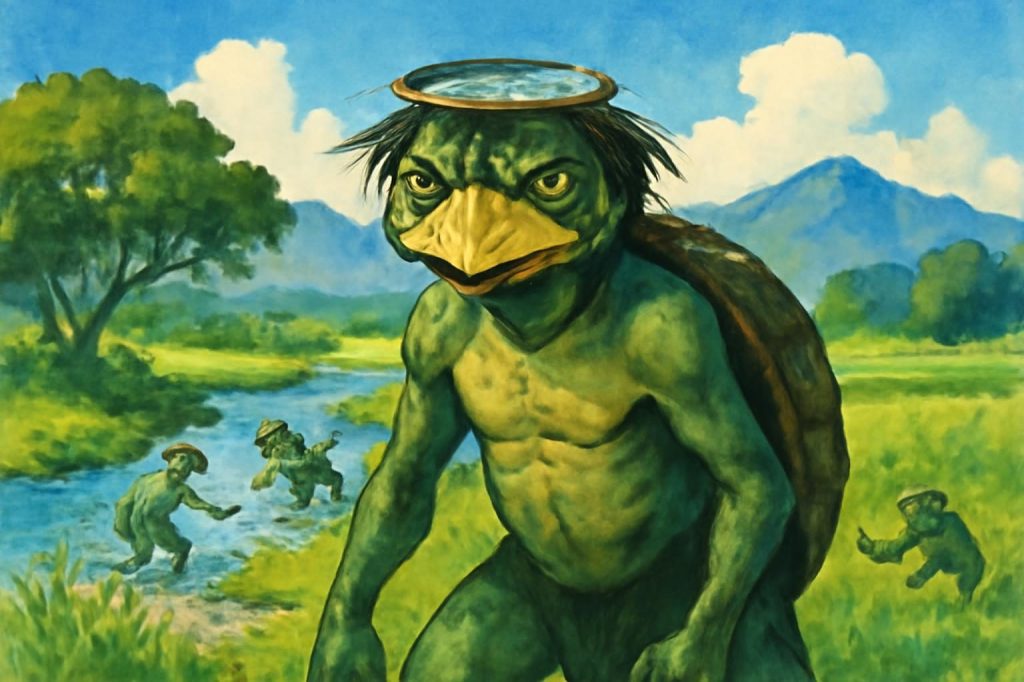
In Yatsushiro, Kumamoto Prefecture, a fascinating legend tells of Kyusenbo, the kappa chief who led his clan from the Yellow River in China to settle along the Kuma River. This tale intertwines history, folklore, and the cultural heritage of the region.
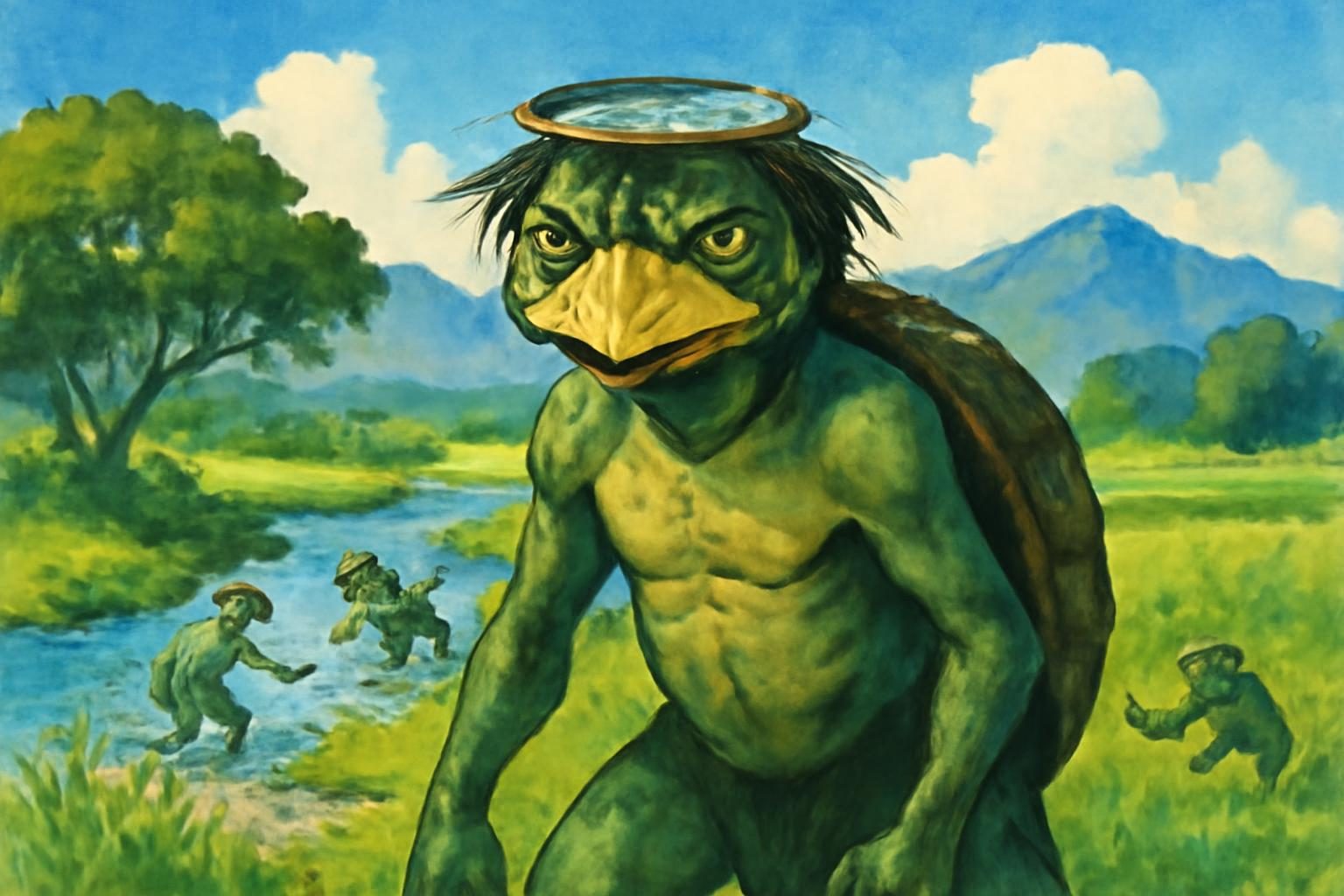
Introduction to Kyusenbo: The Legend of Kyushu’s Kappa Chief
FACT: What the records say
The legend of Kyusenbo is rooted in the Edo-period gazetteer Honchō Zokugenshi, circa 1746. According to this source, a clan of kappa, mythical water creatures from Japanese folklore, crossed the ocean from the Yellow River in China and landed at Yatsushiro in Higo Province. They settled along the Kuma River, a significant waterway in the region. This historical context provides a fascinating backdrop to the legend, suggesting a blend of cultural exchange and myth-making. The Kuma River itself is a vital part of the local geography, known for its scenic beauty and historical importance, making it a fitting setting for such a rich tale.
The presence of the kappa in such a historically significant area underscores the deep integration of folklore into the cultural fabric of Yatsushiro. The river, with its long history as a trade route, serves as a symbolic bridge between the realms of the mythical and the tangible, where stories of supernatural beings like the kappa find a home.
LEGEND: The story of the kappa clan
According to local legend, the kappa clan multiplied to an astonishing nine thousand members, leading to their leader being named Kyusenbo, which translates to “nine-thousand boss.” This tale reflects the rich tapestry of folklore in Yatsushiro, where the kappa are seen as both mischievous and integral to the local cultural identity. The kappa, often depicted as small, humanoid creatures with features reminiscent of turtles and frogs, are known in Japanese folklore for their love of mischief and their interactions with humans, which are sometimes playful and other times more sinister.
The exponential growth of the kappa clan under Kyusenbo’s leadership is a narrative that captures the imagination, suggesting themes of abundance and the mysterious proliferation of these creatures. The legend serves as a metaphor for the natural world’s capacity for growth and transformation, echoing the lush landscapes surrounding the Kuma River.
From the Yellow River to Yatsushiro: Origins of the Kappa Clan
FACT: Historical significance of Yatsushiro
Yatsushiro was historically a lively natural port at the mouth of the Kuma River, serving as a gateway for intercontinental trade. This bustling port may have inspired the legend of the kappa arriving from overseas, as the area was a hub for cultural and commercial exchange during the Middle Ages. The port’s activity would have brought a variety of influences and stories to the region, potentially giving rise to the legend of the kappa’s maritime journey.
The historical role of Yatsushiro as a trade nexus underscores the plausibility of legends involving foreign arrivals. It highlights the area’s openness to external influences, which could have shaped local myths and contributed to the creation of stories like that of the kappa’s arrival.
LEGEND: The journey of the kappa
The legend narrates that the kappa, led by Kyusenbo, navigated the ocean from their homeland in China to Japan. This journey is symbolic of the cultural connections between Japan and the Asian continent, with the kappa embodying the mysteries and wonders of the sea. The crossing from the Yellow River to the shores of Yatsushiro is a testament to the imaginative storytelling that characterizes much of Japanese folklore, where elements of the natural world are often personified and imbued with supernatural significance.
This journey across the sea not only highlights the adventurous spirit attributed to the kappa but also serves as a narrative device to explain the presence of these mythical beings in Japan. It reflects the broader theme of migration and settlement that is common in many cultural myths.

Who Was Kyusenbo? The Story Behind the Nine-Thousand Boss
LEGEND: Kyusenbo’s power and vulnerability
Kyusenbo, as the leader of the kappa, is said to have held enough power to trouble an entire province. However, he was helpless before his natural enemy, the monkey. This aspect of the legend highlights the dual nature of the kappa as both powerful and vulnerable, reflecting the complexities of their character in Japanese folklore. The monkey, known in many cultures as a symbol of cleverness and agility, represents a natural balance to the kappa’s strength, adding depth to the narrative of Kyusenbo’s reign.
The interplay of power and vulnerability in Kyusenbo’s story is a common motif in folklore, illustrating the balance of forces in nature and society. It serves as a reminder of the limits of power and the importance of harmony with the natural world.
The Garappa Stones and the Monument to the Kappa’s Arrival
FACT: The Garappa Stones in Yatsushiro
At the foot of the Maekawa Bridge in Honmachi, Yatsushiro City, stands the Monument to the Kappa’s Arrival, also known as the Garappa Stones. Erected in 1954, this monument commemorates the legendary arrival of the kappa. According to the story, a captured kappa swore upon these stones to cause no harm to humans or horses until the stones wore away, in exchange for an annual festival. This site is a tangible link to the past, allowing visitors to connect with the legend in a physical space.
The Garappa Stones serve not only as a historical marker but also as a cultural artifact that embodies the community’s relationship with the kappa legend. Visitors can reflect on the enduring nature of folklore and its ability to shape local identity and traditions.
LEGEND: The significance of the stones
The Garappa Stones are central to the local folklore, symbolizing the pact between humans and kappa. This annual festival, rooted in the legend, is a testament to the enduring cultural impact of these mythical creatures in Yatsushiro. The festival not only celebrates the legend but also reinforces community bonds and cultural continuity, drawing locals and visitors alike into the rich tapestry of Yatsushiro’s history.
The festival associated with the Garappa Stones is a vibrant expression of the community’s connection to its past, blending traditional rituals with contemporary celebrations. It highlights the role of folklore in fostering a sense of belonging and continuity in Yatsushiro.

Echoes of History: Maritime Trade and Local Folklore in Kumamoto
FACT: Maritime history of the Kuma River
The Kuma River’s role as a major trade route during the Middle Ages underscores the historical plausibility of legends involving foreign arrivals. The river facilitated interactions between Japan and other cultures, providing fertile ground for the emergence of stories like that of Kyusenbo and his kappa clan. The river’s historical significance as a conduit for trade and cultural exchange is mirrored in the legend’s narrative of overseas origins and settlement.
This historical backdrop enriches the legend, offering insights into how trade and cultural exchange have historically influenced local folklore, weaving together elements of reality and imagination.
LEGEND: The river festival chant
A local river festival features a chant, “Ore-Ore-Deraita,” believed to be a corruption of “Many people have arrived from the land of Wu (Kure).” Though its exact meaning remains unclear, this chant is an integral part of the festival, linking the community’s present-day celebrations to its storied past. The chant, echoing through the festivities, serves as a reminder of the region’s rich heritage and the enduring power of folklore in shaping cultural identity.
The chant’s mysterious origins add an element of intrigue to the festival, inviting participants to ponder the historical and cultural layers embedded in their traditions. It acts as a living connection between past and present, maintaining the vibrancy of Yatsushiro’s cultural landscape.
Visiting Yatsushiro: Exploring Kappa Landmarks and River Heritage
FACT: Visiting the Monument to the Kappa’s Arrival
Visitors to Yatsushiro can explore the Monument to the Kappa’s Arrival at the foot of the Maekawa Bridge. This site offers a tangible connection to the legend of Kyusenbo, inviting reflection on the region’s rich folklore and history. The monument stands as a testament to the enduring legacy of the kappa in Yatsushiro, providing a unique glimpse into the intersection of myth and reality in Japanese culture.
Exploring the monument allows visitors to engage with the local legend in a meaningful way, offering insights into the cultural narratives that have shaped the identity of Yatsushiro. It is a place where history and myth converge, offering a window into the community’s storied past.

Related on JAPAN ESSENCE: Ubagabi Legend: Exploring the Ghost Lights of Kameoka’s Hozu River | Tracing the Yamata no Orochi Legend Along Shimane’s Hii River
Regional guide
Location: Yatsushiro, Kumamoto Prefecture
- Monument to the Kappa’s Arrival (Yatsushiro) — source
Sources
- Kyūsenbō – Yokai Encyclopedia | YOKAI.JP
- Kumamoto Yokai Encyclopedia — Kappa, Amabie, and Kihachi of Aso | YOKAI.JP
To explore further, visit Zenkei (禅景) for Zen-inspired onigawara art and Onigawara Experience for hands-on onigawara experiences in Japan.


Leave a Reply