Experience the serene beauty of autumn at Buttsuji Temple in Mihara, Hiroshima Prefecture. This Rinzai Zen sanctuary offers a unique blend of spiritual practice and natural splendor, especially during the fall when the temple grounds are adorned with vibrant foliage.

Introduction to Buttsuji Temple: A Rinzai Zen Sanctuary
FACT: The Historical Foundation of Buttsuji Temple
Buttsuji Temple, located in Mihara City, Hiroshima Prefecture, is a significant Rinzai Zen temple. It was founded in 1397, when Kobayakawa Haruhira, the local lord, invited the Zen monk Guchū Shūkyū to open it. Guchū trained under Musō Soseki in his youth, but he received the Dharma transmission in Yuan-dynasty China from the master Sokkyū Keiryō (Jixiu Qiliao), whose posthumous title, Buttsū Zenji, gave the temple its name. The temple has long been a center for Zen practice, attracting monks and laypeople alike who seek to deepen their understanding of Zen Buddhism. This historical foundation underscores the temple’s role as a spiritual haven, offering a place for meditation and reflection amidst its tranquil surroundings.
The temple’s establishment in the late 14th century marked a period of significant cultural and religious development in Japan. As a Rinzai Zen temple, Buttsuji has played a crucial role in the dissemination of Zen teachings, emphasizing meditation, mindfulness, and the pursuit of enlightenment. At its height it is said to have had 88 sub-temples on the mountain and some 3,000 branch temples in western Japan. It declined after the Ōnin War, revived in the Meiji era, and in 1905 became independent of Tenryū-ji as the head temple of the Rinzai Buttsūji school.
LEGEND: The Serpent of Kyomō Bridge
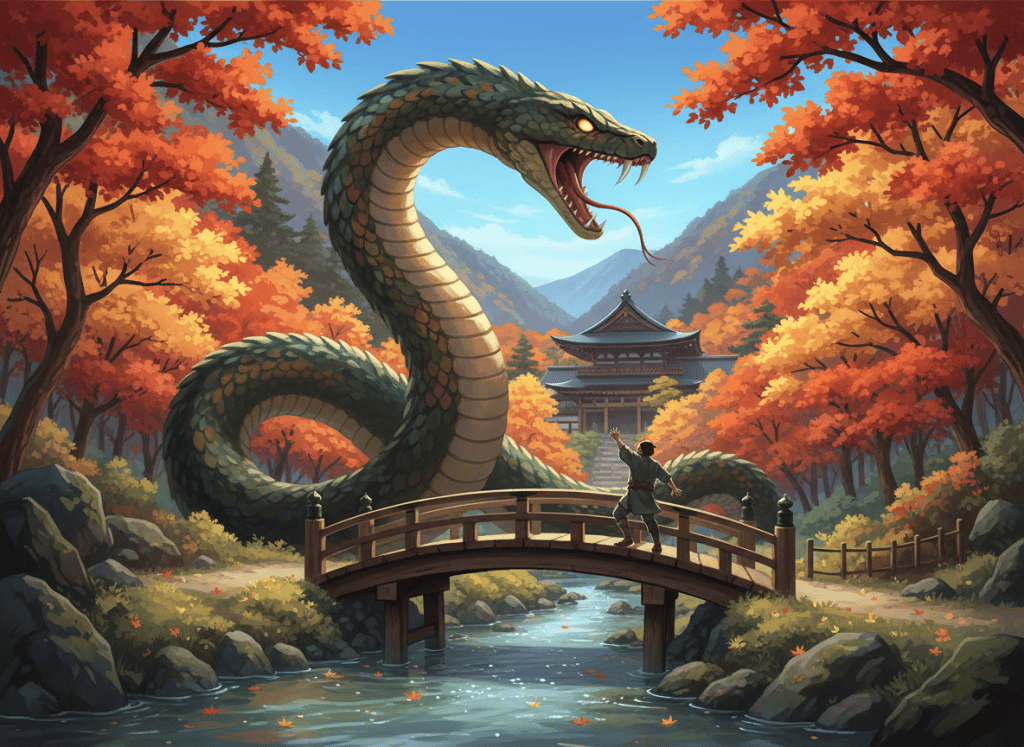
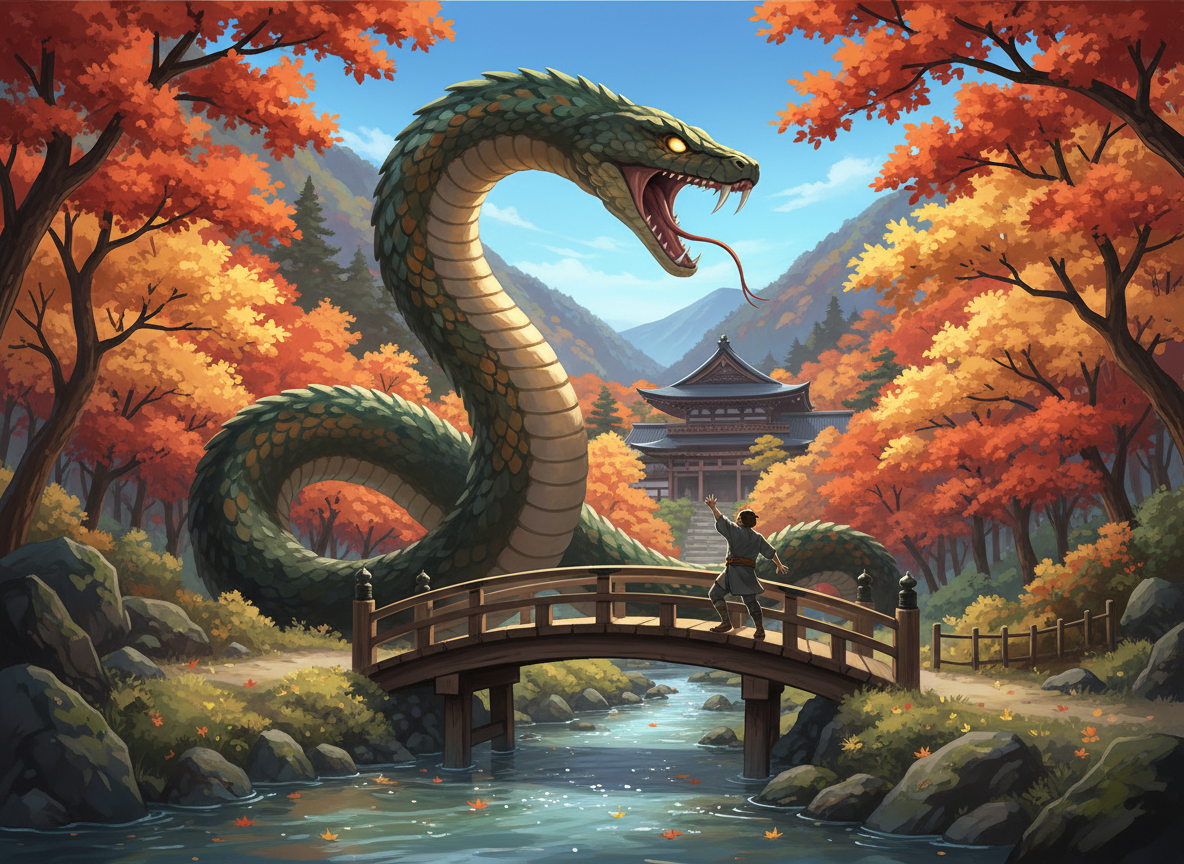
The temple’s own guide tells a legend about Kyomō Bridge (Kyomō-kyō, “Giant Serpent Bridge”). The mountain stream it crosses, shown on maps today as the Buttsūji River, has long been called Katsuryūsui, “living dragon water”, and it marks the sacred boundary of the main temple. Anyone crossing the bridge was expected to leave all worldly dust behind, and it was said that if an unworthy person tried to cross, a giant serpent would appear from nowhere to threaten them.
The History and Foundation of Buttsuji Temple in Mihara
FACT: Architectural Significance and Cultural Heritage
The architecture of Buttsuji Temple is a testament to its historical significance. The temple complex includes the Butsuden (Buddha hall, which also serves as the Dharma hall and was rebuilt in 1809 after a fire in 1796), the Great Hōjō main hall, the Zen hall, the Founder’s Hall, the San-mon gate and a tahōtō pagoda. The Jizō Hall of Ganki-in, which survives from the temple’s founding era, is a nationally designated Important Cultural Property, and the temple is designated a Historic Site and Place of Scenic Beauty by Mihara City. These buildings showcase traditional Japanese architectural styles that reflect the aesthetics of Zen Buddhism. Some interiors, such as the Butsuden and the main hall, are normally closed and are opened during the autumn special viewing; check the official site for what is open when you visit.
The architectural style of the temple reflects the simplicity and elegance characteristic of Zen design, which emphasizes minimalism and natural beauty. This approach not only enhances the spiritual ambiance of the temple but also serves as a visual representation of Zen principles. The preservation of these structures allows visitors to step back in time and experience the historical and cultural heritage of the region firsthand.
LEGEND: Sesshū and Konkō Pond
Konkō Pond, in front of the main gate, is traditionally attributed to the painter-monk Sesshū, though the temple itself says the attribution is uncertain. The temple regards Sesshū’s stay at Buttsuji as close to historical fact, and tradition places traces of him at many spots on the mountain. Garden specialists say the pond keeps little of its original form, and the stone bridge in the middle was added recently.

Experiencing Fall Foliage and Nature in the Surrounding Valley
FACT: A Natural Haven for Autumn Leaves
Buttsuji Temple is renowned for its breathtaking autumn scenery. The temple is nestled in a valley along the Buttsuji River, where the surrounding hills burst into vibrant hues of red, orange, and yellow each fall. It is counted among the leading autumn-foliage spots in Hiroshima Prefecture, and the temple holds an autumn photo contest. The vivid colors of the foliage create a stunning backdrop for the temple, enhancing its spiritual ambiance and offering a perfect setting for contemplation and meditation.
During the leaf season in November the temple holds an autumn special viewing, and traffic restrictions may be in place nearby. Dates, hours and fees change from year to year and with the state of the leaves, so check the official site and Mihara City information before you go.
Participating in Public Zazen Meditation
FACT: Zazen Practice at Buttsuji Temple
Buttsuji opens its Zen hall, called Shishikutsu, to the public for a monthly zazen session (gekkei zazenkai), and beginners can take part. According to the official page it is held on the first Saturday of each month and must be booked by phone by noon the day before; short zazen sessions are also offered during the autumn special viewing. Schedules, fees and booking rules can change, so check the official site before you go.
The Zen hall was built in the early Shōwa era with a donation from Yamaguchi Gendō, a businessman from Onomichi. It was long used by training monks and today serves as a Zen hall for the general public. The temple describes itself as the only head temple in western Japan with its own Zen training hall.

Exploring Architectural Treasures: The Ganki-in Jizo Hall
FACT: The Ganki-in Jizo Hall
The Jizō Hall of Ganki-in survives from the temple’s founding era and is a nationally designated Important Cultural Property. It was built as the Buddha hall of Ganki-in, a sub-temple established by Kobayakawa Haruhira’s wife Shōgan-ni. It is a square hall, three bays by three bays, in the eclectic (setchūyō) style, with a pyramidal hōgyō roof of tiles (originally thatched). Inside, on a Chinese-style dais about two metres square, sits a wooden statue of Jizō Bosatsu, the bodhisattva known for protecting travellers and children.
The presence of Jizo Bosatsu in the Ganki-in Jizo Hall offers a focal point for reflection and prayer. The bodhisattva’s association with protection and guidance resonates with visitors, providing comfort and inspiration. The hall’s design and the spiritual significance of its contents create an environment conducive to contemplation and reverence.

Related on JAPAN ESSENCE: Eiheiji and Zen: Dōgen’s Living Tradition in Fukui | Hachinohe Aomori Travel Guide: Exploring Folklore, Coastlines, and Local Delicacies
Sources
- Buttsuji Temple | Mihara | Yuku Japan
- The best places for seeing the autumn leaves in Japan | Japan Experience
- 歴史 | 臨済宗佛通寺派大本山 佛通寺(公式)
- 境内 | 臨済宗佛通寺派大本山 佛通寺(公式)
- 月例坐禅会 | 臨済宗佛通寺派大本山 佛通寺(公式)
- 秋の特別拝観(11月)のお知らせ | 臨済宗佛通寺派大本山 佛通寺(公式)
- 佛通寺 | 三原市ホームページ
To explore further, visit Oni Kobo (鬼工房) for onigawara demon-tile art and charms and Zenkei (禅景) for Zen-inspired onigawara art.


Leave a Reply