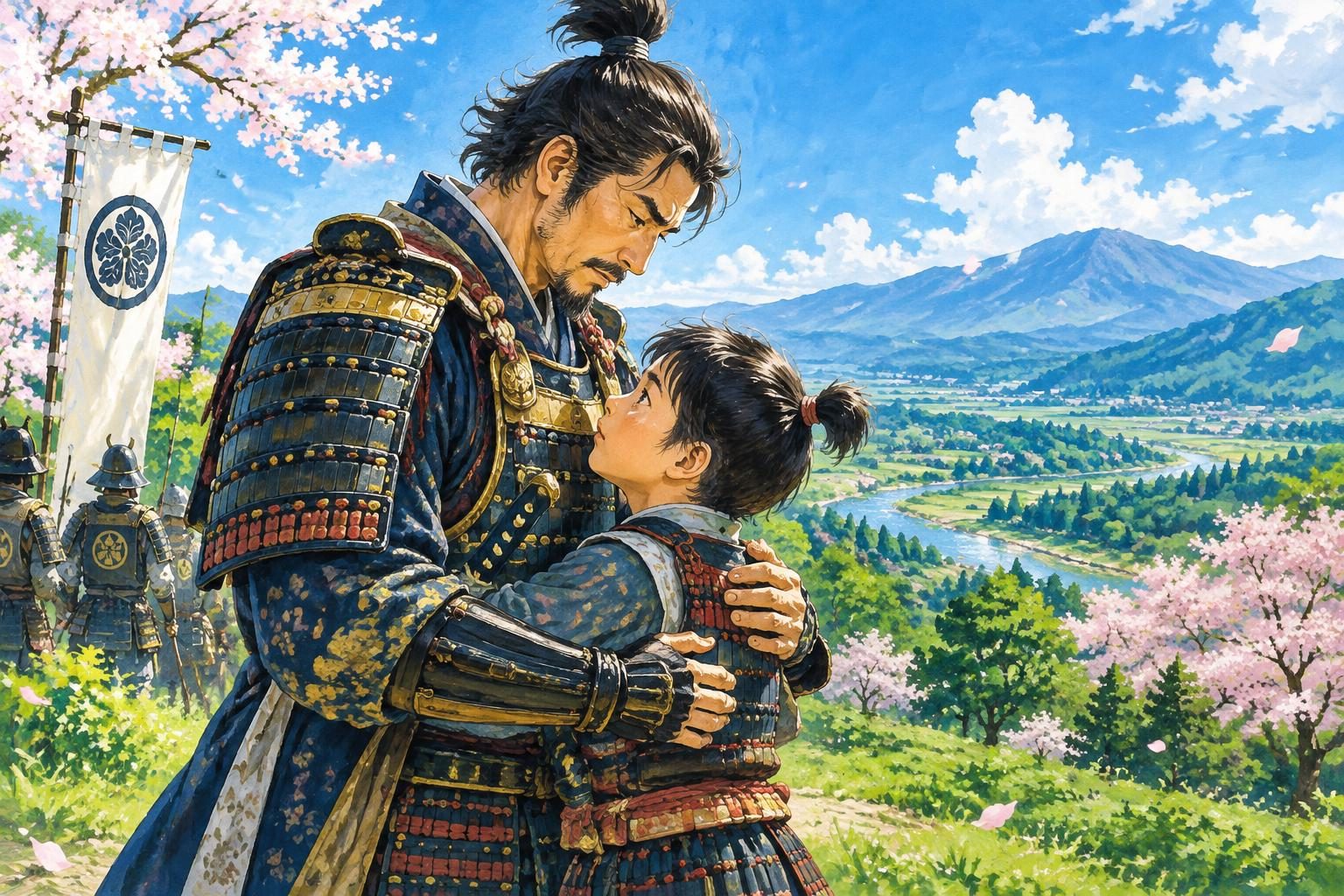
In Shimamoto, Osaka Prefecture, lies the Sakurai Station Site Historic Park, a place steeped in the legend of Kusunoki Masashige’s poignant farewell to his son. This site, rich in history and cultural significance, offers visitors a glimpse into a legendary moment from Japan’s past.


Introduction to the Sakurai Station Site in Shimamoto, Osaka
The Sakurai Station Site in Shimamoto, Osaka Prefecture, is a historical location that draws visitors interested in Japan’s samurai history and legendary tales. Known for its connection to the famous farewell of Kusunoki Masashige, a revered samurai of the 14th century, the site is a testament to the enduring legacy of loyalty and sacrifice. Visitors to the park can immerse themselves in the atmosphere of a bygone era, where the values of honor and duty were paramount. The park’s serene environment, with its lush greenery and historical monuments, offers a reflective space for those who wish to connect with Japan’s storied past.

The Legend of the ‘Farewell at Sakurai’ from the Taiheiki
LEGEND: The Taiheiki’s Account
According to the Taiheiki, a historical chronicle, Kusunoki Masashige, a loyal samurai of the Southern Court during the Nanboku-chō period, bade a poignant farewell to his son, Masatsura, at the Sakurai Station. This event, known as the ‘Farewell at Sakurai,’ is said to have occurred in 1336. Masashige, aware of his impending death in battle, charged his son with continuing their cause. This moment of parting has become emblematic of samurai loyalty and filial duty. The tale is often recounted as a powerful example of the deep bonds between parent and child, as well as the unwavering commitment to one’s principles and duties.
LEGEND: Symbolism and Legacy
The story of Masashige’s farewell is more than just a tale of personal sacrifice; it symbolizes the broader themes of loyalty and perseverance in the face of adversity. The narrative has been passed down through generations, capturing the imagination of those who hear it. It serves as a reminder of the values that were held dear during the tumultuous times of the Nanboku-chō period, where loyalty to one’s lord and family was of utmost importance. The legend continues to inspire many, reflecting the timeless nature of its themes and the enduring respect for samurai ideals in Japanese culture.


Historical Context and Modern Archaeological Perspectives
FACT: What the Records Say
The Sakurai Station Site was once a relay post known as ‘Sakurai-no-eki’ on the ancient Saigoku Kaidō highway. While the exact historical details of the farewell may be debated, the site is recognized for its cultural and historical significance. Today, it serves as a public park where visitors can reflect on the past amid its serene surroundings. The park’s historical context provides a backdrop for understanding the strategic importance of such relay stations in facilitating communication and travel during the era. These stations were vital for the movement of people and goods, playing a crucial role in the connectivity of the region.
FACT: Archaeological Insights
Modern archaeological perspectives offer insights into the site’s historical use and significance. While the narrative of the farewell is a compelling story, the physical remnants at the site, such as the stone monuments and camphor trees, provide tangible links to the past. These elements allow visitors to connect with history on a deeper level, offering a sense of continuity with the lives and events that shaped the region. The presence of these historical markers helps to contextualize the legend within the broader framework of Japanese history, allowing for a more comprehensive understanding of the site’s importance.
Monuments, Camphor Trees, and Commemorative Stones
FACT: The Park’s Features
The park next to JR Shimamoto Station contains several stone monuments and old camphor trees, creating a tranquil atmosphere. Among these are stone figures depicting Kusunoki Masashige and his son, symbolizing their legendary farewell. A stone marker erected in 1913 bears a title written by General Nogi Maresuke, while a monument erected in 1931 bears a waka poem by Emperor Meiji in the calligraphy of Admiral Tōgō Heihachirō. These features serve as focal points for reflection and remembrance, drawing visitors into the story of the past. The camphor trees, with their ancient presence, add a natural element to the park’s historical narrative, enhancing the sense of timelessness and continuity.
FACT: Commemorative Contributions
The contributions of prominent historical figures such as General Nogi Maresuke and Admiral Tōgō Heihachirō highlight the site’s importance in Japan’s cultural memory. The inscriptions and monuments they left behind are not only artistic expressions but also serve as historical documents that commemorate the ideals embodied by Kusunoki Masashige. Visitors can appreciate these contributions as part of a broader narrative that honors the samurai’s legacy. The waka poem, in particular, reflects the aesthetic and literary appreciation of the era, connecting visitors to the cultural richness of the time.


How to Visit the Sakurai Station Site Historic Park
The Sakurai Station Site Historic Park is an open public space, free of charge and accessible at any time. Located immediately outside the east exit of JR Shimamoto Station, it is easily reachable for those interested in exploring this historical landmark. Visitors are encouraged to check the official website for current hours, fees, and access details. The park’s accessibility makes it an ideal destination for both casual visitors and history enthusiasts looking to delve into the rich tapestry of Japan’s past. The park’s location, adjacent to a major transportation hub, ensures that it remains a convenient and inviting place for all who wish to experience its historical and cultural offerings.
Nearby Guide
Access
- JR Shimamoto Station (Shimamoto) — From JR Shimamoto Station, it’s a 1-minute walk to the Sakurai Station Site Historic Park. official site
- Hankyu Minase Station (Shimamoto) — From Hankyu Minase Station, it’s a 10-minute walk to the Sakurai Station Site Historic Park. official site
Nearby sights
- Sakurai Station Site Historic Park (Shimamoto) — This park preserves the remains of an ancient post station, known as ‘umaya,’ on the Saigoku Kaidō highway. It’s famous for the ‘Farewell at Sakurai’ episode from the ‘Taiheiki,’ where Kusunoki Masashige parted ways with his son Masatsura in 1336. The park features stone monuments and inscriptions. official site
- Shimamoto Town Historical Cultural Museum (Shimamoto) — Located near the Sakurai Station Site Historic Park, this museum offers exhibits related to the local history and culture of Shimamoto. It’s a great place to learn more about the region’s heritage. official site


Related on JAPAN ESSENCE: Visiting the Sakurai Station Site: Kusunoki Masashige’s Legendary Farewell in Osaka | The Fall of the Late Hojo: Samurai Legacy and Legends in Kanto
Sources
- Site of the Sakurai Post Station (traditional site associated with Kusunoki Masashige)
- Shimamoto Town Official Site
To explore further, visit Kawara Kobo (瓦工房) for a hands-on kawara experience and Zenkei (禅景) for Zen-inspired onigawara art.
大阪府島本町には、楠木正成が息子に感動的な別れを告げたという伝承が残る桜井駅跡歴史公園があります。この場所は歴史と文化的意義に満ちており、日本の過去の伝説的な瞬間を垣間見ることができます。
大阪、島本町の桜井駅跡の紹介
大阪府島本町にある桜井駅跡は、日本の侍の歴史と伝説的な物語に興味を持つ訪問者を引き付ける歴史的な場所です。14世紀の尊敬される侍、楠木正成の有名な別れに関連することで知られ、この場所は忠誠と犠牲の永続的な遺産を証明しています。公園を訪れる人々は、名誉と義務が最も重要視された過去の時代の雰囲気に浸ることができます。緑豊かな自然と歴史的な記念碑に囲まれた公園の静かな環境は、日本の歴史に触れたい人々にとって反省の場を提供します。
太平記の「桜井の別れ」の伝承
伝承: 太平記の記述
歴史書『太平記』によると、南北朝時代の南朝の忠実な侍、楠木正成は、桜井駅で息子の正行に感動的な別れを告げました。この出来事は1336年に起こったとされ、「桜井の別れ」として知られています。正成は戦いでの死を覚悟し、息子にその志を継ぐよう託しました。この別れの瞬間は、侍の忠誠心と親子の絆の象徴となっています。この物語は、親子の深い絆と、信念と義務に対する揺るぎない献身の強力な例としてしばしば語られます。
伝承: 象徴と遺産
正成の別れの物語は、個人的な犠牲の物語以上のものであり、逆境に直面した際の忠誠心と忍耐力の広範なテーマを象徴しています。この物語は世代を超えて受け継がれ、聞く人々の想像力を掻き立てます。それは、主君と家族への忠誠心が最も重要視された南北朝時代の価値観を思い起こさせるものです。この伝説は多くの人々にインスピレーションを与え続け、そのテーマの時代を超えた性質と、日本文化における侍の理想への永続的な敬意を反映しています。
歴史的背景と現代の考古学的視点
事実: 記録が示すもの
桜井駅跡は、かつて古代の西国街道にあった「桜井の駅」として知られる中継所でした。別れの正確な歴史的詳細は議論の余地がありますが、この場所は文化的および歴史的な意義で認識されています。現在では、訪問者がその静かな環境の中で過去を振り返ることができる公園として機能しています。公園の歴史的背景は、その時代における通信と移動を促進するための中継所の戦略的重要性を理解するための背景を提供します。これらの中継所は、人々や物資の移動にとって重要であり、地域のつながりにおいて重要な役割を果たしました。
事実: 考古学的洞察
現代の考古学的視点は、サイトの歴史的な使用と意義についての洞察を提供します。別れの物語は魅力的な話ですが、現地の石碑やクスノキのような物理的な遺物は、過去への具体的なつながりを提供します。これらの要素は、訪問者が歴史とより深くつながることを可能にし、地域を形作った生活や出来事との連続性を提供します。これらの歴史的なマーカーの存在は、伝説を日本の歴史のより広い枠組みの中で文脈化し、サイトの重要性をより包括的に理解することを可能にします。
記念碑、クスノキ、記念石
事実: 公園の特徴
JR島本駅の隣にある公園には、いくつかの石碑と古いクスノキがあり、静かな雰囲気を作り出しています。これらの中には、楠木正成とその息子を描いた石像があり、彼らの伝説的な別れを象徴しています。1913年建立の石碑の題字は乃木希典の書です。また、1931年建立の明治天皇御製碑には、明治天皇の和歌が東郷平八郎の書で刻まれています。これらの特徴は、過去の物語に訪問者を引き込む反省と追憶の焦点として機能します。古代からの存在感を持つクスノキは、公園の歴史的な物語に自然な要素を加え、時代を超えた連続性と永続性を強調します。
事実: 記念の貢献
乃木希典将軍や東郷平八郎元帥などの著名な歴史的人物の貢献は、日本の文化的記憶におけるサイトの重要性を強調しています。彼らが残した碑文や記念碑は、芸術的な表現であるだけでなく、楠木正成が体現した理想を記念する歴史的な文書としても機能しています。訪問者は、侍の遺産を称えるより広い物語の一部として、これらの貢献を鑑賞することができます。特に和歌の詩は、その時代の美的および文学的な鑑賞を反映し、訪問者をその時代の文化的豊かさに結びつけます。
桜井駅跡歴史公園への訪問方法
桜井駅跡歴史公園は、無料でいつでもアクセス可能な公共のスペースです。JR島本駅の東出口のすぐ外に位置し、この歴史的なランドマークを探索したい人々にとって簡単に到達できます。訪問者は、最新の営業時間、料金、アクセスの詳細について公式サイトを確認することをお勧めします。公園のアクセスの良さは、カジュアルな訪問者や日本の過去の豊かなタペストリーに浸りたい歴史愛好家にとって理想的な目的地となっています。主要な交通ハブに隣接する公園の立地は、その歴史的および文化的な提供物を体験したいすべての人にとって便利で魅力的な場所であることを保証します。
周辺ガイド
アクセス
周辺の見どころ
- 桜井駅跡歴史公園(島本) — この公園は、西国街道にあった古代の駅「厩」の遺跡を保存しています。1336年に楠木正成が息子の正行と別れた「桜井の別れ」のエピソードで有名です。公園には石碑や碑文があります。 公式サイト
- 島本町歴史文化資料館(島本) — 桜井駅跡歴史公園の近くに位置するこの博物館は、島本の地元の歴史と文化に関連する展示を提供しています。地域の遺産についてもっと学ぶのに最適な場所です。 公式サイト
Related on JAPAN ESSENCE: Visiting the Sakurai Station Site: Kusunoki Masashige’s Legendary Farewell in Osaka | The Fall of the Late Hojo: Samurai Legacy and Legends in Kanto
Leave a Reply