In Urahoro, Hokkaido, the Otafunbe Chashi stands as a testament to the rich cultural heritage of the Ainu people, blending historical significance with captivating local legends.

Introduction to Otafunbe Chashi and Eastern Hokkaido
FACT: What the Otafunbe Chashi Represents
The Otafunbe Chashi is the remains of an Ainu chashi, or fortress, located on the Pacific coast of Urahoro Town in eastern Hokkaido. This site is a significant cultural landmark, representing the strategic and defensive architecture of the Ainu people, who are indigenous to Hokkaido and parts of Russia. The chashi served as a fortified settlement, offering protection and a vantage point over the surrounding area. Its location on a coastal knoll provided a strategic advantage, allowing the Ainu to monitor both land and sea routes effectively.
Chashis like Otafunbe were integral to the Ainu’s way of life, serving not only as military strongholds but also as centers of community life. The fortresses were often sites of social gatherings, trade, and cultural exchange, reflecting the Ainu’s deep connection to their land and traditions. The strategic placement of these fortresses highlights the Ainu’s expertise in utilizing natural landscapes for defense and community organization.
FACT: National Historic Site Designation
On August 29, 1981, the Otafunbe Chashi was designated a National Historic Site of Japan. This recognition highlights its importance as a representative example of the osonayama-type chashi, a style characterized by its strategic location on elevated terrain. The designation underscores the site’s historical and cultural value, ensuring its preservation for future generations. As a National Historic Site, Otafunbe Chashi is protected under Japanese law, which aims to maintain the integrity of such culturally significant locations.
The designation as a National Historic Site not only preserves the physical remnants of the chashi but also acknowledges the cultural narratives and traditions associated with it. This status helps to promote awareness and appreciation of Ainu culture, encouraging educational and cultural tourism that respects and honors the site’s historical significance.
What Is a Chashi? Understanding Ainu Fortresses
FACT: Architectural and Cultural Significance
The term ‘chashi’ refers to a type of fortress used by the Ainu people. These structures were typically built on elevated ground, utilizing natural features for defense. The Otafunbe Chashi, with its strategic coastal position, exemplifies this architectural style. It served not only as a defensive stronghold but also as a communal space for the Ainu, reflecting their social and cultural practices. The construction of chashis was a testament to the Ainu’s deep understanding of their environment and their ability to adapt to the challenging landscapes of Hokkaido.
Chashis were often surrounded by moats or embankments, enhancing their defensive capabilities. The Ainu were adept at using the natural topography to their advantage, creating fortresses that were both functional and harmonious with the surrounding environment. These structures stand as a testament to the Ainu’s ingenuity and their sophisticated approach to settlement planning and defense.


The Legend of the Sand Whale of Otafunbe
LEGEND: The Story of the Sand Whale
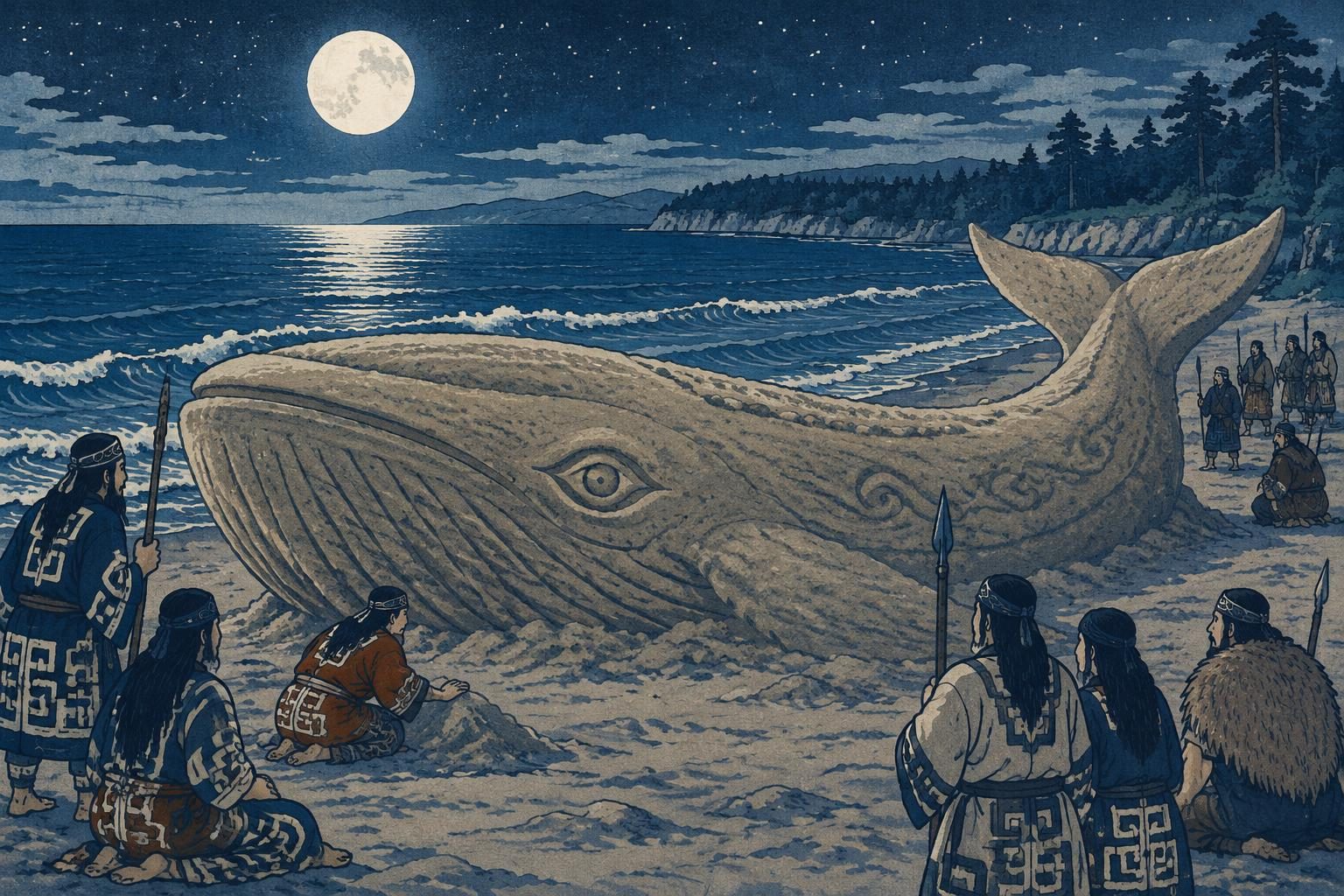
According to local Ainu legend, the Otafunbe Chashi was the site of a cunning stratagem involving a sand whale. The story goes that the Akkeshi Ainu, unable to capture the fortress by force, constructed a massive whale out of sand on the beach at night. The Shiranuka defenders, believing it to be a real whale, descended from their stronghold at dawn, only to be ambushed by the Akkeshi. This tale, rich in imagination and strategy, gives the chashi its name, as ‘Otafunbe’ in Ainu means ‘sand whale.’
This legend is a vivid example of the Ainu’s storytelling tradition, where natural elements and human ingenuity are woven into narratives that explain and celebrate their cultural heritage. The story of the sand whale is not only a tale of clever tactics but also a reflection of the Ainu’s deep connection to their environment and their ability to use it creatively in both legend and life.
LEGEND: Variations and Interpretations
While the core of the legend remains consistent, variations in the telling of the story exist. Some versions emphasize the ingenuity and resourcefulness of the Akkeshi Ainu, highlighting their ability to use the natural environment to their advantage. Others focus on the element of surprise and the psychological tactics employed to deceive the Shiranuka defenders. Despite these variations, the legend of the sand whale remains a cherished part of local folklore, symbolizing the enduring spirit and creativity of the Ainu people.
The legend is often recounted during cultural events and gatherings, serving as a reminder of the Ainu’s rich oral tradition. It is a story that continues to capture the imagination, offering insights into the values and beliefs of the Ainu community. Visitors to the region can learn more about this legend and its significance through local museums and cultural centers that preserve and promote Ainu heritage.
Seasonal Beauty: Ezo Day Lilies on the Pacific Coast
FACT: Natural Splendor Surrounding the Chashi
In late spring to early summer, the area surrounding the Otafunbe Chashi is adorned with the vibrant blooms of Ezo day lilies (Ezo kanzō). These flowers, native to Hokkaido, create a stunning contrast against the backdrop of the Pacific Ocean, enhancing the site’s natural beauty and offering a picturesque setting for visitors. The sight of these bright yellow flowers swaying gently in the coastal breeze adds an extra layer of allure to the already captivating landscape, making it a popular time for visitors to experience the site.
The blooming of Ezo day lilies is a seasonal highlight, drawing nature enthusiasts and photographers to the region. The flowers’ vibrant colors and the serene coastal setting create a unique atmosphere that complements the historical and cultural significance of the chashi. This natural spectacle is a testament to the diverse and rich ecosystem of Hokkaido, adding to the overall experience of visiting the Otafunbe Chashi.


Visitor Guidelines and How to View the Site Responsibly
FACT: Viewing and Access Restrictions
Visitors to the Otafunbe Chashi are encouraged to admire the site from designated viewpoints or the road, as the land is privately owned and climbing the hill is prohibited. This measure helps preserve the integrity of the site while ensuring safety. For those interested in a deeper understanding of the chashi and its history, the Urahoro Town Museum offers valuable insights into the Ainu heritage and the region’s cultural landscape. The museum provides educational exhibits and resources that delve into the history and traditions of the Ainu, enriching the visitor experience.
Respecting these guidelines is crucial for the conservation of the site and the protection of its cultural and natural resources. Visitors are encouraged to engage with the local community and learn about the Ainu culture through respectful and informed tourism practices. By doing so, they contribute to the preservation and appreciation of this unique cultural heritage.
Nearby Guide
Access
- Urahoro Town Museum (Urahoro) — Recommended place to learn more about the site and the wider Ainu heritage of the region. official site
Nearby sights
- Urahoro Shinyoshinodai Microlith Site (Urahoro) — A Prefectural Historic Site featuring ancient stone tools and artifacts. official site
- Toyokita Primeval Flower Garden (Urahoro) — A primeval flower garden stretching along the Pacific coast, offering scenic views and diverse flora. official site
Where to stay
- Urahoro Rushin Onsen (Urahoro) — A hot spring facility offering natural baths and accommodations. Closed on the 3rd Monday of each month (or the next day if a holiday). details
Where to eat
- Torinome Shop (Urahoro) — A cozy bookstore and café featuring vintage clothing and unique local goods. Business hours: 11:00-17:30; Closed on Sundays and Mondays. official site
- futatsuki (Urahoro) — Offers seasonal vegetable dishes in a relaxing atmosphere. Business hours: 12:00-15:00 (Thu.-Sun.); 18:00-22:00 (Wed. & Fri.-Sun.). official site
- Chanko Ryokoku (Urahoro) — Specializes in chanko hotpot, a traditional sumo wrestler’s meal. Business hours: 11:30-14:00; 17:00-22:00; Closed on Sundays. official site


Related on JAPAN ESSENCE: Koshamain’s War: Exploring Hokkaido’s Medieval History in Kaminokuni | Exploring Matsumae: Hokkaido’s Only Samurai Castle and Frontier Domain
Sources
- Otafumbe Chashi Remains | Hokkaido | Explore Japan’s Cultural Heritage | National Treasures Database with Stories & Travel
- How to Get to Urahoro: JR Train, Airport Transfer & Driving Guide
- Urahoro Food Guide
- Urahoro Ryushin Onsen
To explore further, visit Zenkei (禅景) for Zen-inspired onigawara art and Oni Kobo (鬼工房) for onigawara demon-tile art and charms.
北海道浦幌町にあるオタフンベチャシは、アイヌ民族の豊かな文化遺産を証明するものであり、歴史的な重要性と魅力的な地元の伝説が融合しています。
オタフンベチャシと東北海道の紹介
事実: オタフンベチャシが表すもの
オタフンベチャシは、北海道東部の浦幌町の太平洋沿岸に位置するアイヌのチャシ、つまり砦の遺跡です。この場所は、アイヌ民族の戦略的かつ防御的な建築を代表する重要な文化的ランドマークです。アイヌは北海道とロシアの一部に住む先住民族であり、チャシは防御的な集落として機能し、周囲の地域を監視するための有利な地点を提供しました。沿岸の丘に位置することで、アイヌは陸路と海路の両方を効果的に監視することができました。
オタフンベのようなチャシは、アイヌの生活様式に不可欠であり、軍事的な要塞としてだけでなく、コミュニティ生活の中心地としても機能しました。これらの砦はしばしば社会的な集まり、交易、文化交流の場であり、アイヌの土地と伝統への深い結びつきを反映しています。これらの砦の戦略的な配置は、自然の景観を防御とコミュニティ組織に利用するアイヌの専門知識を強調しています。
事実: 国の史跡指定
1981年8月29日、オタフンベチャシは日本の国の史跡に指定されました。この認定は、戦略的に高地に位置するオソナヤマ型チャシの代表的な例としての重要性を強調しています。この指定は、サイトの歴史的および文化的価値を強調し、将来の世代のためにその保存を確保します。国の史跡として、オタフンベチャシは日本の法律の下で保護されており、文化的に重要な場所の完全性を維持することを目的としています。
国の史跡としての指定は、チャシの物理的な遺構を保存するだけでなく、それに関連する文化的な物語や伝統も認めています。この地位は、アイヌ文化の認識と評価を促進し、サイトの歴史的意義を尊重し称える教育的および文化的観光を奨励します。
チャシとは何か?アイヌの砦を理解する
事実: 建築的および文化的意義
‘チャシ’という用語は、アイヌ民族によって使用された砦の一種を指します。これらの構造物は通常、高地に建てられ、防御のために自然の特徴を利用していました。オタフンベチャシは、その戦略的な沿岸位置でこの建築様式を体現しています。それは防御的な要塞としてだけでなく、アイヌの社会的および文化的慣習を反映した共同体の場としても機能しました。チャシの建設は、アイヌが環境を深く理解し、北海道の厳しい景観に適応する能力を示しています。
チャシはしばしば堀や土塁に囲まれており、防御能力を高めていました。アイヌは自然の地形を巧みに利用し、機能的でありながら周囲の環境と調和した砦を作り上げました。これらの構造物は、アイヌの独創性と、定住計画と防御に対する洗練されたアプローチを証明しています。
オタフンベの砂のクジラの伝説
伝承: 砂のクジラの物語
地元のアイヌの伝説によると、オタフンベチャシは砂のクジラを使った巧妙な策略の舞台でした。この物語では、アッケシのアイヌが力で砦を攻略できなかったため、夜に砂で巨大なクジラを浜辺に作りました。シラヌカの守備隊はそれを本物のクジラと信じ、夜明けに砦から降りてきたところをアッケシに待ち伏せされました。この物語は、想像力と戦略に富んでおり、チャシにその名を与えました。アイヌ語で「オタフンベ」は「砂のクジラ」を意味します。
この伝説は、自然の要素と人間の創意工夫が織り込まれたアイヌの物語伝承の生き生きとした例であり、彼らの文化遺産を説明し称えるものです。砂のクジラの物語は、巧妙な戦術の物語であるだけでなく、アイヌの環境への深い結びつきと、それを伝説と生活の両方で創造的に利用する能力を反映しています。
伝承: 変種と解釈
伝説の核心は一貫していますが、物語の語り方にはバリエーションがあります。あるバージョンでは、アッケシのアイヌの創意工夫と資源活用能力を強調し、自然環境を有利に利用する能力を示しています。他のバージョンでは、驚きの要素とシラヌカの守備隊を欺くために用いられた心理的戦術に焦点を当てています。これらのバリエーションにもかかわらず、砂のクジラの伝説は地元の民間伝承の大切な一部であり、アイヌの人々の不屈の精神と創造性を象徴しています。
この伝説は文化イベントや集まりでしばしば語られ、アイヌの豊かな口承伝統を思い起こさせます。それは想像力をかき立て続ける物語であり、アイヌコミュニティの価値観や信念についての洞察を提供します。地域を訪れる人々は、地元の博物館や文化センターを通じて、この伝説とその意義についてさらに学ぶことができます。
季節の美しさ: 太平洋沿岸のエゾカンゾウ
事実: チャシを囲む自然の壮観
春の終わりから初夏にかけて、オタフンベチャシの周辺はエゾカンゾウの鮮やかな花で彩られます。これらの花は北海道に自生しており、太平洋の背景に対して見事なコントラストを生み出し、サイトの自然の美しさを高め、訪問者にとって絵のような風景を提供します。これらの明るい黄色の花が沿岸の風に優しく揺れる光景は、すでに魅力的な景観にさらなる魅力を加え、訪問者がサイトを体験するのに人気のある時期となっています。
エゾカンゾウの開花は季節のハイライトであり、自然愛好家や写真家を地域に引き寄せます。花の鮮やかな色と静かな沿岸の風景は、チャシの歴史的および文化的意義を補完する独特の雰囲気を作り出します。この自然の壮観は、北海道の多様で豊かな生態系を証明し、オタフンベチャシを訪れる全体的な体験に寄与しています。
訪問者ガイドラインとサイトを責任を持って見る方法
事実: 観覧とアクセスの制限
オタフンベチャシを訪れる人々は、指定された展望台や道路からサイトを鑑賞することが奨励されています。土地は私有地であり、丘を登ることは禁止されています。この措置は、サイトの完全性を保ち、安全を確保するのに役立ちます。チャシとその歴史についてより深く理解したい方には、浦幌町博物館がアイヌの遺産と地域の文化的景観に関する貴重な洞察を提供しています。博物館は、アイヌの歴史と伝統を掘り下げた教育的な展示とリソースを提供し、訪問者の体験を豊かにします。
これらのガイドラインを尊重することは、サイトの保全とその文化的および自然資源の保護にとって重要です。訪問者は、地元のコミュニティと関わり、アイヌ文化について尊重し、情報に基づいた観光活動を通じて学ぶことが奨励されています。そうすることで、彼らはこのユニークな文化遺産の保存と評価に貢献します。
周辺ガイド
アクセス
- 浦幌町博物館(浦幌)— サイトと地域のアイヌ遺産についてさらに学ぶための推奨スポット。公式サイト
周辺の見どころ
泊まる
- 浦幌留真温泉(浦幌)— 自然の湯と宿泊施設を提供する温泉施設。毎月第3月曜日(祝日の場合は翌日)休館。詳細
食べる
- 鳥の目商店(浦幌)— ヴィンテージ衣料とユニークな地元商品を扱う居心地の良い書店兼カフェ。営業時間: 11:00-17:30; 日曜と月曜定休。公式サイト
- ふたつき(浦幌)— 季節の野菜料理をリラックスした雰囲気で提供。営業時間: 12:00-15:00(木-日); 18:00-22:00(水・金-日)。公式サイト
- ちゃんこ両国(浦幌)— 伝統的な相撲力士の食事であるちゃんこ鍋を専門としています。営業時間: 11:30-14:00; 17:00-22:00; 日曜定休。公式サイト
Related on JAPAN ESSENCE: Koshamain’s War: Exploring Hokkaido’s Medieval History in Kaminokuni | Exploring Matsumae: Hokkaido’s Only Samurai Castle and Frontier Domain
Leave a Reply