Category: Myths

神話

  • Visiting Amano Iwato Shrine and the Heavenly Rock Cave in Takachiho

    Visiting Amano Iwato Shrine and the Heavenly Rock Cave in Takachiho

    In the scenic town of Takachiho, Miyazaki Prefecture, lies Amano Iwato Shrine, a place steeped in myth and natural beauty. Known as the site where the sun goddess Amaterasu once hid, this shrine offers visitors a glimpse into Japan’s rich tapestry of mythology and spirituality.

    The maim hall of West Amanoiwato Shrine in Takachiho, Miyazaki.
    “Amanoiwato-west-shrine (28795304727)” by Big Ben in Japan, CC BY-SA 2.0, via Wikimedia Commons

    Introduction to Takachiho and the Legend of the Heavenly Rock Cave

    FACT: What the records say

    Amano Iwato Shrine is located in Takachiho, a town renowned for its connection to Japanese mythology. The shrine is dedicated to the sun goddess Amaterasu, one of the most important deities in Shinto belief. According to historical records, the shrine has been a place of worship for centuries, drawing pilgrims and tourists alike to its sacred grounds. The shrine’s significance is not only spiritual but also cultural, as it embodies the essence of Shinto traditions and the reverence for nature and deities.

    The shrine’s historical importance is also reflected in its architecture and layout, which are designed to harmonize with the natural landscape. Visitors to the shrine can experience a sense of tranquility and spiritual connection, as the serene environment encourages reflection and reverence. The presence of ancient trees and the gentle flow of the nearby river enhance the sacred atmosphere, making it a place where one can feel the enduring presence of the divine.

    LEGEND: The story of Amaterasu’s hiding

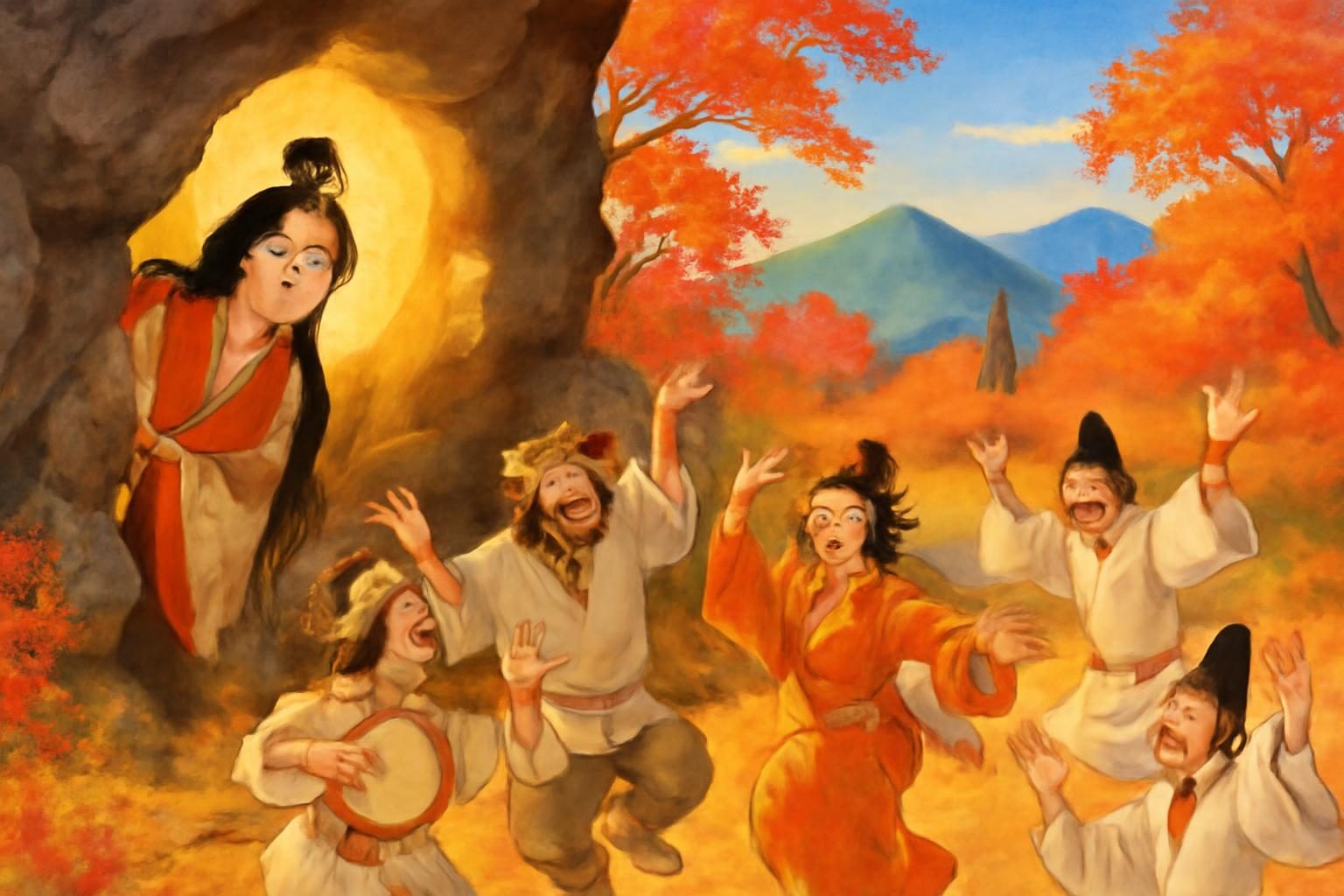
    According to legend, Amaterasu hid herself in a cave called Amano Iwato after a dispute with her brother, Susanoo. Her withdrawal plunged the world into darkness, causing chaos among the gods. To lure her out, the other deities gathered outside the cave, performing dances and making noise. Intrigued by the commotion, Amaterasu peeked out, allowing light to return to the world. This story underscores the shrine’s significance as a symbol of light and renewal. The tale is a vivid illustration of the interplay between light and darkness, a theme that resonates deeply within Shinto mythology.

    This legend is celebrated in various forms, including traditional dances and festivals that reenact the divine events. The story of Amaterasu’s seclusion and return is a powerful metaphor for the cycles of nature and the resilience of life. It serves as a reminder of the importance of harmony and balance, both in the natural world and in human relationships. Visitors to the shrine can feel the weight of this ancient story, as it continues to influence the cultural and spiritual life of the region.

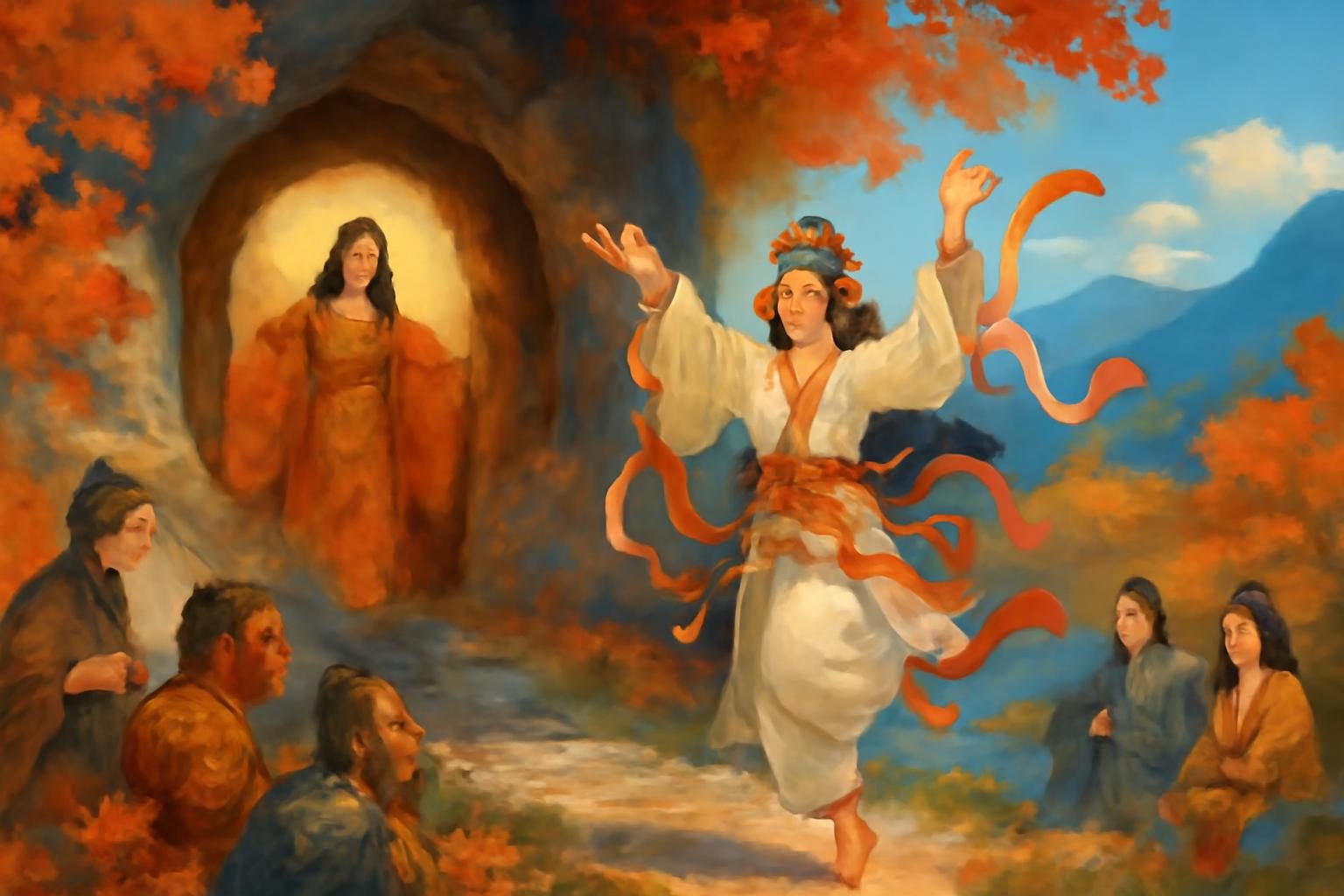
    Amaterasu peeks from a cave as deities dance joyfully in an autumn landscape, symbolizing light and renewal.
    AI生成イメージ / AI-generated illustration (not a photograph of the actual place)

    Amano Iwato Shrine: The Two Sanctuaries and the Sun Goddess Amaterasu

    FACT: The shrine’s layout and significance

    Amano Iwato Shrine consists of two main sanctuaries: the West Shrine and the East Shrine. The West Shrine is situated near the cave where Amaterasu is said to have hidden. Visitors can view the cave from a designated observation point within the shrine grounds. This vantage point allows guests to connect with the legend and imagine the divine events that are said to have taken place there. The East Shrine, located nearby, serves as a place for worship and rituals dedicated to Amaterasu. These sanctuaries are not only places of reverence but also architectural marvels that reflect the harmony between human craftsmanship and natural surroundings.

    The sanctuaries are carefully maintained to preserve their historical and spiritual significance. Visitors are encouraged to participate in the rituals and ceremonies held at the shrines, which provide an opportunity to engage with the local culture and deepen their understanding of Shinto beliefs. The shrine’s layout, with its carefully arranged pathways and sacred spaces, invites contemplation and a sense of connection to the divine. This thoughtful design enhances the spiritual experience, making a visit to Amano Iwato Shrine a journey into the heart of Japanese mythology.

    LEGEND: The role of the deities

    Local tradition holds that the deities who gathered to coax Amaterasu out of hiding played crucial roles in the myth. Among them was Ame-no-Uzume, the goddess of dawn and revelry, whose dance was pivotal in drawing Amaterasu’s attention. This legend highlights the collaborative efforts of the kami (gods) to restore balance to the world. The story of Ame-no-Uzume’s dance is celebrated as a testament to the power of joy and community in overcoming adversity, a theme that continues to inspire cultural practices in the region.

    The dance of Ame-no-Uzume is often depicted in local festivals and performances, where her joyous and spirited movements symbolize the triumph of light over darkness. This celebration of life and renewal is a central theme in many cultural events in Takachiho, where the community comes together to honor their shared heritage. The legend of the deities’ collaboration serves as a reminder of the strength found in unity and the enduring power of hope and perseverance.

    Amanoiwato Shrine (30722535953) - Ema at Amanoiwato Shrine
    “Amanoiwato Shrine (30722535953)” (Ema at Amanoiwato Shrine) by David Stanley from Nanaimo, Canada, CC BY 2.0, source, via Wikimedia Commons

    Journey to Amano Yasukawara: The Riverbed Cave of the Kami

    FACT: Visiting Amano Yasukawara

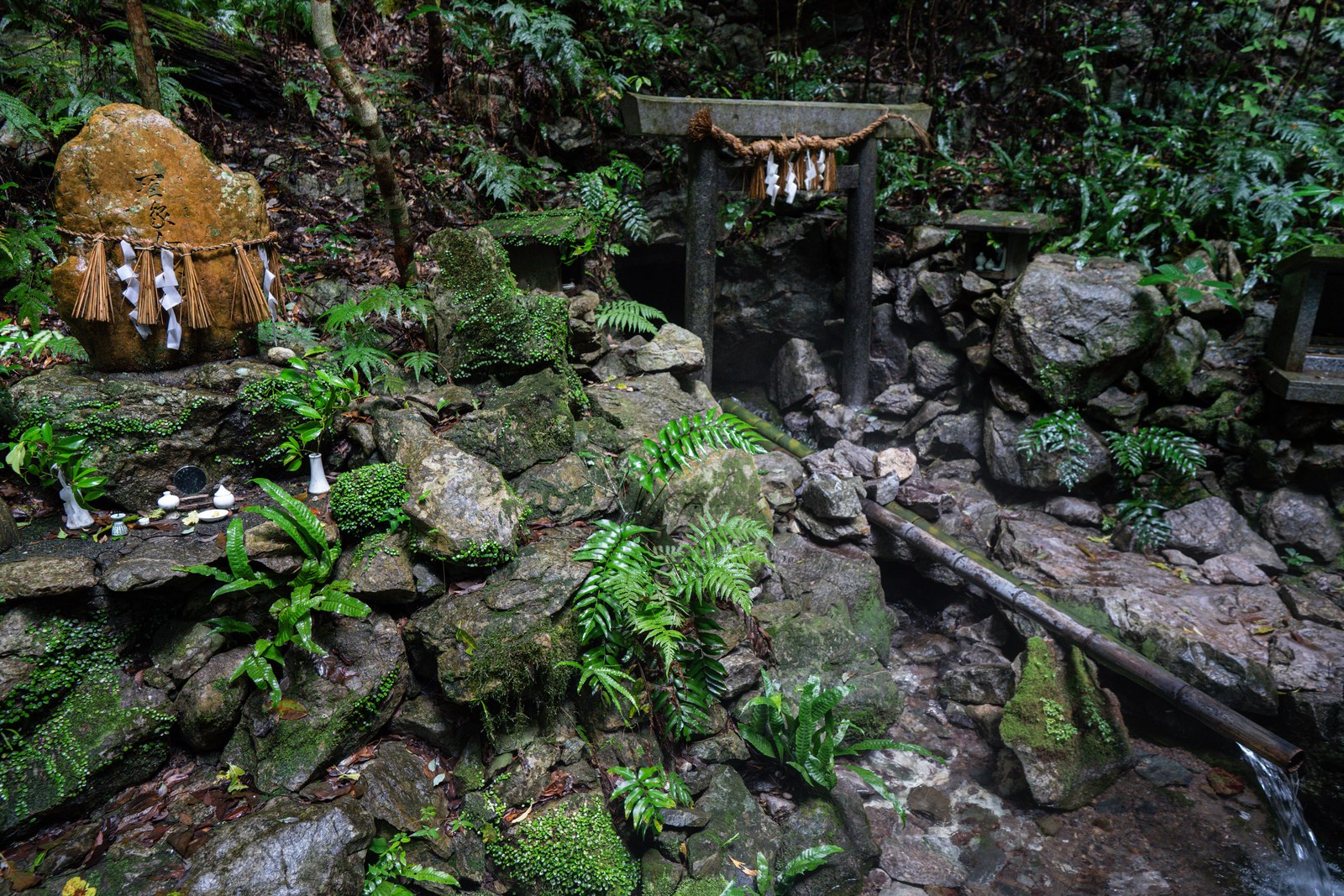
    A short walk from Amano Iwato Shrine leads to Amano Yasukawara, a cave along the Iwato River. This site is believed to be where the gods gathered to discuss how to bring Amaterasu out of hiding. The cave is marked by countless stone stacks, left by pilgrims as offerings and prayers for guidance and protection. The serene environment of Amano Yasukawara provides a contemplative space for visitors, inviting them to reflect on the legends and their own personal journeys.

    As visitors approach the cave, they are greeted by the tranquil sound of the river and the sight of lush greenery surrounding the area. The path to the cave is lined with these stone stacks, each one representing a personal wish or prayer. This tradition of leaving stone offerings is a way for visitors to connect with the divine and participate in a ritual that has been practiced for generations. The peaceful ambiance of Amano Yasukawara encourages introspection and a sense of connection to the myths that have shaped the region’s cultural identity.

    LEGEND: The gathering of the gods

    According to local lore, Amano Yasukawara was the meeting place for the deities who devised the plan to coax Amaterasu from her seclusion. The stones stacked within the cave are said to represent the prayers and hopes of those who visit, echoing the divine assembly’s efforts to restore light to the world. This tradition of stone stacking serves as a tangible connection to the past, allowing modern visitors to participate in an age-old practice that symbolizes hope and unity.

    This gathering of the gods is a central theme in the local storytelling tradition, where it is often recounted as a moment of divine intervention and cooperation. The story emphasizes the importance of collective action and the power of faith in overcoming challenges. The stone stacks at Amano Yasukawara are a testament to this enduring belief, offering a physical representation of the community’s shared hopes and aspirations. Visitors can feel the presence of the past as they contribute their own stones to this living tradition.

    The Sacred Stone Stacks: Pilgrim Offerings Along the River

    FACT: The tradition of stone stacking

    The practice of stacking stones at Amano Yasukawara is a long-standing tradition. Pilgrims and visitors create these stacks as a form of prayer or wish, each stone representing a personal hope or plea. This custom connects modern visitors to the ancient myths that define the region. The act of stacking stones is both a meditative practice and a communal activity, fostering a sense of continuity and shared purpose among those who partake in it.

    Stone stacking is seen as a way to communicate with the divine, offering a tangible expression of one’s desires and intentions. The simplicity of the act belies its profound significance, as each stone represents a connection to the spiritual world. This practice is an integral part of the pilgrimage experience, allowing visitors to leave a lasting mark on the sacred landscape and to participate in a tradition that transcends time and cultural boundaries.

    天岩戸神社の神楽殿 - panoramio - Amanoiwato-jinja, Photos from Panoramio
    “天岩戸神社の神楽殿 – panoramio” (Amanoiwato-jinja, Photos from Panoramio) by sk01, CC BY-SA 3.0, source, via Wikimedia Commons

    Takachiho Yokagura: Reenacting the Ancient Myth Through Dance

    FACT: The Yokagura dance performances

    Takachiho is also famous for its Yokagura dances, which reenact the story of Amaterasu and the other deities. These performances take place annually from November to February, showcasing traditional music, dance, and costumes. The Yokagura serves as both entertainment and a cultural ritual, preserving the myths of Takachiho for future generations. The dances are a vibrant expression of the community’s cultural heritage, bringing the ancient legends to life through dynamic performances that engage both participants and spectators.

    The Yokagura performances are a highlight of the cultural calendar in Takachiho, attracting visitors from across Japan and beyond. Each dance tells a part of the myth, with performers donning elaborate costumes and masks to portray the gods and goddesses. The rhythmic music and expressive movements capture the essence of the story, allowing audiences to experience the drama and emotion of the ancient tales. These performances are not only a celebration of the region’s rich history but also a testament to the enduring power of storytelling in preserving cultural identity.

    Practical Tips for Visiting Amano Iwato Shrine in Miyazaki

    FACT: Planning your visit

    Visitors to Amano Iwato Shrine should check the official website for current hours, fees, and access information. The shrine is accessible by car or local bus services, and the surrounding area offers various amenities for travelers, including restaurants and souvenir shops. Respectful behavior is encouraged, as the site holds deep spiritual significance. Engaging with the local culture and traditions can enrich the experience, providing deeper insights into the spiritual and historical context of this revered site.

    When planning a visit, it is important to consider the cultural norms and practices associated with visiting a sacred site. Visitors are encouraged to approach the shrine with a sense of reverence and mindfulness, participating in the rituals and ceremonies if possible. The local community is welcoming to those who wish to learn about their traditions, offering a unique opportunity to experience the living culture of Takachiho. By respecting the customs and engaging with the local heritage, visitors can gain a deeper appreciation for the spiritual and cultural significance of Amano Iwato Shrine.

    Locator map of Japan: Takachiho, Miyazaki
    Legend site: Takachiho, Miyazaki — Source: Map of Japan with highlight on 45 Miyazaki prefecture.svg; Map: Lincun, CC BY-SA 3.0, via Wikimedia Commons

    Sources

    About the author

    JAPAN ESSENCE Editorial Team
    Our mission is to bring you Japan’s legends, myths, festivals and living traditions, through both historical fact and the stories passed down over generations.

  • The Killing Stone of Nasu: Where Japanese Legend Meets Volcanic Reality

    The Killing Stone of Nasu: Where Japanese Legend Meets Volcanic Reality

    In Nasu, Tochigi Prefecture, lies the infamous Sesshō-seki, or Killing Stone, a site where legend and volcanic reality intertwine. This stone, steeped in myth and natural phenomena, draws visitors intrigued by its mysterious past and geological significance.

    栃木県那須町、殺生石のバナー。ウィキヴォヤージュのバナー。
    “Sessho-seki Nasu Wikivoyage banner” by 663highland, CC BY-SA 3.0, via Wikimedia Commons

    What Is the Sesshō-seki (Killing Stone)?

    FACT: The Stone’s Location and Features

    The Sesshō-seki is located about 200 meters north of Nasu Onsen Shrine in the sulfurous area above Nasu Yumoto Onsen. This volcanic region is renowned for its hot springs and sulfur emissions, which have historically contributed to the stone’s deadly reputation. The stone itself is a large volcanic rock, notable not only for its geological properties but also for its central role in local folklore. Visitors to the area are often captivated by the stark contrast between the serene beauty of the landscape and the ominous tales associated with the stone.

    Surrounded by a landscape of geothermal activity, the stone sits in an area where the earth’s natural forces are visibly at work. The sulfurous fumes that rise from the ground create an otherworldly atmosphere, enhancing the stone’s mysterious allure. The site is accessible to visitors, who can walk along paths that offer views of both the stone and the surrounding natural beauty. The juxtaposition of tranquility and danger is a compelling aspect of the Sesshō-seki, drawing those interested in both natural wonders and cultural myths.

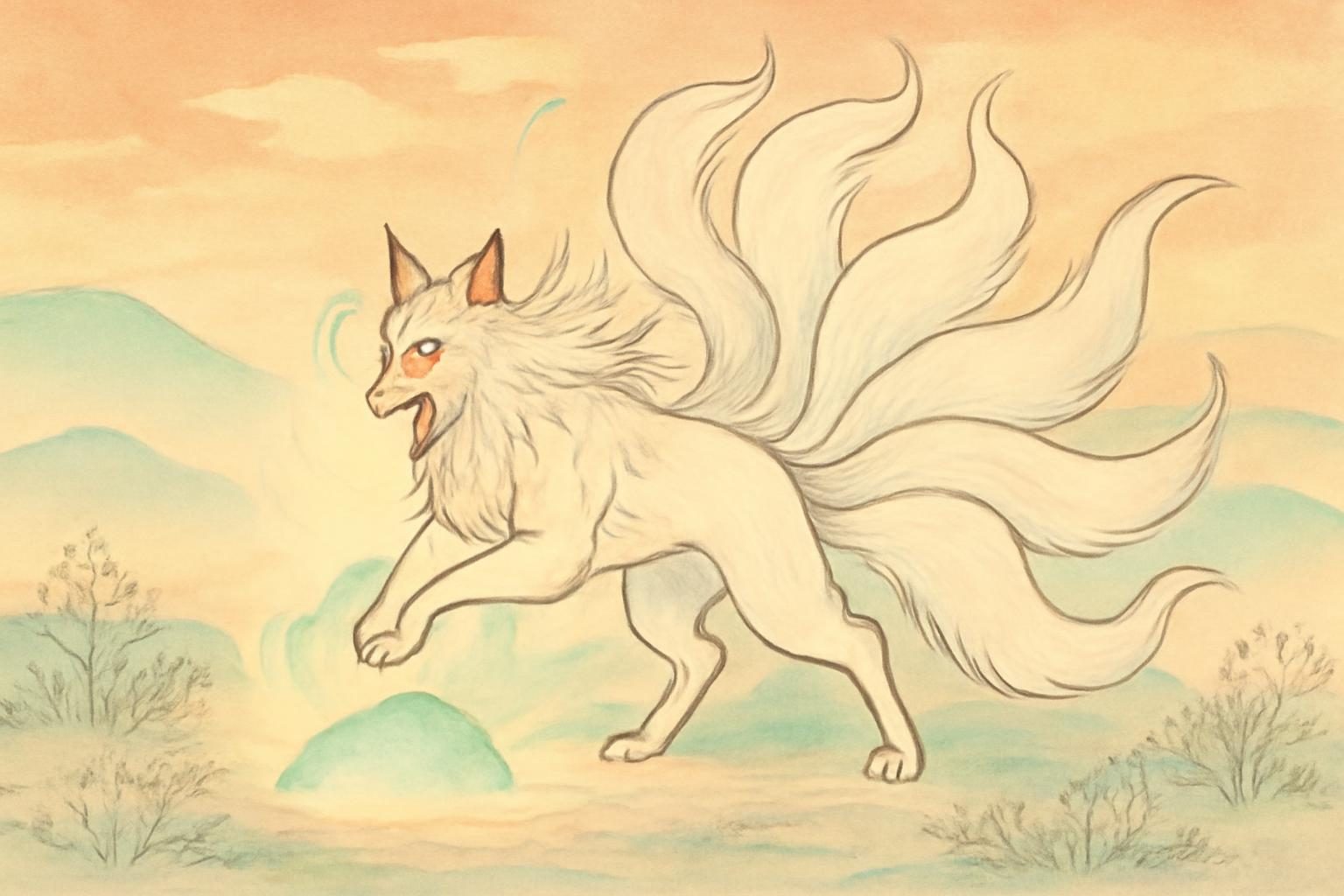
    Nine-tailed fox spirit Tamamo-no-Mae transforms into the Sesshō-seki amidst a Nasu-inspired landscape.
    AI生成イメージ / AI-generated illustration (not a photograph of the actual place)

    The Legend of Tamamo-no-Mae and the Nine-Tailed Fox

    LEGEND: The Story of the Nine-Tailed Fox

    According to local legend, the Sesshō-seki is the transformed body of Tamamo-no-Mae, a beautiful woman who was actually a nine-tailed fox in disguise. This fox spirit is said to have served as a consort to Emperor Toba in the 12th century, bringing chaos and misfortune to the court. When her true identity was discovered, she fled and was eventually hunted down in Nasu, where she turned into the Sesshō-seki. The stone was believed to emanate a poisonous gas that killed anyone who approached it, hence its name, the Killing Stone. The tale of Tamamo-no-Mae is a classic example of the kitsune, or fox spirit, in Japanese folklore, representing both beauty and danger.

    LEGEND: Variants and Local Accounts

    While the core elements of the legend remain consistent, variations exist in different accounts. Some stories suggest that the stone’s deadly nature was due to the spirit of the fox, while others integrate the natural sulfur emissions as part of the legend itself. This blending of myth and reality is a testament to the enduring power of folklore in the region. According to some versions, the gases are seen as the lingering malevolence of the fox spirit, a supernatural explanation that intertwines with the scientific understanding of the area’s geothermal activity.

    In some local narratives, the transformation of Tamamo-no-Mae into the stone is depicted as a dramatic event, with the fox spirit’s cries echoing through the hills of Nasu. These stories often emphasize the cunning and intelligence of the kitsune, traits that are both revered and feared in Japanese culture. The persistence of these tales in local storytelling highlights the cultural significance of the Sesshō-seki as a symbol of the mysterious and the unknown.

    那須温泉神社 - panoramio - Nasu Yuzen-jinja
    “那須温泉神社 – panoramio” (Nasu Yuzen-jinja) by Hiroki Sato, CC BY 3.0, source, via Wikimedia Commons

    Volcanic Reality: Why the Stones Emitted Toxic Gases

    FACT: Geological Explanation

    The Sesshō-seki is situated in a volcanic area known for its geothermal activity. The sulfurous gases emitted from the ground are a natural occurrence in such regions, contributing to the stone’s lethal reputation. These gases, primarily hydrogen sulfide, are indeed toxic and have historically posed a danger to those who ventured too close. This natural phenomenon likely fueled the legend of the stone’s deadly power. The presence of these gases adds a layer of tangible danger to the mythical narrative, making the legend of the Sesshō-seki all the more compelling.

    Geologists studying the area have noted that the volcanic activity is part of a larger geothermal system that includes the famous hot springs of Nasu. The emissions from the ground are a visible reminder of the earth’s dynamic processes, which have shaped both the landscape and the legends of the region. For visitors, the experience of standing near the Sesshō-seki is a visceral reminder of the power of nature, as the smell of sulfur and the sight of steam rising from the ground create a vivid sensory experience.

    Monk Gennō and the Pacification of the Stone

    LEGEND: The Monk’s Intervention

    Legend tells of a monk named Gennō who, upon visiting Nasu, performed rituals to pacify the spirit of the nine-tailed fox. It is said that through his prayers and spiritual efforts, he was able to neutralize the stone’s deadly aura, allowing people to approach it safely. This story highlights the cultural significance of spiritual practices in addressing natural and supernatural threats in Japanese folklore. The intervention of Monk Gennō is often seen as a symbol of the triumph of human spirituality over malevolent forces, reflecting a common theme in many Japanese legends where spiritual purity and dedication can overcome evil.

    The tale of Monk Gennō is celebrated in local folklore as an example of the power of faith and ritual. According to tradition, Gennō’s actions not only made the area safe for travelers and locals but also served as a reminder of the importance of harmony between humans and the spiritual world. This narrative reinforces the idea that spiritual intervention can bring peace and balance to places where natural and supernatural elements converge.

    Nasu Yuzen Shrine from Sessho-seki area - Nasu Yuzen-jinja
    “Nasu Yuzen Shrine from Sessho-seki area” (Nasu Yuzen-jinja) by Miyuki Meinaka, CC BY-SA 4.0, source, via Wikimedia Commons

    Literary History: Matsuo Bashō and the Oku no Hosomichi

    FACT: Bashō’s Journey and the Stone

    The famous haiku poet Matsuo Bashō visited the Sesshō-seki during his travels, as documented in his work “Oku no Hosomichi” (The Narrow Road to the Deep North). Bashō’s writings provide a historical account of the stone’s significance and its place in the cultural landscape of the Edo period. His observations add a literary dimension to the stone’s storied past, blending poetry with the natural and mythical elements of Nasu. Bashō’s visit underscores the stone’s importance not only as a geological feature but also as a cultural and literary landmark that continues to inspire artists and writers.

    Bashō’s reflections on the Sesshō-seki capture the essence of the stone’s mystique, as he weaves together the natural splendor of the landscape with the haunting legends that surround it. His work serves as a testament to the enduring allure of the Sesshō-seki, which has captivated the imaginations of poets and travelers for centuries. For those interested in Japanese literature and history, Bashō’s account offers a glimpse into the cultural significance of the site during his time.

    Recent Events: The Splitting of the Killing Stone

    FACT: Natural Changes and Cultural Impact

    In recent years, the Sesshō-seki has drawn attention due to natural changes in its structure. Reports of the stone splitting have sparked renewed interest and discussions about its cultural and geological significance. Such events remind us of the dynamic nature of geological formations and their ongoing influence on local traditions and beliefs. The splitting of the stone has been interpreted by some as a sign of the fox spirit’s release, adding a new chapter to the legend and reigniting public fascination with this mysterious site.

    The event of the stone splitting has been a topic of both scientific and cultural discourse. Geologists view it as a natural occurrence, while local communities have embraced it as a continuation of the stone’s legendary narrative. This dual perspective highlights the complex relationship between natural phenomena and cultural storytelling, where each informs and enriches the other. The renewed interest in the Sesshō-seki following this event illustrates the stone’s enduring place in the cultural consciousness of Nasu.

    How to Visit Sesshō-seki and Nasu Yumoto Onsen Safely

    FACT: Visiting Tips and Safety Precautions

    Visitors to the Sesshō-seki should exercise caution due to the area’s volcanic activity. It is advisable to stay on designated paths and heed any safety warnings regarding gas emissions. The nearby Nasu Yumoto Onsen offers a chance to experience the region’s geothermal wonders while enjoying the therapeutic benefits of its hot springs. Check the official website for current hours, fees, and access information. As with any natural site, respecting the environment and following safety guidelines ensures a safe and enriching visit.

    For those planning a visit, understanding the balance between enjoying the natural beauty and respecting the potential hazards is key. The area provides an opportunity to witness the intersection of nature’s raw power and cultural heritage, offering a unique experience that is both educational and awe-inspiring. Visitors are encouraged to immerse themselves in the local culture and history, gaining a deeper appreciation for the legends and realities that define this remarkable location.

    Locator map of Japan: Nasu, Tochigi
    Legend site: Nasu, Tochigi — Source: Map of Japan with highlight on 09 Tochigi prefecture.svg; Map: Lincun, CC BY-SA 3.0, via Wikimedia Commons

    Sources

    About the author

    JAPAN ESSENCE Editorial Team
    Our mission is to bring you Japan’s legends, myths, festivals and living traditions, through both historical fact and the stories passed down over generations.

  • Izumo Taisha Kamiari Festival: A Sacred Gathering in Shimane

    Izumo Taisha Kamiari Festival: A Sacred Gathering in Shimane

    Every year, during the lunar tenth month, Izumo Taisha in Izumo, Shimane Prefecture, becomes the focal point of a sacred gathering known as the Kamiari Festival. This event, deeply rooted in Japanese mythology, sees the assembly of deities from across Japan, making it a time of reverence and celebration.

    Izumo Taisha, Shimane. 出雲大社
    “Izumo-taisha 121538651 f69f257ed0 o” by Blue Lotus, CC BY 2.0, via Wikimedia Commons

    What Is Kamiarizuki? The Month the Gods Gather in Izumo

    FACT: The Significance of Kamiarizuki

    Kamiarizuki, meaning “the month with gods,” is a unique period in the Japanese lunar calendar when it is believed that all deities gather at Izumo Taisha. While the rest of Japan refers to this month as Kannazuki, “the month without gods,” Izumo is considered to be the exception, hosting this divine congregation. Izumo Taisha, one of Japan’s most revered shrines, plays a central role in this tradition. The belief in the gathering of deities at Izumo Taisha underscores the shrine’s importance in Shinto spirituality and marks it as a pivotal site for worship and pilgrimage.

    This gathering is not just a spiritual event but also a cultural phenomenon, drawing pilgrims and tourists alike to witness and participate in the rituals. The influx of visitors during this time transforms Izumo into a vibrant hub of activity, where ancient traditions are observed with great solemnity and joy. The month is filled with various ceremonies and events that highlight the rich tapestry of Shinto beliefs, offering a glimpse into the spiritual life of Japan.

    LEGEND: The Mythical Gathering

    According to local legend, during Kamiarizuki, the deities convene at Izumo Taisha to discuss the fates of people and the world. This belief is deeply ingrained in the cultural fabric of Izumo, and the shrine becomes a place of pilgrimage for those wishing to pay their respects and seek blessings. The legend speaks to the spiritual significance of the shrine and the perceived power of the deities to influence human destinies, making it a compelling time for reflection and prayer.

    One account of the legend suggests that the deities gather to deliberate over the year’s events and decide on the fortunes of the people for the coming year. This gathering is seen as a divine council, where matters of great importance are discussed. The atmosphere in Izumo during this time is one of anticipation and hope, as people offer prayers and seek guidance for their personal and communal lives. The legend continues to be a source of inspiration and reverence, illustrating the profound connection between the people of Izumo and their spiritual heritage.

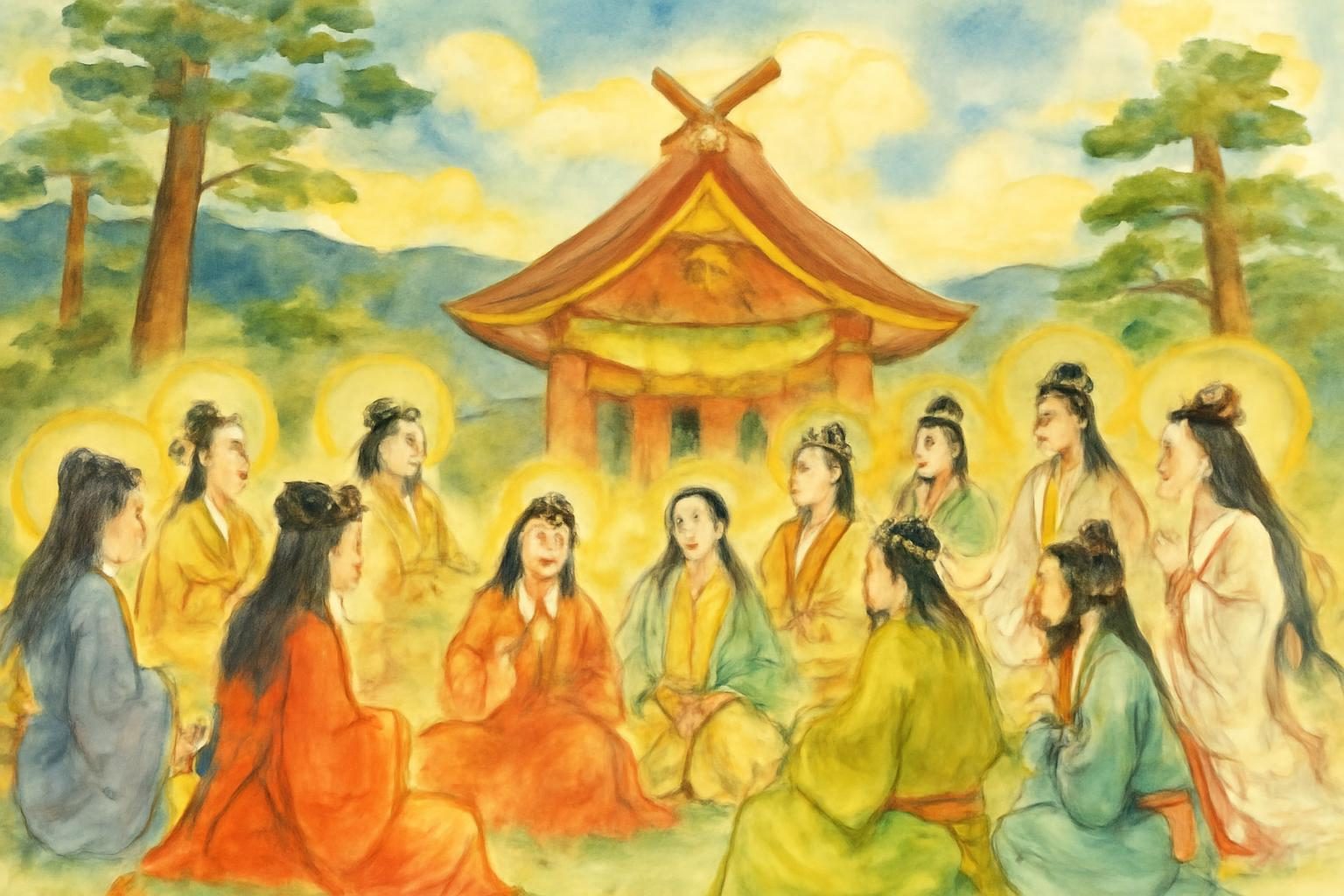
    Deities in vibrant robes gather in Izumo Taisha's lush landscape during Kamiarizuki.
    AI生成イメージ / AI-generated illustration (not a photograph of the actual place)

    The Arrival at Inasa Beach: Welcoming the Deities

    FACT: Rituals at Inasa Beach

    Inasa Beach, located near Izumo Taisha, is the traditional landing spot for the deities arriving for the Kamiari Festival. A ceremonial welcome is held here, where priests and worshippers gather to greet the divine visitors with prayers and offerings. This ritual marks the beginning of the festival and is a significant event for locals and visitors alike. The beach itself becomes a sacred space, transformed by the presence of the deities and the community’s collective reverence.

    The welcoming ceremony at Inasa Beach is a visually striking event, with participants dressed in traditional attire, performing age-old rituals that have been passed down through generations. The sound of waves mingles with the chants of prayers, creating an atmosphere of serene solemnity. This ritual not only signifies the arrival of the deities but also serves as a reminder of the deep-seated traditions that continue to thrive in Izumo, connecting the past with the present.

    Izumo Taisha gardens - Izumo Taisha
    “Izumo Taisha gardens” (Izumo Taisha) by Immanuelle, CC BY 4.0, source, via Wikimedia Commons

    Quiet Reverence: Inside Izumo Taisha During the Festival

    FACT: Unique Worship Practices

    Worship at Izumo Taisha is distinct from other shrines in Japan. The customary practice involves two bows, four claps, and one bow, differing from the typical two bows and two claps. This unique pattern is part of the shrine’s rich tradition and is observed by the multitude of visitors who come during Kamiarizuki. The additional claps are said to invite the attention of the deities more emphatically, emphasizing the special connection between the shrine and the divine assembly.

    This practice reflects the deep respect and reverence the worshippers have for the deities. The sound of the claps resonates through the shrine, creating an echo that symbolizes the call to the divine. Visitors are often guided by shrine staff or locals to ensure they perform the ritual correctly, allowing them to fully partake in the spiritual experience. This distinctive worship etiquette is a testament to the unique identity of Izumo Taisha within the Shinto tradition.

    Sacred Architecture: The Massive Shimenawa of Kaguraden

    FACT: The Iconic Shimenawa

    Izumo Taisha is renowned for its massive shimenawa, a sacred straw rope that hangs at the entrance of the Kaguraden hall. This symbol of purification and protection is one of the largest of its kind and is an iconic feature of the shrine. Visitors often photograph this impressive structure as part of their pilgrimage experience. The shimenawa’s size and presence serve as a powerful reminder of the spiritual weight the shrine carries, marking the boundary between the sacred and the mundane.

    The crafting of the shimenawa involves the skilled hands of local artisans, who imbue it with spiritual significance. As visitors pass beneath it, they are reminded of the protective barrier it represents, safeguarding the shrine from negative influences. The shimenawa is not only a visual marvel but also a tactile connection to the divine, inviting all who enter to reflect on the sanctity of the space they are about to enter.

    Haiden of Izumo-taisha-1 - Haiden of Izumo Taisha
    “Haiden of Izumo-taisha-1” (Haiden of Izumo Taisha) by Saigen Jiro, CC0, source, via Wikimedia Commons

    Unique Customs: Sand Exchange and Izumo Worship Etiquette

    FACT: The Sand Exchange Ritual

    During the Kamiari Festival, a unique custom involves the exchange of sand between Izumo Taisha and other shrines across Japan. This ritual symbolizes the connection and unity among the deities and the places they represent. It is a gesture of goodwill and spiritual solidarity, reinforcing the idea that despite the physical distances, the spiritual realm remains interconnected. This exchange serves as a reminder of the shared cultural and spiritual heritage that binds different regions of Japan together.

    The sand exchange is a subtle yet profound act, representing the flow of spiritual energy between the shrines. It is a tradition that underscores the harmony and cooperation among the deities, reflecting the broader theme of unity that characterizes the Kamiari Festival. Participants in the ritual often feel a sense of belonging and connection to the larger spiritual community, transcending geographical boundaries.

    Pilgrim Flavors: Enjoying Izumo Soba and Red-Bean Zenzai

    FACT: Local Culinary Delights

    Visitors to Izumo during Kamiarizuki can indulge in local specialties such as Izumo soba, served in the distinctive warigo style, and red-bean zenzai, a sweet treat linked to the kamiari-mochi tradition. These dishes are not only culinary delights but also part of the cultural experience of the festival. Izumo soba, known for its robust flavor and served in a tiered box, offers a unique dining experience, while zenzai, with its sweet and comforting taste, connects visitors to the historical and spiritual roots of the region.

    The culinary offerings during Kamiarizuki are a reflection of the region’s rich cultural heritage. Izumo soba, with its earthy taste and traditional presentation, provides a taste of the local landscape and its agricultural bounty. Meanwhile, zenzai, believed to have originated from kamiari-mochi, is a dessert that carries with it the warmth of tradition, offering both nourishment and a connection to the past. These dishes are savored by locals and visitors alike, adding a flavorful dimension to the spiritual journey.

    Locator map of Japan: Izumo, Shimane
    Legend site: Izumo, Shimane — Source: Map of Japan with highlight on 32 Shimane prefecture.svg; Map: Lincun, CC BY-SA 3.0, via Wikimedia Commons

    Regional guide

    Location: Izumo, Shimane Prefecture

    • Izumo soba (warigo style) (Izumo) — source
    • Red‑bean zenzai (kamiari‑mochi origin) (Izumo) — source

    Sources & Further Reading

    About the author

    JAPAN ESSENCE Editorial Team
    Our mission is to bring you Japan’s legends, myths, festivals and living traditions, through both historical fact and the stories passed down over generations.

  • Oshira-sama: Unveiling the Tragic Legend of Tono’s Horse Spirit

    Oshira-sama: Unveiling the Tragic Legend of Tono’s Horse Spirit

    In the heart of Tōno, Iwate Prefecture, lies a tale that intertwines love, tragedy, and the supernatural. This is the story of Oshira-sama, a revered deity with roots deep in Japanese folklore, whose presence is still felt in the region today.

    Location Map of Tono in Iwate Prefecture, Japan
    “Tono in Iwate Prefecture” by user:alberth2, Public domain, via Wikimedia Commons

    Introduction to Oshira-sama and Tono’s Rich Folklore

    FACT: Oshira-sama in Tōno’s Cultural Landscape

    Oshira-sama is a deity deeply embedded in the folklore of Tōno, a city in Iwate Prefecture known for its rich tapestry of myths and legends. The deity is often associated with agriculture and sericulture, symbolizing fertility and prosperity. Oshira-sama effigies, typically made from mulberry wood and adorned with layers of cloth, are a common sight in local households and shrines, embodying the spiritual connection between the people and their land. These effigies not only represent the deity’s protective nature but also serve as a reminder of the region’s reliance on agriculture and silkworm cultivation, which are central to its economy and cultural identity.

    LEGEND: The Daughter and Horse in Tōno Monogatari, Tale 69

    In tale 69 of Yanagita Kunio’s Tōno Monogatari, a father kills a horse by hanging it from a mulberry tree after learning of his daughter’s attachment to it. As she clings to its neck in grief, he cuts off the horse’s head; she and the head rise into the sky. The tale then describes divine images made from that mulberry tree, explaining Oshira-sama’s origin as a legend.

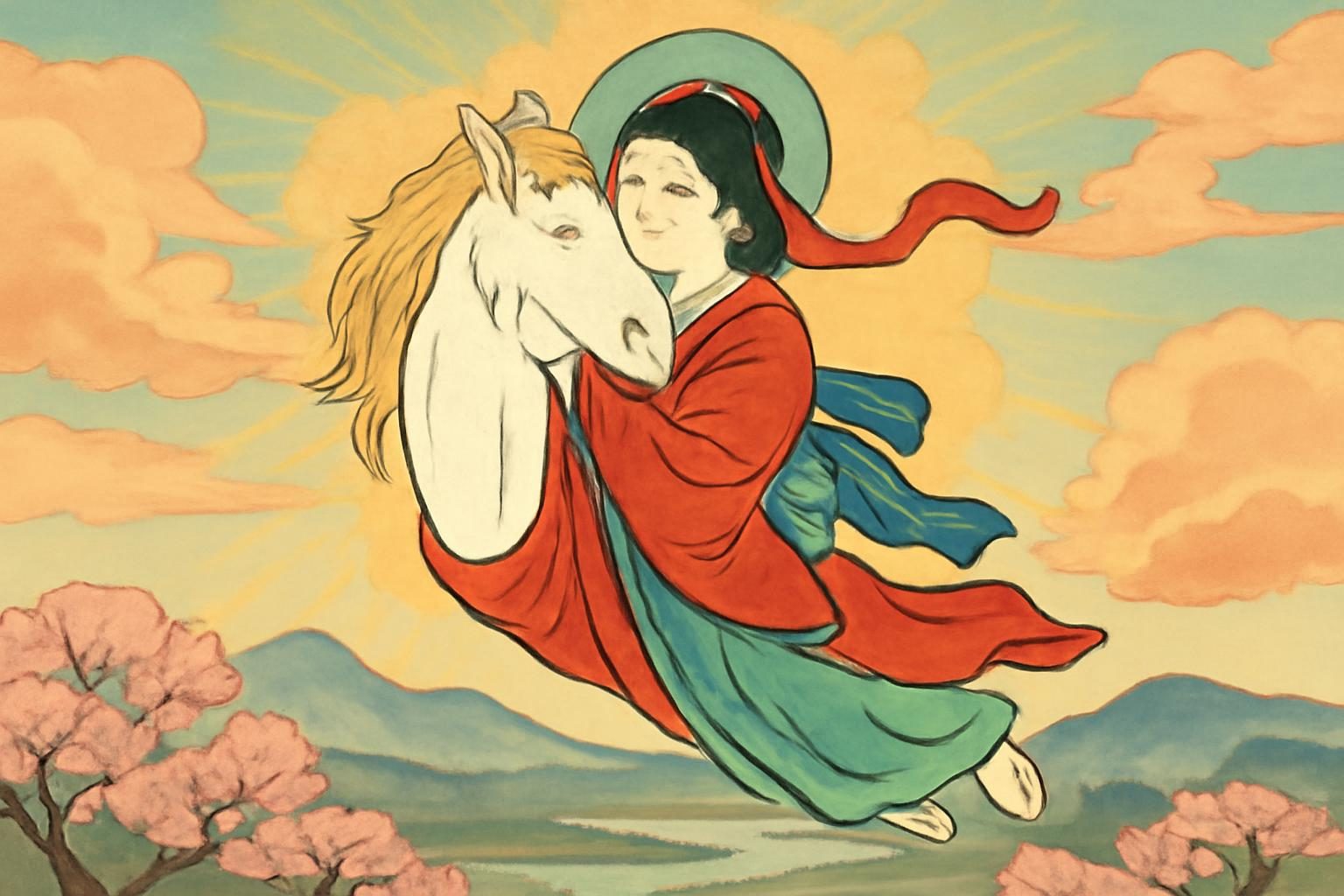
    Oshira-sama, a deity formed from a farmer's daughter and horse, ascending amidst a vibrant Tōno landscape.
    AI生成イメージ / AI-generated illustration (not a photograph of the actual place)

    Who is Oshira-sama? Deities of Agriculture and Silkworms

    FACT: The Role of Oshira-sama in Agriculture

    In Tōno, Oshira-sama is venerated as a protector of agriculture and sericulture. Farmers and silk producers often pray to Oshira-sama for bountiful harvests and successful silk production. The deity’s connection to mulberry trees, which are crucial for silkworm cultivation, underscores its significance in local agricultural practices. Mulberry trees are not only vital for the sustenance of silkworms but also serve as a symbol of continuity and life, reflecting the cyclical nature of agricultural work and the community’s dependence on the land.

    LIVING TRADITION: Osendaku

    Tōno Municipal Museum’s exhibition guide describes a custom of dressing the figures in a new cloth called osendaku on festival days and praying for a good harvest and household safety.

    Tono Denshouen, 遠野 伝承園 - panoramio (2) - Denshoen, Photos from Panoramio
    “Tono Denshouen, 遠野 伝承園 – panoramio (2)” (Denshoen, Photos from Panoramio) by z tanuki, CC BY 3.0, source, via Wikimedia Commons

    Crafting the Deity: Mulberry Wood and Layered Cloth Rituals

    FACT: Oshira-sama Effigies

    Tōno Municipal Museum describes the sacred figures as a pair made from wood such as mulberry. These cloth-dressed wooden images are associated with a faith in Oshira-sama as a deity of the household, sericulture and eyes.

    Visiting Denshōen Park and the Oshirado Hall

    FACT: Denshōen Park as a Cultural Hub

    Denshōen Park in Tōno is home to the Oshirado Hall, where visitors can see 1,000 Oshira-sama effigies. This open-air museum offers a glimpse into the region’s cultural heritage, showcasing the artistry and spiritual traditions associated with Oshira-sama. The park serves as a focal point for those interested in exploring Tōno’s rich folklore. It provides an immersive experience that allows visitors to connect with the historical and spiritual narratives that have shaped the region.

    Tono Denshouen, 遠野 伝承園 - panoramio (8) - Denshoen, Photos from Panoramio
    “Tono Denshouen, 遠野 伝承園 – panoramio (8)” (Denshoen, Photos from Panoramio) by z tanuki, CC BY 3.0, source, via Wikimedia Commons

    Experiencing Traditional Magariya Farmhouses in Iwate

    FACT: The Architecture of Magariya Farmhouses

    The magariya farmhouses, traditional to the Iwate region, offer a unique insight into the lifestyle and architectural ingenuity of the past. These L-shaped structures were designed to accommodate both living quarters and livestock, reflecting the agricultural heritage of the area. The design of these farmhouses is a practical solution to the harsh climate, providing warmth and shelter for both humans and animals, and highlighting the resourcefulness of the local people.

    How Kunio Yanagita and Kizen Sasaki Preserved Tono’s Tales

    FACT: The Role of Folklorists in Preserving Tono’s Legends

    Kunio Yanagita and Kizen Sasaki played pivotal roles in documenting and preserving the folklore of Tōno through works like the Tono Monogatari. Their efforts ensured that stories like that of Oshira-sama were recorded for future generations, highlighting the cultural richness of the region. Their work was instrumental in bringing attention to the unique cultural narratives of rural Japan, which might have otherwise been lost to time.

    CULTURAL HISTORY: The Impact of Tōno Monogatari

    The publication of Tono Monogatari brought the legends of Tōno, including that of Oshira-sama, to a wider audience. This work not only preserved the tales but also sparked interest in Japan’s rural folklore, contributing to a broader understanding of the country’s cultural heritage. The stories captured in this collection continue to inspire and intrigue, offering a window into the spiritual and cultural life of a bygone era.

    Locator map of Japan: Tōno, Iwate
    Legend site: Tōno, Iwate — Source: Map of Japan with highlight on 03 Iwate prefecture.svg; Map: Lincun, CC BY-SA 3.0, via Wikimedia Commons

    Sources

    About the author

    JAPAN ESSENCE Editorial Team
    Our mission is to bring you Japan’s legends, myths, festivals and living traditions, through both historical fact and the stories passed down over generations.

  • The Wolf-Guide of Mount Mitake: Discovering Tokyo’s Sacred Mountain Shrine

    The Wolf-Guide of Mount Mitake: Discovering Tokyo’s Sacred Mountain Shrine

    High above the bustling metropolis of Tokyo, Mount Mitake in Ōme City offers a serene escape into the spiritual world of ancient Japan. At its summit lies Musashi Mitake Jinja, a shrine dedicated to the wolf deity Okuchi-no-Magami, also known as O-inu-sama, revered as a guardian spirit. This sacred site is a place where history, legend, and nature intertwine, providing visitors with a unique glimpse into Japan’s rich cultural tapestry.

    Illustration of a white wolf guiding a warrior through Mount Mitake's vibrant forest.
    AI生成イメージ / AI-generated illustration (not a photograph of the actual place)

    Introduction to Mount Mitake and Musashi Mitake Jinja

    FACT: The Shrine’s Location and Deity

    Musashi Mitake Jinja is located near the summit of Mount Mitake, which stands at approximately 929 meters in Ōme, Tokyo. The shrine enshrines the wolf deity Okuchi-no-Magami, affectionately known as O-inu-sama, who is worshiped as a guardian god. This sacred site attracts visitors seeking spiritual solace and connection with nature. The shrine’s location, high in the mountains, adds to its mystical allure, offering panoramic views of the surrounding landscape and a sense of peace and tranquility.

    Visitors to the shrine can experience the serene environment that has been a place of worship and pilgrimage for centuries. The path leading to the shrine is lined with towering trees, creating a natural canopy that enhances the mystical atmosphere. The journey itself is part of the spiritual experience, inviting introspection and a deeper connection with the natural world.

    The Legend of Yamato-takeru and the White Wolf

    LEGEND: The Story of the White Wolf

    According to local legend, the warrior Yamato-takeru became lost during his eastern expedition on Mount Mitake. A white wolf appeared, guiding him to safety through the dense forest. In gratitude, Yamato-takeru deified the wolf as Okuchi-no-Magami, establishing the foundation for the shrine’s spiritual significance. This tale is a testament to the deep respect and reverence for nature and animals that is woven into the fabric of Japanese culture.

    This legend is not just a story of survival but also a reflection of the symbiotic relationship between humans and nature. The wolf, as a guide and protector, symbolizes the harmony that can exist between the natural and human worlds. It is a reminder of the spiritual beliefs that see animals as messengers and protectors, bridging the gap between the earthly and the divine.

    LEGEND: The Deer-Demon Variant

    Another version of the legend recounts that before the white wolf’s guidance, Yamato-takeru encountered an evil deity disguised as a giant white deer. This malevolent spirit blocked his path, causing him to lose his way in a fog. It was after this encounter that the white wolf appeared to lead him to safety, further solidifying the wolf’s revered status. This variant of the legend adds a layer of drama and intrigue, highlighting the challenges and supernatural elements that are often present in Japanese folklore.

    The presence of the deer-demon in this variant underscores the theme of overcoming obstacles with the help of divine intervention. It emphasizes the belief in supernatural forces at play in the natural world, where deities and spirits can influence human fate. This narrative variation enriches the cultural tapestry of the region, offering multiple layers of meaning and interpretation.

    Ome @ Mount Mitake (13438731803) - Views from Mount Mitake (Tokyo), Cityscapes in Western Tokyo
    “Ome @ Mount Mitake (13438731803)” (Views from Mount Mitake (Tokyo), Cityscapes in Western Tokyo) by Guilhem Vellut from Annecy, France, CC BY 2.0, source, via Wikimedia Commons

    Understanding Okuchi-no-Magami: The Wolf as a Guardian Deity

    FACT: The Cultural Role of O-inu-sama

    Okuchi-no-Magami, or O-inu-sama, is venerated not only as a protector of travelers but also as a guardian of homes. During the Edo period, the O-inu-sama cult spread throughout the Kantō region, with Oshi priests distributing protective woodblock talismans bearing the wolf’s image. These talismans were believed to ward off evil and bring good fortune. The image of the wolf as a guardian reflects the broader cultural symbolism of wolves in Japan, where they are often seen as protectors and guides.

    The talismans served as a tangible connection to the divine, allowing individuals to invite the protective presence of O-inu-sama into their homes. This practice illustrates the integration of spiritual beliefs into daily life, where the divine is not distant but actively engaged in the well-being of the community. The widespread distribution of these talismans highlights the popularity and influence of the wolf deity during this period.

    Edo Period Traditions: The Spread of O-inu-sama Talismans

    FACT: Talismans and Their Significance

    In the Edo period, the image of O-inu-sama was widely disseminated through woodblock prints. These talismans were placed at house entrances as apotropaic charms, believed to protect the inhabitants from harm. The spread of these talismans helped to solidify the cult of O-inu-sama across the region. The practice of using talismans as protective charms is deeply rooted in Japanese tradition, reflecting a belief in the power of symbols to influence the spiritual realm.

    These talismans were more than just protective symbols; they were a testament to the community’s shared beliefs and values. By placing them at their doorways, families expressed their trust in the protective power of O-inu-sama, reinforcing communal ties through a shared spiritual practice. This tradition exemplifies the enduring nature of cultural practices that adapt over time while maintaining their core significance.

    Torii @ Trail from Mount Hinode to Mount Mitake (13438742333) - Geography of Ome, Tokyo, Torii in Tokyo
    “Torii @ Trail from Mount Hinode to Mount Mitake (13438742333)” (Geography of Ome, Tokyo, Torii in Tokyo) by Guilhem Vellut from Annecy, France, CC BY 2.0, source, via Wikimedia Commons

    Mount Mitake and Chichibu Mitsumine: A Kantō Mountain-Cult Pair

    FACT: The Connection Between Shrines

    Musashi Mitake Jinja and Mitsumine Shrine in Chichibu form a pair within the Kantō region’s mountain-cult tradition centered on wolf-worship. This pairing highlights the cultural significance of mountain shrines and the enduring reverence for the wolf deity. The relationship between these two shrines underscores a shared spiritual heritage and a common cultural identity centered on the veneration of nature and its guardians.

    The duality of these shrines represents a broader cultural narrative where sacred sites are linked through shared deities and traditions. Pilgrims visiting these shrines participate in a spiritual journey that connects them to the ancient past, fostering a sense of continuity and belonging. The pairing of these shrines is a testament to the regional integration of spiritual practices, reflecting a unified cultural landscape.

    Modern Pilgrimages: Dog-Loving Worshippers at Mount Mitake

    FACT: Contemporary Worship Practices

    Today, Musashi Mitake Jinja continues to attract worshippers, particularly those with a fondness for dogs. The shrine features dog-friendly water basins, where visitors can bless their canine companions, reflecting the enduring connection between the shrine’s wolf deity and modern pet culture. This contemporary practice is a testament to the adaptability of traditional beliefs, allowing them to remain relevant in a modern context.

    The inclusion of dogs in the shrine’s rituals is a modern adaptation that resonates with today’s pet-loving society. It highlights the shrine’s ability to evolve and incorporate contemporary values while maintaining its historical roots. This practice not only honors the wolf deity but also strengthens the bond between humans and animals, echoing the ancient legends of guidance and protection.

    Planning Your Visit to Mount Mitake from Tokyo

    FACT: Access and Visitor Information

    To visit Musashi Mitake Jinja, travelers can take a train from central Tokyo to Ōme, followed by a bus or cable car to the mountain. The journey offers a scenic escape from the city, with opportunities for hiking and exploring the natural beauty of Mount Mitake. Visitors can immerse themselves in the tranquil surroundings and experience the spiritual ambiance that has drawn pilgrims for centuries. Check the official website for current hours, fees, and access details.

    The journey to Mount Mitake is as much a part of the experience as the destination itself. As visitors ascend the mountain, they are invited to leave behind the hustle of urban life and enter a realm of peace and reflection. The path to the shrine is an opportunity to engage with the landscape, offering moments of quiet contemplation and a deeper appreciation for the natural world.

    Locator map of Japan: Ōme, Tokyo
    Legend site: Ōme, Tokyo — Source: Map of Japan with highlight on 13 Tokyo prefecture.svg; Map: Lincun, CC BY-SA 3.0, via Wikimedia Commons

    Sources

    About the author

    JAPAN ESSENCE Editorial Team
    Our mission is to bring you Japan’s legends, myths, festivals and living traditions, through both historical fact and the stories passed down over generations.

  • Tracing the Mythic Descent of Ninigi-no-Mikoto at Takachiho Gorge

    Tracing the Mythic Descent of Ninigi-no-Mikoto at Takachiho Gorge

    Takachiho Gorge in Miyazaki Prefecture is a place where myth and nature intertwine, offering visitors a glimpse into Japan’s rich tapestry of legends. Known as the legendary site where Ninigi-no-Mikoto descended to earth, the gorge and its surroundings are steeped in spiritual significance and natural beauty.

    Statue of Ninigi-no-mikoto at Kunimigaoka Viewpoint, Takachiho, Miyazaki, Japan
    “Ninigi-no-mikoto statues at Kunimigaoka” by STA3816, CC BY-SA 3.0, via Wikimedia Commons

    Introduction to Takachiho and the Tenson Kōrin Myth

    FACT: What the records say

    According to the ancient texts of Kojiki and Nihon Shoki, Ninigi-no-Mikoto, the grandson of the sun goddess Amaterasu, descended from the heavenly realm to “Takachiho in Hyūga.” This event, known as the Tenson Kōrin, marked the beginning of the imperial lineage in Japan, as Ninigi brought with him the Three Sacred Treasures. These treasures, consisting of a mirror, a sword, and a jewel, symbolize the divine right of the Japanese emperors to rule. The descent is said to have occurred in Takachiho, a town that continues to celebrate its mythic heritage through various cultural practices and sites.

    LEGEND: The story told in Takachiho

    According to local legend, Takachiho Gorge is the very site where Ninigi-no-Mikoto made his descent to earth. The dramatic volcanic landscape, carved by the Gokase River, is believed to have been the divine pathway for Ninigi’s arrival. This mythological connection has made Takachiho a focal point for visitors seeking to connect with Japan’s ancient past. The gorge’s ethereal beauty, with its towering cliffs and cascading waterfalls, serves as a natural backdrop that enhances the mystical aura of the legend.

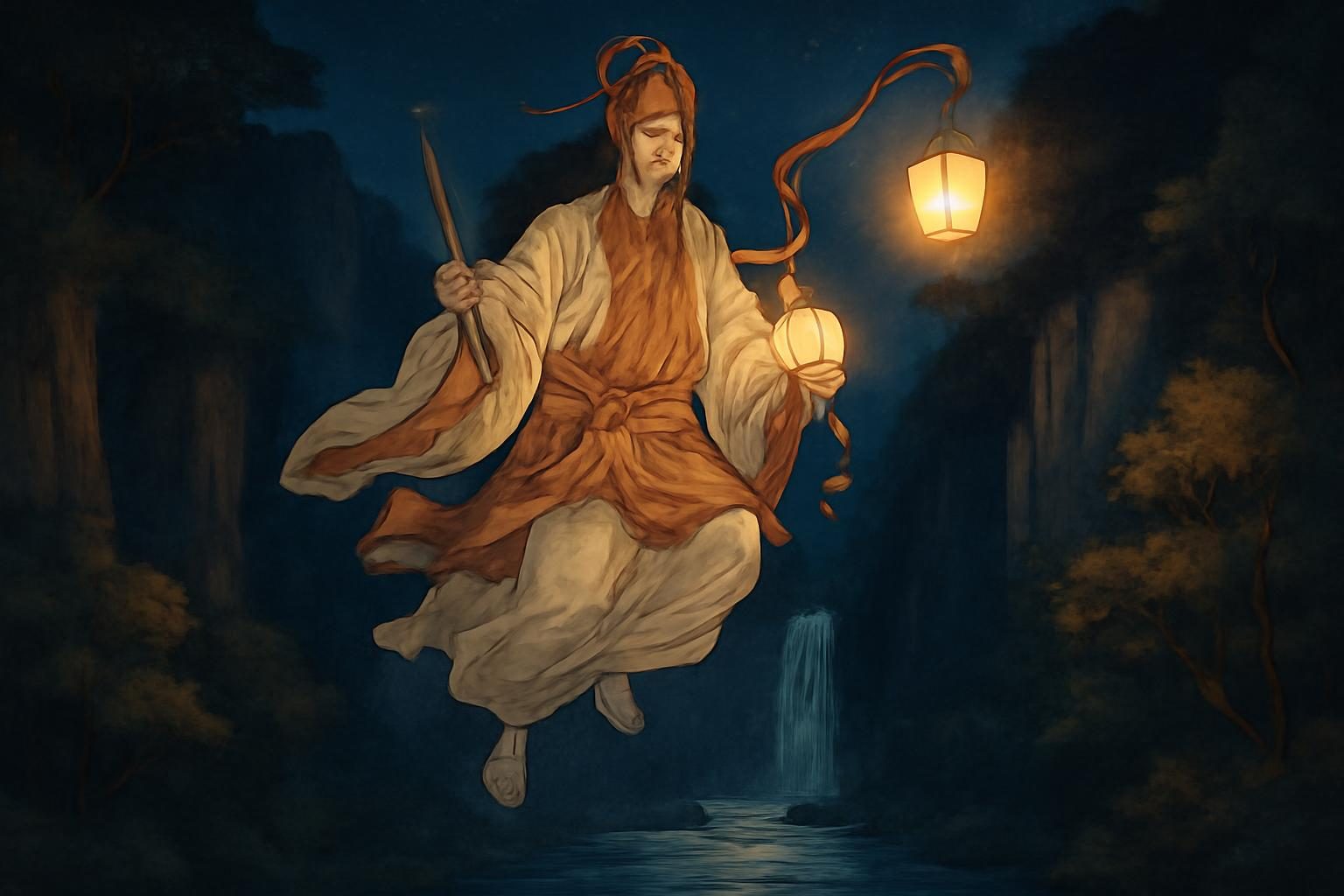
    Ninigi-no-Mikoto descends with sacred treasures in a lantern-lit Takachiho Gorge at night.
    AI生成イメージ / AI-generated illustration (not a photograph of the actual place)

    Takachiho Gorge: The Volcanic Landscape of the Gods

    FACT: The natural wonder

    Takachiho Gorge is a stunning natural formation created by the volcanic activity of Mount Aso. The Gokase River runs through the gorge, forming breathtaking waterfalls and sheer cliffs that rise dramatically on either side. Visitors can explore the gorge by boat or on foot, taking in the lush surroundings and the iconic Manai Falls, which add to the mystical atmosphere of the place. The gorge is particularly famous for its emerald-green waters and the unique columnar basalt formations that line its walls, offering a visual feast for nature lovers and photographers alike.

    LEGEND: A sacred descent

    The gorge is not just a natural wonder but also a sacred site. According to legend, it was here that Ninigi-no-Mikoto descended to establish the imperial line. The gorge’s beauty and spiritual significance make it a place of pilgrimage for those interested in Japanese mythology and history. As visitors traverse the gorge, they are often struck by the serene and otherworldly ambiance that seems to echo the divine footsteps of Ninigi himself.

    Takachiho-gorge - Takachihokyo
    “Takachiho-gorge” (Takachihokyo) by Takasunrise0921, CC BY 2.5, source, via Wikimedia Commons

    Kushifuru Shrine and the Sacred Mountaintop Descent

    FACT: The shrine’s significance

    Kushifuru Shrine stands halfway up Kushifuru Peak in Takachiho, marking the sacred site of Ninigi-no-Mikoto’s descent. The shrine is dedicated to Ninigi and serves as a tangible connection to the divine event. Visitors can reach the shrine via a trail that offers panoramic views of the surrounding landscape, enhancing the spiritual experience. The shrine itself is a modest yet profound structure, where the air is filled with the scent of cedar and the sound of rustling leaves, inviting contemplation and reverence.

    LEGEND: The divine peak

    Legend holds that Kushifuru Peak is where Ninigi first set foot on earth. The shrine commemorates this event, and the peak itself is considered a sacred space where the heavens and earth once met. Pilgrims and tourists alike visit the shrine to pay their respects and absorb the tranquil atmosphere. The journey to the shrine is often seen as a pilgrimage, a chance to walk in the footsteps of the divine and to reflect on the profound connection between the celestial and the terrestrial.

    Takachiho-jinja Shrine: Centuries of Worship

    FACT: The historical shrine

    Takachiho-jinja Shrine, founded approximately 1,900 years ago, enshrines Ninigi-no-Mikoto among other deities. It is a central place of worship in Takachiho and hosts nightly Kagura dance performances that reenact the myths of the area. The shrine’s long history and cultural significance make it a must-visit for those exploring the region’s spiritual heritage. The architecture of the shrine, with its traditional wooden structures and serene garden, offers a glimpse into the past, where the divine and the earthly coexist in harmony.

    LEGEND: The home of the gods

    According to legend, Takachiho-jinja Shrine is a gathering place for the gods, where they convene to watch the Kagura dances. These performances, which depict the descent of Ninigi and other myths, are a vibrant expression of Takachiho’s living tradition and offer a unique insight into Japan’s mythological past. The dances are performed with elaborate costumes and masks, accompanied by traditional music, creating an immersive experience that transports the audience back to the time of the gods.

    Takachiho gorge bridges - Shinto Takachiho Bridge
    “Takachiho gorge bridges” (Shinto Takachiho Bridge) by Kenta Mabuchi from Fukuoka, Japan, CC BY-SA 2.0, source, via Wikimedia Commons

    The Takachiho Yokagura: Reenacting Ancient Myths

    FACT: The dance tradition

    The Takachiho Yokagura is a cycle of 33 masked dances performed from mid-November to early February. These dances reenact various myths, including the descent of Ninigi-no-Mikoto, and are held in private homes and as nightly shortened shows at Takachiho-jinja Shrine. The performances are an integral part of Takachiho’s cultural identity, drawing visitors from across Japan and beyond. Each dance tells a story, often involving themes of creation, conflict, and resolution, reflecting the complexities of the human condition and its divine influences.

    LEGEND: A night with the gods

    Legend has it that during the Takachiho Yokagura, the gods descend to earth to witness the performances. The dances are believed to invite divine presence, creating a bridge between the human and spiritual worlds. For participants and spectators, the Yokagura is more than entertainment; it is a sacred ritual that connects them to the divine. The atmosphere during these performances is charged with a sense of awe and reverence, as the boundary between the mortal and the immortal becomes blurred.

    Locator map of Japan: Takachiho, Miyazaki
    Legend site: Takachiho, Miyazaki — Source: Map of Japan with highlight on 45 Miyazaki prefecture.svg; Map: Lincun, CC BY-SA 3.0, via Wikimedia Commons

    Regional guide

    Location: Takachiho, Miyazaki Prefecture

    • Nagashi Sōmen at Takachiho Gorge teahouse (Takachiho) — source
    • Takachiho Gorge (Takachiho) — source
    • Kushifuru Shrine (Takachiho) — source
    • Takachiho-jinja Shrine (Takachiho) — source
    • Takachiho Yokagura performances (Takachiho) — source

    Sources

    About the author

    JAPAN ESSENCE Editorial Team
    Our mission is to bring you Japan’s legends, myths, festivals and living traditions, through both historical fact and the stories passed down over generations.

  • Yatagarasu Kumano Hongu Taisha: The Guiding Crow of Japan’s Sacred Path

    Yatagarasu Kumano Hongu Taisha: The Guiding Crow of Japan’s Sacred Path

    In the heart of Wakayama Prefecture, a mystical legend unfolds at Kumano Hongu Taisha, where the divine Yatagarasu, a three-legged crow, is said to have guided Emperor Jimmu through the mountainous terrain of Kumano. This sacred site, part of the Kumano Sanzan, offers a glimpse into Japan’s spiritual heritage and the enduring power of myth.

    Yatagarasu, Kumano Hongū Taisha
    “Yatagarasu, Kumano Hongū Taisha” by hirotomo, CC BY-SA 2.0, via Wikimedia Commons

    Introduction to Yatagarasu: The Mythical Three-Legged Crow

    FACT: What the records say about Yatagarasu

    The Yatagarasu, a mythical three-legged crow, is a prominent figure in Japanese mythology, often symbolizing guidance and divine intervention. According to historical texts such as the Nihon Shoki and Kojiki, Yatagarasu is credited with leading Emperor Jimmu, the legendary first emperor of Japan, through the treacherous mountains of Kumano, ensuring the success of his journey. This crow is not just a mythical creature but a representation of divine will, often depicted in religious and cultural artifacts across the region.

    In various depictions, Yatagarasu is shown with three legs, each leg representing one of the three realms: heaven, earth, and humanity. This symbolism underscores its role as a bridge between the divine and the mortal, guiding humans with celestial wisdom. The crow’s image is a common motif in the region, appearing on talismans, flags, and even in the architecture of shrines, reminding visitors of its legendary guidance.

    LEGEND: Yatagarasu’s guidance of Emperor Jimmu

    According to legend, Emperor Jimmu, during his conquest to unify Japan, found himself lost in the dense forests of Kumano. It was then that Yatagarasu appeared, guiding him safely through the mountains. This divine intervention is celebrated at Kumano Hongu Taisha, where the crow is revered as a symbol of heavenly guidance. The story of Yatagarasu not only highlights the crow’s role as a divine guide but also emphasizes the spiritual significance of the Kumano region as a place where the divine interacts with the earthly realm.

    This legend is deeply embedded in the cultural consciousness of the area, influencing local customs and festivals. It is said that the presence of Yatagarasu ensures safe passage and success, a belief that continues to draw pilgrims and tourists alike to the sacred sites of Kumano.

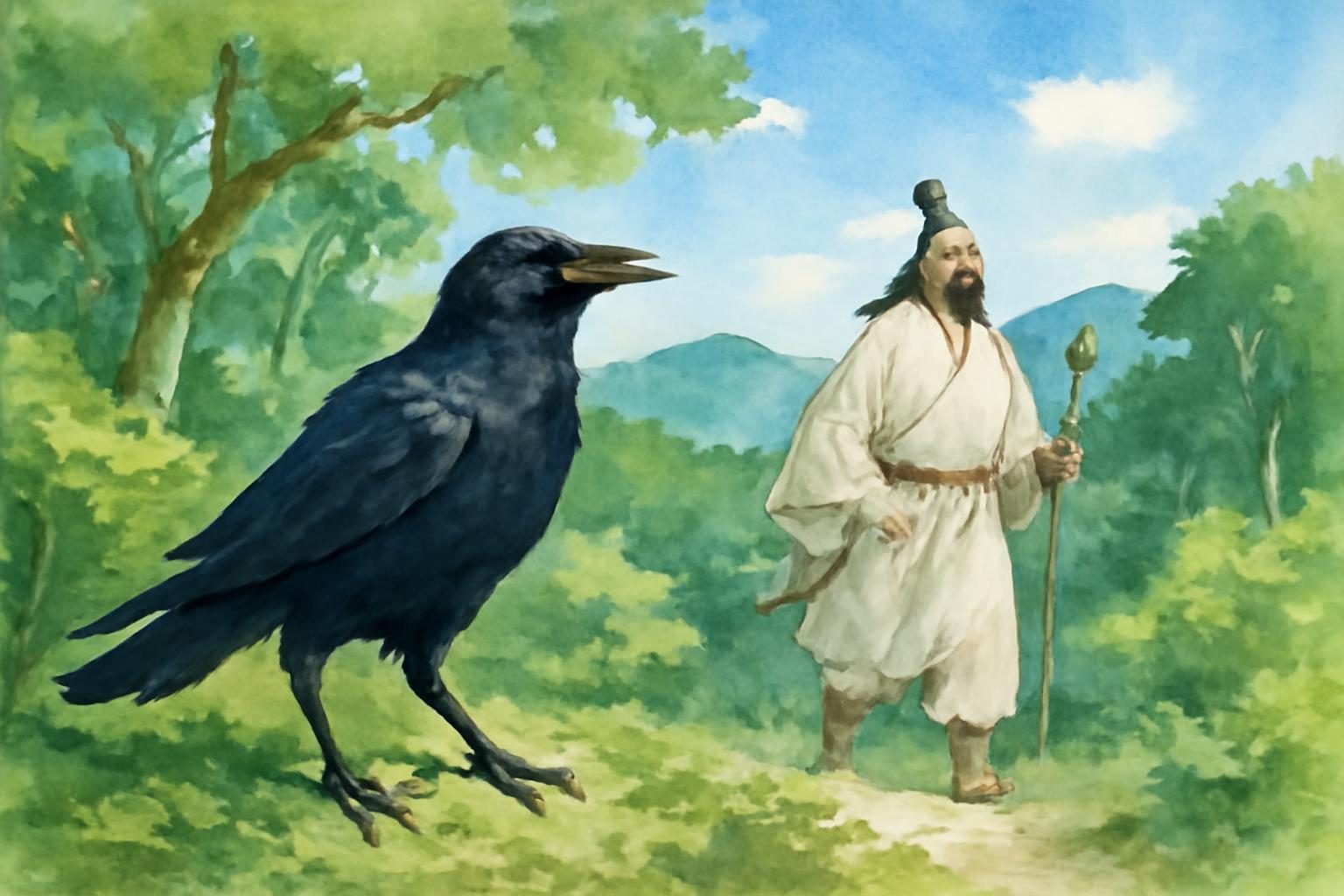
    Yatagarasu guides Emperor Jimmu through Kumano's lush, sunlit forest.
    AI生成イメージ / AI-generated illustration (not a photograph of the actual place)

    Kumano Hongu Taisha: Heart of the Sacred Kumano Sanzan

    FACT: The significance of Kumano Hongu Taisha

    Kumano Hongu Taisha, located in the Hongū area of Tanabe city, is one of the three grand shrines of Kumano, collectively known as the Kumano Sanzan. It serves as the head shrine of over 3,000 Kumano shrines nationwide. The shrine’s current location was established after a devastating flood in 1889, which led to its relocation to a safer, higher ground. This move not only preserved the shrine’s physical structure but also its spiritual essence, allowing it to continue serving as a focal point for worship and pilgrimage.

    The architecture of Kumano Hongu Taisha is a testament to traditional Japanese shrine design, incorporating natural materials and a harmonious integration with the surrounding landscape. Visitors can experience a sense of tranquility and reverence as they explore the shrine grounds, which are steeped in history and spiritual significance. The shrine’s role as a spiritual hub is further emphasized by its connection to the Kumano Kodo pilgrimage routes, which are recognized as UNESCO World Heritage Sites.

    LEGEND: The spiritual journey to Kumano Hongu Taisha

    For centuries, pilgrims have traveled the Kumano Kodo pilgrimage routes, now recognized as UNESCO World Heritage Sites, to reach Kumano Hongu Taisha. The journey is seen as a spiritual quest, with Yatagarasu often depicted on talismans and flags, symbolizing the guidance and protection offered to those who undertake this sacred path. The pilgrimage is not only a physical journey but also a spiritual one, inviting participants to reflect on their own lives and seek divine guidance.

    The routes themselves are a testament to the enduring spiritual significance of the region, winding through lush forests, past ancient shrines, and along scenic vistas. Each step taken by pilgrims is imbued with the history and legends of those who have walked the paths before them, creating a deep sense of connection to the past and the divine.

    Tanabe Kumano Hongu-Taisha Honden Hongu 5 - Hongu, Kumano Hongu Taisha
    “Tanabe Kumano Hongu-Taisha Honden Hongu 5” (Hongu, Kumano Hongu Taisha) by Zairon, CC BY 4.0, source, via Wikimedia Commons

    Stepping Back in Time at Oyunohara and the World’s Largest Torii Gate

    FACT: The history of Oyunohara

    Oyunohara, the original site of Kumano Hongu Taisha, is marked by a massive steel torii gate, the largest in the world at approximately 33-34 meters tall. This site, located at the confluence of the Kumano and Otonashi Rivers, remains a significant place of worship and pilgrimage, despite the shrine’s relocation. The torii gate stands as a monumental symbol of the transition from the earthly to the sacred, inviting visitors to step into a realm of spiritual reflection and reverence.

    The site of Oyunohara is imbued with historical and spiritual significance, serving as a reminder of the shrine’s origins and its enduring presence in the region. Pilgrims and visitors alike are drawn to this site, where they can experience the profound sense of history and spirituality that permeates the air.

    LEGEND: The symbolism of the torii gate

    The torii gate at Oyunohara is more than just an entrance; it symbolizes the threshold between the mundane world and the sacred. According to legend, the crest of Yatagarasu on the gate serves as a reminder of the divine guidance that has been a part of Kumano’s spiritual heritage for centuries. The gate’s imposing presence and the sacred symbols it bears invite contemplation and reverence, offering a tangible connection to the divine.

    Visitors to Oyunohara can reflect on the legends and history that have shaped the region, gaining a deeper understanding of the cultural and spiritual landscape of Kumano. The torii gate stands as a testament to the enduring power of myth and the sacred, inviting all who pass beneath it to embark on their own spiritual journey.

    Symbols and Traditions: Talismans and the Yata-no-Hi Matsuri Festival

    FACT: The Yatagarasu shinji ritual

    At Kumano Hongu Taisha, the Yatagarasu shinji, or ‘jewel-stamp rite’, is held annually on January 7th. This purification ritual involves stamping crow imagery on talismans, which are believed to offer protection and guidance to the faithful. The ritual is a deeply symbolic act, connecting participants to the divine power of Yatagarasu and reinforcing the spiritual connection between the shrine and its devotees.

    The talismans created during the Yatagarasu shinji are cherished by those who receive them, serving as a tangible reminder of the divine guidance and protection offered by the three-legged crow. These talismans are often kept as personal amulets or given as gifts to loved ones, spreading the blessings of Yatagarasu far and wide.

    FACT: The Yata-no-Hi Matsuri Festival

    The Yata-no-Hi Matsuri, held annually on the last Saturday of August at Oyunohara, is a vibrant celebration featuring a flaming mikoshi in the likeness of Yatagarasu, taiko drumming, dancing, and fireworks. This festival honors the crow’s role as a divine messenger and protector. The festival is a lively and colorful event, drawing participants and spectators from across the region to celebrate the enduring legacy of Yatagarasu.

    The spectacle of the flaming mikoshi, carried through the night by enthusiastic participants, is a highlight of the festival, symbolizing the crow’s guiding light and divine intervention. The rhythmic beats of taiko drums and the vibrant energy of traditional dances create an atmosphere of joy and reverence, bringing the legend of Yatagarasu to life in a dynamic and engaging way.

    Tanabe Kumano Hongu-Taisha Honden Hongu 4 - Hongu, Kumano Hongu Taisha
    “Tanabe Kumano Hongu-Taisha Honden Hongu 4” (Hongu, Kumano Hongu Taisha) by Zairon, CC BY 4.0, source, via Wikimedia Commons

    Tracing the Legend: Exploring Nachikatsuura and the Wider Kumano Region

    LEGEND: Yatagarasu’s transformation in Nachikatsuura

    In Nachikatsuura, the Miagatahiko-sha shrine on the grounds of Kumano Nachi Taisha features a bronze statue of Yatagarasu. According to local legend, the crow transformed into a stone at this site, further cementing its place in the spiritual landscape of Kumano. This transformation is a testament to the crow’s enduring presence and influence in the region, highlighting its role as a symbol of divine intervention and protection.

    The statue at Miagatahiko-sha serves as a focal point for visitors, inviting them to reflect on the legend and its significance. The story of Yatagarasu’s transformation into stone is a powerful reminder of the crow’s divine nature and its lasting impact on the spiritual heritage of Kumano. Visitors to the shrine can explore the grounds, taking in the natural beauty and spiritual ambiance that define this sacred space.

    Locator map of Japan: Tanabe (Hongū), Wakayama
    Legend site: Tanabe (Hongū), Wakayama — Source: Map of Japan with highlight on 30 Wakayama prefecture.svg; Map: Lincun, CC BY-SA 3.0, via Wikimedia Commons

    Regional guide

    Location: Tanabe (Hongū), Wakayama Prefecture

    • Kumano Goō Hōin talisman (Tanabe (Hongū)) — source
    • Ōyunohara (former site of Kumano Hongū Taisha) and its giant torii (Tanabe (Hongū)) — source
    • Kumano Hongū Taisha (current shrine) (Tanabe (Hongū)) — source

    Sources

    About the author — JAPAN ESSENCE Editorial Team. Our mission is to bring you Japan’s legends, myths, festivals and living traditions, through both historical fact and the stories passed down over generations.

  • Tracing the Yamata no Orochi Legend Along Shimane’s Hii River

    Tracing the Yamata no Orochi Legend Along Shimane’s Hii River

    In Unnan City, Shimane Prefecture, the Hii River flows through a landscape steeped in myth and legend, where the storm god Susanoo is said to have vanquished the fearsome eight-headed serpent, Yamata no Orochi. This legendary tale is deeply woven into the cultural and historical fabric of the region, inviting visitors to explore its storied past.

    Nippon ryakushi, “A Brief History of Japan”. The Goddess Amaterasu Omikami's younger brother, Susanoo no Mikoto, was banished
    “Susanoo-no-Mikoto-slays-Yamata-no-Orochi-in-Izumo-By-Tsukioka-Yoshitoshi” by Yoshitoshi, Public domain, via Wikimedia Commons

    Introduction to the Yamata no Orochi Legend in Shimane

    FACT: The Myth’s Historical Roots

    The Yamata-no-Orochi myth is one of Japan’s most famous legends, recounting the story of the storm god Susanoo who defeated an eight-headed serpent. This tale is not only a captivating story but also a reflection of the region’s historical and cultural landscape. The Hii River, a central element in the myth, has been associated with this legend for centuries, symbolizing both the natural beauty and the mythological richness of Shimane Prefecture. The river’s presence in the legend underscores its importance as a lifeline for the communities along its banks, providing sustenance and a setting for the unfolding of this dramatic tale.

    In addition to its mythological significance, the Hii River has played a crucial role in the development of the region’s culture and economy. Its waters have supported agriculture and trade, and its banks have been the site of numerous historical events, further embedding the river into the cultural consciousness of the people of Shimane.

    LEGEND: The Tale of Susanoo and the Serpent

    According to legend, Susanoo encountered a grieving family near the headwaters of the Hii River in Okuizumo Town. They told him of the monstrous Yamata-no-Orochi, which demanded the sacrifice of their daughters. Moved by their plight, Susanoo devised a plan to defeat the serpent. He prepared eight vats of sake and placed them around the serpent’s lair. When the serpent drank the sake and fell into a stupor, Susanoo seized the moment to slay it, cutting off its heads and tails.

    This legendary encounter is celebrated in local festivals and cultural events, where the bravery and cunning of Susanoo are honored. The tale is often depicted in traditional art and performances, providing a vivid retelling of the hero’s triumph over the monstrous serpent. These cultural expressions keep the legend alive, allowing each generation to connect with the myth and its enduring themes of courage and sacrifice.

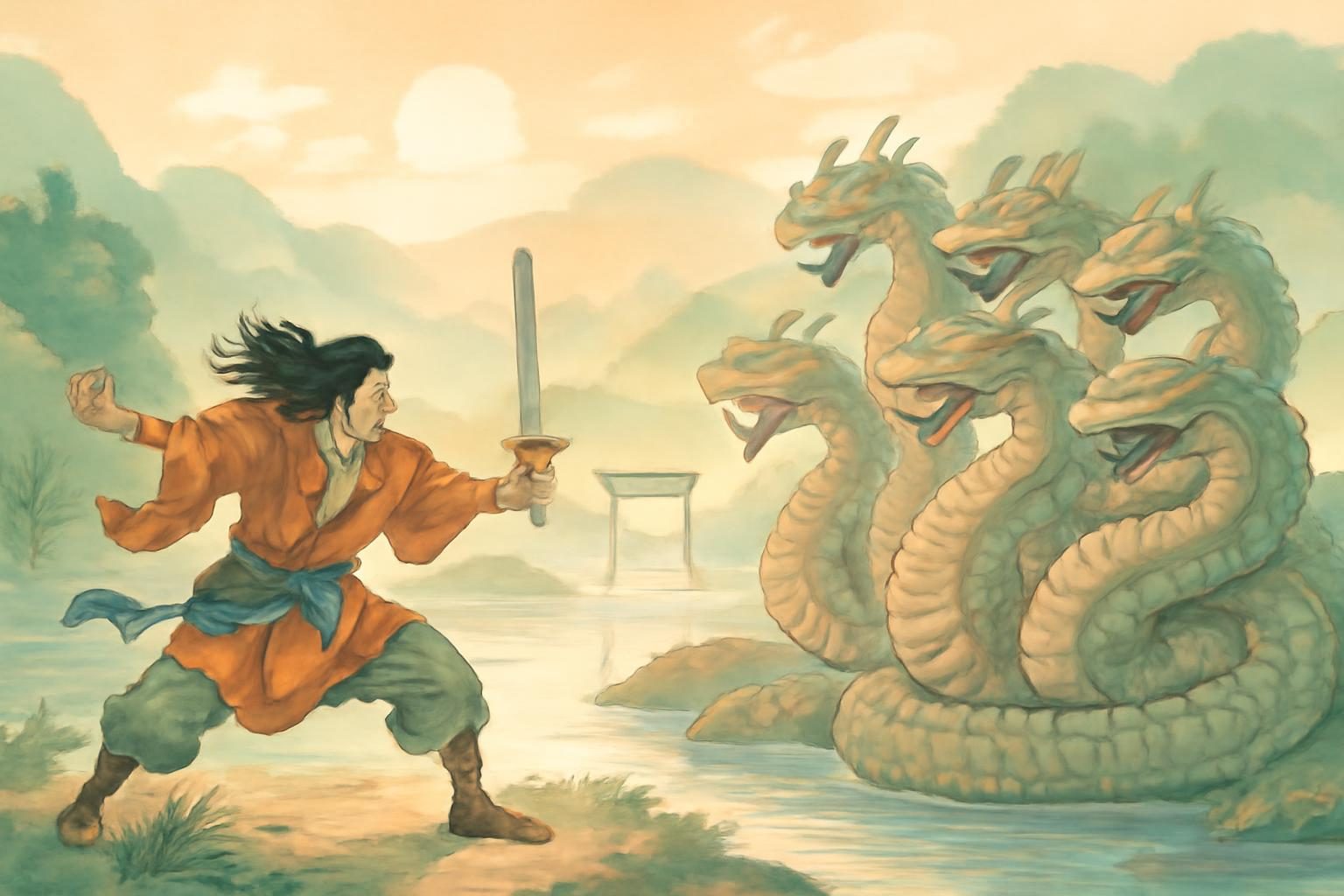
    Susanoo confronting Yamata-no-Orochi by the Hii River at sunrise.
    AI生成イメージ / AI-generated illustration (not a photograph of the actual place)

    The Hii River: The Lifeline and Lair of the Serpent

    FACT: The River’s Significance

    The Hii River flows through Unnan City, and it is here that Susanoo is said to have encountered the serpent. This river is not only a geographical landmark but also a symbolic one, representing the lifeblood of the region and a key element in the myth of Yamata-no-Orochi. Scholars often interpret the myth and the river’s flooding as an allegory for ancient flood-control efforts in the area. The challenges of managing the river’s waters are mirrored in the tale, reflecting the struggles and innovations of early inhabitants in their quest to harness nature’s power.

    The river’s historical significance extends beyond its mythological associations. It has been a vital resource for irrigation and transportation, shaping the livelihoods of those who live along its banks. The interplay between the river’s natural forces and human ingenuity is a testament to the resilience and adaptability of the region’s people, who have long sought to coexist with the powerful elements of their environment.

    LEGEND: Ama-ga-fuchi, the Serpent’s Dwelling

    In the Kisuki area of Unnan City, Ama-ga-fuchi is a deep pool on the Hii River, believed to have been the dwelling place of Yamata-no-Orochi. This site is shrouded in mystery and legend, drawing visitors who wish to connect with the mythological past and explore the natural beauty of the region. The pool’s dark, reflective waters evoke a sense of the unknown, inviting contemplation of the ancient stories that have been passed down through generations.

    Visitors to Ama-ga-fuchi can experience the tranquil yet eerie atmosphere that has inspired countless tales and imaginations. The site’s natural beauty, combined with its legendary significance, makes it a compelling destination for those seeking to delve into the mythological heritage of Unnan City.

    斐伊川堤防桜並木 - Unnan, Shimane, Hii River
    “斐伊川堤防桜並木” (Unnan, Shimane, Hii River) by (Boowytakuya), CC BY-SA 3.0, source, via Wikimedia Commons

    Ama-ga-fuchi and Okuizumo: Where the Monster Dwelt

    FACT: Torikami and the Legend’s Origins

    Torikami, near the headwaters of the Hii River in Okuizumo Town, is identified as the place where Susanoo first encountered the family and began the legend of Yamata-no-Orochi. This location is crucial to understanding the origins of the myth and its deep connection to the landscape of Shimane. The headwaters serve as a symbolic starting point for the tale, where the forces of nature and destiny converge to set the stage for Susanoo’s heroic deeds.

    The area’s rugged terrain and pristine natural environment provide a fitting backdrop for the legendary events. Visitors can explore the scenic beauty of Torikami, gaining insight into the geographical and cultural context that gave rise to the enduring myth of Yamata-no-Orochi.

    LEGEND: The Serpent’s Lair

    According to local lore, the serpent made its lair in the depths of Ama-ga-fuchi, a place that still evokes a sense of awe and wonder. Visitors to this area can immerse themselves in the mythological atmosphere, imagining the dramatic events that unfolded here according to the ancient tales. The site’s natural features, such as its rocky outcrops and dense vegetation, contribute to the mystique that surrounds this legendary location.

    The enduring fascination with the serpent’s lair reflects the power of myth to shape perceptions of the landscape. Ama-ga-fuchi’s association with the Yamata-no-Orochi legend enhances its allure, drawing those who seek to experience the magic and mystery of this storied place.

    Hii Shrine and Happon-sugi: Marking the Serpent’s End

    FACT: The Shrine’s Historical Role

    Hii Shrine in Kisuki-cho, Unnan City, plays a significant role in the Yamata-no-Orochi legend. It is here that the eight cedar trees, known as Happon-sugi, are said to mark the spot where Susanoo buried the serpent’s eight heads. This site serves as a tangible connection to the myth, offering a place for reflection and reverence. The shrine’s sacred grounds provide a serene setting for visitors to contemplate the legend’s themes of victory and renewal.

    The presence of the Happon-sugi trees adds a living dimension to the site’s historical significance. These ancient cedars stand as silent witnesses to the passage of time, embodying the enduring legacy of Susanoo’s triumph over the serpent. Their majestic presence invites visitors to reflect on the interconnectedness of nature, myth, and history.

    LEGEND: The Burial of the Serpent

    Legend holds that after defeating Yamata-no-Orochi, Susanoo buried the serpent’s heads beneath the Happon-sugi at Hii Shrine. This act not only signifies the end of the serpent’s terror but also the triumph of good over evil, a theme that resonates throughout Japanese mythology. The burial site serves as a powerful reminder of the hero’s victory and the restoration of peace to the land.

    The story of the serpent’s burial is commemorated in local rituals and ceremonies, which celebrate the enduring power of myth to inspire and unite communities. These cultural practices ensure that the legend of Yamata-no-Orochi remains a vibrant part of the region’s heritage, fostering a sense of continuity and connection with the past.

    Hinobori check dam - Hii River, Dams in Unnan, Shimane
    “Hinobori check dam” (Hii River, Dams in Unnan, Shimane) by photo: Qurren ( talk ) Taken with Canon IXY 10S (Digital IXUS 210), CC BY-SA 3.0, source, via Wikimedia Commons

    Suga Shrine: The Aftermath and Birthplace of Waka Poetry

    FACT: The Shrine’s Cultural Significance

    Suga Shrine, located in the Daito area of Unnan City, is where Susanoo and Kushinada-hime are said to have lived after the serpent’s defeat. The shrine is considered one of the oldest in Japan and is linked to the Yamata-no-Orochi legend. It is also recognized as the birthplace of waka poetry, where Susanoo composed the first waka poem. This cultural milestone highlights the shrine’s importance as a center of artistic and spiritual expression.

    The shrine’s historical and cultural significance extends beyond its mythological associations. As a site of pilgrimage and worship, Suga Shrine attracts visitors seeking to connect with the spiritual heritage of the region. Its serene atmosphere and beautiful architecture provide a setting for contemplation and inspiration, inviting reflection on the enduring legacy of Susanoo’s deeds.

    LEGEND: Susanoo’s New Home

    According to legend, after vanquishing the serpent, Susanoo built a palace at the site of Suga Shrine. This location became a symbol of peace and prosperity, marking the beginning of a new era for the region and the enduring legacy of Susanoo’s victory. The shrine’s association with the hero’s post-victory life adds a layer of depth to its historical narrative, enriching the visitor’s experience.

    The story of Susanoo’s new home is celebrated in local lore and cultural traditions, which emphasize the themes of renewal and transformation. These narratives reinforce the shrine’s role as a beacon of hope and resilience, embodying the spirit of renewal that follows triumph over adversity.

    Connecting Myth to Reality: Floods and Tatara Ironmaking

    FACT: The Myth’s Allegorical Meaning

    Scholars interpret the Yamata-no-Orochi myth as an allegory for ancient flood-control efforts in the region. The Hii River’s historical significance and its association with the legend underscore the challenges faced by early inhabitants in managing the river’s floods. This interpretation highlights the practical aspects of the myth, revealing its relevance to the region’s historical development and environmental adaptation.

    The allegorical reading of the myth provides insight into the ways in which ancient communities understood and responded to the natural world. By framing the legend as a reflection of human ingenuity and resilience, scholars offer a deeper understanding of the cultural and historical context in which the myth arose.

    FACT: Tatara Ironmaking Heritage

    The myth’s discovery of a sword in the serpent’s tail ties to the region’s long legacy of tatara ironmaking. Okuizumo Town, known for its historical connection to this ancient craft, reflects the intersection of myth and industry, highlighting the cultural richness of Shimane Prefecture. The practice of tatara ironmaking is celebrated as a testament to the region’s innovative spirit and its ability to harness natural resources for technological advancement.

    The connection between the myth and the ironmaking tradition enriches the cultural narrative of the region, emphasizing the interplay between legend and reality. Visitors to Okuizumo can explore this heritage, gaining insight into the historical and cultural forces that have shaped the region’s identity over the centuries.

    Locator map of Japan: Unnan City, Shimane
    Legend site: Unnan City, Shimane — Source: Map of Japan with highlight on 32 Shimane prefecture.svg; Map: Lincun, CC BY-SA 3.0, via Wikimedia Commons

    Regional guide

    Location: Unnan City, Shimane Prefecture

    • Yamata no Orochi Park (Unnan City) — source
    • Orochi Shrine (part of Iwatsubo Shrine) (Okuizumo Town) — source

    Sources

    About the author — JAPAN ESSENCE Editorial Team. Our mission is to bring you Japan’s legends, myths, festivals and living traditions, through both historical fact and the stories passed down over generations.

  • Visiting Takachiho’s Heavenly Rock Cave: Amaterasu’s Hiding Place

    Visiting Takachiho’s Heavenly Rock Cave: Amaterasu’s Hiding Place

    In Takachiho Town, Miyazaki Prefecture, lies a site steeped in myth and history, where the divine and the earthly intersect. Known as the Heavenly Rock Cave, this sacred place is said to be the hiding spot of the sun goddess Amaterasu, a legend that has shaped the cultural and spiritual landscape of Japan.

    高千穂あまてらす鉄道としての本格的な装飾が行われたあとの駅舎
    “Takachiho-Amaterasu Railway Takachiho Sta 20260322” by にのへ, CC BY-SA 4.0, via Wikimedia Commons

    The Legend of Amaterasu and Takachiho’s Heavenly Rock Cave

    LEGEND: The Sun Goddess’s Retreat

    According to legend, the sun goddess Amaterasu, distressed by her brother Susanoo’s misbehavior, hid herself in a cave in Takachiho, plunging the world into darkness. The other gods, desperate to bring light back to the world, gathered outside the cave. Ame-no-Uzume, the goddess of dawn and revelry, performed a dance that caused the gods to laugh uproariously. Curious about the commotion, Amaterasu peeked out, and a mirror reflected her image, luring her out and restoring light to the world.

    This story is not merely a myth but a reflection of the cultural values that emphasize the power of community and collective action. The gathering of the gods symbolizes the importance of unity and cooperation in overcoming challenges. Visitors to Takachiho can feel the weight of this legend as they explore the sites associated with it, each location a testament to the enduring power of these ancient stories.

    LEGEND: The Role of Ame-no-Uzume

    Ame-no-Uzume’s dance is a pivotal moment in the legend, showcasing the power of joy and laughter. Her performance was not just a simple dance but a divine act that brought the gods together in unity. The laughter and clamor outside the cave were so compelling that Amaterasu could not resist seeing what was happening, ultimately leading to her emergence and the return of light.

    The dance of Ame-no-Uzume is celebrated in various cultural expressions, including the Yokagura dances, which are deeply rooted in the traditions of Takachiho. These performances highlight the role of art and festivity in spiritual practices, illustrating how creativity can bridge the gap between the human and the divine. As visitors witness these dances, they are reminded of the joyous spirit that Ame-no-Uzume embodies.

    Amaterasu peeking from cave entrance while Ame-no-Uzume dances, surrounded by autumn foliage and gods.
    AI生成イメージ / AI-generated illustration (not a photograph of the actual place)

    Exploring Amanoiwato Shrine and Viewing the Sacred Cave

    FACT: Amanoiwato Shrine’s Sacred Grounds

    Amanoiwato Shrine stands near the legendary cave in Takachiho Town, Miyazaki Prefecture. This shrine is a place of deep reverence, where visitors can connect with the myth of Amaterasu. The cave itself is considered the shrine’s divine body (go-shintai) and cannot be entered directly. Instead, visitors can view it from a distance, ensuring the sanctity of this sacred site is preserved.

    The shrine’s location is steeped in natural beauty, with lush surroundings that enhance the spiritual atmosphere. As visitors approach the shrine, they are enveloped in a sense of tranquility and reverence, a reminder of the sacredness of the land and its connection to the divine. The careful preservation of the site reflects the community’s respect for its historical and spiritual significance.

    FACT: Viewing the Cave

    Visitors can view the sacred cave from a rear observation deck behind the West Main Shrine (Nishi Hongū) via free guided tours conducted by a Shinto priest. This unique experience allows visitors to appreciate the spiritual significance of the site while learning about its history and cultural importance. The guided tour provides insights into the rituals and traditions associated with the shrine, enhancing the visitor’s understanding of its sacred nature.

    The observation deck offers a serene vantage point from which to contemplate the legend of Amaterasu. The guidance of a Shinto priest adds depth to the experience, as they share stories and rituals that have been passed down through generations. This connection to the past is palpable, providing a bridge between ancient traditions and modern visitors.

    FACT: Etiquette and Reverence

    When visiting Amanoiwato Shrine, it is important to observe proper etiquette. Visitors should remain quiet within the shrine precincts to maintain the sanctity of the environment. The guided tour to view the cave is free and conducted with a sense of reverence, emphasizing the spiritual significance of the site. At Amano Yasukawara, visitors are encouraged to avoid disturbing the stone stacks, which are offerings made by worshippers as acts of devotion.

    Respectful behavior is essential to preserving the spiritual atmosphere of these sacred sites. Visitors are reminded that their presence is part of a long tradition of pilgrimage and worship. By honoring these customs, they contribute to the ongoing legacy of the shrine, ensuring that future generations can also experience its profound serenity.

    Amanoiwato Shrine (30722535953) - Ema at Amanoiwato Shrine
    “Amanoiwato Shrine (30722535953)” (Ema at Amanoiwato Shrine) by David Stanley from Nanaimo, Canada, CC BY 2.0, source, via Wikimedia Commons

    The Mythic Cavern of Amano Yasukawara and Stone Offerings

    FACT: Amano Yasukawara’s Sacred Gathering

    A short 10-minute riverside path from Amanoiwato Shrine leads to Amano Yasukawara, a cavern where the gods are said to have held council to plan how to lure Amaterasu from hiding. This mystical site is marked by thousands of stone stacks along the riverbank, offerings made by worshippers over the years. These stone stacks are a testament to the enduring power of the legend and the devotion it inspires.

    The path to Amano Yasukawara is a journey through nature, offering moments of reflection and connection with the divine. The cavern itself is a place where the boundaries between the human and the divine seem to blur, inviting visitors to contemplate the mysteries of the universe. The stone offerings are a physical manifestation of the prayers and hopes of countless pilgrims, each stack a silent witness to the faith and devotion that have characterized this site for centuries.

    FACT: The Significance of Stone Offerings

    The stone stacks at Amano Yasukawara are more than just physical structures; they represent the prayers and hopes of those who have visited this sacred place. Each stack is a personal offering, a symbol of connection between the worshipper and the divine. The practice of stacking stones is a way for visitors to leave a part of themselves at this holy site, contributing to the spiritual atmosphere that permeates the area.

    These offerings are a testament to the enduring power of faith and the human desire to connect with something greater than oneself. As visitors add their own stones to the growing collection, they become part of a living tradition that transcends time and space. This act of devotion is a reminder that the legends of Takachiho continue to inspire and resonate with people from all walks of life.

    Experiencing Takachiho’s Sacred Yokagura Dances

    FACT: The Yokagura Tradition

    Takachiho is also renowned for its Yokagura, a series of 33 mythic dances rooted in the Amano Iwato legend. Designated an Important Intangible Folk Cultural Property in 1978, these dances are performed to honor the gods and celebrate the rich tapestry of Japanese mythology. At Takachiho Shrine’s Kagura Hall, four representative dances from the 33-dance cycle are performed nightly by local residents known as hoshadon.

    The Yokagura dances are a vibrant expression of Takachiho’s cultural heritage, blending music, movement, and storytelling to bring the legends to life. Each performance is a carefully choreographed ritual that conveys the essence of the myths, allowing audiences to experience the stories in a dynamic and engaging way. The dedication of the performers ensures that these traditions are preserved and passed down through generations.

    FACT: Nightly Performances

    The Yokagura performances are held nightly from mid-November to early February, with full all-night versions in village kagura lodgings. The Kagura Hall nightly shows begin at 8 PM and last about one hour, offering visitors a captivating glimpse into the spiritual and cultural heritage of Takachiho. These performances are not merely entertainment; they are a living tradition that connects the past with the present, allowing both locals and visitors to experience the power of myth through dance.

    Attending a Yokagura performance is an immersive experience that transports audiences to a world where gods and humans coexist. The rhythmic drumming and vibrant costumes create an atmosphere of celebration and reverence, inviting spectators to participate in the timeless rituals that define Takachiho’s identity. These dances are a testament to the enduring power of myth and the role of art in preserving cultural heritage.

    FACT: The Role of Hoshadon

    The hoshadon, local residents who perform the Yokagura dances, play a crucial role in preserving this cultural heritage. Their dedication to the art form ensures that the stories and traditions of Takachiho continue to be passed down through generations. By participating in these performances, they help sustain the cultural identity of the region and keep the legend of Amaterasu alive in the hearts of all who witness the dances.

    The hoshadon are not only performers but also cultural custodians, committed to maintaining the authenticity and integrity of the Yokagura tradition. Their involvement in the performances is a reflection of their deep connection to the community and its history. Through their efforts, the Yokagura dances remain a vibrant and essential part of Takachiho’s cultural landscape, inspiring both locals and visitors alike.

    天岩戸神社の神楽殿 - panoramio - Amanoiwato-jinja, Photos from Panoramio
    “天岩戸神社の神楽殿 – panoramio” (Amanoiwato-jinja, Photos from Panoramio) by sk01, CC BY-SA 3.0, source, via Wikimedia Commons
    Locator map of Japan: Takachiho, Miyazaki
    Legend site: Takachiho, Miyazaki — Source: Map of Japan with highlight on 45 Miyazaki prefecture.svg; Map: Lincun, CC BY-SA 3.0, via Wikimedia Commons

    Regional guide

    Location: Takachiho, Miyazaki Prefecture

    • Amanoiwato Shrine (West Main Shrine observation deck) (Takachiho Town) — source
    • Takachiho Shrine Kagura Hall (Takachiho Town) — source

    Sources

    About the author — JAPAN ESSENCE Editorial Team. Our mission is to bring you Japan’s legends, myths, festivals and living traditions, through both historical fact and the stories passed down over generations.

  • Visiting Amano Iwato in Shima: Mie Prefecture’s Mythical Hiding Cave

    Visiting Amano Iwato in Shima: Mie Prefecture’s Mythical Hiding Cave

    In Shima, Mie Prefecture, lies Amano Iwato, a site steeped in Japanese mythology and natural beauty. This legendary cave is said to be where Amaterasu, the sun goddess, once hid, casting the world into darkness. Today, visitors can explore this serene location, surrounded by lush nature and cultural history.

    Illustration: a mossy rock cave in a hushed forest with a thin seam of golden light escaping from behind a great stone, evoking the myth of the sun goddess Amaterasu hiding in the cave
    AI-generated illustration

    Introduction to Amano Iwato and Japanese Mythology in Shima

    FACT: The Mythical Significance of Amano Iwato

    Amano Iwato, located in the Erihara area of Isobe-cho, Shima City, is a significant site in Japanese mythology. It is traditionally believed to be the cave where Amaterasu-Omikami, the sun goddess, hid after being upset by her brother Susanoo-no-Mikoto’s actions. This event is a pivotal moment in the Kojiki, Japan’s oldest chronicle, symbolizing the struggle between light and darkness. The myth underscores the importance of harmony and balance, themes deeply rooted in Japanese culture and spirituality. Visitors to the site can reflect on these themes as they explore the natural beauty and tranquility of the area, gaining a deeper appreciation for the cultural significance of the legend.

    LEGEND: Amaterasu’s Hiding in the Cave

    According to legend, Amaterasu’s seclusion in the cave plunged the world into darkness, causing chaos among the gods. To lure her out, the gods performed a dance, and when Amaterasu peeked out, curious about the commotion, she was captivated by her reflection in a mirror. This allowed the gods to pull her out, restoring light to the world. The cave at Amano Iwato in Shima is one of the sites believed to be the setting of this legendary event. The tale is not just a story of celestial beings but also a reflection of human emotions and societal values, highlighting the interplay between conflict and resolution. Visitors can imagine the dramatic scene as they stand at the entrance of the cave, feeling the weight of history and myth that surrounds them.

    The Legend of Amaterasu’s Hiding Cave

    FACT: Amano Iwato’s Natural and Cultural Features

    The path to Amano Iwato is a serene, shaded walk that leads visitors through the tranquil surroundings of Shima. The area is known for its fresh air and natural beauty, making the journey to the cave a peaceful experience. Along the way, visitors can see a camphor tree planted by Kokichi Mikimoto, known as Mikimoto Kusunoki, which stands as a testament to the area’s cultural heritage. This tree is a symbol of the enduring connection between nature and culture, offering a moment of reflection for those who pass by. The path itself is a journey through time, inviting visitors to consider the historical and spiritual significance of their surroundings.

    LEGEND: The Story of the Iwatōzakura Cherry Tree

    Near the cave, the Iwatōzakura, a 360-year-old Oshima cherry tree, blooms each spring. According to local tradition, this tree is not only a natural monument but also part of the legend, symbolizing the renewal of life and light after Amaterasu’s return. The tree’s blossoms are celebrated with traditional early rice-cake pounding performances, adding to the cultural richness of the site. These performances are a vibrant expression of community spirit and continuity, connecting the past with the present. For visitors, witnessing these events offers a glimpse into the living traditions that keep the legend of Amano Iwato alive.

    Ama no Iwato (Erihara no Mizuana) - Jul 9, 2021 - Ama no Iwato, Torii in Mie prefecture
    “Ama no Iwato (Erihara no Mizuana) – Jul 9, 2021” (Ama no Iwato, Torii in Mie prefecture) by Big Ben in Japan, CC BY-SA 2.0, source, via Wikimedia Commons

    Walking the Serene Path to Amano Iwato

    FACT: Accessibility and Visitor Information

    Visitors can access Amano Iwato via a 20-minute walk from the Mie Kotsu bus stop “Amano-Iwato-guchi.” The site is open to visitors at any time, although it is unlit after dark, and the narrow roads are unsuitable for large buses. This accessibility ensures that travelers can easily explore the legendary cave and its surroundings. The journey itself is part of the experience, inviting visitors to immerse themselves in the tranquil landscape and the storied past of the site. Walking the path allows visitors to disconnect from the modern world and connect with the timeless beauty and mystery of the area.

    Natural Wonders Along the Way: Iwatōzakura and Mikimoto Kusunoki

    FACT: The Iwatōzakura Cherry Tree

    The Iwatōzakura, designated as a natural monument by Shima City, is a highlight for visitors. Its spring blossoms are a sight to behold, offering a vibrant contrast to the lush greenery of the area. This tree is a living connection to the past, standing near the path to the legendary cave. The sight of its blossoms is a reminder of the cyclical nature of life and the beauty of renewal, themes that resonate deeply in Japanese culture. Visitors can take a moment to appreciate the delicate beauty of the blossoms, which serve as a metaphor for the fleeting yet enduring nature of life and legend.

    FACT: Mikimoto Kusunoki Camphor Tree

    The Mikimoto Kusunoki, a camphor tree planted by the renowned Pearl King Kokichi Mikimoto, marks the approach to Amano Iwato. This tree adds to the historical and cultural tapestry of the site, symbolizing the enduring legacy of Mikimoto’s contributions to the region. It stands as a testament to the influence of individuals who have shaped the cultural landscape of Shima, bridging the gap between nature and human achievement. Visitors can reflect on the legacy of Mikimoto as they pass by, considering how individual actions can leave a lasting impact on the world.

    Origin of the Cave Door Dance (Amaterasu) by Shunsai Toshimasa 1889 - Ama no Iwato, Shunsai Toshimasa
    “Origin of the Cave Door Dance (Amaterasu) by Shunsai Toshimasa 1889” (Ama no Iwato, Shunsai Toshimasa) by Shunsai Toshimasa, Public domain, source, via Wikimedia Commons

    Japan’s Top 100 Famous Waters at the Shima Site

    FACT: The Famous Spring Waters

    The spring water flowing from the Amano Iwato site is recognized as one of Japan’s “Top 100 Famous Waters.” This accolade highlights the purity and significance of the water, which is considered sacred and is an integral part of the site’s natural allure. The water’s reputation draws visitors seeking not only the beauty of the landscape but also the spiritual refreshment it offers, embodying the harmonious relationship between nature and spirituality. For those who visit, the water represents a connection to the divine and a source of renewal, echoing the themes of the Amaterasu legend.

    Practical Tips for International Travelers Visiting Amano Iwato

    FACT: Travel Tips and Recommendations

    For international travelers, visiting Amano Iwato offers a unique opportunity to experience a blend of mythology and nature. It is advisable to visit during daylight hours to fully appreciate the site’s beauty and to take part in any local cultural events, such as the rice-cake pounding performances, which provide insight into the region’s traditions. Engaging with these cultural practices allows visitors to connect with the local community and gain a deeper understanding of the area’s historical significance. Travelers are encouraged to respect the site’s cultural and spiritual importance, ensuring that their visit is both enriching and respectful.

    Locator map of Japan: Shima, Mie
    Legend site: Shima, Mie — Source: Map of Japan with highlight on 24 Mie prefecture.svg; Map: Lincun, CC BY-SA 3.0, via Wikimedia Commons

    Regional guide

    Location: Shima, Mie Prefecture

    • Iwatōzakura (Oshima cherry tree) (Shima) — source
    • Mikimoto Kusunoki (camphor tree) (Shima) — source
    • Amano Iwato (the cave site and approach) (Shima) — source

    Sources & Further Reading

    About the author — JAPAN ESSENCE Editorial Team. Our mission is to bring you Japan’s legends, myths, festivals and living traditions, through both historical fact and the stories passed down over generations.