Category: Yokai

妖怪

  • Exploring Tono: Japan’s Legendary Home of the Kappa

    Exploring Tono: Japan’s Legendary Home of the Kappa

    In Tono, Iwate Prefecture, lies a landscape steeped in folklore and mystery, where the legendary Kappabuchi Pool is said to be home to the mythical kappa, a water spirit that has captivated imaginations for generations.

    Kappa-buchi in Tono, Iwate prefecture, Japan
    “Kappa-buchi03s3872” by 663highland, CC BY 2.5, via Wikimedia Commons

    Introduction to Tono: The Heart of Japanese Folklore

    FACT: Tono’s Rich Cultural Landscape

    Tono, located in Iwate Prefecture, is renowned for its rich tapestry of folklore, most notably captured in the “Tono Monogatari,” a collection of stories compiled by Kunio Yanagita. This seminal work has cemented Tono’s reputation as a cultural heartland of Japan, where tales of yokai, including the kappa, are deeply woven into the local heritage. Visitors to Tono can experience this folklore firsthand, exploring sites that continue to celebrate these stories. The town’s commitment to preserving and sharing its folklore is evident in the way these tales are integrated into the everyday life of its residents, creating a living narrative that visitors can witness and participate in.

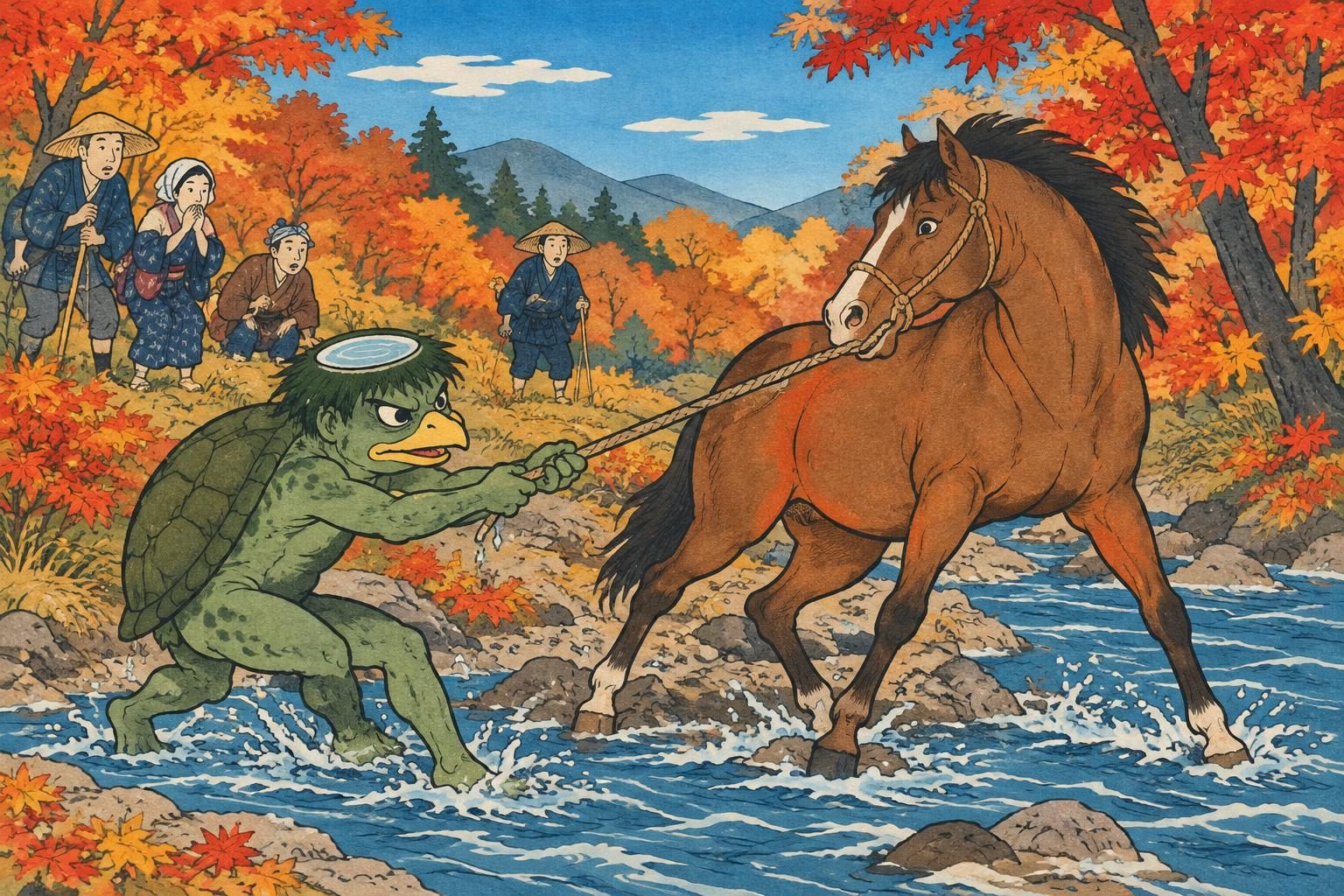
    A kappa tries to drag a horse into a pool while villagers outwit it, set in an autumnal Tono landscape.
    AI生成イメージ / AI-generated illustration (not a photograph of the actual place)

    Kappabuchi Pool: The Legendary Home of Tono’s Kappa

    FACT: What the Records Say

    Kappabuchi Pool, located behind Jōken-ji Temple in Tono, is a key site associated with the kappa legend. The pool is a serene spot surrounded by lush greenery, offering a tranquil setting that belies its mythical reputation. According to local tourism sources, this pool is a focal point for those interested in experiencing the living folklore of the region. The pool’s serene ambiance, combined with its cultural significance, makes it a must-visit for those intrigued by Japan’s rich mythological tapestry.

    FACT: Jōken-ji Temple and Its Connection

    The proximity of Kappabuchi Pool to Jōken-ji Temple adds another layer of cultural depth to the site. Jōken-ji, an ancient Soto Zen temple, is not only a place of spiritual significance but also a custodian of the kappa legends. The temple grounds feature unique Kappa Komainu statues, which are said to have a depression on their heads resembling a kappa’s plate when water collects in it. This architectural feature serves as a tangible connection to the folklore, allowing visitors to engage with the legend in a physical space.

    LEGEND: The Story of the Kappa

    According to local tradition, Kappabuchi Pool is inhabited by kappa, mischievous water spirits known for their love of cucumbers and their penchant for pranks. One popular tale recounts how a kappa attempted to drag a horse into the water, only to be outwitted by the villagers. These stories are not just relics of the past but are actively shared and celebrated, keeping the spirit of the kappa alive in Tono. The tale of the kappa and the horse is particularly famous, illustrating the cunning nature of these creatures and the cleverness of the local people in dealing with them.

    LEGEND: Variations in the Kappa’s Appearance

    In Tono, the kappa is often depicted with a distinctive red face, a regional variation that sets it apart from other depictions across Japan. This unique portrayal adds to the local flavor of the legend, providing a visual cue that is instantly recognizable to those familiar with Tono’s folklore. Such variations highlight the diverse interpretations of yokai across different regions, reflecting the rich tapestry of Japanese mythological traditions.

    遠野カッパ淵 - panoramio - Kappa-buchi, Photos from Panoramio
    “遠野カッパ淵 – panoramio” (Kappa-buchi, Photos from Panoramio) by Mamusi Taka, CC BY-SA 3.0, source, via Wikimedia Commons

    Unique Local Traditions: Fishing for Kappa and Shrine Offerings

    FACT: Rituals and Offerings

    Visitors to Kappabuchi Pool often partake in unique rituals that reflect the area’s folklore. It is customary to offer cucumbers at the small shrine near the pool, a gesture believed to appease the kappa. This practice highlights the blend of reverence and playfulness that characterizes Tono’s approach to its legendary creatures. The act of offering cucumbers is not only a nod to the kappa’s supposed preferences but also a way for visitors to engage with the legend in a meaningful way.

    LEGEND: Community Engagement with the Kappa

    Local accounts suggest that the community has long engaged with the kappa through various rituals and festivals. These traditions serve as a means of connecting the past with the present, allowing both residents and visitors to partake in the rich cultural narrative of Tono. The community’s active involvement in these traditions ensures that the stories and practices are passed down through generations, maintaining the vibrancy of Tono’s folklore.

    The Tales of Tono: Kunio Yanagita and Japanese Minzokugaku

    FACT: The Influence of Tono Monogatari

    Kunio Yanagita’s “Tono Monogatari” is a seminal work in Japanese folklore studies, or minzokugaku. The collection of stories from Tono has played a crucial role in preserving the region’s folklore and has influenced generations of folklorists and enthusiasts. Yanagita’s work provides a window into the beliefs and traditions that have shaped Tono’s cultural identity. His meticulous documentation of these tales has ensured that the rich oral traditions of Tono are not lost to time, but instead, continue to inspire and educate those interested in Japan’s cultural heritage.

    Jokenji temple 常堅寺 - Dec 23, 2012 - Temple gates in Iwate prefecture, Joken-ji (Tono)
    “Jokenji temple 常堅寺 – Dec 23, 2012” (Temple gates in Iwate prefecture, Joken-ji (Tono)) by uetchy, CC BY 2.0, source, via Wikimedia Commons

    Exploring Denshoen and Traditional Magariya Farmhouses

    FACT: Denshoen Park

    Denshoen Park in Tono offers visitors a glimpse into traditional Japanese rural life. The park is centered around the Kikuchi magariya farmhouse, a national Important Cultural Property. This site allows visitors to explore the architectural and cultural heritage of the region, providing context to the folklore that permeates Tono. The magariya, with its distinctive L-shaped structure, is a testament to the ingenuity and adaptability of traditional Japanese architecture, designed to accommodate both living quarters and livestock under one roof.

    How to Plan Your Visit to Iwate’s Folklore Capital

    For those planning a visit to Tono, Iwate Prefecture, exploring Kappabuchi Pool and its surroundings offers a unique opportunity to immerse oneself in Japan’s rich folklore. Check the official website for current hours, fees, and access information to ensure a smooth visit. Engaging with the local legends and traditions provides a deeper understanding of the cultural fabric that makes Tono a unique destination.

    Nearby Guide

    Access

    • JR Tono Station (Tono) — From JR Tono Station, it’s approximately 6 km to Kappabuchi Pool. By car, it’s about a 10-minute drive; on foot, it’s a 5-minute walk; by bicycle, it’s about a 25-minute ride. If you’re walking from Denshoen Park, it’s a 5-minute walk to the site. official site

    Nearby sights

    • Jokenji Temple (Tono) — An ancient Soto Zen temple founded in 1490, located near Kappabuchi Pool. The temple grounds feature a pair of Kappa Komainu statues, which have a depression on their heads resembling a kappa’s plate when water collects in it. Legend has it that a kappa helped extinguish a fire at the temple, leading official site
    • Denshoen Park (Tono) — A folk park built around the Kikuchi magariya farmhouse, a national Important Cultural Property. The park offers visitors a glimpse into traditional Japanese farmhouses and the region’s cultural heritage. It’s a short walk from Kappabuchi Pool and provides a deeper understanding of Tono’s folklore a official site

    Where to eat

    • Kappa no Chaya (Tono) — A rest stop located near Denshoen Park, offering local specialties and a variety of refreshments. It’s a great place to relax and enjoy traditional Japanese snacks after exploring the area. details
    • Zashiki Warashi Soft Cream (Tono) — A unique soft serve ice cream made with red beans, available at Kappa no Chaya. It’s a local favorite and offers a taste of Tono’s culinary creativity. details
    Locator map of Japan: Tono, Iwate
    Legend site: Tono, Iwate — Source: Map of Japan with highlight on 03 Iwate prefecture.svg; Map: Lincun, CC BY-SA 3.0, via Wikimedia Commons

    Sources

    About the author

    JAPAN ESSENCE Editorial Team
    Our mission is to bring you Japan’s legends, myths, festivals and living traditions, through both historical fact and the stories passed down over generations.

  • Konaki-Jijii: The Legend of Tokushima’s Crying Old Man Yokai

    Konaki-Jijii: The Legend of Tokushima’s Crying Old Man Yokai

    In the heart of Tokushima Prefecture, the mystical Oboke Gorge in Miyoshi is home to the eerie legend of Konaki-Jijii, a yokai known as the Crying Old Man. This tale, deeply rooted in Japanese folklore, continues to intrigue both locals and visitors alike.

    Ukiyo-e illustration of Konaki-Jijii, the crying old man yokai in a summer landscape.
    AI生成イメージ / AI-generated illustration (not a photograph of the actual place)

    Who is Konaki-Jijii? The Origins of the Crying Yokai

    FACT: What the records say

    The legend of Konaki-Jijii, or the Crying Old Man, is a well-known story in the folklore of Tokushima Prefecture, particularly in the Oboke Gorge area of Miyoshi. The yokai is described as an old man who appears as a crying baby. When a passerby picks him up, he transforms back into his true form, becoming unbearably heavy and immobilizing the victim. This tale has been passed down through generations and is a staple of local folklore. The story serves as a cautionary tale, warning people to be wary of appearances and the unexpected burdens they might bring.

    The 1938 Folklore Record vs. Modern Legend

    LEGEND: Traditional accounts

    According to local tradition, the story of Konaki-Jijii was first recorded in 1938 as part of a broader collection of yokai tales from the region. While the core elements of the legend remain consistent, modern retellings often embellish the story, adding new layers to the character and his interactions with humans. Some versions suggest that Konaki-Jijii targets those who are greedy or selfish, serving as a moral lesson to those who encounter him. This evolution of the legend reflects the changing societal values and the enduring nature of folklore as a living tradition.

    FACT: The evolution of yokai stories

    The recording of Konaki-Jijii in 1938 highlights a period when many regional tales were being documented to preserve cultural heritage. This effort was part of a broader movement to capture the rich tapestry of Japanese folklore, which includes a wide variety of yokai, each with unique stories and characteristics. The preservation of these tales allows us to see how they adapt over time, reflecting the cultural and social changes within the communities that tell them.

    Tokushima Miyoshi Oboke Gorge Of Yoshino River 2 - Ōboke and Koboke Valleys
    “Tokushima Miyoshi Oboke Gorge Of Yoshino River 2” (Ōboke and Koboke Valleys) by 京浜にけ, CC BY-SA 3.0, source, via Wikimedia Commons

    Exploring Fujikawa Valley and the Birthplace of the Legend

    FACT: The landscape of Oboke Gorge

    Oboke Gorge, located in the Yoshino River Valley, is a breathtaking natural landscape characterized by its steep cliffs and clear blue waters. This area, rich in natural beauty, provides a fitting backdrop for the eerie tales of yokai like Konaki-Jijii. The gorge is part of the greater Iya Valley, known for its remote and rugged terrain, which has historically fostered a rich tapestry of folklore and legends. The dramatic scenery of Oboke Gorge, with its towering rock formations and swirling waters, creates an atmosphere ripe for the imagination, making it an ideal setting for stories of the supernatural.

    The Konaki-Jijii Stone Statue in Oboke Gorge

    FACT: A tribute to the legend

    Visitors to Oboke Gorge can find a stone statue dedicated to Konaki-Jijii, serving as a reminder of the area’s cultural heritage. This statue, located along the Yokai Kaido, a road adorned with wooden statues of various yokai, celebrates the region’s folklore and provides an engaging way for tourists to connect with these traditional stories. The presence of this statue not only honors the legend but also invites visitors to engage with the cultural history of the area, offering a tangible link to the tales that have been told for generations.

    Tokushima Miyoshi Yoshino River Of Oboke Gorge 1 - Ōboke and Koboke Valleys
    “Tokushima Miyoshi Yoshino River Of Oboke Gorge 1” (Ōboke and Koboke Valleys) by 京浜にけ, CC BY-SA 3.0, source, via Wikimedia Commons

    Yokai Tourism in Miyoshi City and Yamashiro

    FACT: Embracing yokai culture

    Miyoshi City has embraced its connection to yokai culture, with various attractions and events celebrating these mythical creatures. The Yokai Kaido, mentioned earlier, is a popular destination for those interested in Japanese folklore. Additionally, local festivals often feature yokai-themed activities, drawing visitors from across Japan and beyond. These events not only celebrate the supernatural but also serve to educate and entertain, offering a unique cultural experience for all who attend.

    Experiencing Shikoku’s Monster Festival and Heritage

    LEGEND: Celebrating the supernatural

    In Shikoku, the celebration of yokai is not limited to Miyoshi. The region hosts various festivals dedicated to these supernatural beings, where locals and tourists can immerse themselves in the vibrant culture of Japanese folklore. These events often include parades, performances, and exhibitions that highlight the unique characteristics of yokai like Konaki-Jijii. Participants may dress as their favorite yokai, bringing the legends to life and fostering a deeper appreciation for this aspect of Japanese cultural heritage.

    Nearby Guide

    Access

    • JR Oboke Station (Miyoshi) — JR Oboke Station is the nearest railway station to Oboke Gorge. From the station, it’s a 20-minute walk to the gorge. Alternatively, a free shuttle bus operates between the station and the boat dock during sightseeing boat hours. official site
    • Oboke Sightseeing Boat Dock (Miyoshi) — The Oboke Sightseeing Boat Dock is accessible via a 20-minute walk from JR Oboke Station. A free shuttle bus operates between the station and the dock during sightseeing boat hours. official site
    • Oboke Gorge Center Parking (Miyoshi) — For visitors traveling by car, the Oboke Gorge Center offers free parking facilities. The center is approximately a 60-minute drive from Tokushima City via Route 32. details

    Nearby sights

    • Oboke Gorge (Miyoshi) — Oboke Gorge is a scenic gorge located in the western part of Tokushima Prefecture in Japan. It is situated in the Yoshino River Valley and is known for its steep cliffs, clear blue water, and beautiful natural scenery. The gorge is formed by the Oboke River, which flows through the surrounding mount. details
    • Koboke Gorge (Miyoshi) — Koboke Gorge is located about 3 kilometers downstream from Oboke Gorge. It features similar geological formations and offers additional scenic views of the Yoshino River and surrounding landscapes. official site
    • Yokai Kaido (Miyoshi) — Yokai Kaido is a road in Oboke adorned with wooden statues of local yokai (spirits). These statues represent various mythical creatures from Japanese folklore and add a unique cultural element to the area. official site

    Where to stay

    • Hotel Iya Onsen (Miyoshi) — Hotel Iya Onsen is a traditional Japanese inn located in the Iya Valley, offering hot spring baths and scenic views of the surrounding mountains. It’s a popular choice for visitors seeking an authentic experience in the area. details
    • Oboke Gorge Center (Miyoshi) — The Oboke Gorge Center offers accommodations and serves as a hub for visitors exploring the gorge. It provides easy access to local attractions and amenities. details

    Where to eat

    • Boke Mart (Miyoshi) — Boke Mart is a popular supermarket in Oboke that stocks local specialties such as Iya soba (buckwheat noodles), tofu, and konnyaku. On weekends, it offers standing meals featuring local dishes like bokeage (fried tofu) and Unkaijiru (a dish using bokeage and grated daikon). official site
    • Cafe & Gibier (Miyoshi) — Cafe & Gibier, located at the Roadside Station Oboke, serves a variety of local dishes, including gibier (wild game) burgers. The cafe offers terrace seating with views of the Yoshino River and Oboke Gorge. official site
    • Oboke Gorge Center Restaurant (Miyoshi) — The Oboke Gorge Center features a restaurant serving local river fish dishes and Iya soba (buckwheat noodles). Tokushima specialties like Naruto-kintoki sweet potato treats are also available. details
    Locator map of Japan: Miyoshi, Tokushima
    Legend site: Miyoshi, Tokushima — Source: Map of Japan with highlight on 36 Tokushima prefecture.svg; Map: Lincun, CC BY-SA 3.0, via Wikimedia Commons

    Sources

    About the author

    JAPAN ESSENCE Editorial Team
    Our mission is to bring you Japan’s legends, myths, festivals and living traditions, through both historical fact and the stories passed down over generations.

  • Who Are the Koropokkuru? The Legend of Ainu’s Little People

    Who Are the Koropokkuru? The Legend of Ainu’s Little People

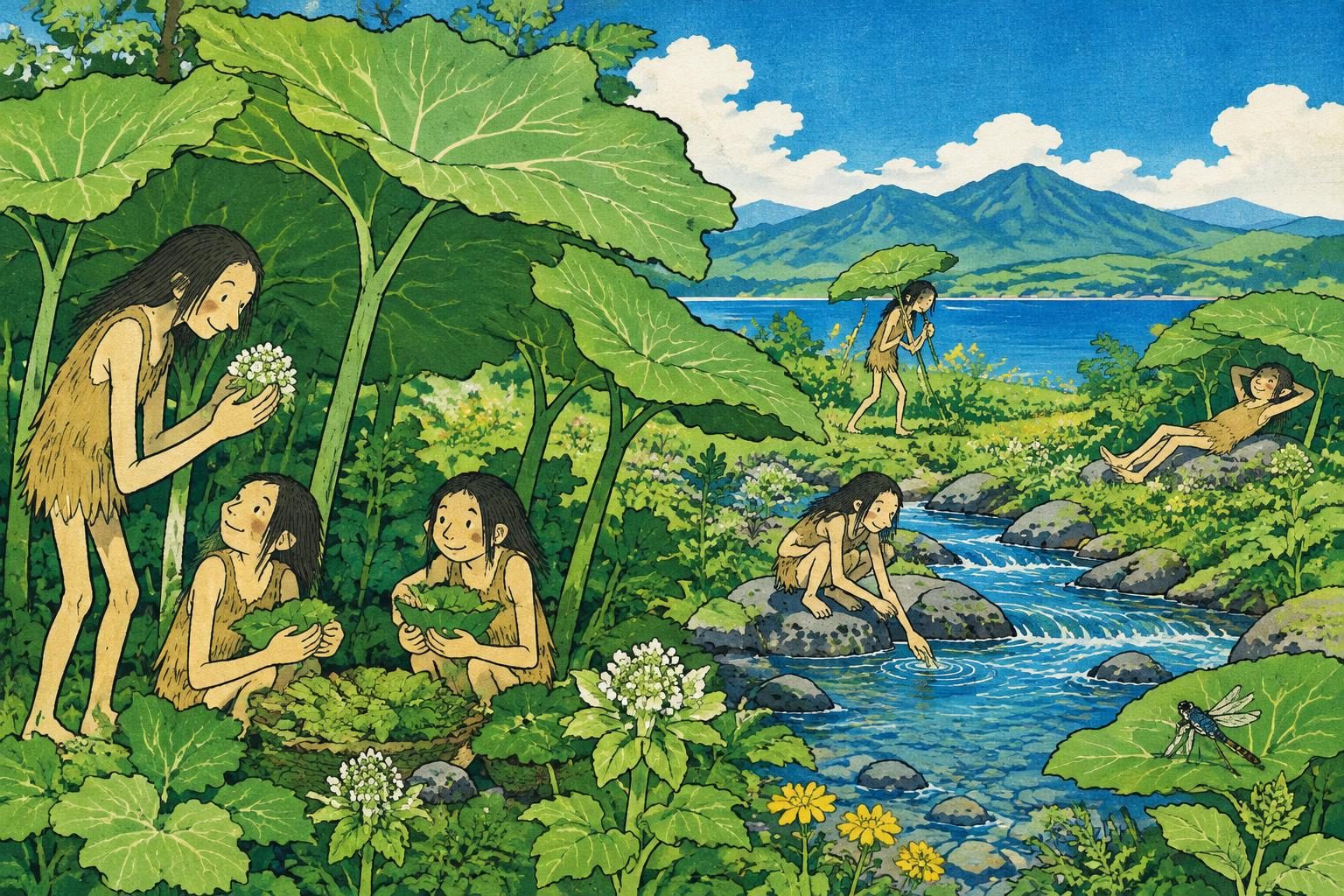
    In Shiraoi, Hokkaido, the legend of the Koropokkuru—a mysterious race of little people who lived under butterbur leaves—continues to capture the imagination of many. This tale, deeply rooted in Ainu folklore, offers a glimpse into the rich cultural tapestry of Japan’s northernmost island.

    Koropokkuru with long limbs under butterbur leaves in vivid Hokkaido landscape, ukiyo-e style.
    AI生成イメージ / AI-generated illustration (not a photograph of the actual place)

    Who Are the Koropokkuru in Ainu Folklore?

    LEGEND: The story of the Koropokkuru

    According to Ainu folklore, the Koropokkuru were a race of small, human-like beings who inhabited Hokkaido long before the Ainu people arrived. They were said to be only a few feet tall, with long arms and legs, and lived under the large leaves of the butterbur plant, which they used as makeshift shelters. The name ‘Koropokkuru’ itself is derived from the Ainu words ‘koro’ (meaning ‘people’), ‘pok’ (meaning ‘under’), and ‘kuru’ (meaning ‘leaf’), thus translating to ‘people under the leaves’. This etymology reflects their intimate connection with nature, emphasizing their small stature and their resourcefulness in using the natural environment for protection and shelter.

    LEGEND: Silent trade with the Ainu

    Local tradition holds that the Koropokkuru engaged in a form of silent trade with the Ainu. The Koropokkuru would leave fish and game on the riverbanks for the Ainu, who in return would leave goods such as rice and sake. This exchange was conducted without direct contact, as the Koropokkuru were said to be shy and wary of humans. However, one story recounts how an Ainu man, curious about these mysterious benefactors, hid near the riverbank and managed to catch a Koropokkuru. The captured being was so ashamed of being seen that it vanished, and from that day on, the Koropokkuru were never seen again. This tale underscores the delicate balance and mutual respect that once existed between the Koropokkuru and the Ainu, highlighting the fragility of their relationship.

    The Meaning Behind the Name: Life Under Butterbur Leaves

    FACT: The significance of butterbur leaves

    The butterbur plant, known as ‘fuki’ in Japanese, plays a significant role in the legend of the Koropokkuru. These large, broad leaves provided the perfect cover for the diminutive Koropokkuru, symbolizing their connection to the natural world and their resourcefulness in using the environment to their advantage. The butterbur plant is native to Hokkaido and is commonly found in damp, shaded areas, which aligns with the traditional habitat of the Koropokkuru as described in Ainu folklore. The choice of the butterbur leaf as their shelter not only highlights their small size but also their adaptability and harmonious relationship with nature.

    FACT: The cultural symbolism of the butterbur

    Beyond its practical use as a shelter, the butterbur leaf holds cultural significance. In many cultures, plants and their characteristics are often imbued with symbolic meanings. For the Koropokkuru, the butterbur leaf represents protection and invisibility, allowing them to live undetected by the larger world. This symbolism is a testament to their elusive nature and the mystery that surrounds them in Ainu folklore.

    Inkura - Shiraoi, Hokkaido, Waterfalls in Hokkaido
    “Inkura” (Shiraoi, Hokkaido, Waterfalls in Hokkaido) by Tomo200006, CC BY-SA 3.0, source, via Wikimedia Commons

    Why Did the Koropokkuru Disappear?

    LEGEND: The end of the Koropokkuru

    Various accounts explain the disappearance of the Koropokkuru. One popular version suggests that after the incident of being seen by an Ainu, the Koropokkuru felt their privacy was violated and chose to leave the area. Another theory posits that the arrival of the Ainu and subsequent changes in the environment led to their decline. Despite these tales, the Koropokkuru remain a cherished part of Ainu oral tradition, symbolizing the mystery and allure of the unseen world. These stories serve as a reminder of the delicate balance between human expansion and the preservation of mythical and natural worlds.

    Connecting Folklore to History: Stone Age Pit-Dwellings

    FACT: Archaeological connections

    Some researchers suggest a historical basis for the Koropokkuru legend, linking it to the ancient Jomon people who inhabited Japan during the Stone Age. The Jomon were known for their pit-dwellings, which could have inspired the idea of small beings living close to the earth. While there is no direct evidence connecting the Jomon to the Koropokkuru, the similarities in lifestyle and dwelling types provide an intriguing possible connection between folklore and history. This potential link invites further exploration into how ancient peoples may have influenced the myths and legends that have been passed down through generations.

    FACT: The Jomon culture and its influence

    The Jomon culture, characterized by its unique pottery and pit-dwelling lifestyle, represents one of the earliest known cultures in Japan. The possibility that the Koropokkuru legend could be rooted in the Jomon way of life adds a layer of historical depth to the folklore. It suggests that the stories of the Koropokkuru may have been inspired by real historical interactions, blending myth with the reality of ancient human habitation in Hokkaido.

    Shiraoi Town Hall - Shiraoi, Hokkaido, Town halls in Hokkaido
    “Shiraoi Town Hall” (Shiraoi, Hokkaido, Town halls in Hokkaido) by Ozizo, Public domain, source, via Wikimedia Commons

    Exploring Ainu History and Culture at Upopoy in Shiraoi

    FACT: Ainu cultural preservation

    For those interested in learning more about Ainu culture and the legend of the Koropokkuru, the Upopoy National Ainu Museum and Park in Shiraoi is a must-visit. This cultural complex is dedicated to preserving and promoting Ainu heritage, offering visitors a chance to explore exhibits on Ainu history, art, and traditions. The museum provides valuable insights into the rich cultural legacy of the Ainu people and their folklore, including the stories of the Koropokkuru. Visitors can engage with interactive displays and participate in cultural workshops, gaining a deeper understanding of the Ainu way of life and their enduring myths.

    Nearby Guide

    Nearby sights

    • Shiraoi Falls (Shiraoi) — A scenic waterfall located in the Shiraoi area, offering picturesque views and a tranquil environment for visitors to enjoy nature’s beauty. details

    Where to stay

    • Shiraoi Urban Area (Shiraoi) — The central area of Shiraoi Town, offering various accommodations, dining options, and access to local attractions. It’s a convenient base for exploring the region. details

    Where to eat

    • Shiraoi Omotenashi Guide Center (Shiraoi) — A facility managed by local members to provide visitors with information about Ainu culture, history, and local attractions. It offers guided tours and serves as a venue to learn about the rich nature and culture of Shiraoi. official site
    Locator map of Japan: Shiraoi, Hokkaido
    Legend site: Shiraoi, Hokkaido — Source: Map of Japan with highlight on 01 Hokkaido prefecture.svg; Map: Lincun, CC BY-SA 3.0, via Wikimedia Commons

    Sources

    About the author

    JAPAN ESSENCE Editorial Team
    Our mission is to bring you Japan’s legends, myths, festivals and living traditions, through both historical fact and the stories passed down over generations.

  • Exploring Tōno, Iwate: The Birthplace of Japan’s Most Famous Folklore and Legends

    Exploring Tōno, Iwate: The Birthplace of Japan’s Most Famous Folklore and Legends

    In Tōno, Iwate Prefecture, the rich tapestry of Japanese folklore comes alive, offering visitors a glimpse into the mystical world of kappa, zashiki-warashi, and Oshirasama. This enchanting region, known for its captivating legends, invites you to explore its mythical sites and traditional culture.

    Kappa trying to drag a horse into water, set in autumn Tōno landscape.
    AI生成イメージ / AI-generated illustration (not a photograph of the actual place)

    Introduction to Tōno: Japan’s Capital of Folklore and Legends

    FACT: Tōno’s Cultural Significance

    Tōno, located in Iwate Prefecture, is often referred to as the heart of Japanese folklore. The region’s legends were immortalized in the early 20th century by Kunio Yanagita in his collection “Tōno Monogatari.” This work captures the essence of Tōno’s oral traditions, preserving stories passed down through generations. The area’s unique cultural landscape, characterized by its traditional magariya farmhouses and serene natural beauty, provides the perfect backdrop for these timeless tales. Visitors to Tōno can immerse themselves in this cultural heritage, experiencing firsthand the stories that have shaped the local identity.

    The Mischievous Kappa of Kappabuchi Pool and Jōken-ji Temple

    FACT: What the Records Say

    Kappabuchi Pool, located behind Jōken-ji Temple in Tōno, is a small, tranquil body of water steeped in legend. The pool is said to be home to kappa, mythical water creatures known for their mischievous behavior. These creatures are often depicted as small, human-like beings with a dish on their heads that holds water, which is the source of their power. The pool attracts visitors who hope to catch a glimpse of these elusive beings or at least experience the enchanting atmosphere that surrounds the site. The serene environment of Kappabuchi Pool, coupled with its rich folklore, makes it a must-visit for those interested in Japanese mythology.

    LEGEND: The Kappa Tales

    According to local tradition, the kappa of Kappabuchi Pool are known for their playful antics, such as pulling pranks on unsuspecting passersby. One popular story tells of a kappa helping a farmer by irrigating his fields, while another recounts a kappa’s attempt to drag a horse into the water, only to be thwarted by the animal’s strength. These tales, though varied, share common themes of curiosity and the delicate balance between humans and nature. The stories of kappa often serve as cautionary tales, reminding people of the respect and care needed when interacting with nature.

    Kappa-buchi03s3872 - Kappa-buchi
    “Kappa-buchi03s3872” (Kappa-buchi) by 663highland, CC BY 2.5, source, via Wikimedia Commons

    Zashiki-Warashi: The Household Spirits of Tōno Monogatari

    FACT: Cultural Depictions

    Zashiki-warashi are believed to be protective spirits that inhabit homes, particularly in the Tōno region. These child-like spirits are said to bring good fortune to the households they inhabit, although their presence can also be mischievous. They are often depicted as playful children who enjoy games and pranks, adding a sense of whimsy to the domestic sphere. The presence of a zashiki-warashi is considered a blessing, and many families in Tōno cherish the idea of sharing their home with such a spirit. These spirits are thought to ensure prosperity and happiness, making them a beloved part of local folklore.

    LEGEND: Stories of Zashiki-Warashi

    According to tradition, zashiki-warashi often manifest themselves through playful activities, such as moving objects or creating sounds, to announce their presence. Families who have experienced such phenomena often consider it a sign of good luck. The tales of zashiki-warashi highlight the importance of hospitality and kindness, as these spirits are believed to favor homes where they are treated with respect and care.

    The Oshirasama Legend and Tōno’s Sericulture Heritage

    LEGEND: The Story of Oshirasama

    The legend of Oshirasama is deeply intertwined with Tōno’s history of sericulture, or silk farming. According to the tale, Oshirasama is a deity associated with silkworms and agriculture. The story tells of a young girl who fell in love with a horse, only for her father to kill the horse in anger. The girl, heartbroken, clung to the horse’s head, and together they ascended to the heavens, becoming deities. This poignant tale reflects the region’s agricultural roots and the reverence for nature and its cycles. Oshirasama is often venerated in local households, where small altars are dedicated to the deity, symbolizing the community’s connection to its agrarian past.

    Kappa-buchi - panoramio - Kappa-buchi
    “Kappa-buchi – panoramio” (Kappa-buchi) by Ocavis Leechroot, CC BY 3.0, source, via Wikimedia Commons

    Exploring Traditional Magariya Farmhouses at Denshōen Park

    FACT: Architectural Heritage

    Denshōen Park in Tōno preserves the traditional magariya farmhouses, which are L-shaped structures unique to the region. These farmhouses, dating back to the 18th and 19th centuries, offer insights into the rural lifestyle of Tōno’s past. Visitors can explore these well-preserved buildings and learn about the daily lives of the farmers who once inhabited them. The park serves as a living museum, showcasing the architectural and cultural heritage of Tōno. The magariya farmhouses are a testament to the ingenuity and adaptability of the region’s past inhabitants, reflecting their harmonious relationship with the natural environment.

    Practical Tips for Travelers Visiting Tōno’s Mythical Sites

    Check the official website for current hours, fees, and access information when planning your visit to Tōno’s legendary sites. The region offers a variety of attractions, from the mystical Kappabuchi Pool to the historical Denshōen Park, each providing a unique glimpse into the folklore and traditions of Iwate Prefecture. Visitors are encouraged to take their time exploring these sites, allowing the stories and legends to unfold in the tranquil setting of Tōno’s countryside.

    Nearby Guide

    Access

    • JR Tōno Station (Tōno) — Approximately 5 km from Kappabuchi Pool; accessible by car in about 10 minutes. Alternatively, take the Hayachine Bus from Tōno Station to Ashiaraigawa Stop (17 minutes), then walk about 5 minutes to the pool. details
    • Denshoen-mae Bus Stop (Tōno) — From Tōno Station, take the Hayachine Bus to Denshoen-mae Stop (25 minutes), then walk approximately 7 minutes to Kappabuchi Pool. details
    • Sawayaka Toilet Parking Lot (Tōno) — Free parking available; about a 10-minute walk to Kappabuchi Pool. details

    Nearby sights

    • Jōkenji Temple (Tōno) — A Soto Zen Buddhist temple founded in 1490, located near Kappabuchi Pool. The temple grounds feature unique Kappa Komainu statues, believed to have helped extinguish a fire by pouring water from the depression on their heads. official site
    • Denshoen Park (Tōno) — A folklore park preserving traditional L-shaped farmhouses (magariya) from the 18th and 19th centuries. Offers insights into Tōno’s cultural heritage. official site
    • Tōno Furusato Village (Tōno) — A collection of relocated traditional farmhouses, offering a glimpse into rural life in Tōno. Located approximately 10 km from Kappabuchi Pool; accessible by bicycle or car. details

    Where to stay

    • Tōno City Guesthouse Tono-ya (Tōno) — A guesthouse offering private rooms and shared kitchen facilities. Bicycle rentals are available, making it convenient for exploring Tōno’s attractions. Located 300 meters from Tōno Station. details
    Locator map of Japan: Tōno, Iwate
    Legend site: Tōno, Iwate — Source: Map of Japan with highlight on 03 Iwate prefecture.svg; Map: Lincun, CC BY-SA 3.0, via Wikimedia Commons

    Sources

    About the author

    JAPAN ESSENCE Editorial Team
    Our mission is to bring you Japan’s legends, myths, festivals and living traditions, through both historical fact and the stories passed down over generations.

  • Tracing the Legend of Kuzunoha: The Fox-Wife of Izumi, Osaka

    Tracing the Legend of Kuzunoha: The Fox-Wife of Izumi, Osaka

    In Izumi, Osaka Prefecture, the legend of Kuzunoha, the fox-wife, weaves a tale of love, mystery, and supernatural transformation. This enchanting story is deeply rooted in the cultural landscape of the region, with Shinoda Forest and the Kuzunoha Inari Shrine serving as its focal points.

    Woodblock print, oban tate-e. Tsumago (Tsumagome) Station. Abe no Yasuna entering a room to discover the true form of his wif
    “No. 43 Tsumagome 妻籠” by Print artist: Utagawa Kuniyoshi (歌川国芳), Public domain, via Wikimedia Commons

    Introduction to the Legend of Kuzunoha

    FACT: The Historical and Geographical Context

    Shinoda-no-Mori, now part of Kuzunoha-cho in Izumi City, is the legendary forest associated with Kuzunoha. It is here that the Kuzunoha Inari Shrine stands, marking the site where the legendary fox-wife is said to have departed. The shrine, formally known as Shinoda-no-Mori Shrine, is recorded as founded in 708 according to local sources, underscoring its historical significance in the region. The forest and shrine are deeply intertwined with the legend, offering visitors a glimpse into the past where myth and history converge. Visitors to the shrine can sense the weight of history and the enduring power of the legend as they explore the serene grounds.

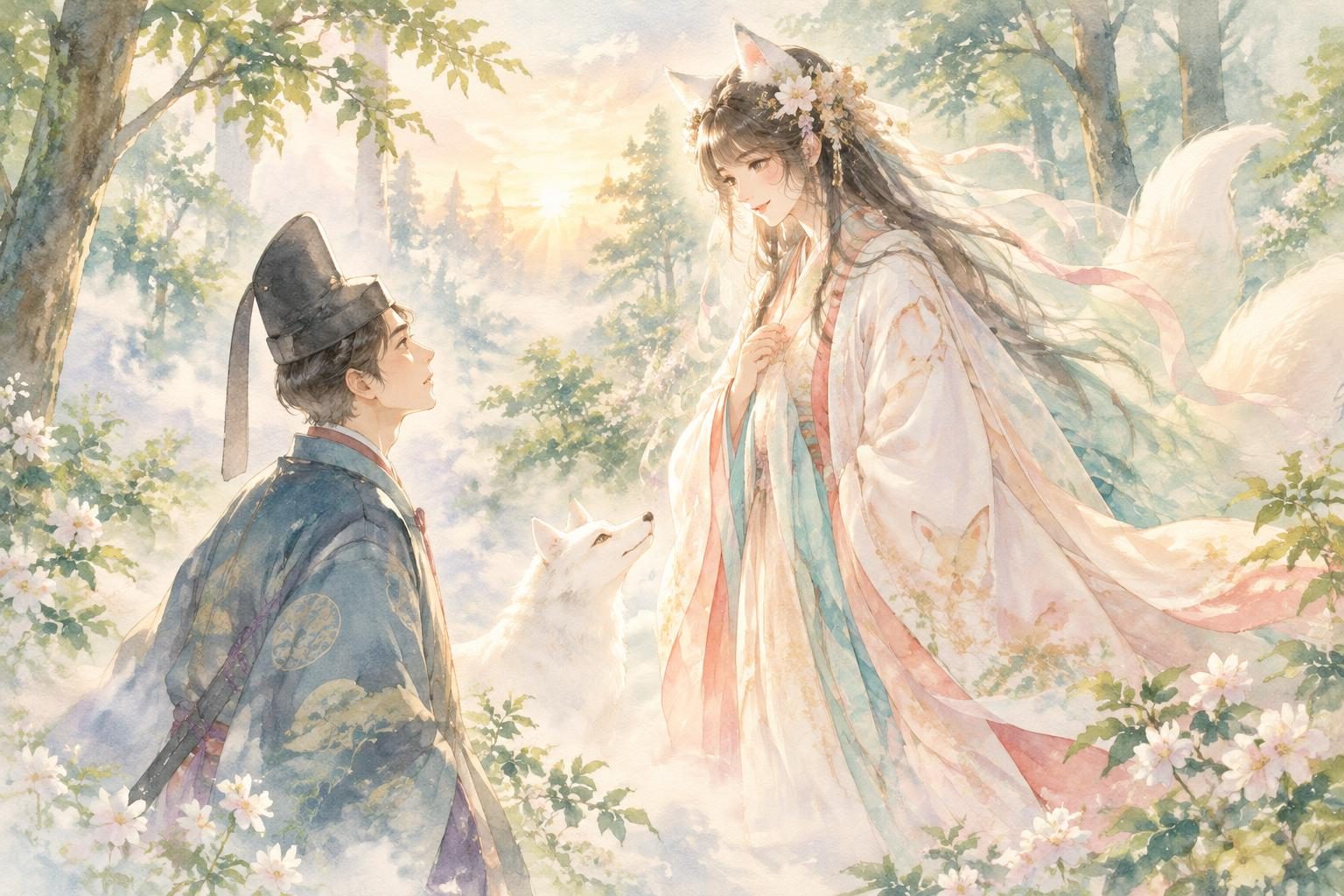
    Abe no Yasuna and Kuzunoha's transformation in Shinoda Forest at sunrise.
    AI生成イメージ / AI-generated illustration (not a photograph of the actual place)

    The Tale of Abe no Yasuna and the White Fox

    LEGEND: The Rescue and Transformation

    According to the legend, Abe no Yasuna, a nobleman, encountered a white fox in distress in Shinoda Forest. After rescuing the fox, it transformed into a beautiful woman named Kuzunoha. Grateful for his kindness, Kuzunoha married Yasuna, and together they had a son named Dōjimaru, who would later be known as the famed onmyoji, Abe no Seimei. This transformation from fox to human and the subsequent marriage highlight themes of gratitude and the mystical bond between humans and the supernatural. The story is often recounted during local festivals and gatherings, where the tale of Yasuna’s bravery and Kuzunoha’s gratitude is celebrated.

    LEGEND: The Birth of Abe no Seimei

    The birth of Dōjimaru, later known as Abe no Seimei, is a significant element of the legend. Seimei is celebrated in Japanese history as a master of onmyōdō, a traditional Japanese esoteric cosmology. The legend of his birth from a fox mother imbues his character with a mystical origin, suggesting that his supernatural skills were inherited from his mother, Kuzunoha. This aspect of the tale emphasizes the blend of human and supernatural worlds. The story of Seimei’s origins is a popular subject in local storytelling, with many believing that his abilities were a direct gift from his fox lineage.

    Danjiri-of-Osaka-Izumi001 - Roads in Izumi, Osaka, Izumi Danjiri Matsuri
    “Danjiri-of-Osaka-Izumi001” (Roads in Izumi, Osaka, Izumi Danjiri Matsuri) by 阪神強いなプラス (Japanese User), CC BY-SA 3.0, source, via Wikimedia Commons

    The Heartbreaking Departure and Famous Farewell Poem

    LEGEND: Kuzunoha’s Departure

    The legend tells that when Dōjimaru accidentally saw Kuzunoha’s true fox form, she had to leave her family. Before departing, she left behind a poignant farewell poem: “If you yearn for me, come and seek me in Shinoda Forest of Izumi Province, where the leaves of kuzu hide my regret.” This poem is central to the legend, symbolizing her enduring love and sorrow. It encapsulates the themes of love, loss, and longing, leaving a lasting emotional impact on those who hear it. The poem is often recited at the shrine, with visitors reflecting on the themes of love and sacrifice that it conveys.

    Visiting Kuzunoha Inari Shrine in Izumi, Osaka

    FACT: Shrine Features and Cultural Significance

    The Kuzunoha Inari Shrine is a place of deep cultural and spiritual importance. Visitors come to pray for children’s welfare and safe childbirth, reflecting the maternal aspect of the Kuzunoha legend. The shrine grounds are home to several significant landmarks, including a large camphor tree, known as Chie no Kusu, which is designated as a Natural Monument by Izumi City. Folklore suggests that this tree is where the white fox disappeared. The shrine’s connection to the legend makes it a poignant site for those seeking blessings related to family and fertility. The serene atmosphere and historical significance make it a popular destination for both locals and tourists.

    FACT: Sacred Landmarks and Mystical Elements

    Within the shrine grounds, visitors can find the Sugatami-no-Ido, or Mirror Well, where the fox is said to have seen her reflection. Additionally, there is a stone believed to be bewitched by a fox, adding to the mystical aura of the site. These elements not only enhance the legend but also provide tangible connections to the story. The presence of these landmarks allows visitors to physically engage with the legend, offering a unique and immersive experience. Many visitors leave offerings or prayers at these sites, hoping to connect with the spirit of Kuzunoha and seek her blessings.

    Izumi-City-Osaka-Japan001 - Izumi, Osaka
    “Izumi-City-Osaka-Japan001” (Izumi, Osaka) by 阪神強いなプラス (Japanese User), CC BY-SA 3.0, source, via Wikimedia Commons

    The Legend’s Legacy in Kabuki and Japanese Theater

    FACT: Theatrical Adaptations

    The legend of Kuzunoha has been immortalized in Japanese theater, particularly in early modern puppet (bunraku) and kabuki performances. One notable adaptation is Chikamatsu’s Ashiya Dōman Ōuchi Kagami from 1734, which dramatizes the tale and highlights its enduring appeal in Japanese culture. These performances not only preserve the legend but also bring it to life, allowing audiences to experience the drama and emotion of Kuzunoha’s story through the art of theater. Theatrical adaptations continue to draw audiences, keeping the legend alive and relevant in contemporary culture.

    Nearby Guide

    Nearby sights

    • Shinodanomori Furusato Museum (Izumi) — A local history museum and community center where you can see exhibits related to the legend and a statue of Lady Kuzunoha and her son, as well as a large pond purported to have once been used by Kuzunoha as a mirror. details

    Where to eat

    • Kuzunoha Inari Shrine’s Magatama Fox Charm (Izumi) — A unique charm inspired by the Kuzunoha legend, featuring a magatama in the shape of a white fox combined with a glass bead of a different color, created in collaboration with Satake Glass. details
    • Shinodanomori Kuzunoha Inari Shrine’s Fox-themed Charms (Izumi) — The shrine office sells unique charms, including a fox holding a fortune slip in its mouth and votive plaques decorated with pictures of foxes. details
    Locator map of Japan: Izumi, Osaka
    Legend site: Izumi, Osaka — Source: Map of Japan with highlight on 27 Osaka prefecture.svg; Map: Lincun, CC BY-SA 3.0, via Wikimedia Commons

    Regional guide

    Location: Izumi, Osaka Prefecture

    • Visiting spot: Shinoda-no-Mori Kuzunoha Inari Shrine (Izumi) — source
    • Chie-no-Kusu (Large camphor tree) (Izumi) — source
    • Sugatami-no-Ido (Mirror Well) (Izumi) — source

    Sources

    About the author

    JAPAN ESSENCE Editorial Team
    Our mission is to bring you Japan’s legends, myths, festivals and living traditions, through both historical fact and the stories passed down over generations.

  • The True Legend of Nurikabe: Fukuoka’s Invisible Wall Yokai

    The True Legend of Nurikabe: Fukuoka’s Invisible Wall Yokai

    In Onga, Fukuoka Prefecture, a mysterious yokai known as the Nurikabe is said to haunt the night roads, creating invisible barriers that confound travelers. This legendary creature, deeply rooted in the folklore of northern Kyushu, continues to captivate both locals and visitors with its enigmatic presence.

    Nurikabe from the Bakemono no e scroll in the Harry F. Bruning Collection of Japanese books and manuscripts at Brigham Young
    “Nurikabe Bakemono no e BYU” by Anonymous Unknown author, Public domain, via Wikimedia Commons

    Introduction to Japan’s Invisible Wall

    FACT: What the records say

    The Nurikabe is a yokai from northern Kyushu, most strongly associated with Onga District in Fukuoka Prefecture. According to the “Yōkai Glossary” by folklorist Kunio Yanagita, the Nurikabe manifests as an invisible barrier that blocks travelers’ paths at night. This phenomenon was notably recorded on the coastal paths of Onga District, which was then part of Chikuzen Province. Yanagita documented that when one walks these paths at night, the way forward suddenly feels like a wall, and sweeping the bottom of this invisible obstruction with a stick can make it disappear, while striking the top has no effect.

    LEGEND: The story told in Onga

    According to local tradition, the Nurikabe is an invisible wall that appears unexpectedly on dark roads, causing disorientation and confusion among travelers. The name “Nurikabe” itself evokes the image of freshly plastered walls, suggesting that the phenomenon might have originated from the experience of losing one’s way in the dark, especially on narrow paths surrounded by buildings or dense vegetation. The invisibility of the Nurikabe adds to its mystique, as it is said to be an unseen force rather than a visible entity.

    Illustration of the Nurikabe yokai subtly redirecting a traveler's path on a sunlit road in Onga, Fukuoka.
    AI生成イメージ / AI-generated illustration (not a photograph of the actual place)

    The Origins of Nurikabe in Onga District, Fukuoka

    FACT: Historical context and interpretations

    The Nurikabe legend is deeply tied to the geography and history of Onga District. The region’s coastal roads, often shrouded in darkness and surrounded by natural and man-made obstacles, provided the perfect setting for tales of mysterious encounters. Scholars suggest that the etymology of “Nurikabe”—which conjures images of freshly plastered walls—reflects the disorienting experiences of travelers navigating these challenging paths at night. This interpretation aligns with the idea that the yokai’s origins lie in the natural human fear of the unknown and the unseen.

    Onga River Source park01 - Kama, Fukuoka, Parks in Fukuoka prefecture
    “Onga River Source park01” (Kama, Fukuoka, Parks in Fukuoka prefecture) by Muyo, CC BY-SA 4.0, source, via Wikimedia Commons

    Kunio Yanagita and the Folklore of Chikuzen Province

    FACT: Yanagita’s contribution to yokai folklore

    Kunio Yanagita, a prominent folklorist, played a crucial role in documenting and preserving the story of the Nurikabe. His work in the “Yōkai Glossary” provided a detailed account of this yokai, capturing the essence of the oral traditions passed down through generations in Onga. Yanagita’s records are invaluable for understanding the cultural and historical significance of the Nurikabe, as they offer insights into the beliefs and fears of the people who lived in the region during his time.

    How Travelers Countered the Invisible Obstruction

    LEGEND: Local remedies and beliefs

    Local tradition offers a unique method for dealing with the Nurikabe. It is said that sweeping the bottom of the invisible wall with a stick can dispel the barrier, allowing the traveler to continue their journey. This practice reflects the belief in simple, practical solutions to supernatural problems, a common theme in Japanese folklore. Striking the top of the wall, however, is believed to have no effect, emphasizing the importance of understanding and respecting the nuances of these traditional remedies.

    Cosmos on the right bank of the Onga River in Mizumaki Town - Onga River, Mizumaki, Fukuoka
    “Cosmos on the right bank of the Onga River in Mizumaki Town” (Onga River, Mizumaki, Fukuoka) by 水だらけのプール, CC0, source, via Wikimedia Commons

    From Invisible Phenomenon to Shigeru Mizuki’s Gentle Giant

    FACT: Evolution of the Nurikabe’s image

    While the traditional Nurikabe is an invisible force, its modern depiction has been influenced by popular culture. Shigeru Mizuki, a renowned manga artist, reimagined the Nurikabe as a gentle giant in his series “GeGeGe no Kitarō.” This version of the yokai is portrayed as a massive, white, wall-shaped creature with a placid personality. Mizuki’s work has popularized this new image of the Nurikabe, making it a familiar figure in Japanese pop culture, distinct from the original invisible phenomenon.

    LEGEND: Variants and modern interpretations

    Despite the modern reinterpretations, the classical oral tradition of the Nurikabe remains focused on its role as an invisible obstruction. Scholars note that the illustrated forms seen today are modern representations, distinct from the original folklore. In 2007, a yokai scroll from the Edo period was discovered, depicting a three-eyed beast labeled as “Nurikabe.” However, its connection to the Onga legend is unclear, highlighting the diverse interpretations and evolutions of this enigmatic yokai over time.

    Exploring the Cultural Legacy of Kyushu’s Yokai

    FACT: The enduring allure of the Nurikabe

    The Nurikabe continues to be a symbol of the rich cultural heritage of Onga and the broader Kyushu region. Its story, rooted in the landscapes and history of Fukuoka, offers a glimpse into the fears and imaginations of past generations. Today, the Nurikabe remains a popular subject of study and fascination, drawing both locals and tourists to explore the mysteries of this invisible wall yokai.

    Nearby Guide

    Access

    • Nishitetsu Bus Wakamatsu Bus Stop (Onga) — A 10-minute walk from the Onga Shimazu-Maruyama Natural Park, this bus stop offers access to local bus routes serving the area. details
    • Onga Sports Park Parking Lot (Onga) — Provides parking facilities for visitors to Onga Sports Park, a central location in the town. details

    Nearby sights

    • Onga Shimazu-Maruyama Natural Park (Onga) — A riverside park featuring ancient burial mounds, seasonal flowers, and exhibition halls, offering a blend of history and nature. details
    • Onga River (Nakama) — A historically significant river once vital for coal transport, now a scenic spot for relaxation and nature observation. details
    • Onga River Pumping Station (Nakama) — A UNESCO World Heritage site, this 1910-built station was crucial for industrial water supply during Japan’s Meiji era. official site

    Where to stay

    • Paruhoteruonga (Onga) — A local hotel offering comfortable accommodations for visitors to Onga Town. details
    • Ryotei Ryokan Daifuku-so (Okagaki) — A traditional Japanese inn offering a ryotei-style experience, located in the nearby Okagaki area. details

    Where to eat

    • Mame Kobo Ongaeshi (Onga) — A café specializing in Japanese sweets, offering fresh zenzai served with mochi filled with homemade red bean paste. details
    • Tsukushi no Ko (Onga) — A cozy, family-run yakitori and teppan restaurant with over 30 years of history, known for its quality ingredients and affordable prices. details
    • Agohachi (Onga) — A casual spot to enjoy fresh seafood, offering a variety of dishes in a relaxed setting. details
    Locator map of Japan: Onga, Fukuoka
    Legend site: Onga, Fukuoka — Source: Map of Japan with highlight on 40 Fukuoka prefecture.svg; Map: Lincun, CC BY-SA 3.0, via Wikimedia Commons

    Sources

    About the author

    JAPAN ESSENCE Editorial Team
    Our mission is to bring you Japan’s legends, myths, festivals and living traditions, through both historical fact and the stories passed down over generations.

  • The Uwan: Exploring Japan’s Mysterious Voice-Shouting House Yokai

    The Uwan: Exploring Japan’s Mysterious Voice-Shouting House Yokai

    In Aomori, a prefecture known for its rich folklore, the mysterious Uwan stands out as a unique yokai. This disembodied voice is said to haunt old or abandoned houses, startling those inside with a sudden shout of ‘uwan’.

    Uwan うハん from Bakemono no e (化物之繪, c. 1700), Harry F. Bruning Collection of Japanese Books and Manuscripts, L. Tom Perry Spec
    “Uwan (cropped)” by Brigham Young University, CC BY-SA 4.0, via Wikimedia Commons

    What Is the Uwan? The Voice-Shouting Yokai of Aomori

    FACT: Characteristics of the Uwan

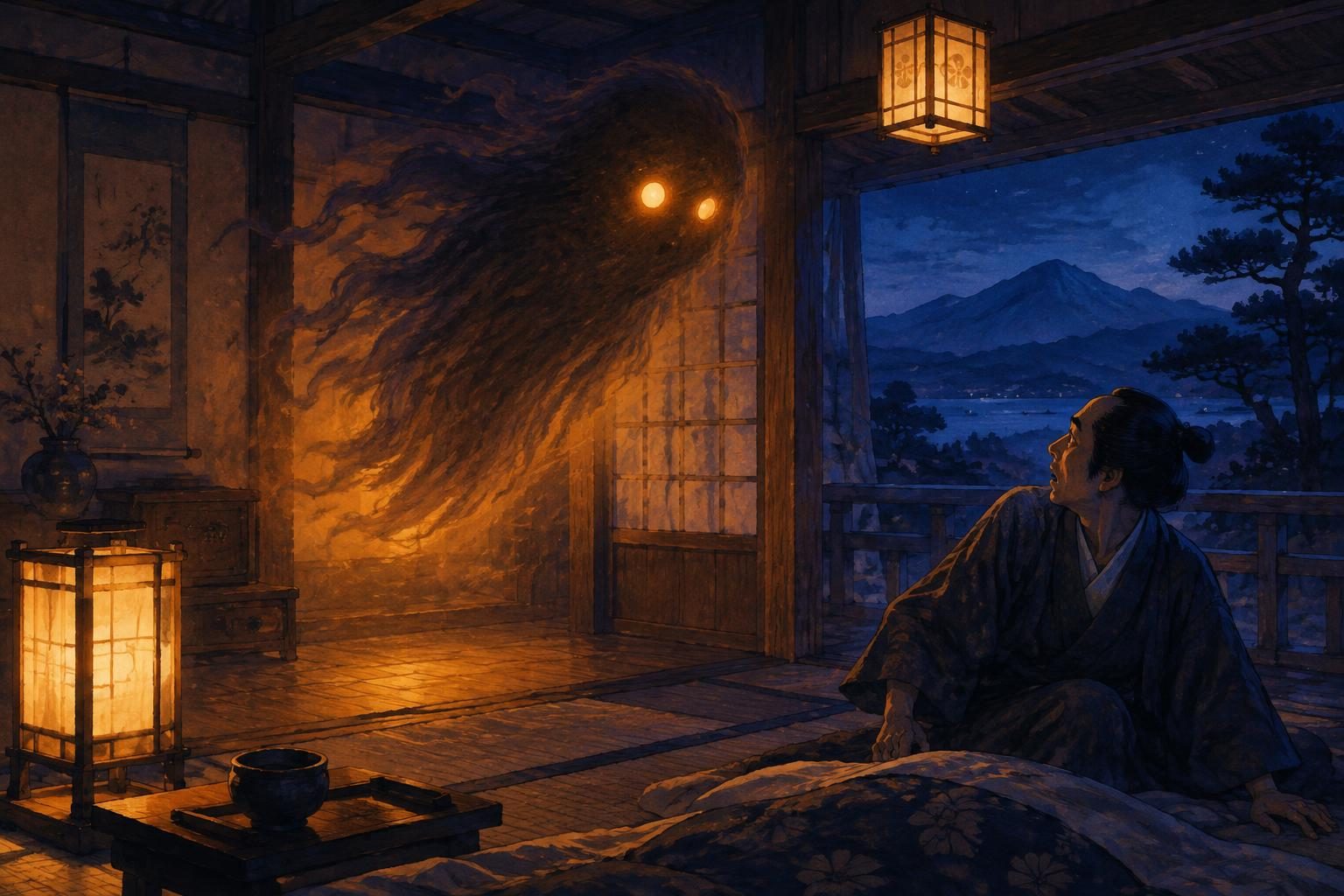
    The Uwan is a house yokai, a type of supernatural creature in Japanese folklore, known for its peculiar method of haunting. Unlike other yokai that may have physical forms, the Uwan is identified solely by its voice. It is said to frighten people by suddenly shouting ‘uwan’ when they are inside old or deserted buildings. This phenomenon is particularly associated with Aomori Prefecture, where the legend of the Uwan is most prevalent. The voice is only heard by those inside the building, adding to the eerie nature of this yokai.

    The Uwan’s presence is often described as unsettling, not just because of the suddenness of its shout, but also due to the mystery surrounding its intentions. In Japanese culture, where respect for spirits and the unseen is deeply ingrained, the Uwan’s behavior challenges the boundaries between the known and the unknown, leaving those who encounter it with a sense of unease.

    FACT: The Auditory Nature of Uwan

    What makes the Uwan particularly intriguing is its purely auditory manifestation. Unlike other spirits that might be seen or felt, the Uwan’s presence is marked solely by sound. This characteristic sets it apart from other house spirits, emphasizing the importance of sound in Japanese folklore. The sudden shout of ‘uwan’ within the silent confines of an old house can be a startling experience, leaving those who hear it questioning the source and intent of the sound.

    This auditory focus highlights the cultural significance of sound in Japanese traditions, where it is often seen as a medium through which spirits communicate. The Uwan’s shout disrupts the quietude of an abandoned space, suggesting a lingering presence that defies the physical emptiness of the location.

    The Uwan yokai floating in a lantern-lit Aomori house by night, with a startled Edo-period figure inside.
    AI生成イメージ / AI-generated illustration (not a photograph of the actual place)

    Historical Roots: Depictions in Edo-Period Art

    FACT: Toriyama Sekien’s Depiction

    The Uwan was depicted by the renowned Edo-period artist Toriyama Sekien in his 1776 work, Gazu Hyakki Yagyō. Sekien illustrated the Uwan as a three-fingered figure, capturing the imagination of those interested in yokai. This depiction has contributed to the Uwan’s enduring presence in Japanese folklore, despite its primarily auditory nature.

    Sekien’s artistic interpretation provides a rare visual representation of the Uwan, offering a glimpse into how such entities were conceptualized during the Edo period. The three-fingered depiction adds a layer of mystique, suggesting a form that is as enigmatic as the voice itself.

    FACT: Influence of Sekien’s Work

    Toriyama Sekien’s depiction of the Uwan in Gazu Hyakki Yagyō is significant not only for its artistic merit but also for its role in preserving and popularizing yokai stories. Sekien’s work serves as an important cultural artifact, offering insights into how these supernatural entities were perceived during the Edo period. His portrayal of the Uwan as a three-fingered figure adds a visual element to an otherwise invisible presence, bridging the gap between the auditory and the visual in folklore.

    Sekien’s influence extends beyond art, as his works have become foundational texts for understanding yokai. By documenting these creatures, Sekien helped ensure their stories would be passed down through generations, allowing the Uwan to remain a fixture in Japanese cultural consciousness.

    Aomori Bay Asamushi Onsen Japan02bs5 - Aomori Bay, Ports and harbours in Aomori prefecture
    “Aomori Bay Asamushi Onsen Japan02bs5” (Aomori Bay, Ports and harbours in Aomori prefecture) by 663highland, CC BY 2.5, source, via Wikimedia Commons

    The Aomori Legend and Tohoku Folklore

    LEGEND: The Tale from Aomori

    According to legend, as recounted in Yamada Norio’s 1974 book Tohoku Kaidan no Tabi, an old house in Aomori was once plagued by the Uwan. The owner of the house was kept awake by the incessant shouting of ‘uwan’, while neighbors outside heard nothing unusual. This story highlights the Uwan’s selective haunting, where only those within the confines of the haunted space experience its presence.

    This tale underscores the personal nature of yokai encounters, where the experience is unique to the individual. The selective auditory phenomenon adds a layer of mystery, as it suggests an intentional targeting by the Uwan, leaving those affected to ponder why they were chosen.

    LEGEND: Variants and Interpretations

    While the tale from Yamada Norio’s book is one of the most well-known accounts, there are various interpretations and retellings of the Uwan legend across Aomori. Some versions suggest that the Uwan’s voice serves as a warning or a protective measure, while others portray it as a mischievous spirit intent on causing unrest. These differing interpretations reflect the rich tapestry of folklore in the region, where stories evolve and adapt over time.

    These variations in the Uwan’s narrative demonstrate the fluid nature of folklore, where stories are shaped by cultural context and personal beliefs. The Uwan’s ambiguous role—whether as protector or trickster—allows for a wide range of interpretations, each adding depth to the legend.

    Modern Interpretations and Pop Culture Myth

    FACT: Influence on Modern Culture

    While the Uwan remains a staple of traditional folklore, it has also found its way into modern interpretations and pop culture. The concept of a voice-only spirit has been adapted into various media, contributing to the broader understanding of yokai in contemporary Japan. However, these modern adaptations often introduce elements not found in the original legends, such as the trope of shouting back to the Uwan to dispel it, which lacks historical basis.

    These adaptations often blend traditional elements with new narratives, creating a dynamic interplay between past and present. The Uwan’s presence in modern media highlights the enduring fascination with yokai, as these stories continue to captivate audiences both in Japan and abroad.

    FACT: The Evolution of Uwan in Media

    In contemporary media, the Uwan has been reimagined in various forms, from animated series to literature, often taking on new characteristics that align with modern storytelling techniques. These adaptations highlight the flexibility of folklore, as traditional stories are reshaped to fit new contexts and audiences. Despite these changes, the core essence of the Uwan as a mysterious, voice-only spirit remains intact, continuing to captivate those interested in Japanese supernatural tales.

    The evolution of the Uwan in media illustrates the adaptability of folklore, where ancient stories are given new life through creative reinterpretation. This process ensures that the Uwan remains relevant, resonating with contemporary themes while preserving its traditional roots.

    Aomori kukou - Aomori Airport
    “Aomori kukou” (Aomori Airport) by Shishi-netman, CC BY-SA 4.0, source, via Wikimedia Commons

    Exploring Japanese House Spirits and Folklore

    FACT: The Role of House Spirits in Japanese Folklore

    House spirits like the Uwan play a significant role in Japanese folklore, reflecting cultural beliefs about the spiritual world and the unseen forces that inhabit everyday spaces. These spirits are often seen as guardians or, conversely, as mischievous entities that disrupt the peace of a home. The Uwan, with its unsettling vocal presence, embodies the latter, serving as a reminder of the mysteries that old houses might conceal.

    The concept of house spirits emphasizes the connection between the physical and spiritual realms, where the home is seen as a microcosm of the larger universe. The Uwan’s presence challenges the sanctity of this space, prompting reflection on the balance between harmony and chaos.

    FACT: Cultural Significance of House Spirits

    The presence of house spirits in Japanese folklore underscores the cultural importance of the home as a sacred space. These spirits, whether benevolent or malevolent, are believed to influence the harmony and well-being of a household. The Uwan, as a voice that disturbs the silence of an old house, challenges this harmony, prompting those who encounter it to consider the balance between the physical and spiritual worlds.

    This cultural significance is reflected in the rituals and practices designed to appease or ward off these spirits, highlighting the deep respect for the unseen forces that are believed to coexist with the human world. The Uwan, with its enigmatic shout, serves as a reminder of the delicate interplay between these realms.

    Locator map of Japan: Aomori, Aomori
    Legend site: Aomori, Aomori — Source: Map of Japan with highlight on 02 Aomori prefecture.svg; Map: Lincun, CC BY-SA 3.0, via Wikimedia Commons

    Sources

    About the author

    JAPAN ESSENCE Editorial Team
    Our mission is to bring you Japan’s legends, myths, festivals and living traditions, through both historical fact and the stories passed down over generations.

  • Hiyosunbo: Uncovering Miyazaki’s Unique River Spirit and Kappa Legend

    Hiyosunbo: Uncovering Miyazaki’s Unique River Spirit and Kappa Legend

    In Hyūga City, Miyazaki Prefecture, the legend of Hiyosunbo, a unique river spirit, weaves a tale that captures the imagination and highlights the rich folklore of Southern Kyushu. This enigmatic figure is said to inhabit the Shiiya and Tsuboya Rivers, offering a glimpse into the region’s deep connection with its waterways.

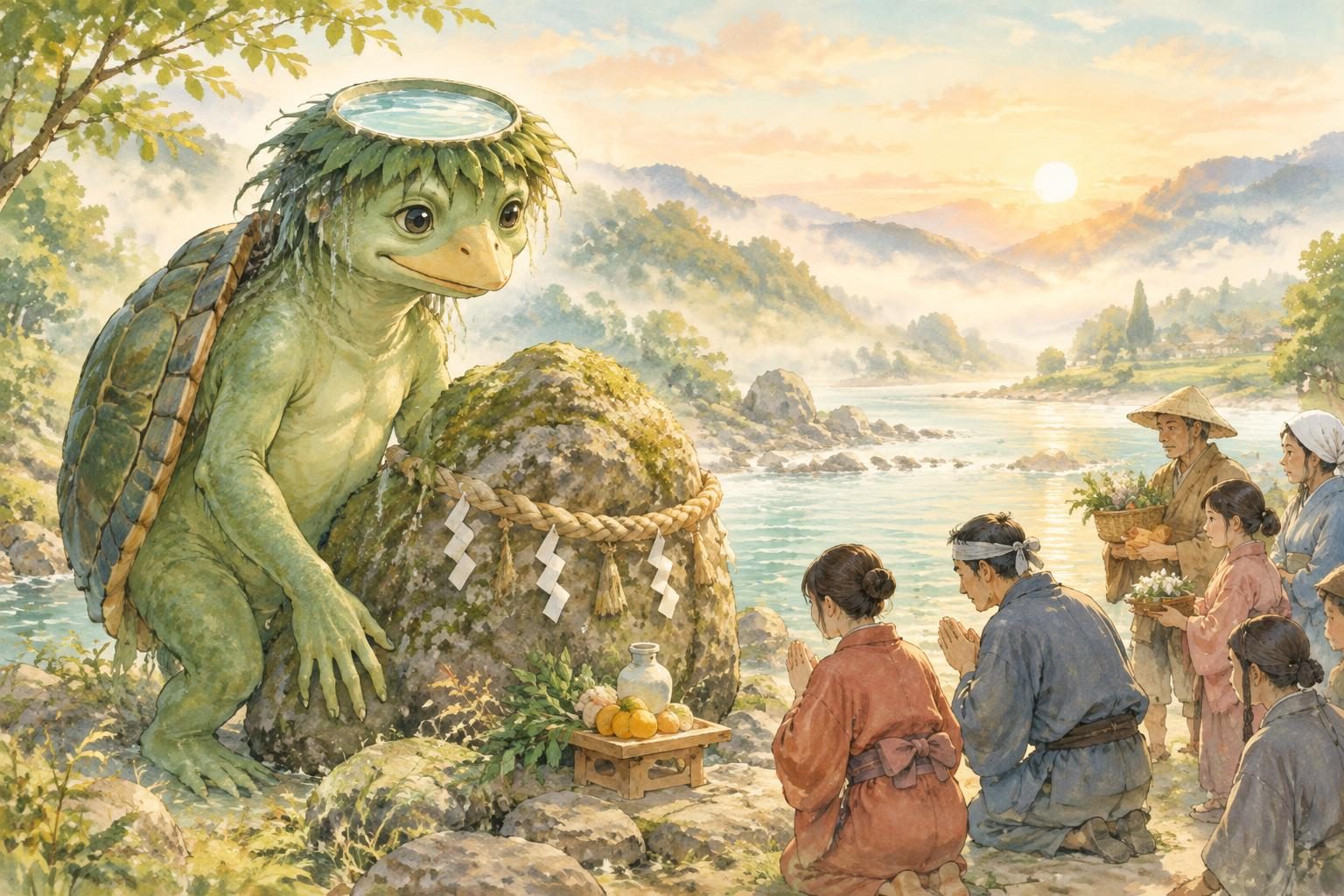
    Hiyosunbo the river spirit beside the sacred rock, with villagers offering gifts by the Shiiya River.
    AI生成イメージ / AI-generated illustration (not a photograph of the actual place)

    Who Is Hiyosunbo? The Unique River Spirit of Southern Kyushu

    FACT: What the records say

    The legend of Hiyosunbo centers around the Shiiya and Tsuboya Rivers in what was once Tōgō Town, now part of Hyūga City in Miyazaki Prefecture. According to sources, Hiyosunbo is a river spirit, often compared to the more widely known kappa, a water-dwelling creature in Japanese folklore. This spirit is said to have a distinct presence in the local culture, particularly influencing rituals and stories passed down through generations. The presence of Hiyosunbo in these narratives underscores the importance of the rivers in the daily lives of the local people, serving both as a source of sustenance and a spiritual entity.

    LEGEND: The story of Hiyosunbo

    According to local tradition, Hiyosunbo is a guardian of the rivers, known for its protective yet sometimes mischievous nature. The spirit is believed to have the power to control the flow of the river, affecting the lives of those who live nearby. One popular tale speaks of a promise made between Hiyosunbo and the villagers, involving a rock that marks the spirit’s presence. This rock is said to be a sacred site where villagers would offer prayers and gifts to appease the spirit, ensuring the safety and prosperity of their community. The legend suggests that maintaining a harmonious relationship with Hiyosunbo is crucial for the well-being of the village, reflecting a broader cultural belief in the interdependence between humans and nature.

    The Legend of the Shiiya River: The Promise and the Rock

    FACT: The significance of the river

    The Shiiya River, along with the Tsuboya River, plays a crucial role in the local ecosystem and community life. These rivers have been vital for agriculture, providing water for rice paddies and other crops. The rivers’ health directly impacts the livelihood of the residents, making the legend of Hiyosunbo even more significant as a symbol of the delicate balance between nature and human activity. The rivers are not just physical landmarks but are deeply embedded in the social and cultural fabric of the area, influencing local customs and traditions.

    LEGEND: The promise and the sacred rock

    One account of the legend tells of a promise made by the villagers to Hiyosunbo, which involved maintaining the river’s cleanliness and respecting its natural course. In return, the spirit would ensure bountiful harvests and protect the village from floods. The sacred rock, believed to be the dwelling place of Hiyosunbo, became a site of ritual offerings. Villagers would gather here during festivals to honor the spirit and renew their promise, reinforcing the bond between the community and the river. This practice highlights the reciprocal relationship between the villagers and the river spirit, where mutual respect and care lead to communal prosperity.

    Hyūga nada 01 - Cape Hyūga
    “Hyūga nada 01” (Cape Hyūga) by hirotomo t from japan, CC BY-SA 2.0, source, via Wikimedia Commons

    Seasonal Migrations and Village Rituals: Appeasing the Water Spirit

    FACT: Cultural practices and rituals

    In Hyūga City, traditional rituals and festivals are held to honor Hiyosunbo and ensure the community’s prosperity. These events often coincide with the agricultural calendar, marking the changing seasons and the river’s role in sustaining life. The rituals involve offerings of food and drink, as well as performances of traditional music and dance, reflecting the community’s gratitude and reverence for the river spirit. Such practices are integral to the cultural identity of the region, serving as a means of preserving historical narratives and fostering community cohesion.

    LEGEND: The sumo ritual

    According to local legend, one unique ritual involves a sumo wrestling match performed as a symbolic gesture to entertain and appease Hiyosunbo. This event is said to occur during specific times of the year when the spirit is believed to migrate along the river. The sumo ritual serves as a reminder of the spirit’s presence and the villagers’ commitment to maintaining harmony with the natural world. This tradition not only entertains but also educates the younger generation about the importance of respecting and honoring the natural forces that influence their lives.

    Hiyosunbo Versus Kappa: Understanding Southern Kyushu Folklore

    FACT: Distinguishing features

    While Hiyosunbo shares some characteristics with the kappa, such as its aquatic nature, it is distinct in its role as a guardian spirit rather than a trickster. The kappa is often depicted as mischievous and sometimes malevolent, whereas Hiyosunbo is seen as a protector and benefactor of the community. This distinction highlights the unique cultural identity of Southern Kyushu and its interpretation of river spirits. The contrasting portrayals of these spirits reflect the diverse ways in which different regions of Japan interpret and interact with their natural surroundings.

    LEGEND: Local variations and interpretations

    Local variations of the Hiyosunbo legend emphasize different aspects of the spirit’s character. Some accounts describe Hiyosunbo as a benevolent figure, while others portray it as more temperamental, requiring careful attention and respect from the villagers. These variations reflect the diverse interpretations of the legend and its adaptability to different cultural contexts within the region. The flexibility of the legend allows it to remain relevant across generations, adapting to the evolving cultural and environmental landscape.

    Tōgō-jinja (東郷神社) - Monuments and memorials to Tōgō Heihachirō
    “Tōgō-jinja (東郷神社)” (Monuments and memorials to Tōgō Heihachirō) by Matsujima, CC BY-SA 4.0, source, via Wikimedia Commons

    Tracing the Myth: Exploring Hyuga City’s Folklore Landscape

    FACT: Visiting the rivers and local sites

    Visitors to Hyūga City can explore the Shiiya and Tsuboya Rivers, where the legend of Hiyosunbo is said to originate. These sites offer a glimpse into the natural beauty and cultural heritage of the area. While the sacred rock may not be easily identifiable, the rivers themselves serve as living reminders of the legend and its enduring impact on the community. Exploring these waterways provides an opportunity to connect with the local culture and understand the historical significance of the legend in shaping the identity of the region.

    Nearby Guide

    Nearby sights

    • Shiiba Village (Shiiba Village) — Approximately 90 minutes by car from Hyūga City, Shiiba Village is renowned for its terraced rice paddies and traditional farming practices. The village offers scenic hikes and cultural experiences, including the Shiiba Kagura dance. official site
    • Cape Hyūga (Hyūga City) — Cape Hyūga offers panoramic ocean views and is known for its rugged volcanic seascapes. It’s a popular spot for surfing and enjoying the natural coastline. official site

    Where to eat

    • Mimitsu Port Town (Hyūga City) — A historic port town known for its fresh seafood restaurants, offering a variety of local dishes. details
    Locator map of Japan: Hyūga City, Miyazaki
    Legend site: Hyūga City, Miyazaki — Source: Map of Japan with highlight on 45 Miyazaki prefecture.svg; Map: Lincun, CC BY-SA 3.0, via Wikimedia Commons

    Sources

    About the author

    JAPAN ESSENCE Editorial Team
    Our mission is to bring you Japan’s legends, myths, festivals and living traditions, through both historical fact and the stories passed down over generations.

  • The Legend of Mount Hakusan: Taichō Daishi and the 3,000 Snakes

    The Legend of Mount Hakusan: Taichō Daishi and the 3,000 Snakes

    Mount Hakusan, located in Hakusan, Ishikawa Prefecture, stands as one of Japan’s sacred mountains, steeped in myths and legends. Among these is the captivating tale of Taichō Daishi and the 3,000 snakes.

    Taichō Daishi performs a sealing ritual among serpents on Mount Hakusan in vivid autumn colors.
    AI生成イメージ / AI-generated illustration (not a photograph of the actual place)

    Introduction to Sacred Mount Hakusan

    FACT: The Significance of Mount Hakusan

    Mount Hakusan is revered as one of Japan’s three sacred mountains, alongside Mount Fuji and Mount Tateyama. It has long been a site of pilgrimage and worship, attracting devotees from across the country. The mountain’s name, Hakusan, literally means “white mountain,” a nod to its snow-capped peaks that dominate the landscape. The mountain’s spiritual significance is deeply embedded in the local culture, with numerous shrines and temples dedicated to its veneration. Pilgrims and tourists alike are drawn to its serene beauty and the spiritual aura that surrounds it.

    Who Was Taichō Daishi? Opening the Mountain in 717

    FACT: Taichō Daishi’s Historical Influence

    Taichō Daishi, a Buddhist monk from the Nara period, is credited with “opening” Mount Hakusan for religious purposes in 717. This act of “opening” refers to the establishment of the mountain as a sacred site for Buddhist practice and pilgrimage. Taichō Daishi is celebrated for his spiritual journey and the establishment of several temples in the region. His influence extends beyond religious practices, as he is often associated with the mountain’s legends. His legacy is evident in the continued reverence for Mount Hakusan as a spiritual and cultural landmark.

    The Legend of the Three Thousand Snakes

    LEGEND: Taichō Daishi and the Serpents

    Accounts published by Japan’s Ministry of Land, Infrastructure, Transport and Tourism and Shirayama Hime Shrine tell of 3,000 serpents harming villages around Mount Hakusan. Taichō Daishi gathered and confined them at Jazuka, Karikomiike and Senjagaike. This is a religious legend associated with the mountain, not a documented historical event.

    Jazuka: The Snake Mound

    PLACE AND LEGEND: Jazuka

    Jazuka is a mound of piled stones on the upper Kanko Shindo trail. In the legend, Taichō buried 1,000 disobedient serpents here.

    Senjagaike Pond: The Snow-Covered Crater

    LEGEND: The Pond of a Thousand Snakes

    Senjagaike occupies a crater near Hakusan’s summit. In the legend, Taichō sealed 1,000 serpents beneath a lid of perennial snow. If the snow melted, the rock formation above it, Otakara-gura, would collapse to keep them confined.

    Karikomiike Pond and the Final Sealing Site

    PLACE AND LEGEND: Karikomiike Pond

    Karikomiike is in Ono, Fukui Prefecture. The shrine’s account tells of another 1,000 serpents confined there by the reflection of a great sword. It is separate from the summit ponds; plan and check access independently rather than treating all three sites as a single short walk.

    Visiting Mt. Hakusan’s Legendary Trail Sites Today

    FACT: Planning a Visit

    Reaching Jazuka and Senjagaike requires mountain hiking. Check official trail, facility, weather and snow information, and choose a route suited to your experience and fitness.

    Nearby Guide

    Access

    The shuttle to Bettodeai departs from Ichinose, not Ichirino Onsen. As of October 25, 2026, the operator announces that its 2026 season has ended. Check the operator’s official information for operating seasons, dates and fares.

    Consult Ishikawa Prefecture’s trail and facility updates before planning a hike.

    Locator map of Japan: Hakusan, Ishikawa
    Legend site: Hakusan, Ishikawa — Source: Map of Japan with highlight on 17 Ishikawa prefecture.svg; Map: Lincun, CC BY-SA 3.0, via Wikimedia Commons

    Sources

    About the author

    JAPAN ESSENCE Editorial Team
    Our mission is to bring you Japan’s legends, myths, festivals and living traditions, through both historical fact and the stories passed down over generations.

  • Hunting for Konaki-Jijii: Exploring Tokushima’s Oboke Gorge Yokai Path

    Hunting for Konaki-Jijii: Exploring Tokushima’s Oboke Gorge Yokai Path

    In the heart of Tokushima Prefecture lies Miyoshi City, a place steeped in folklore and natural beauty. It is here that the legend of Konaki-Jijii, the crying old man yokai, has its roots, particularly in the scenic Fujikawa Valley.

    Konaki-Jijii, the crying old man yokai, in a vivid summer Oboke Gorge setting, evoking Japanese folklore.
    AI生成イメージ / AI-generated illustration (not a photograph of the actual place)

    Introduction to Tokushima’s Yokai Folklore and Oboke Gorge

    FACT: Fujikawa Valley’s Scenic and Cultural Significance

    Fujikawa Valley, located in Yamashiro-cho within Miyoshi City, is a place where nature and folklore intertwine. On February 21, 2024, it was registered as a national Registered Monument in the scenic-places category, highlighting its cultural and natural importance. This valley is not only a picturesque landscape but also the birthplace of the Konaki-Jijii legend, making it a significant cultural landmark in Tokushima Prefecture. Visitors to the valley can experience the serene beauty of the area, which has inspired countless stories and legends over the centuries.

    FACT: The Scenic Beauty of Fujikawa Valley

    As a national Registered Monument (scenic-places category), Fujikawa Valley offers breathtaking views and a tranquil environment that attracts both nature lovers and those interested in Japanese folklore. The lush greenery, combined with the gentle flow of the river, creates a perfect backdrop for the mysterious and enchanting tales of yokai that have been passed down through generations. The valley’s registration underscores its importance as both a natural wonder and a cultural treasure.

    LEGEND: The Crying Old Man Spirit

    According to folklore recorded by Kunio Yanagita and local accounts, Konaki-Jijii is a yokai that appears as a crying old man. The legend tells of his deceptive nature; he lures unsuspecting passersby with the cries of a human infant. When someone picks him up, his weight increases unbearably, eventually crushing the victim. This tale, deeply rooted in the local culture, serves as a cautionary story about the dangers of the unknown. The story of Konaki-Jijii reflects the rich tapestry of Japanese folklore, where supernatural beings often embody moral lessons or warnings.

    The Legend of Konaki-Jijii: The Crying Old Man Spirit

    LEGEND: Local Traditions and Warnings

    In the local oral tradition of Miyoshi, elders would often warn children about the Konaki-Jijii. It was said that this yokai dwelled along the trail to Azami Pass, and misbehaving children were cautioned that he might take them away. This story was a tool to instill discipline and caution in the younger generation, embedding the legend into the local culture. Such tales were not uncommon in rural Japan, where the mysterious and unexplained were often attributed to the presence of yokai.

    Tokushima Miyoshi Iyanokazurabashi 1 - Taken with Canon PowerShot G9, Kazurabashi
    “Tokushima Miyoshi Iyanokazurabashi 1” (Taken with Canon PowerShot G9, Kazurabashi) by 京浜にけ at Japanese Wikipedia, CC BY-SA 3.0, source, via Wikimedia Commons

    Walking the Yokai Kaido Along Prefectural Route 272

    FACT: The Path of Yokai Heritage

    The area around Fujikawa Valley is part of the Yokai Kaido, a trail that celebrates the rich yokai heritage of the region. In 2008, the area was recognized as a Yokai Heritage site by the World Yokai Association, acknowledging over 70 regional yokai, including Konaki-Jijii. This designation highlights the cultural significance and the enduring legacy of yokai folklore in Tokushima. Walking along the Yokai Kaido, visitors can immerse themselves in the stories and legends that have shaped the region’s identity.

    FACT: Exploring the Yokai Kaido

    The Yokai Kaido offers an interactive experience for those interested in Japan’s supernatural folklore. As you walk along the trail, you can encounter various markers and displays that tell the stories of the yokai associated with the area. This journey through the Yokai Heritage site provides a unique opportunity to connect with the cultural history of Tokushima and understand the role that these mythical creatures play in Japanese tradition.

    Fujikawa Valley: Birthplace of the Legend and Registered Monument

    FACT: Statues and Monuments

    In 2001, a stone statue of Konaki-Jijii was erected in Fujikawa Valley by local volunteers. Beside it stands a monument bearing text by Natsuhiko Kyogoku, a renowned author known for his works on yokai. This site serves as a tangible connection to the legend, allowing visitors to engage with the story in a meaningful way. The statue and monument not only commemorate the legend but also celebrate the community’s efforts to preserve and promote its cultural heritage.

    FACT: The Role of Community in Preserving Legends

    The erection of the Konaki-Jijii statue and monument is a testament to the local community’s dedication to preserving their cultural heritage. By creating these landmarks, the people of Miyoshi have ensured that the legend of Konaki-Jijii remains a living part of their cultural landscape, inviting both locals and tourists to explore and appreciate the rich folklore of the region.

    Tokushima Miyoshi City Central Library ac (2) - Miyoshi City Central Library (Tokushima)
    “Tokushima Miyoshi City Central Library ac (2)” (Miyoshi City Central Library (Tokushima)) by Asturio Cantabrio, CC BY-SA 4.0, source, via Wikimedia Commons

    Exploring the Yokai House and Stone Museum at Roadside Station Oboke

    FACT: A Hub for Yokai Enthusiasts

    The Yokai House and Stone Museum, located at Roadside Station Oboke, offers an intriguing glimpse into the world of yokai. This museum displays handmade yokai dolls crafted by local residents, including representations of Konaki-Jijii. Additionally, it showcases geological specimens, adding a layer of natural history to the cultural experience. Visitors can explore these exhibits and learn more about the region’s rich folklore. The museum serves as a center for education and appreciation of the unique cultural and natural heritage of Miyoshi.

    FACT: Engaging with Local Craftsmanship

    At the Yokai House and Stone Museum, the handmade yokai dolls provide a fascinating insight into local craftsmanship and creativity. These dolls, crafted with care and attention to detail, reflect the community’s connection to their folklore and the importance of preserving these stories for future generations.

    Tips for Travelers Exploring Shikoku’s Yokai Heritage Trail

    FACT: Planning Your Visit

    For those planning to explore the Yokai Heritage Trail, Fujikawa Valley and the surrounding areas offer a unique blend of cultural and natural attractions. While specific visiting hours and fees for the Yokai House and Stone Museum are updated regularly, it is advisable to check the official website for the most current information. Travelers can enhance their experience by participating in local festivals and events that celebrate the region’s yokai heritage, providing a deeper understanding of the cultural significance of these mythical creatures.

    Locator map of Japan: Miyoshi, Tokushima
    Legend site: Miyoshi, Tokushima — Source: Map of Japan with highlight on 36 Tokushima prefecture.svg; Map: Lincun, CC BY-SA 3.0, via Wikimedia Commons

    Regional guide

    Location: Miyoshi, Tokushima Prefecture

    • Handmade yokai dolls and carvings (Miyoshi) — source
    • Yokai House and Stone Museum (Miyoshi) — source

    Sources

    About the author

    JAPAN ESSENCE Editorial Team
    Our mission is to bring you Japan’s legends, myths, festivals and living traditions, through both historical fact and the stories passed down over generations.