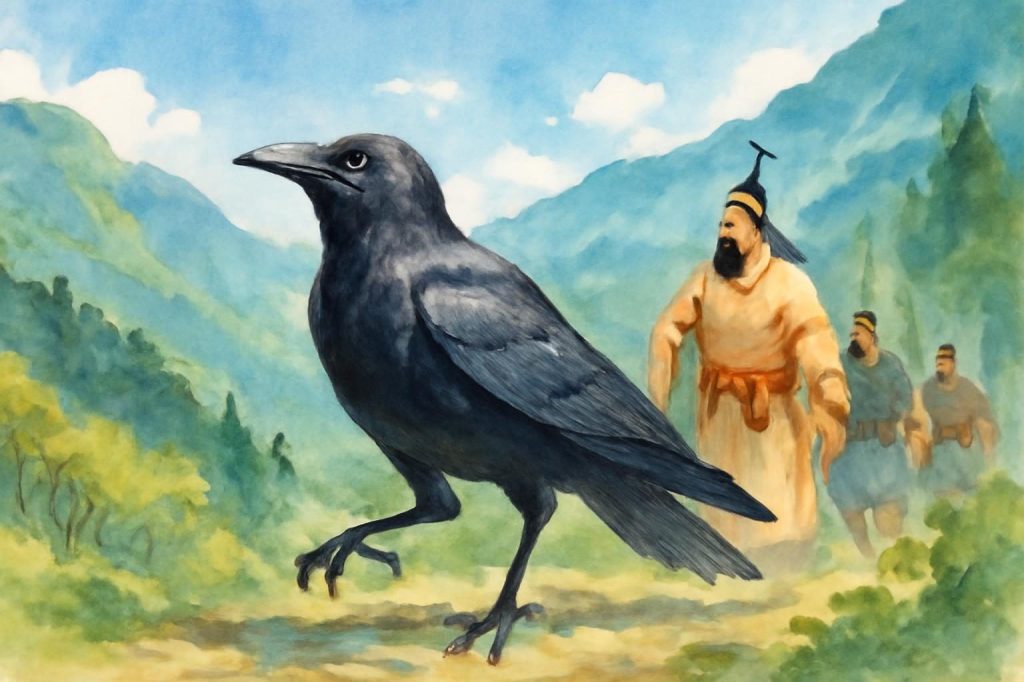
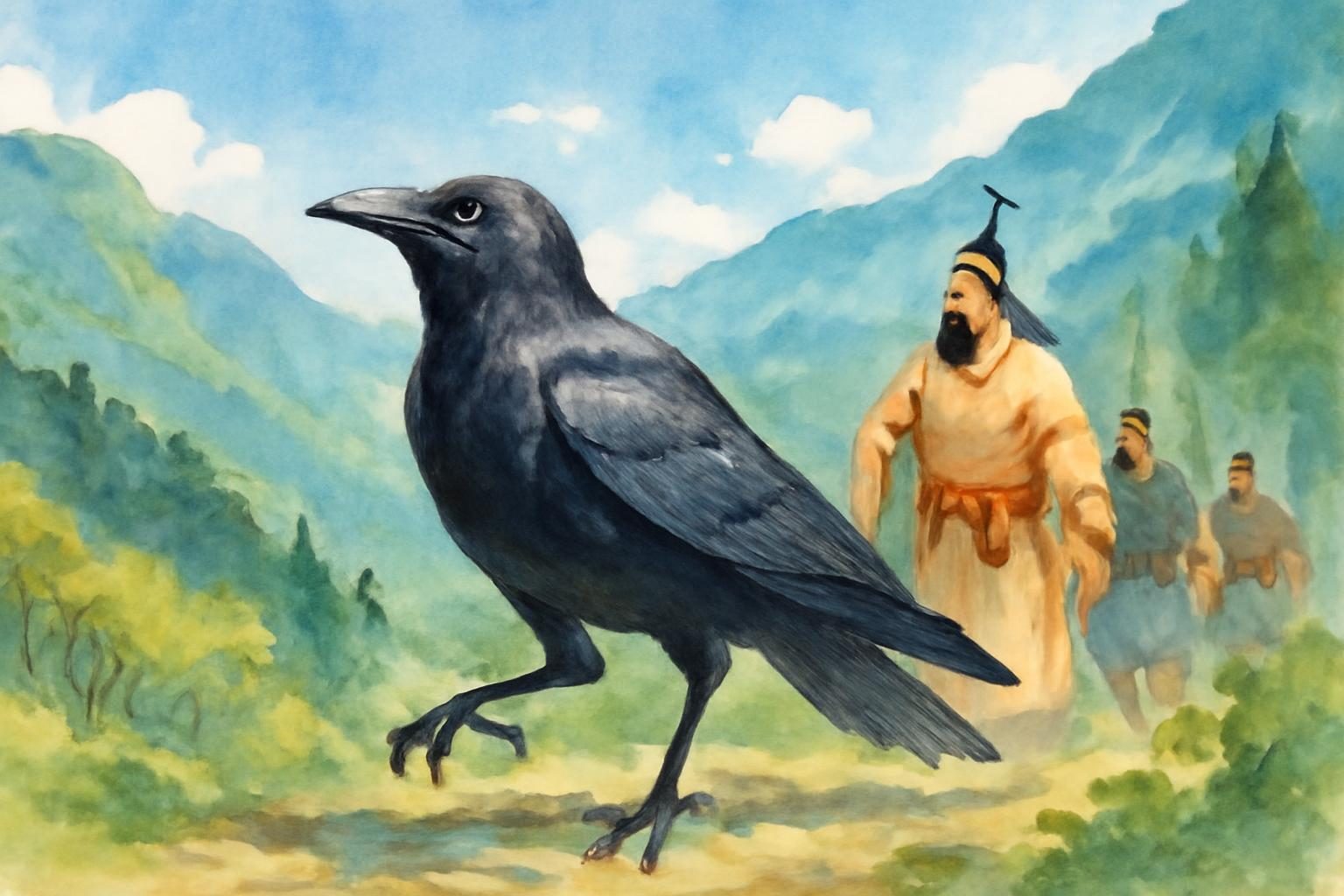
In the lush landscapes of Tanabe, Wakayama Prefecture, the legend of Yatagarasu, the three-legged crow, continues to captivate locals and visitors alike. This mythical creature is said to have guided Emperor Jimmu, the first Emperor of Japan, through the treacherous mountains of Kumano, leading him to victory and the establishment of the Japanese nation.

Introduction to Yatagarasu: Japan’s Legendary Three-Legged Crow
FACT: The Symbolism of Yatagarasu
The Yatagarasu, or three-legged crow, is a prominent symbol in Japanese mythology, often associated with guidance and divine intervention. This mythical bird is depicted as a crow with three legs, each leg representing a different realm: heaven, earth, and humankind. This symbolism highlights the interconnectedness of these realms, emphasizing the crow’s role as a bridge between the divine and the mortal. Yatagarasu is revered in Shinto belief as a messenger of the gods, particularly in the Kumano region, where it is considered a sacred creature. Its presence is believed to bring divine guidance and protection, making it a central figure in local spiritual practices.
LEGEND: Guiding Emperor Jimmu Through the Mountains
According to local tradition, Yatagarasu played a crucial role in the journey of Emperor Jimmu, Japan’s legendary first emperor. As the story goes, during his expedition to unify Japan, Jimmu and his army found themselves lost in the dense and rugged mountains of Kumano. It was then that Yatagarasu appeared, sent by the gods to guide them safely through the treacherous terrain. Thanks to the crow’s guidance, Jimmu was able to reach his destination and eventually establish the imperial line. This legend underscores the crow’s role as a divine guide, a recurring theme in the mythology surrounding Yatagarasu.
Kumano Hongū Taisha: The Head Shrine of the Three-Legged Crow
FACT: A Sacred Site in Tanabe
Kumano Hongū Taisha, located in Tanabe, is one of the Kumano Sanzan, the three grand shrines of Kumano. It is considered the head shrine of Yatagarasu and plays a central role in the worship of this mythical creature. The shrine is a significant pilgrimage site and is part of the Kumano Kodo pilgrimage routes, which are recognized as a UNESCO World Heritage Site. Visitors to the shrine can see various depictions of Yatagarasu, including statues and emblems, celebrating its role as a divine guide. The shrine’s architecture and serene surroundings offer a glimpse into the spiritual heritage of the region, making it a must-visit for those interested in Japanese mythology and culture.
FACT: The Pilgrimage Experience
The Kumano Kodo pilgrimage routes, which include a visit to Kumano Hongū Taisha, offer a unique opportunity for spiritual reflection and cultural immersion. Pilgrims and tourists alike can walk these ancient paths, experiencing the natural beauty and spiritual significance of the area. The routes are well-marked and provide a chance to connect with the history and legends of Kumano, including the story of Yatagarasu. As you walk these paths, you may feel the presence of the mythical crow guiding you, just as it did for Emperor Jimmu.

Exploring Ōyunohara and the Sacred Sites of Tanabe
FACT: The Historical Significance of Ōyunohara
Ōyunohara is the original site of Kumano Hongū Taisha before it was relocated due to flooding in the late 19th century. Today, it remains a sacred area marked by a large torii gate, symbolizing the entrance to a holy place. The site is a testament to the historical and spiritual significance of the Kumano region and offers a serene environment for reflection and connection with nature. Visitors can explore the area and imagine the ancient rituals that once took place here, feeling the deep spiritual resonance that continues to permeate the site.
FACT: The Symbolic Torii Gate
The massive torii gate at Ōyunohara stands as a powerful symbol of the sacred. It marks the boundary between the mundane world and the spiritual realm, inviting visitors to step into a space of reverence and contemplation. This gate, one of the largest in Japan, is a striking feature of the landscape and serves as a reminder of the enduring spiritual traditions of the Kumano region. As you pass through the gate, you are entering a realm where the legends of Yatagarasu and other mythical tales come to life.
Miagatahiko-sha and the Yatagarasu Statues of Nachikatsuura
FACT: Honoring Yatagarasu in Nachikatsuura
Miagatahiko-sha Shrine in Nachikatsuura is another important site where Yatagarasu is honored. The shrine features statues and imagery of the three-legged crow, reflecting its revered status in local culture. Visitors can explore the shrine grounds and learn more about the legends and traditions associated with Yatagarasu, gaining insight into its enduring legacy in the region. The presence of these statues serves as a visual reminder of the crow’s significance and the deep cultural roots it has in the area.
FACT: Cultural Significance of the Statues
The statues of Yatagarasu at Miagatahiko-sha are not just artistic representations; they are embodiments of the cultural and spiritual beliefs of the region. These statues are often depicted in dynamic poses, capturing the crow’s mythical nature and its role as a divine guide. They serve as focal points for worship and reflection, allowing visitors to connect with the spiritual essence of Yatagarasu. The shrine itself is a peaceful retreat, offering a space for contemplation and appreciation of the rich cultural heritage of Kumano.

Festivals and Traditions: Honoring Yatagarasu Through the Seasons
LEGEND: Celebrations in Tanabe and Beyond
Throughout the year, various festivals and rituals in Tanabe and the surrounding areas celebrate Yatagarasu. These events often include processions, traditional music, and dance, all paying homage to the mythical crow. Such celebrations not only honor the past but also keep the legend alive, fostering a sense of community and cultural continuity. Participants in these festivals may dress in traditional attire, engage in ceremonial activities, and share stories of Yatagarasu, ensuring that the legend continues to be passed down through generations.
FACT: Community and Continuity
The festivals dedicated to Yatagarasu are more than mere celebrations; they are vital expressions of community identity and cultural continuity. These events bring together people of all ages, allowing them to partake in shared traditions and reinforce their connection to the region’s rich history. Through these communal activities, the legend of Yatagarasu remains a living part of the cultural landscape, inspiring new generations to appreciate and uphold the traditions of their ancestors.
The Meaning Behind the Three Legs: Heaven, Earth, and Humankind
FACT: Interpreting the Symbolism of Yatagarasu
The three legs of Yatagarasu are rich in symbolic meaning, representing the unity and balance between heaven, earth, and humankind. This symbolism underscores the crow’s role as a divine guide, bridging the gap between the spiritual and physical worlds. In Shinto belief, Yatagarasu’s guidance is seen as a blessing, offering protection and wisdom to those who seek it. The crow’s three legs also suggest a completeness and harmony that is central to the spiritual teachings of the Kumano region, reminding believers of the interconnectedness of all things.
FACT: A Symbol of Harmony
The harmonious symbolism of Yatagarasu’s three legs is a powerful reminder of the balance that is sought in both spiritual and earthly matters. This balance is a key tenet of Shinto philosophy, where the natural world and the divine are seen as intimately linked. Yatagarasu, with its unique form, embodies this philosophy, serving as a guide for those who wish to live in harmony with the world around them. The crow’s image is often used in rituals and prayers, invoking its guidance and protection for individuals and communities alike.

Related on JAPAN ESSENCE: Visiting Takachiho’s Heavenly Rock Cave: Amaterasu’s Hiding Place | Exploring Sefa-utaki: Okinawa’s Most Sacred Grove and UNESCO Site
Sources
- A Birding Journey Through Wakayama
- Yatagarasu shinji
- Miagatahiko-sha Shrine
- Yatagarasu – Wikipedia
- Kumano Hongu Taisha: Japan’s Sacred Head Shrine
- Kumano Kodo Nakahechi Route Maps
To explore further, visit Zenkei (禅景) for Zen-inspired onigawara art and Kawara Kobo (瓦工房) for a hands-on kawara experience.


Leave a Reply