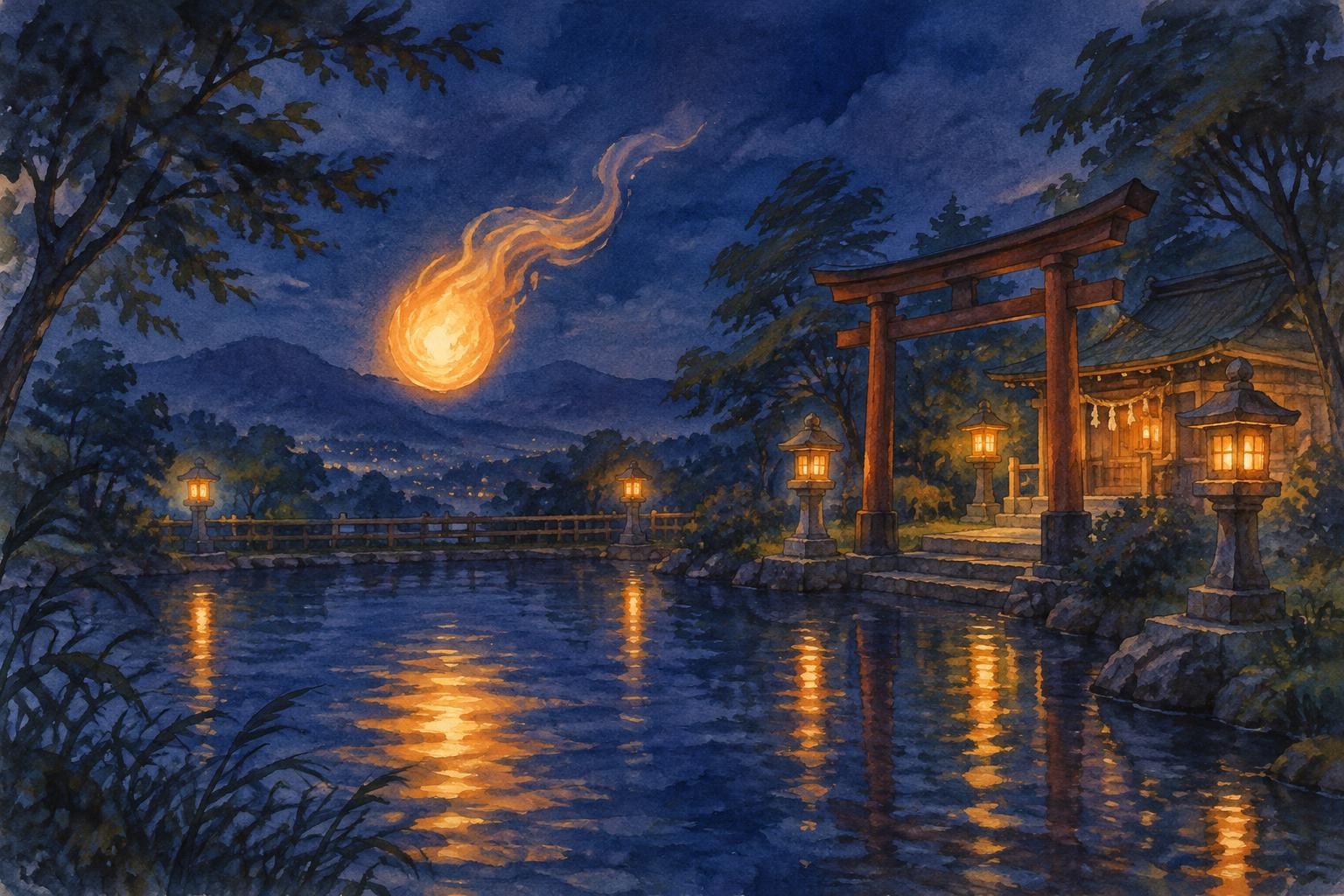
In the heart of Higashiōsaka, Osaka Prefecture, lies a tale that has intrigued locals and visitors alike: the legend of Ubagabi, a mysterious ghost-fire said to haunt the area around Hiraoka Shrine. This spectral phenomenon is steeped in Japanese folklore, blending history with the supernatural.

What Is Ubagabi? The Legend of Japan’s Floating Ghost-Fire
LEGEND: The Story of Ubagabi
According to local tradition, Ubagabi is a ghostly fireball that appears near Hiraoka Shrine in Higashiōsaka. The legend tells of an old woman who, after being caught stealing oil from the shrine, drowned herself in a nearby pond. This pond, known as Ubagaike or “Old Woman’s Pond,” is said to be the origin of the ghost-fire. The spectral flames are believed to be the restless spirit of the woman, forever roaming the area.
The story of Ubagabi captures the imagination with its haunting imagery and tragic backstory. The old woman’s despair and subsequent transformation into a ghost-fire serve as a cautionary tale about the consequences of transgression and the enduring nature of guilt. This narrative element highlights the moral undertones often present in Japanese folklore, where supernatural occurrences are frequently linked to human actions and emotions.
LEGEND: Variations of the Tale
While the core story of Ubagabi involves the tragic end of the old woman, variations of the tale exist. Some versions suggest that the woman’s spirit, in the form of the ghost-fire, seeks redemption or forgiveness for her actions. Others imply that the fire serves as a warning to those who might disrespect the sacred grounds of the shrine. These variations add layers to the legend, reflecting the rich tapestry of oral storytelling in Japanese culture.
These different versions of the Ubagabi legend illustrate the fluid nature of folklore, where stories evolve over time and adapt to the cultural and social contexts of the communities that tell them. The variations also highlight the communal aspect of storytelling, where each retelling can introduce new elements or emphasize different moral lessons, ensuring the tale remains relevant and engaging for successive generations.
The Origin Story: Theft at Hiraoka Shrine
FACT: What the Records Say
Hiraoka Shrine, located at the base of the Ikoma mountains in Higashiōsaka, has been a significant spiritual site for centuries. The shrine’s history is intertwined with the local folklore of Ubagabi. While the exact origins of the legend are not documented, the shrine’s proximity to Ubagaike lends credence to the tale’s local significance. The pond itself has been preserved as a cultural landmark, with the city of Higashiōsaka acknowledging its connection to the legend.
The shrine’s enduring presence in the community underscores its role as a custodian of local history and tradition. Visitors to Hiraoka Shrine can not only appreciate its spiritual significance but also engage with the cultural narratives that have shaped the region’s identity. The shrine and its surrounding landscape offer a unique opportunity to explore the intersection of history, legend, and spirituality.
FACT: The Cultural Importance of Ubagaike
Ubagaike, the “Old Woman’s Pond,” is more than just a backdrop to the Ubagabi legend. It serves as a tangible link to the past, a place where history and myth converge. The pond’s restoration in 2011, led by the citizens’ group Hiraoka no Mori o Mamoru Kai with support from city grants and other funding, underscores its importance as a cultural and historical site, ensuring that the legend of Ubagabi continues to be a living part of the community’s heritage.
The preservation efforts highlight the community’s commitment to maintaining its cultural landmarks and the stories associated with them. The 2011 restoration of Ubagaike not only honored the area’s past but also provided a space for reflection and storytelling, where visitors could connect with the legends that have shaped the region’s identity.


Encounters and Terrifying Tales from Edo-Period Lore
LEGEND: Ghostly Sightings and Stories
During the Edo period, tales of Ubagabi were popular among the local populace. These stories often described encounters with the ghost-fire, which was said to float ominously above the pond or along the shrine grounds. Such tales contributed to the mystique of the area, drawing curious onlookers and believers in the supernatural.
The ghostly sightings of Ubagabi during the Edo period reflect the era’s fascination with yōkai and supernatural phenomena. These stories served as both entertainment and moral instruction, cautioning listeners about the dangers of disrespecting sacred spaces and the potential consequences of one’s actions. The enduring popularity of these tales highlights their role in shaping the cultural and spiritual landscape of the region.
LEGEND: The Impact on Local Culture
The stories of Ubagabi have left a lasting impact on Higashiōsaka’s cultural landscape. They have inspired not only fear and curiosity but also a sense of reverence for the spiritual and the unexplained. The legend serves as a reminder of the deep connection between the natural world and the supernatural in Japanese folklore.
This connection between the natural and supernatural is a recurring theme in Japanese culture, where landscapes are often imbued with spiritual significance. The legend of Ubagabi exemplifies this relationship, where the physical environment of Hiraoka Shrine and Ubagaike becomes a stage for the supernatural, inviting both locals and visitors to explore the mysteries of the unseen world.
Toriyama Sekien and the Visual Depiction of Ubagabi
FACT: Artistic Representations
Ubagabi has also found its place in Japanese art, notably in the works of Toriyama Sekien, a famous Edo-period artist known for his depictions of yōkai, or supernatural creatures. Sekien’s illustrations helped popularize the image of Ubagabi as a fiery apparition, cementing its place in Japanese ghost lore.
Sekien’s artistic contributions are significant in that they not only preserved the image of Ubagabi but also contributed to the broader cultural appreciation of yōkai. His works provided a visual language through which the supernatural could be explored and understood, influencing both contemporary and future representations of ghostly phenomena.
FACT: The Influence of Yōkai Art
Sekien’s work not only popularized Ubagabi but also contributed to the broader appreciation of yōkai in Japanese culture. His artistic interpretations of supernatural beings have influenced generations of artists and storytellers, keeping the tradition of yōkai alive in modern Japan.
The enduring appeal of yōkai art is evident in its continued presence in contemporary media, from literature to film and animation. Sekien’s influence can be seen in the way modern Japanese culture continues to engage with themes of the supernatural, blending traditional folklore with new artistic expressions to captivate audiences worldwide.


Tracing the Legend: Hiraoka Shrine and Ubagaike Pond Today
FACT: Visiting the Shrine and Pond
Today, visitors to Hiraoka Shrine can explore the grounds and the nearby Ubagaike Pond, both of which are integral to the Ubagabi legend. The pond was restored in 2011 through an effort led by the citizens’ group Hiraoka no Mori o Mamoru Kai, using the city’s community-development grants and other funding. The shrine itself is a serene location, offering a glimpse into the spiritual traditions of the region.
Exploring Hiraoka Shrine and Ubagaike allows visitors to immerse themselves in the local folklore and experience the tranquil beauty of the area. The serene atmosphere of the shrine and the pond provides a perfect setting for reflection and appreciation of the cultural narratives that have shaped Higashiōsaka’s identity.
FACT: Experiencing the Local Atmosphere
The area around Hiraoka Shrine is imbued with a sense of tranquility and mystery, inviting visitors to reflect on the legends and history that have shaped it. Walking through the shrine grounds and around Ubagaike, one can almost feel the presence of the past, a testament to the enduring power of folklore.
The mystical ambiance of the area is enhanced by the natural beauty of the Ikoma mountains, providing a picturesque backdrop to the spiritual and cultural exploration of the region. Visitors are encouraged to take their time and absorb the unique atmosphere, allowing the stories of Ubagabi and the history of Hiraoka Shrine to unfold around them.
Visiting Higashiosaka to Explore Local Japanese Folklore
FACT: How to Visit
Hiraoka Shrine is easily accessible from Hiraoka Station on the Kintetsu Nara Line, making it a convenient destination for those interested in Japanese folklore and history. Visitors are encouraged to check the official website for current hours, fees, and access details.
Nearby Guide
Access
- Hiraoka Station (Higashiōsaka) — Immediately next to Hiraoka Station on the Kintetsu Nara Line. official site
Nearby sights
- Hiraoka Park (Higashiōsaka) — A 43.4-hectare urban park known for seasonal scenery such as plum blossoms, cherry blossoms, and autumn foliage. Features hiking routes leading toward Mt. Ikoma and a playground area ‘Mori no Omochabako.’ official site
- Ishikiri Tsurugiya Shrine (Higashiōsaka) — A shrine said to date back about 2,700 years, affectionately called ‘Ishikiri-san’ and visited by people praying for healing. Features the ‘ohyaku-do-mairi’ ritual, where visitors walk back and forth between two stones and the main hall. details
Where to eat
- Niku No Moritaya Nukada (Higashiōsaka) — A Japanese-style tavern (Izakaya) known for its delicious meat dishes and cozy atmosphere, located approximately 0.4 miles from Hiraoka Shrine. details
- Koma Sushi (Higashiōsaka) — A seafood restaurant offering fresh sushi and sashimi in a traditional setting, located approximately 0.4 miles from Hiraoka Shrine. details


Related on JAPAN ESSENCE: The Kudan of Iwakuni: The Wartime Prophetic Yokai of Yamaguchi | Shidaidaka: The Ever-Rising Roadside Yokai of Shimane
Sources
- Ubagabi – Wikipedia
- 平成23年2月18日 悲しい老婆の身投げ伝説に由来する“姥ヶ池(ウバガイケ)”が甦る | 東大阪市
- Hiraoka Station – Osaka Info
- Hiraoka Park – Osaka Info
- Ishikiri Tsurugiya Shrine – Japalens
- Hiraoka Shrine – TripAdvisor
To explore further, visit Zenkei (禅景) for Zen-inspired onigawara art and Oni Kobo (鬼工房) for onigawara demon-tile art and charms.
大阪府東大阪市の中心に、地元の人々や訪問者を魅了する物語があります。それは、枚岡神社周辺に出没すると言われる神秘的な幽霊火、姥ヶ火の伝説です。この幽霊現象は、日本の民間伝承に深く根ざしており、歴史と超自然が融合しています。
姥ヶ火とは?日本の浮遊する幽霊火の伝説
伝承: 姥ヶ火の物語
地元の言い伝えによると、姥ヶ火は東大阪市の枚岡神社付近に現れる幽霊の火の玉です。この伝説は、神社から油を盗んで捕まった後、近くの池で溺れた老女の話を語っています。この池は「姥ヶ池」として知られ、幽霊火の起源とされています。幽霊の炎は、永遠にその地域をさまよう女性の落ち着かない魂であると信じられています。
姥ヶ火の物語は、その不気味なイメージと悲劇的な背景で人々の想像力をかき立てます。老女の絶望とその後の幽霊火への変身は、違反の結果と罪の永続性についての教訓的な物語として機能します。この物語の要素は、日本の民間伝承にしばしば見られる道徳的なニュアンスを強調しており、超自然現象が人間の行動や感情に結びついていることが多いです。
伝承: 物語のバリエーション
姥ヶ火の核心的な物語は老女の悲劇的な結末を含んでいますが、物語のバリエーションも存在します。あるバージョンでは、女性の霊が幽霊火の形で自分の行動に対する贖罪や許しを求めていると示唆されています。他のバージョンでは、火が神社の神聖な場所を軽んじる者への警告として機能していると暗示されています。これらのバリエーションは、物語に層を加え、日本文化における口承の豊かな織り成しを反映しています。
姥ヶ火の伝説の異なるバージョンは、民間伝承の流動的な性質を示しており、物語が時間とともに進化し、それを語るコミュニティの文化的および社会的文脈に適応することを示しています。これらのバリエーションはまた、物語の再話が新しい要素を導入したり、異なる道徳的教訓を強調したりすることができるという、物語の共同的な側面を強調しています。
起源の物語: 枚岡神社での盗難
事実: 記録が示すもの
東大阪市の生駒山のふもとに位置する枚岡神社は、何世紀にもわたって重要な精神的な場所であり続けています。神社の歴史は、姥ヶ火の地元の民間伝承と密接に結びついています。伝説の正確な起源は文書化されていませんが、神社の近くにある姥ヶ池は、物語の地元での重要性を裏付けています。池自体は文化的なランドマークとして保存されており、東大阪市はその伝説との関係を認識しています。
神社の地域社会における永続的な存在は、地元の歴史と伝統の保護者としての役割を強調しています。枚岡神社を訪れる人々は、その精神的な重要性を理解するだけでなく、地域のアイデンティティを形作ってきた文化的な物語に触れることができます。神社とその周辺の風景は、歴史、伝説、精神性の交差点を探求するユニークな機会を提供します。
事実: 姥ヶ池の文化的重要性
「姥ヶ池」は、姥ヶ火の伝説の背景以上のものです。それは過去への具体的なリンクとして機能し、歴史と神話が交差する場所です。2011年に市民団体「ひらおかの森を守る会」が中心となり、市の助成金などを活用して行った池の整備は、文化的および歴史的な場所としての重要性を強調しており、姥ヶ火の伝説が地域社会の遺産の生きた一部であり続けることを保証しています。
保存活動は、文化的ランドマークとそれに関連する物語を維持するという地域社会のコミットメントを強調しています。2011年の姥ヶ池の整備は、地域の過去を称えるとともに、訪問者が地域のアイデンティティを形作ってきた伝説とつながることができる反省と物語の場を提供しました。
江戸時代の伝承からの出会いと恐ろしい物語
伝承: 幽霊の目撃と物語
江戸時代には、姥ヶ火の物語が地元の人々の間で人気がありました。これらの物語は、池の上や神社の敷地を不気味に浮かぶ幽霊火との遭遇をしばしば描写しました。このような物語は、その地域の神秘性に寄与し、好奇心旺盛な見物人や超自然を信じる者を引き寄せました。
江戸時代の姥ヶ火の幽霊の目撃は、妖怪や超自然現象への関心を反映しています。これらの物語は、娯楽としてだけでなく、神聖な場所を軽んじることの危険性や自分の行動の潜在的な結果についての道徳的な教訓としても機能しました。これらの物語の持続的な人気は、地域の文化的および精神的な風景を形作る上での役割を強調しています。
伝承: 地元文化への影響
姥ヶ火の物語は、東大阪市の文化的風景に持続的な影響を与えました。それらは、恐怖や好奇心だけでなく、精神的なものや説明のつかないものへの畏敬の念も呼び起こしました。この伝説は、日本の民間伝承における自然界と超自然の深いつながりを思い起こさせます。
自然と超自然のつながりは、日本文化において繰り返し現れるテーマであり、風景はしばしば精神的な重要性を帯びています。姥ヶ火の伝説はこの関係を例示しており、枚岡神社と姥ヶ池の物理的環境が超自然の舞台となり、地元の人々や訪問者を見えない世界の謎を探求するよう招いています。
鳥山石燕と姥ヶ火の視覚的描写
事実: 芸術的表現
姥ヶ火は、日本の芸術、特に妖怪や超自然の生物の描写で知られる江戸時代の有名な画家、鳥山石燕の作品にもその地位を見出しました。石燕のイラストは、姥ヶ火を火の幽霊としてのイメージを広め、日本の幽霊伝説にその地位を確立しました。
石燕の芸術的貢献は、姥ヶ火のイメージを保存しただけでなく、妖怪の文化的な評価を広めることにも貢献しました。彼の作品は、超自然を探求し理解するための視覚的な言語を提供し、現代および将来の幽霊現象の表現に影響を与えました。
事実: 妖怪アートの影響
石燕の作品は、姥ヶ火を広めただけでなく、日本文化における妖怪の評価を広めることにも貢献しました。彼の超自然の存在の芸術的解釈は、世代を超えてアーティストや物語作家に影響を与え、現代日本における妖怪の伝統を生き続けさせています。
妖怪アートの持続的な魅力は、文学から映画、アニメーションに至るまで、現代のメディアにおいてもその存在感が続いていることに明らかです。石燕の影響は、現代日本文化が超自然のテーマに引き続き関与し、伝統的な民間伝承を新しい芸術的表現と融合させて、世界中の観客を魅了している方法に見られます。
伝説をたどる: 現代の枚岡神社と姥ヶ池
事実: 神社と池を訪れる
今日、枚岡神社を訪れる人々は、姥ヶ火の伝説に不可欠な神社の敷地と近くの姥ヶ池を探索することができます。池は2011年、市民団体「ひらおかの森を守る会」が中心となり、市の地域まちづくり活動助成金などを活用して整備されました。神社自体は静かな場所であり、地域の精神的な伝統を垣間見ることができます。
枚岡神社と姥ヶ池を探索することで、訪問者は地元の民間伝承に没頭し、その地域の静かな美しさを体験することができます。神社と池の静かな雰囲気は、反省と地域のアイデンティティを形作ってきた文化的物語の鑑賞に最適な環境を提供します。
事実: 地元の雰囲気を体験する
枚岡神社周辺の地域は、静けさと神秘に満ちており、訪問者にそれを形作ってきた伝説と歴史を反映するよう招いています。神社の敷地や姥ヶ池を歩くと、過去の存在をほとんど感じることができ、民間伝承の持続的な力を証明しています。
地域の神秘的な雰囲気は、生駒山の自然の美しさによって強化され、地域の精神的および文化的探求の絵のように美しい背景を提供します。訪問者は時間をかけて独特の雰囲気を吸収し、姥ヶ火の物語と枚岡神社の歴史がその周りで展開するのを許すことをお勧めします。
地元の日本の民間伝承を探るための東大阪訪問
事実: 訪問方法
枚岡神社は近鉄奈良線の枚岡駅から簡単にアクセスでき、日本の民間伝承や歴史に興味のある人にとって便利な目的地です。訪問者は、最新の営業時間、料金、アクセスの詳細について公式サイトを確認することをお勧めします。
周辺ガイド
アクセス
- 枚岡駅(東大阪)— 近鉄奈良線の枚岡駅のすぐ隣。公式サイト
周辺の見どころ
- 枚岡公園(東大阪)— 梅や桜、秋の紅葉などの季節の風景で知られる43.4ヘクタールの都市公園。生駒山に向かうハイキングルートや「森のおもちゃ箱」という遊び場があります。公式サイト
- 石切劔箭神社(東大阪)— 約2700年前に遡ると言われる神社で、「石切さん」として親しまれ、癒しを祈る人々が訪れます。二つの石と本殿の間を行き来する「お百度参り」の儀式があります。詳細
食べる
- 肉のもりたや額田(東大阪)— 美味しい肉料理と居心地の良い雰囲気で知られる日本風居酒屋で、枚岡神社から約0.4マイルの場所にあります。詳細
- 駒寿司(東大阪)— 新鮮な寿司と刺身を伝統的な設定で提供する海鮮レストランで、枚岡神社から約0.4マイルの場所にあります。詳細
Related on JAPAN ESSENCE: The Kudan of Iwakuni: The Wartime Prophetic Yokai of Yamaguchi | Shidaidaka: The Ever-Rising Roadside Yokai of Shimane
Leave a Reply