Category: Kawara

瓦

  • Discovering Onigawara: Japan’s Fascinating Demon Roof Tiles in Shiga

    Discovering Onigawara: Japan’s Fascinating Demon Roof Tiles in Shiga

    In the heart of Ōmihachiman, Shiga Prefecture, lies a unique cultural treasure: the onigawara, or demon-faced roof tiles, which have captivated both locals and visitors with their intricate designs and historical significance. These iconic tiles are a testament to Japan’s rich architectural heritage and can be explored in depth at the Kawara Museum.

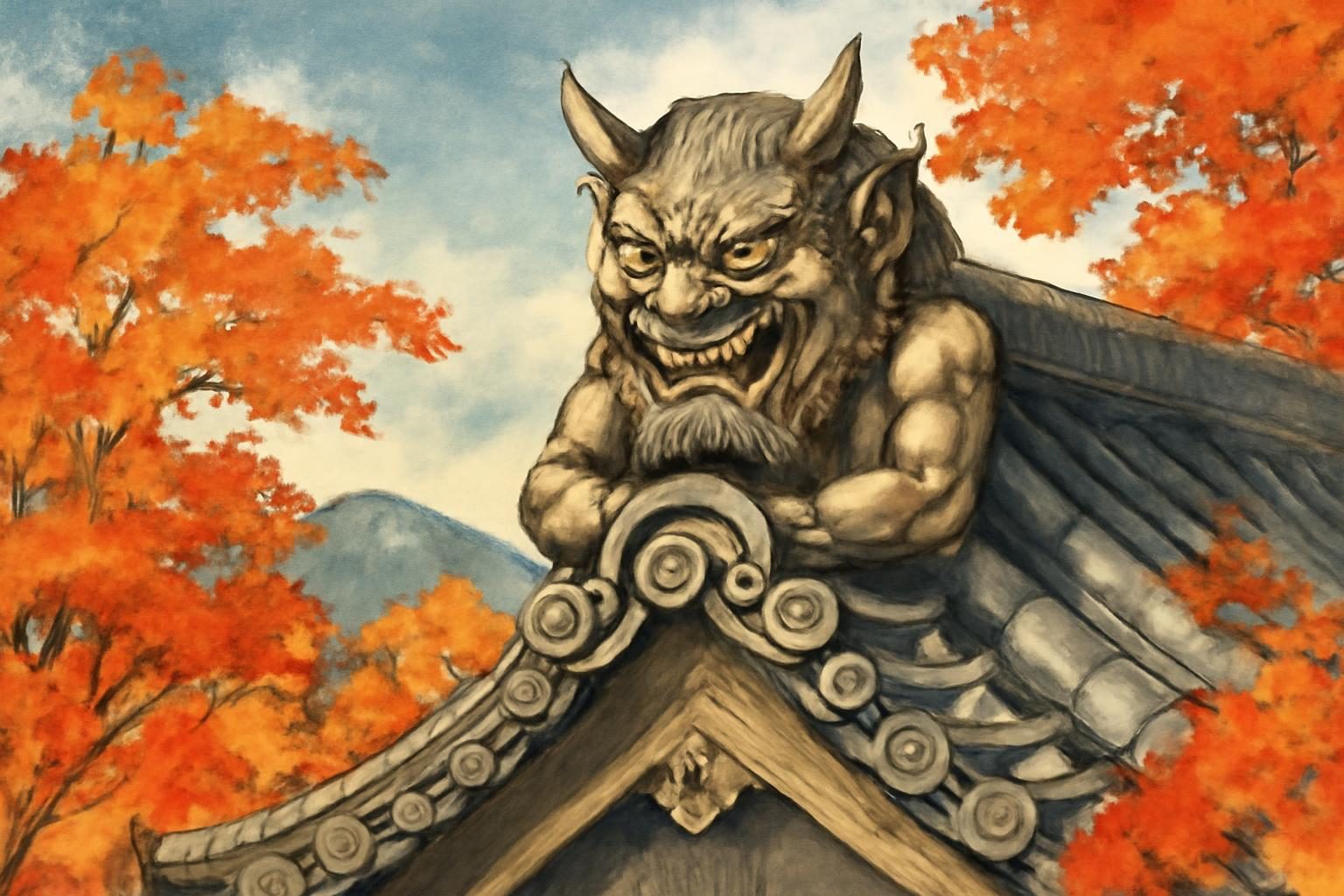
    Onigawara demon on a traditional roof, surrounded by autumn colors in Ōmihachiman.
    AI生成イメージ / AI-generated illustration (not a photograph of the actual place)

    What Are Onigawara? The Iconic Demon-Face Tiles of Japan

    FACT: The Origins and Purpose of Onigawara

    Onigawara are decorative roof tiles that traditionally feature the face of an oni, or demon. These tiles are typically placed at the ends of roof ridges and are believed to ward off evil spirits and protect the structures they adorn. The practice of using onigawara dates back to the Nara period (710-794 AD), when they were first introduced as part of Buddhist temple architecture. During this era, the influence of Chinese architectural styles was prominent, and the use of protective motifs was a common practice.

    The introduction of onigawara into Japanese architecture marked a significant cultural exchange between Japan and China. As Buddhism spread throughout Japan, so did the architectural elements associated with it, including the protective symbolism embodied by onigawara. These tiles served not only a decorative function but also a spiritual one, as they were believed to embody the power to repel negative energies.

    FACT: The Evolution of Onigawara Design

    Originally, onigawara designs were simple and floral, reflecting the aesthetic preferences of early Japanese architecture. However, over time, these designs evolved into more elaborate and fearsome depictions of demons. This transformation was influenced by various cultural and religious factors, including the syncretism of Shinto and Buddhist beliefs. By the Edo period (1603-1868), onigawara had become a common feature not only in temples but also in samurai residences and other important buildings. This evolution reflects a broader trend in Japanese art and architecture, where the merging of different cultural influences led to unique and distinct styles.

    The shift from floral to demon motifs in onigawara design also mirrored societal changes. As Japan moved through different historical periods, the role of demons in folklore and religion became more pronounced, influencing the artistic representation of these figures. The demon faces on onigawara became more exaggerated and expressive, embodying the dual role of beauty and protection.

    The Evolution of Onigawara: From Floral Ornaments to Ogre Masks

    FACT: Changes in Artistic Styles

    The artistic styles of onigawara have varied significantly over the centuries. Early designs were influenced by Chinese floral motifs, but as Japanese culture developed its own identity, the tiles began to feature more indigenous themes, such as mythical creatures and legendary figures. The demon faces became more pronounced, reflecting a shift towards using these tiles as protective talismans. This change in style can be seen as a reflection of the evolving spiritual beliefs in Japan, where the concept of demons and protective spirits played a significant role in everyday life.

    As the designs became more complex, the craftsmanship required to produce onigawara also advanced. Artisans began to experiment with different expressions and styles, creating a wide variety of demon faces that could convey different emotions and levels of ferocity. This artistic diversity allowed onigawara to be tailored to the specific needs and beliefs of the building owners, making each piece a unique work of art.

    FACT: Cultural and Religious Influences

    Throughout Japanese history, the design of onigawara has been shaped by the interplay of cultural and religious influences. The integration of Shinto and Buddhist elements is evident in the motifs used in these tiles. While Shintoism emphasizes the presence of kami, or spirits, in natural elements, Buddhism brought with it the concept of protective deities. Onigawara, therefore, serve as a physical manifestation of these beliefs, combining the protective aspects of both religions into a single artistic expression.

    This blend of religious symbolism in onigawara highlights the syncretic nature of Japanese spirituality. The tiles not only serve as a protective measure but also as a reminder of the interconnectedness of different belief systems within Japanese culture. By incorporating elements from both Shinto and Buddhism, onigawara became a symbol of cultural harmony and spiritual protection.

    Hachiman-bori Canal ac (6) - Vehicles in Shiga prefecture
    “Hachiman-bori Canal ac (6)” (Vehicles in Shiga prefecture) by Asturio Cantabrio, CC BY-SA 4.0, source, via Wikimedia Commons

    Exploring Omihachiman: A Hub of Traditional Tile Manufacture

    FACT: Ōmihachiman’s Historical Significance

    Ōmihachiman, located in Shiga Prefecture, has a long history of roof tile production, making it an ideal place to explore the art of onigawara. The town’s strategic location along the Hachiman-bori Canal facilitated trade and cultural exchange, contributing to the development of its tile-making industry. The canal itself is a historic waterway that played a crucial role in the economic and cultural development of the region. Today, visitors can explore the town’s historic architecture and see onigawara adorning many traditional buildings. Walking through Ōmihachiman offers a glimpse into the past, where the craftsmanship of onigawara is still visible on the rooftops of preserved structures.

    The town’s rich history is reflected in its well-preserved streets and buildings. As visitors stroll through Ōmihachiman, they can observe how the art of tile-making has been passed down through generations, with each onigawara reflecting the skill and artistry of its creator. The presence of these tiles on historic buildings serves as a testament to the enduring legacy of traditional Japanese craftsmanship.

    Inside the Kawara Museum: The Ultimate Destination for Roof Tile Enthusiasts

    FACT: What to See at the Kawara Museum

    The Kawara Museum in Ōmihachiman offers an in-depth look at the history and craftsmanship of Japanese roof tiles, including onigawara. The museum’s exhibits showcase a wide range of tiles from different periods and regions, highlighting the diversity of styles and techniques used in their creation. Visitors can also learn about the cultural significance of these tiles and their role in Japanese architecture. The museum provides educational displays that explain the evolution of onigawara and their symbolic meanings, making it a valuable resource for anyone interested in traditional Japanese art and architecture.

    In addition to static displays, the museum offers interactive elements that allow visitors to engage more deeply with the history of onigawara. Through multimedia presentations and hands-on activities, guests can gain a better understanding of the cultural and historical context of these fascinating tiles. This interactive approach helps to bring the history of onigawara to life, making the museum experience both educational and enjoyable.

    FACT: Engaging with History

    At the Kawara Museum, visitors have the opportunity to engage with the history of onigawara through interactive exhibits and detailed displays. The museum not only focuses on the aesthetic aspects of these tiles but also delves into the techniques used by craftsmen over the centuries. Although specific manufacturing methods are not detailed, the museum provides insights into the skill and artistry required to create these intricate pieces. This engagement with history allows visitors to appreciate the cultural and historical context of onigawara, enhancing their understanding of this unique art form.

    The museum’s commitment to preserving and sharing the history of onigawara is evident in its comprehensive collection and educational programs. Visitors leave with a deeper appreciation for the craftsmanship and cultural significance of these tiles, as well as a greater understanding of their role in Japanese architectural history.

    Hachiman-bori Canal ac (8) - Hachimanbori
    “Hachiman-bori Canal ac (8)” (Hachimanbori) by Asturio Cantabrio, CC BY-SA 4.0, source, via Wikimedia Commons

    Architecture and Aesthetics: Viewing Historic Rooftops in Shiga

    FACT: Notable Buildings Featuring Onigawara

    In addition to the Kawara Museum, Ōmihachiman is home to several historic buildings where visitors can see onigawara in situ. These include traditional merchant houses and temples that have been preserved to showcase the architectural styles of past eras. The town’s commitment to preserving its cultural heritage makes it a prime destination for those interested in traditional Japanese architecture. Walking through the streets of Ōmihachiman, visitors can admire the craftsmanship of onigawara on the rooftops, each tile telling a story of protection and artistry.

    The presence of onigawara on these historic structures offers a unique opportunity to see how these tiles have been integrated into the architectural fabric of the town. Each building provides insight into the historical and cultural context in which it was constructed, with onigawara serving as a visual link to the past. This architectural heritage is a key aspect of Ōmihachiman’s charm and appeal.

    Plan Your Visit: Practical Tips for Exploring Omihachiman’s Tile Heritage

    FACT: Visiting the Kawara Museum

    For those planning a visit to the Kawara Museum, it is advisable to check the official website for current hours, fees, and access information. The museum is conveniently located beside the Hachiman-bori Canal, making it easily accessible for visitors exploring the area. Ōmihachiman itself offers a charming blend of historical sites and scenic beauty, providing a comprehensive cultural experience. The town’s picturesque setting, combined with its rich history, makes it an ideal destination for those looking to immerse themselves in Japan’s architectural heritage.

    Whether you are a history enthusiast, an architecture aficionado, or simply curious about Japanese culture, a visit to Ōmihachiman and the Kawara Museum promises a rewarding experience. The town’s unique combination of natural beauty and historical significance ensures that visitors will leave with lasting memories and a deeper appreciation for Japan’s rich cultural tapestry.

    Locator map of Japan: Ōmihachiman, Shiga
    Legend site: Ōmihachiman, Shiga — Source: Map of Japan with highlight on 25 Shiga prefecture.svg; Map: Lincun, CC BY-SA 3.0, via Wikimedia Commons

    Sources

    About the author

    JAPAN ESSENCE Editorial Team
    Our mission is to bring you Japan’s legends, myths, festivals and living traditions, through both historical fact and the stories passed down over generations.

  • Kunimisan Temple Ruins: Onigawara and Heian Roofs in Kitakami

    At Kunimisan in Kitakami, Iwate, roof tiles help us approach a vanished mountain temple. An onigawara is part of that archaeological record: a small piece of architecture that invites a closer look at the buildings once standing here.

    Exterior of Kitakami City Museum photographed in August 2007
    Kitakami City Museum, 25 August 2007. This contextual photograph shows the museum, not Kunimisan’s ruins or an excavated tile. 663highland; CC BY 2.5, via Wikimedia Commons.

    A Heian-period temple landscape

    Kitakami City places the ruins in the Uchinokado-oka district of Inasechō. Halls and a pagoda have been identified at this mountain temple, which flourished more than a thousand years ago. The city regards it as an important temple of the Kitakami basin before Hiraizumi’s prosperity. Its possible identification with the ancient Gokurakuji remains an interpretation.

    The tile that drew attention to the site

    According to Kitakami City Museum, roadworks in 1936 revealed a lotus-patterned eaves-tile fragment. Further finds helped lead to archaeological investigation. The museum’s 2021 exhibition included onigawara excavated at Kunimisan. That exhibition has ended; its surviving page is a historical record, not a current display announcement.

    What the roof evidence can tell us

    The Agency for Cultural Affairs describes the late tenth to eleventh centuries as the temple’s peak, followed by a rapid decline of hillside buildings in the twelfth century. Crucially, it states that the quantity of excavated tiles indicates roofs were not entirely tiled. Onigawara finds therefore do not justify imagining every building covered in tiles.

    Looking without filling the gaps

    A roof ornament is a compelling starting point, but the surrounding evidence matters. Foundations help locate buildings; recovered tiles add detail to questions about their roofs. Read together, these different clues bring the temple’s architecture into sharper focus. Kunimisan’s fascination lies in what archaeology reveals, and in the questions it leaves open.

    Sources

    JAPAN ESSENCE Editorial Team

    Stories of Japan’s legends, myths, festivals and cultural heritage.

  • Sendai Castle’s Onigawara: Roof Tiles, Gold and the Lost Ōtemon

    Roof ornaments offer a small-scale way into the history of Sendai Castle in Miyagi. Fragments recovered by archaeologists, together with photographs of the former Ōtemon gate, invite us to look closely at a roofscape that no longer survives intact.

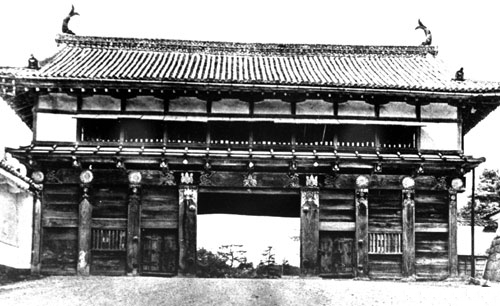
    The former Ōtemon gate of Sendai Castle photographed in July 1938
    Sendai Castle’s former Ōtemon, July 1938. A historic view of the gate, not a photograph of an excavated onigawara. Mainichi Shimbun; public domain, via Wikimedia Commons.

    Excavated evidence: gold and roof ornaments

    Sendai City records 56 gilded tile pieces, including a chrysanthemum onigawara, and more than 200 shachi-tile fragments from the main enclosure. These are different kinds of roof ornament. The city associates onigawara and shachi with decoration and fire-averting symbolism. It also cautions that the purpose of gilded tiles at early-Edo Sendai Castle requires further research.

    A gate recovered through archaeology

    The city’s report on investigations in 2023–2024 records an onigawara from the Ōtemon area. It also describes tiles reddened by the 1945 air raid. Such finds connect architectural history with the physical traces of the gate’s destruction.

    Putting the fragments in context

    A municipal excavation leaflet describes Ōtemon as a special entrance used for the lord and ceremonial occasions. The gate measured approximately 12.5 metres high and 20 metres wide. The leaflet identifies the onigawara discovered in 2024 as evidence for understanding the roof before the war.

    Sendai Castle stone walls, 25 March 2007. A contextual photograph of the castle ruins.
    Sendai Castle stone walls, 25 March 2007. A contextual photograph of the castle ruins. Photo: Yamaguchi Yoshiaki, CC BY-SA 2.0, via Wikimedia Commons.

    How to read a protective ornament

    The historical belief that a roof ornament could avert fire should be understood as symbolism. Archaeological objects can document where ornament was used and what survived; they cannot demonstrate supernatural protection. Likewise, a gold surface alone does not settle the political meaning of a building. Here, the most revealing story lies in the relationship between the excavated fragments, the written interpretation and the surviving photograph.

    Sources

    JAPAN ESSENCE Editorial Team

    Stories of Japan’s legends, myths, festivals and cultural heritage.

  • Uncovering Kyoto’s Architectural Guardians: The History of Onigawara

    Uncovering Kyoto’s Architectural Guardians: The History of Onigawara

    In the heart of Kyoto Prefecture, the Ōyamazaki Tile Kiln Site offers a fascinating glimpse into the ancient art of Japanese roof tile production, particularly the iconic Onigawara tiles. These tiles, known for their fierce designs, served both a functional and spiritual role in Japanese architecture.

    Onigawara spirit with lion-like face, horns, in a pastoral Kyoto landscape with cherry blossoms and a glowing sky.
    AI生成イメージ / AI-generated illustration (not a photograph of the actual place)

    Introduction to Onigawara and Japanese Architectural Heritage

    FACT: The Role of Onigawara in Architecture

    Onigawara are ornamental roof tiles, often featuring the face of a demon or ogre. Traditionally, they were used at the ends of roof ridges in Japanese architecture, serving both as a decorative element and a talisman to ward off evil spirits. These tiles have been a significant part of Japanese architectural heritage, symbolizing protection and artistry. Their presence on buildings was not merely for aesthetic appeal but also to embody the cultural beliefs and practices that sought to protect structures from malevolent forces.

    The use of Onigawara dates back centuries, and their designs have evolved over time. Originally, these tiles were simple clay figures, but as craftsmanship advanced, they became more intricate and detailed. The imagery of demons or fierce creatures was intended to scare away evil spirits, a belief deeply rooted in Shinto and Buddhist traditions. Today, Onigawara continue to be a distinctive feature of traditional Japanese architecture, admired for their artistic value and cultural significance.

    The Historical Significance of the Ōyamazaki Tile Kiln Site

    FACT: What the Archaeological Site Reveals

    The Ōyamazaki Tile Kiln Site, located in Ōyamazaki, Kyoto Prefecture, is a National Historic Site that dates back to the early Heian period. The designation of the site in 2006 underscores its importance in providing valuable insights into the production techniques and architectural styles of the time. Visitors to the site can appreciate the historical context and the role these kilns played in the grand architectural schemes of the Heian period.

    As a state-run facility, the Ōyamazaki kilns were integral to the construction efforts of the Heian-kyō, the capital of Japan during the Heian period. The kilns’ production was closely tied to the needs of the imperial court, ensuring that the architectural projects of the time were supplied with high-quality tiles. This connection to the capital highlights the strategic importance of the site in maintaining the grandeur and functionality of Heian-kyō’s structures.

    FACT: Discoveries at the Site

    Archaeologists have identified twelve kilns at the Ōyamazaki site, arranged in planned groups. These kilns produced a comprehensive range of roofing components, such as round and flat eaves tiles, flat and curved ridge tiles, and ornamental gable-end tiles including Onigawara. The discovery of these kilns highlights the site’s importance in supplying tiles to the palaces of Heian-kyō, the ancient capital of Japan. The arrangement and variety of tiles produced reflect the sophisticated planning and architectural demands of the period.

    The kilns’ layout suggests a highly organized production process, indicative of the advanced state of ceramic technology during the Heian period. The variety of tiles produced at the site not only met functional needs but also allowed for a range of decorative options, reflecting the aesthetic sensibilities of the time. This diversity in production underscores the kilns’ role in shaping the architectural landscape of the era.

    FACT: Connection to Imperial Structures

    Excavated tiles from the Ōyamazaki site have been matched to specific imperial structures, including the Chōdō-in, Saga-in, and Kaya detached palace. This connection underscores the site’s historical significance and its role in the architectural grandeur of the Heian period. The ability to trace these tiles back to such prominent structures provides a tangible link to Japan’s imperial past, offering a glimpse into the construction practices and aesthetic considerations of the era.

    The matching of tiles to these imperial sites demonstrates the precision and quality of the tiles produced at Ōyamazaki. This archaeological evidence not only confirms the site’s contribution to the imperial architecture but also highlights the craftsmanship that was required to meet the high standards of the court. The tiles served not only as functional elements but also as symbols of the cultural and political power of the Heian period.

    大山崎瓦窯跡3092 - Steles of Kyoto prefecture
    “大山崎瓦窯跡3092” (Steles of Kyoto prefecture) by mariemon, CC BY 3.0, source, via Wikimedia Commons

    Supplying the Heian-kyō Palaces: Archaeological Discoveries

    FACT: Preserving the Site

    Today, the Ōyamazaki Tile Kiln Site is preserved as a park, with the outlines of the kilns marked using ceramic panels and plantings. One kiln is displayed at full scale, allowing visitors to appreciate the scale and craftsmanship involved. An observation plaza offers panoramic views over the Kyoto basin and the river routes once used to transport these tiles to the capital. This thoughtful preservation allows visitors to step back in time and imagine the bustling activity that once characterized this site.

    The park’s design aims to educate visitors about the historical and cultural significance of the kilns. By preserving the kiln outlines and providing a full-scale display, the park offers a unique opportunity to understand the production process and the role these kilns played in Japan’s architectural history. The observation plaza further enriches the visitor experience by connecting the site to the broader geographical and historical context of the region.

    LEGEND: Onigawara Production at Ōyamazaki

    According to historical records, as outlined in a town leaflet, the Ōyamazaki kilns produced Onigawara among other roof tiles like eaves tiles and flat tiles. This suggests that Onigawara production was an integral part of the state-run tile manufacturing process at this site. While the exact details of production remain part of local lore, the legend highlights the cultural significance and the enduring legacy of these tiles in Japanese architectural history.

    This legend, passed down through generations, reflects the pride and identity of the local community in their historical contributions to Japanese architecture. The production of Onigawara at Ōyamazaki is not only a testament to the craftsmanship of the past but also a symbol of cultural heritage that continues to inspire and intrigue both locals and visitors alike.

    What to Expect at the Ōyamazaki Tile Kiln Site Park

    FACT: Visiting the Park

    The Ōyamazaki Tile Kiln Site Park is open daily with free admission. It is conveniently accessible, located about an 8-minute walk from JR Yamazaki Station or Hankyu Ōyamazaki Station. Opening hours vary seasonally, so visitors are encouraged to check the official website for current hours and access information. The park offers a serene environment where one can explore the historical significance of the kilns while enjoying the natural beauty of the surrounding landscape.

    Visitors to the park can expect a well-maintained site that balances historical education with leisure. The park’s pathways and informational panels guide visitors through the history and significance of the kilns, while the natural setting provides a peaceful backdrop for reflection and appreciation of this unique cultural heritage site. Whether you are a history enthusiast or simply looking to enjoy a day outdoors, the Ōyamazaki Tile Kiln Site Park offers a rewarding experience.

    大山崎瓦窯跡3091 - Oyamazaki Kiln Site
    “大山崎瓦窯跡3091” (Oyamazaki Kiln Site) by mariemon, CC BY 3.0, source, via Wikimedia Commons
    Locator map of Japan: Ōyamazaki, Kyoto
    Legend site: Ōyamazaki, Kyoto — Source: Map of Japan with highlight on 26 Kyoto prefecture.svg; Map: Lincun, CC BY-SA 3.0, via Wikimedia Commons

    Regional guide

    Location: Ōyamazaki, Kyoto Prefecture

    • Ōyamazaki Tile Kiln Site Park (Ōyamazaki) — source

    Sources

    About the author

    JAPAN ESSENCE Editorial Team
    Our mission is to bring you Japan’s legends, myths, festivals and living traditions, through both historical fact and the stories passed down over generations.

  • Jojima Onigawara: Exploring Kyushu’s Lustrous Demon Tiles in Fukuoka

    Jojima Onigawara: Exploring Kyushu’s Lustrous Demon Tiles in Fukuoka

    In the city of Kurume, Fukuoka Prefecture, the tradition of crafting Jojima Onigawara tiles has been a testament to the region’s rich cultural heritage and craftsmanship. These demon-faced tiles, known for their protective symbolism, have adorned the roofs of shrines, temples, and traditional homes across Kyushu for centuries.

    Ukiyo-e style demons from onigawara tiles guarding a Japanese home at sunset.
    AI生成イメージ / AI-generated illustration (not a photograph of the actual place)

    Introduction to Jojima Onigawara and Kyushu’s Tile Heritage

    FACT: The Origins of Tile Making in Kurume

    Tile making in the Jojima district of Kurume began after the Battle of Sekigahara, under the rule of the Arima clan in the Kurume Domain. This marked the beginning of a long-standing tradition that would see the region become a hub for tile production in Kyushu. The rich clay deposits from the Chikugo River basin and access to water transport routes facilitated the growth of this industry, making Jojima a prominent tile manufacturing area. The Arima clan’s governance provided the necessary support and stability for the craft to flourish, allowing artisans to perfect their skills over generations.

    The aftermath of the Battle of Sekigahara, which was a pivotal conflict in Japanese history, brought about significant changes in governance and regional development. In Kurume, this period of change was harnessed to foster local industries, including the art of tile making. The strategic location of Jojima, with its abundant natural resources, played a crucial role in establishing the district as a key player in the production of traditional Japanese tiles.

    FACT: Characteristics of Jojima Onigawara

    Jojima Onigawara tiles are renowned for their refined luster, elegant form, and excellent durability. These tiles are not only functional but also serve as decorative elements, often depicting fierce demon faces, clouds, or chrysanthemums. Their primary purpose is to act as talismans, warding off evil and protecting the households they adorn. The unique aesthetic of these tiles is achieved through the skilled hands of craftsmen who have inherited techniques passed down through generations.

    The designs on Jojima Onigawara tiles are deeply symbolic. The fierce demon faces are crafted with meticulous detail to embody strength and protection. Clouds and chrysanthemums add a touch of elegance and are often associated with longevity and resilience in Japanese culture. This combination of beauty and function makes Jojima Onigawara tiles a cherished element of traditional architecture.

    LEGEND: The Protective Power of Onigawara

    According to legend, the onigawara tiles possess the power to protect homes from malevolent spirits and misfortune. The fierce expressions of the demons are believed to scare away evil, ensuring the safety and prosperity of the inhabitants. This belief has been passed down through generations, making these tiles an integral part of Japanese architectural tradition. The legend speaks to a time when spiritual beliefs were interwoven with everyday life, reflecting the cultural values and superstitions of the era.

    In traditional Japanese society, the presence of onigawara tiles on a home or temple was a clear indication of the owner’s desire to safeguard their family and property. This practice continues today, with many modern buildings incorporating these tiles as a nod to cultural heritage and an enduring belief in their protective power.

    The History of Tile Making in Kurume

    FACT: Development Under the Arima Clan

    Under the Arima clan’s rule, the tile-making industry in Kurume flourished. The clan’s support and the availability of natural resources allowed the craft to thrive, establishing Jojima as a key player in the production of traditional Japanese tiles. The Arima clan’s patronage was instrumental in nurturing the craft, providing artisans with the resources and stability needed to hone their skills and innovate within their trade.

    FACT: Jojima’s Rise as a Tile Manufacturing Hub

    The Jojima district’s strategic location and resource availability made it Kyushu’s foremost tile manufacturing hub. The Chikugo River provided the necessary clay, while the river itself served as a transportation route, facilitating trade and distribution of the tiles throughout the region. This accessibility allowed Jojima Onigawara to reach a wide audience, enhancing their reputation and demand across Kyushu.

    The river not only supplied the essential materials but also connected Jojima to other regions, enabling the exchange of ideas and techniques. This exchange contributed to the evolution of tile designs and the refinement of craftsmanship, ensuring that Jojima Onigawara remained at the forefront of tile production in Japan.

    Fountain in Seseragi Park, Jojima 01 - Taken with Nikon Coolpix A10, Jōjima
    “Fountain in Seseragi Park, Jojima 01” (Taken with Nikon Coolpix A10, Jōjima) by STA3816, CC BY-SA 4.0, source, via Wikimedia Commons

    What Are Onigawara and Their Protective Symbolism?

    FACT: The Role of Onigawara in Architecture

    Onigawara tiles are a traditional architectural element in Japan, typically placed at the ends of roofs. They serve both decorative and protective purposes, with their fierce designs intended to ward off evil spirits and protect the structures they adorn. The presence of onigawara tiles is a testament to the enduring belief in their protective power, a belief that has been woven into the fabric of Japanese architecture for centuries.

    The role of onigawara tiles extends beyond mere ornamentation. They are considered guardians of the home, providing a spiritual shield against misfortune. This dual function of beauty and protection is a hallmark of Japanese design, where aesthetics and utility are seamlessly integrated.

    LEGEND: The Symbolism of Demonic Faces

    Legend has it that the demonic faces depicted on onigawara tiles are not merely for decoration. These faces are believed to embody the spirits of protective deities, ensuring that any malevolent forces are kept at bay. This symbolism is deeply rooted in Japanese culture and continues to be a significant aspect of traditional architecture. The fierce expressions of the demons are crafted to invoke fear in evil spirits, while simultaneously offering reassurance to the inhabitants of the building.

    The use of demonic imagery as a protective measure reflects a broader cultural understanding of balance between good and evil. By placing these powerful symbols on their homes, the Japanese people demonstrate their respect for the spiritual world and their desire to maintain harmony within their environment.

    The Craftsmanship and Characteristics of Jojima Tiles

    FACT: Design and Durability

    Jojima Onigawara tiles are crafted with meticulous attention to detail, resulting in their distinctive luster and durability. The designs often include motifs of demons, clouds, and chrysanthemums, each serving a symbolic purpose as guardians of the home. The craftsmanship involved in creating these tiles is a testament to the skill and dedication of the artisans, who continue to uphold the traditions of their forebears.

    The durability of Jojima Onigawara tiles is not only a result of the materials used but also the techniques employed by the craftsmen. These tiles are designed to withstand the elements, ensuring that they provide protection and beauty for generations. The combination of aesthetic appeal and practical durability makes them a valued addition to any structure.

    FACT: Recognition as a Special Folk Craft

    In 1986, Jojima Onigawara was designated as a Fukuoka Prefectural Special Folk Craft, recognizing the cultural and historical significance of these tiles. This designation highlights the importance of preserving this traditional craft for future generations. The recognition serves as an acknowledgment of the artisans’ dedication to their craft and the cultural heritage they represent.

    The designation as a Special Folk Craft not only honors the past but also encourages the continuation of this unique art form. It ensures that the skills and knowledge required to produce Jojima Onigawara tiles are passed down to future generations, preserving an important aspect of Fukuoka’s cultural identity.

    Fountain in Seseragi Park, Jojima 02 - Taken with Nikon Coolpix A10, Jōjima
    “Fountain in Seseragi Park, Jojima 02” (Taken with Nikon Coolpix A10, Jōjima) by STA3816, CC BY-SA 4.0, source, via Wikimedia Commons

    Exploring the Jojima District in Fukuoka

    FACT: Visiting the Tile-Making Area

    The Jojima district in Kurume remains a vibrant center for tile production. Visitors can explore the area to learn more about the history and craftsmanship of Jojima Onigawara tiles, gaining insight into the cultural heritage of Fukuoka Prefecture. The district offers a unique opportunity to witness the artistry and dedication of the craftsmen who continue to create these iconic tiles.

    Exploring Jojima allows visitors to immerse themselves in the rich history of tile making in Kurume. The area is a living testament to the enduring legacy of Jojima Onigawara tiles, offering a glimpse into the past while showcasing the vibrant continuation of this traditional craft.

    Locator map of Japan: Kurume, Fukuoka
    Legend site: Kurume, Fukuoka — Source: Map of Japan with highlight on 40 Fukuoka prefecture.svg; Map: Lincun, CC BY-SA 3.0, via Wikimedia Commons

    Sources & Further Reading

    About the author — JAPAN ESSENCE Editorial Team. Our mission is to bring you Japan’s legends, myths, festivals and living traditions, through both historical fact and the stories passed down over generations.

  • Shachihoko: The Fire-Guarding Sea Creatures on Japan’s Castle Roofs (and the Secret in Nagoya’s Golden Scales)

    Shachihoko: The Fire-Guarding Sea Creatures on Japan’s Castle Roofs (and the Secret in Nagoya’s Golden Scales)

    Stand in front of almost any old castle keep in Japan and your eyes go where the builders wanted them to go: up the white walls, past the curving eaves, all the way to the ridge. And there, at both ends of the highest beam, something is doing a handstand.

    Illustration: a pair of golden tiger-headed shachihoko fish with tails raised, perched on a roof ridge amid swirling ink clouds, rain and stylized waves
    AI-generated illustration

    It has the head of a tiger, or maybe a dragon. Its body is a fish, covered in scales. Its tail is flung straight at the sky, as if it dove off the roof and froze halfway down. Some are gilded. Most are the soft grey of fired clay.

    This is a shachihoko, often just called shachi. If you watched any of the Asian Games in Aichi and Nagoya, which closed on October 4, 2026, you have already met a friendly version of it: the official mascot, Honohon, was designed after the shachihoko. The real thing is older, stranger, and much more serious about its job.

    The golden shachihoko (kinshachi) at both ends of the top ridge of Nagoya Castle's green-roofed keep
    Photo: Alpsdake / Wikimedia Commons, CC BY-SA 4.0

    A fish that swallows the sea

    In Japanese folklore, the shachihoko is a sea creature from the cold northern ocean. Its fins and tail always point toward heaven, and its back bristles with sharp spines. Most importantly, it can swallow huge amounts of water, hold it in its belly, call up clouds, and bring rain.

    That last power explains why it lives on a roof instead of in the sea.

    Old Japanese buildings were made of wood. Temples, gates, palaces and castle keeps could survive centuries of earthquakes and typhoons and then vanish in a single night of fire. So builders placed a creature of water at the very top of the building. According to the legend, if fire ever broke out, the shachihoko would release the water it carried and put the flames out.

    It is a charm, not a sprinkler system. But stand under one and you can feel the logic: this is the highest point, the place a spark from a neighboring fire would land, and here sits a beast that belongs to the ocean.

    Where the shachihoko came from

    The idea did not start in Japan. Long before shachihoko, Chinese roofs carried ridge-end ornaments meant to protect buildings from fire, and that tradition made its way to Japan. The Japanese shachihoko grew out of it.

    It took a while to settle on a name. Old Japanese writings call these ornaments by Chinese-style names, and the word shachihoko only became the usual name from the middle of the Edo period. The creature itself appears earlier: a picture scroll from around 1295 already shows one sitting on a roof.

    For a long time, shachihoko decorated temples and shrines. Then the warlords took notice. Oda Nobunaga is said to have used them on the keep of his Azuchi Castle, and from there they spread to castle roofs across the country. Under Nobunaga and his successor Toyotomi Hideyoshi, some shachihoko had gold leaf on their faces and fins. The fire charm had become a sign of power, and whoever lived under the gold was telling everyone how much they owned.

    Why they come in pairs

    Look closely and you will usually find two shachihoko on one ridge, one at each end. Very often they are a male and a female. The male has its mouth open and the female has its mouth closed, like the pairs of guardian lion-dogs (komainu) at a shrine entrance. One mouth makes the first sound, “a,” and the other the last sound, “un.” Together they cover everything from beginning to end.

    There are exceptions. At Himeji Castle, only a single old model survived to copy, so the keep’s shachihoko were all rebuilt in the same form, and whether that model was male or female is still uncertain.

    Clay, gold and copper

    Most shachihoko on castle keeps and gates are fired clay, made as special roof tiles. Clay shachihoko are hollow, which makes them fragile. They are fixed onto a vertical rod rising out of the ridge. Others are carved from wood and covered in copper sheet, and a few are cast in bronze.

    Then there are the famous golden ones.

    The golden shachi of Nagoya Castle

    When Nagoya Castle’s enormous keep was finished in 1612, a pair of golden shachihoko went on top. They showed off the power of Tokugawa Ieyasu and the Owari branch of the Tokugawa family. An old song from the Edo period claimed they shone so brightly that fish would not come near the shore at nearby Atsuta. Travelers on the Tokaido road sang about them too.

    Gold is tempting, though. Whenever the Owari domain ran short of money, it looked at its shachi, and before the Meiji era the gold was recast three times.

    The originals guarded the castle for 333 years. In May 1945, an air raid burned the keep, and the golden shachi with it. The people of Nagoya rebuilt them from detailed survey drawings, and the second-generation pair now sits on top of the reconstructed keep.

    By the official castle figures, the pair is clad in 18-karat gold plates just 0.15 mm thick:

    • North (male): 2.621 m tall, 1,272 kg, 112 scales, 44.69 kg of 18k gold
    • South (female): 2.579 m tall, 1,215 kg, 126 scales, 43.39 kg of 18k gold

    The male is bigger, but the female has more scales.

    The secret in the scales

    Some scales from the original shachi survived the 1945 fire, and they are still carefully kept today. For years, though, they posed a small mystery. Some look almost pure gold to the eye, yet earlier X-ray analysis did not find especially high gold levels in them.

    In August 2026, a team from Japan’s High Energy Accelerator Research Organization (KEK), the Nagoya Castle Research Center, the National Museum of Nature and Science and others published an answer. Using a beam of negative muons at the J-PARC research facility, they analyzed seven surviving scales without damaging them, measuring the metal at different depths below the surface.

    In five of the seven, gold became more concentrated toward the surface, within about 10 micrometers of it, reaching roughly 65 to 90 percent gold depending on the scale. A patch that seems to be a later repair showed almost no change with depth, unlike the original metal. The researchers say this points to a deliberate historical surface treatment that concentrated gold at the very skin of each scale, which would explain the deep golden shine.

    In other words, the brilliance that kept the fish away from Atsuta beach may have been engineered, one scale at a time.

    How to see shachihoko on your trip

    • Nagoya Castle is the classic place to see them, and an easy day trip if you are based in Kyoto. The reconstructed keep is currently closed to visitors, according to the castle’s official website (checked October 2026), but the golden shachi can be seen from the castle grounds. Bring a zoom lens or binoculars.
    • Look at every castle you visit. Keeps, turrets and gatehouses often carry clay shachihoko. Compare the tails: some fan out like a fan, others split in two.
    • Check the mouths. Find the pair and see which one is open.
    • Look at temple roofs too. Ridge ends are where Japanese builders put their protectors: shachihoko on some roofs, demon-faced onigawara tiles on others. Once you start looking up, Japanese skylines stop being background.

    A beast that stands on its head

    In Japanese, the word shachihoko-baru, to stand stiffly like a shachihoko, describes someone who is tense and overly formal. It is a funny image for a creature that spends its whole life upside down on a rooftop.

    But maybe that stiffness is the point. For centuries these fish have held the same pose through storms, sieges, recastings and fire, keeping the ocean in their bellies and waiting for the night they are needed. Next time you walk under a Japanese roof, look up and say hello. One of them may be looking back with its mouth open, and the other with its mouth firmly shut.

    Sources & Further Reading


    See Japanese roof-tile craft up close in Kyoto

    If this story has you looking up at rooftops, you can see the tile-maker’s craft at eye level in Kyoto’s Higashiyama, near Gojo Ohashi bridge. Kawarakoubou YOU-ya is a kawara (roof tile) workshop and gallery where you can also shape your own demon-faced onigawara tile from clay.

    About the author — JAPAN ESSENCE Editorial Team. Our mission is to bring you Japan’s legends, myths, festivals and living traditions, through both historical fact and the stories passed down over generations.

  • What Is Onigawara? The Meaning of Japan’s Demon Roof Tiles and Where to See Them in Kyoto

    What Is Onigawara? The Meaning of Japan’s Demon Roof Tiles and Where to See Them in Kyoto

    Quick answer: An onigawara (鬼瓦, “demon tile”) is the tile that finishes the end of a Japanese roof ridge. Many show a fierce oni face, which by tradition is meant to frighten misfortune away from the building below, but others carry lotus flowers, clouds, family crests or the character for water. The earliest ones, in the Asuka period, carried lotus designs, and demon faces became common from the Nara period. In Kyoto you can spot them by following a temple or townhouse roof’s main ridge to its end.

    Walk through Higashiyama on an autumn afternoon and the air is already cooler than it was at noon. Maple leaves beyond a paper screen have started to flush. Somewhere nearby, a temple bell settles into silence. And above a courtyard wall, at the blunt end of a ridge line, a face is watching: teeth bared, brows knotted, silver-grey clay catching the late light.

    Illustration: a silver-grey demon-faced onigawara tile watching from the end of a tiled roof ridge, with red maple leaves drifting across a pale autumn sky
    AI-generated illustration

    That face was an onigawara: a Japanese demon-faced roof tile. Not a Halloween mask. Not a joke. A piece of architecture that has been finishing, weatherproofing, and — in the old way of thinking — guarding Japanese roofs for centuries.

    If you are traveling to Kyoto this autumn, you will walk under dozens of them without knowing. This is a guide to what they mean, where they came from and how to see them clearly.

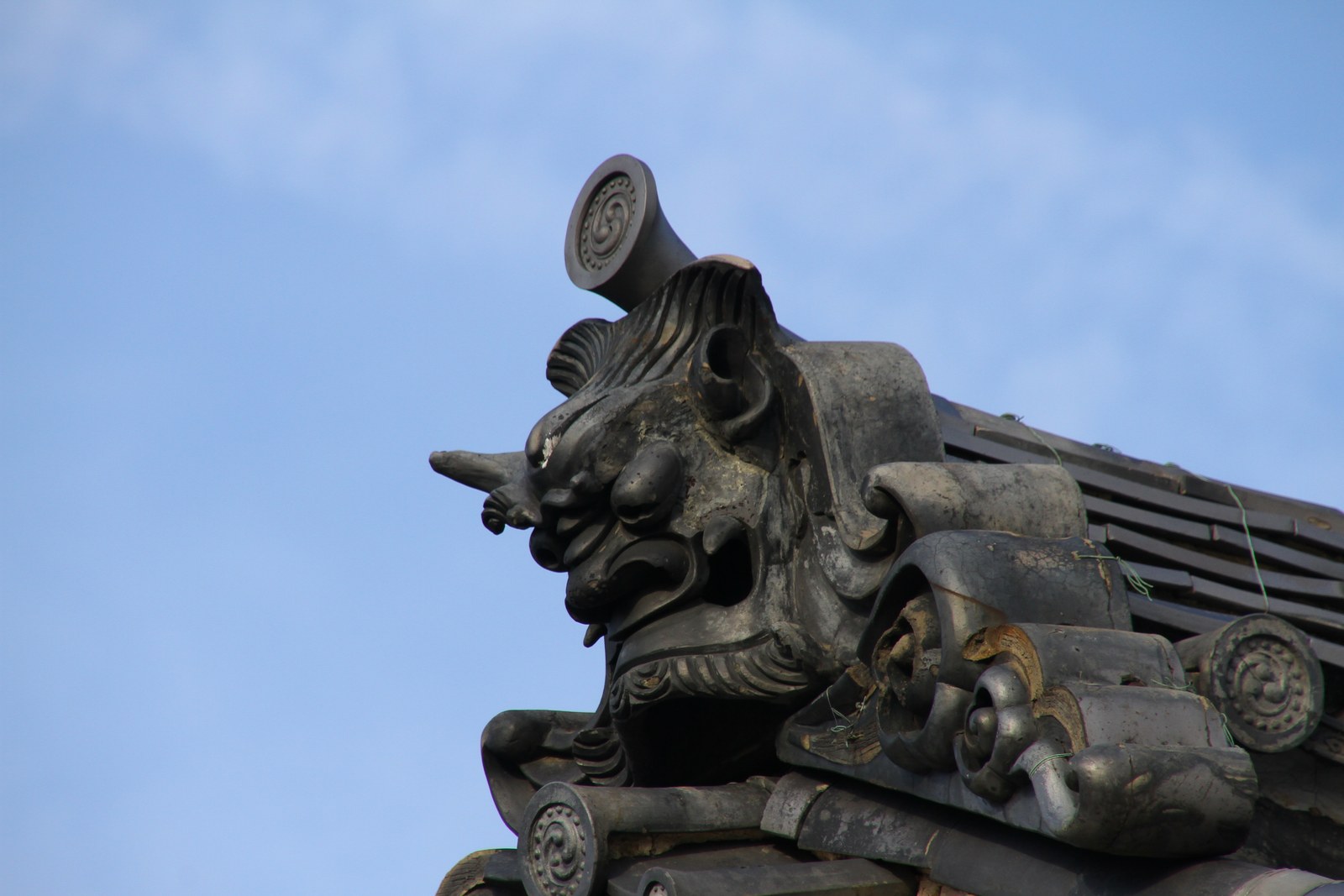
    A weathered demon-faced onigawara ridge-end tile on a temple roof at Myoshin-ji in Kyoto, against a blue sky
    Photo: Hyppolyte de Saint-Rambert / Wikimedia Commons, CC BY-SA 4.0

    What is an onigawara? (and what “demon” really means)

    Onigawara (鬼瓦) is written with the characters for oni (ogre / demon) and kawara (roof tile). The literal English “demon roof tile” sounds ominous. In practice, the name covers a whole family of ridge-end tiles — the special tiles fitted where a main ridge or a descending ridge terminates.

    Some onigawara show a fierce face. Others show lotus blossoms, clouds, family crests, or animals, because the motif is not always an oni. Still, the demon face is the image most travelers remember — and the one that carries the strongest story.

    That story is not “evil lives on the roof.” By tradition it is closer to this: a terrifying face can frighten away misfortune. The same protective instinct that put fierce guardian statues at temple gates put staring eyes on the ridge. The tile also does ordinary work — it closes a vulnerable junction of the roof against rain and wind. Symbol and structure sit in the same piece of fired clay.

    Japanese roof tiles have a surprisingly precise starting point. According to the Nihon Shoki, Japan’s oldest official chronicle, in 588 the Korean kingdom of Baekje sent temple builders, a painter, and four “tile masters” to help build Asuka-dera, the country’s first full-scale Buddhist temple. And the earliest ridge-end tiles were not demons at all. Most carried lotus flowers. Only from the Nara period onward did the fierce face become the dominant design, and the name oni-gawara stuck. Today the word covers every ridge-end tile, face or no face. Some even carry the character for “water” (水), a quiet wish that fire would stay away.

    So when you hear “demon,” hear guardian. The face is meant to stand between the house and harm.

    Where to see onigawara in Kyoto: how to spot them

    Kyoto trains the eye downward — stone paths, moss, shop fronts, matcha. Onigawara ask you to look up.

    Try this on your next temple or machiya walk:

    1. Find the main ridge — the highest horizontal line of the roof.
    2. Follow it to either end. That blunt termination is where a ridge-end tile often sits.
    3. On larger temple halls, check the ends of descending ridges too, where the roof steps down toward the eaves.
    4. Notice age. New and old tiles on the same roof often look different after years of weather.
    5. Do not expect every ridge end to show teeth. A crest, a lotus, or a cloud scroll is still part of the same family of finishing tiles.

    Autumn helps. After summer haze thins, and before winter snow softens every outline, the silhouette of a Kyoto roof becomes very readable against a clear sky. Stand in a courtyard after the tour groups pass. Let your gaze climb the tiles one course at a time until the ridge ends. The face — if there is one — will feel less like decoration and more like a presence that has been working overtime for a very long time.

    Inside temple halls you will meet other guardians — painted dragons on ceilings, stone deities in the garden, fierce protectors at the gate. Onigawara belong to that same vocabulary of watchfulness. Different materials, same old wish: may this place be kept safe.

    Seeing one up close

    On a roof, an onigawara is usually too high to see in detail. Museums are the easiest place to meet one at eye level: the Nara, Kyoto and Kyushu National Museums all hold historic ridge-end tiles (see the sources below), though what is on display changes. In Kyoto, our own workshop also offers a reservation-based onigawara experience for visitors (details at the end of this article).

    Practical tips for roof-watching

    • Look from a distance. Ridge ends are easier to read from across a courtyard than from directly below.
    • Respect private homes. Enjoy townhouse roofs from the street, and don’t block doorways for photos.
    • Keep going. For the longer history, see Why are there demon faces on Japanese roofs? For a Kyoto street where tiled townhouse roofs line the way, walk Sannenzaka. Other roof guardians appear in our shachihoko article.

    A face on the ridge

    Kyoto’s roofs are easy to treat as background. Once you learn the word onigawara, the skyline changes. Every temple walk becomes a search for ridge ends, and every demon face becomes a reminder that Japanese architecture never separated beauty from protection.

    Sources & Further Reading


    Meet onigawara in Kyoto

    Kawarakoubou Youya (瓦工房YOU家) — workshop, gallery, and kawara craft in Higashiyama, near Gojo Ohashi.

    About the author — JAPAN ESSENCE Editorial Team. Our mission is to bring you Japan’s legends, myths, festivals and living traditions, through both historical fact and the stories passed down over generations.

  • Discovering Kyoto’s Onigawara: Japan’s Demon-Quelling Roof Tiles

    Discovering Kyoto’s Onigawara: Japan’s Demon-Quelling Roof Tiles

    Traditional Kyoto skyline with temple roofs and abstract onigawara under a golden late-afternoon sky.
    AI生成イメージ / AI-generated illustration (not a photograph of the actual place)

    Introduction to Kyoto’s Guardian Roof Tiles

    Kyoto, a city renowned for its historic temples and traditional architecture, is home to a unique feature that adorns many of its roofs: the onigawara. These distinctive roof tiles, often depicting the fierce visage of a demon, serve not only as decorative elements but also as protectors against malevolent spirits. The presence of onigawara is a testament to the rich cultural heritage and architectural ingenuity found in Japanese design, particularly in Kyoto’s historic temples and machiya townhouses.

    What Are Onigawara and Their Cultural Significance?

    Onigawara are traditional Japanese architectural roof ornaments that typically feature the face of an ogre or demon, known as an ‘oni’. These tiles are crafted from ceramic and are a distinctive feature in Japanese architecture, especially in religious and traditional buildings. The primary purpose of onigawara is to ward off evil spirits, thus protecting the building and its inhabitants. This protective function is deeply rooted in Japanese folklore and spiritual beliefs, where demons are often seen as both malevolent and benevolent forces.

    Protecting Kyoto’s Historic Temples and Machiya Townhouses

    In Kyoto, onigawara are prominently used in the architecture of historic temples and traditional machiya townhouses. These buildings frequently incorporate customized onigawara that bear family crests or temple motifs, blending personal and spiritual symbolism with architectural aesthetics. The integration of onigawara into Kyoto’s rooflines reflects a harmonious balance between form and function, where artistic expression meets practical protection.

    The Symbolism of Demons and Family Crests on Rooflines

    The demon faces depicted on onigawara are not merely decorative; they carry significant symbolic weight. In Japanese culture, demons are complex figures that can embody both protective and destructive qualities. By placing these fearsome visages on rooftops, builders invoke their protective powers to shield the structure from harm. Additionally, the inclusion of family crests or temple motifs on onigawara serves to personalize the building, linking it to the lineage or spiritual identity of its occupants.

    Where to Spot Onigawara While Exploring Kyoto

    Visitors to Kyoto can spot onigawara adorning the roofs of many historic sites throughout the city. Temples such as Kiyomizu-dera and Ginkaku-ji are excellent places to observe these intricate tiles up close. Additionally, wandering through the narrow streets of Kyoto’s traditional districts, such as Gion and Higashiyama, offers ample opportunities to see onigawara on the roofs of machiya townhouses. These experiences provide a glimpse into the architectural traditions that have shaped Kyoto’s landscape for centuries.

    About the author — JAPAN ESSENCE Editorial Team. Our mission is to bring you Japan’s legends, myths, festivals and living traditions, through both historical fact and the stories passed down over generations.

  • The History and Guardian Role of Kawara and Onigawara in Kyoto Architecture

    The History and Guardian Role of Kawara and Onigawara in Kyoto Architecture

    Ukiyo-e illustration of a Kyoto rooftop with onigawara tiles, autumn leaves, and distant hills under a clear blue sky.
    AI生成イメージ / AI-generated illustration (not a photograph of the actual place)

    Introduction to Kawara and Onigawara

    Kyoto, renowned for its rich cultural heritage and traditional architecture, owes much of its historic charm to the unique roof tiles known as kawara and their decorative counterparts, onigawara. These tiles are not only functional but also serve as cultural symbols, embodying centuries of craftsmanship and tradition.

    The Historical Roots of Kawara

    The introduction of kawara to Japan is closely tied to the spread of Buddhism from the Korean Peninsula in the late 6th century during the Asuka period. As Buddhism took root, so did the architectural styles associated with it, including the use of roof tiles. Early tile-making centers were established to supply the massive state-sponsored temple complexes such as Asuka-dera, and later the ancient capital structures of Heian-kyo, which is modern-day Kyoto.

    These tiles were initially used in religious and imperial buildings, symbolizing a shift from the thatched roofs of earlier periods to more durable and fire-resistant materials. Over time, the use of kawara expanded to include private residences, particularly the traditional townhouses known as machiya.

    The Role of Onigawara

    Onigawara are decorative ridge-end tiles traditionally placed at the ends of roof ridges. Their primary function is to protect structural joints from water leakage, but they also hold significant cultural and symbolic meanings. While modern onigawara often depict fierce ogre-like or demon faces intended to ward off evil spirits, many historic examples in Kyoto feature floral motifs, family crests (kamon), or wave patterns designed to prevent fire.

    The evolution of onigawara designs reflects the blending of practical and aesthetic considerations in Japanese architecture. These tiles not only serve as protective elements but also as artistic expressions that enhance the visual appeal of buildings.

    Fact vs Legend: The Protective Power of Onigawara

    Fact

    Historically, onigawara have been used as a practical solution to protect buildings from water damage. Their placement at critical points on the roof helps prevent leaks and structural decay, making them an essential component of traditional Japanese architecture. The craftsmanship involved in creating these tiles is highly specialized, requiring skilled artisans to maintain the integrity of historic structures.

    Legend

    According to folk beliefs, the fierce visages of onigawara possess supernatural powers to frighten away malevolent spirits, malicious deities, and negative energies before they can enter a building. In traditional Japanese lore, water-related symbols and fierce entities placed on roofs were believed to magically interact with the elements to pacify raging fires, protecting wooden structures from the constant threat of urban blazes.

    These legends highlight the deep cultural significance of onigawara, illustrating how they are perceived as guardians of the home, warding off both physical and spiritual threats.

    Preservation and Modern Relevance

    Today, the preservation of Kyoto’s architectural heritage relies heavily on specialized craftspeople who maintain temples, shrines, and machiya using established architectural repair standards. The skills required to produce and repair kawara and onigawara are passed down through generations, ensuring that these traditional crafts continue to thrive.

    With the increasing awareness of cultural preservation, there is a renewed interest in the role of these tiles in maintaining the historical integrity of Kyoto’s streetscapes. Efforts to preserve these structures not only protect the physical buildings but also safeguard the intangible cultural heritage they represent.

    Visiting Kyoto’s Architectural Gems

    For those interested in exploring the beauty and history of kawara and onigawara, Kyoto offers numerous opportunities. Stroll through historic districts like Gion or Ninenzaka/Sannenzaka to observe diverse onigawara designs on traditional machiya rooflines. Major Kyoto temples such as Kiyomizu-dera or Daitoku-ji showcase large-scale ridge tiles and intricate temple roof craftsmanship.

    When visiting these sites, it’s important to respect private property and local residents, especially when photographing historic rooftops in narrow Kyoto alleyways. These areas provide a glimpse into the past, allowing visitors to appreciate the artistry and cultural significance of these architectural elements.

    About the author — JAPAN ESSENCE Editorial Team. Our mission is to bring you Japan’s legends, myths, festivals and living traditions, through both historical fact and the stories passed down over generations.

  • Why Are There Demon Faces on Japanese Roofs? A Short History of Kawara and Onigawara

    Why Are There Demon Faces on Japanese Roofs? A Short History of Kawara and Onigawara

    Quick answer: The demon faces on Japanese roofs are onigawara (“demon tiles”), board-shaped tiles that finish the ends of a roof’s ridges. Roof tiles (kawara) came to Japan with Buddhism in the late sixth century. The earliest ridge-end tiles carried geometric or lotus designs, and from the Nara period (8th century) demon faces were adopted at the imperial palace and the great temples of Nara. The Nara National Museum suggests the oni face was meant to drive away misfortune. Tradition still holds that the face guards the house below. You can see Japan’s oldest roof tiles still in use at Gangōji in Nara, and onigawara on temple and townhouse roofs all over Kyoto.

    Watercolour scene of traditional Japanese rooftops with onigawara tiles against a bright summer sky.
    AI生成イメージ / AI-generated illustration (not a photograph of the actual place)

    What is an onigawara?

    Walk through Kyoto and you will notice that the city is crowned by a sea of gray tile. These roof tiles are called kawara. At the ends of the ridges you will often find a stern, sometimes smiling face: the onigawara, or “demon tile.”

    The Nara National Museum describes an onigawara as a board-shaped tile that decorates the ends of the main ridge, the descending ridges and the corner ridges of a roof. “Onigawara” is the name for the tile in that position. Not every onigawara shows a demon.

    Origin: roof tiles arrive with Buddhism

    Roof tiles came to Japan from the Asian continent along with Buddhism. A multilingual guide published by Japan’s tourism ministry explains that the oldest clay tiles in Japan were made more than 1,400 years ago by artisans from the Korean kingdom of Baekje, for Hōkōji (Asukadera), an early Buddhist temple in the old capital of Asuka. For a long time afterward, tiled roofs belonged to temples, palaces and government buildings.

    From lotus patterns to fierce faces

    The earliest ridge-end tiles were not demons at all. According to the Nara National Museum, onigawara of the seventh century, when they first appeared, carried geometric patterns or lotus flowers. From the Nara period onward, demon-face designs were adopted at Heijō Palace, the great temples of Nara and other sites around the country. The museum holds an eighth-century demon-face onigawara thought to come from the Nakayama kiln, an official kiln that supplied tiles to Heijō Palace. Tiles with the same design were used on palace buildings in the first half of the eighth century.

    Tiles for townhouses: fire and the city

    For centuries, ordinary townspeople did not have tiled roofs. In Edo (today’s Tokyo), the Tokyo Fire Department’s history notes that a 1720 town ordinance, issued under the eighth shogun Yoshimune, permitted tiled roofs on townhouses for the first time and encouraged them, along with plastered, fire-resistant walls, as protection against the city’s frequent great fires. Kyoto’s townhouse roofs have their own history, but the basic reason is the same everywhere: tile does not catch a spark the way thatch or wooden shingles do.

    Fact and tradition: why a demon face?

    Facts

    • Roof tiles reached Japan with Buddhism from the Asian continent in the late sixth century, through artisans from Baekje.
    • The first ridge-end tiles in the seventh century carried geometric or lotus designs, not demon faces.
    • Demon-face onigawara were in use on Heijō Palace buildings in the first half of the eighth century.
    • In Edo, a 1720 ordinance opened tiled roofs to townhouses as a fire-safety measure.

    Tradition (what people believe, not a proven fact)

    • The oni face is said to scare away evil spirits and bad luck from the house below. The Nara National Museum explains the early demon faces in a similar way: the oni was probably chosen to express hekija, warding off misfortune.
    • Japan often puts its most frightening faces to work as protectors. The same idea appears in living festivals such as the Namahage of Akita, fierce visiting gods who bless the houses they visit, and on castle roofs, where the shachihoko is said to guard against fire.

    Where to see historic kawara and onigawara

    • Gangōji, Nara: Japan’s oldest roof tiles still in use. When Hōkōji moved to Nara and became Gangōji in 718, its tiles were brought along and reused. According to the tourism ministry’s guide, some of them still cover the roofs of the Zenshitsu and Gokurakudō halls today. The original Asuka tiles are reddish, while newer ones are a uniform gray, and the difference is easiest to see when you compare the south and west sides of the Gokurakudō roof.
    • Nara National Museum. The museum’s collection includes the eighth-century demon-face onigawara described above. Exhibits change, so check the museum’s current displays before you go.
    • Kyoto’s temples and old streets. You do not need a special tour. In a temple courtyard or a protected district such as Sannenzaka, below Kiyomizu-dera, slow down and look at the ridge ends. Notice how each face differs: some frown, some grin, some look almost kind. Please enjoy private homes from the street. For the temple at the top of the slope, see Kiyomizu-dera: history and legends.

    Access: visiting Gangōji

    • Hours: 9:00–17:00, last entry 16:30.
    • Admission: adults ¥700 (¥800 during the autumn special exhibition), junior high and high school students ¥500 (¥600), elementary school students ¥300 (¥400).
    • Getting there: about 15 minutes on foot from Kintetsu Nara Station, or by bus to “Fukuchiin-cho” and then 5 minutes on foot. From JR Nara Station, about 20 minutes on foot, or by bus to “Tanaka-cho” and then 5 minutes on foot.

    These details are from Gangōji’s official website (checked October 11, 2026). Hours and fees can change, so check before you go.

    Conclusion

    Kawara began as a technology from the continent and became a living craft of Japan. The onigawara on a Kyoto roof is a small reminder that the people who built these houses wanted them to be safe, beautiful and protected. Next time you visit, remember to look up.

    Sources

    About the author — JAPAN ESSENCE Editorial Team. Our mission is to bring you Japan’s legends, myths, festivals and living traditions, through both historical fact and the stories passed down over generations.