Category: Legends

伝説

  • The Awa Tanuki War: Exploring Japan’s Epic Shape-Shifter Battle in Tokushima

    The Awa Tanuki War: Exploring Japan’s Epic Shape-Shifter Battle in Tokushima

    In Komatsushima, Tokushima Prefecture, the legendary Awa Tanuki War unfolds, a tale where shape-shifting tanuki engage in an epic battle. This captivating folklore is celebrated with monuments and shrines, inviting visitors to explore the rich cultural heritage of the region.

    A stone statue of Kinchō, Kinchō-jinja
    “Kincho statue” by Reggaeman, CC BY-SA 3.0, via Wikimedia Commons

    Introduction to Japan’s Legendary Tanuki Wars

    FACT: The Origin of the Awa Tanuki War

    The Awa Tanuki War is a storied conflict that took place during the late Edo period in Higaino, now part of Komatsushima City. The legend centers around a tanuki named Kinchō, who was rescued by a dye-shop owner named Moemon. In gratitude, Kinchō protected the shop and helped it prosper. This act of loyalty and protection led to Kinchō’s deification as Kinchō Myōjin, enshrined at Kinchō Shrine in Komatsushima.

    The story of Kinchō is deeply embedded in the local culture, symbolizing the values of loyalty and gratitude. Visitors to the region can explore the historical context of this period, learning how the socio-economic conditions of the time may have influenced such legends. The tale of Kinchō not only highlights the bond between humans and yokai but also serves as a reflection of the community’s beliefs and traditions.

    LEGEND: The Battle of the Tanuki

    According to local legend, the Awa Tanuki War was sparked by Kinchō’s refusal to become the adopted heir of Rokuemon, another powerful tanuki, by rejecting marriage to Rokuemon’s daughter. This refusal led to a large-scale battle between their tanuki forces, with roughly 600 tanuki on each side, fought across the Katsuura River. Despite Kinchō’s victory, he sustained mortal wounds and died after returning home to express his gratitude to Moemon.

    This legendary battle is often recounted with vivid imagery, depicting the tanuki as cunning and strategic creatures. The Katsuura River, a significant geographical feature in the area, serves as the backdrop for this mythical confrontation. As visitors explore the region, they can imagine the dramatic scenes of the tanuki war unfolding along the riverbanks, adding a layer of mystique to the landscape.

    LEGEND: Variants of the Tanuki War

    While the main narrative is widely accepted, there are variations in how the story is told. Some accounts emphasize the strategic prowess of Kinchō during the battle, highlighting his clever tactics that led to his side’s victory. Others focus more on the emotional aspects, such as the deep bond between Kinchō and Moemon, which underscored his return home despite his injuries.

    These variations reflect the oral tradition of storytelling, where each retelling can add new dimensions to the legend. The emphasis on strategy and emotion in different versions of the story allows for a richer understanding of the tanuki’s character and the cultural values they represent. Visitors can engage with these narratives by participating in local festivals and events that celebrate the tanuki lore.

    Ukiyo-e illustration of Kinchō leading tanuki forces across Katsuura River, autumn colors, during Awa Tanuki War.
    AI生成イメージ / AI-generated illustration (not a photograph of the actual place)

    The Rescue of Kincho: From Dye Shop to Deified Spirit

    FACT: Kinchō’s Enshrinement

    In 1939, following the success of the film ‘Awa Tanuki Gassen’, a Kinchō Shrine (Hon-gū) was constructed mid-mountains by studio executives and actors to appease Kinchō’s spirit. Later, in 1956, the current Kinchō Shrine at the foot of Nihō-san was established after the film’s remake. This shrine continues to honor Kinchō, the tanuki hero, and serves as a testament to the enduring legacy of the legend.

    The establishment of Kinchō Shrine highlights the intersection of popular culture and traditional folklore. The film’s impact on the local community underscores how modern media can revitalize interest in ancient legends. Visitors to the shrine can explore how the cinematic portrayal of the Awa Tanuki War contributed to the cultural preservation and reinterpretation of the tanuki story.

    FACT: The Significance of Kinchō Shrine

    Kinchō Shrine is more than just a place of worship; it is a cultural landmark that embodies the spirit of loyalty and gratitude. Visitors to the shrine can immerse themselves in the local folklore and appreciate the craftsmanship of the shrine’s architecture, which reflects traditional Japanese design. The shrine’s serene setting at the foot of Nihō-san offers a peaceful retreat for those seeking to connect with the legend of Kinchō.

    The shrine’s architecture and setting provide a tangible connection to the past, allowing visitors to experience the tranquility and spiritual ambiance that the shrine offers. The surrounding natural beauty enhances the sense of reverence and reflection, making it a meaningful destination for those interested in Japanese culture and history.

    Tanotown 恩山寺谷 Komatsushimacity Tokushimapref No,2 - Tano, Komatsushima
    “Tanotown 恩山寺谷 Komatsushimacity Tokushimapref No,2” (Tano, Komatsushima) by Mti, CC BY-SA 3.0, source, via Wikimedia Commons

    Kincho Shrine: Honoring the Mythical Tanuki Hero

    FACT: Visiting Kinchō Shrine

    Kinchō Shrine, located at the foot of Nihō-san in Komatsushima, is a place where visitors can pay respects to the legendary tanuki hero. The shrine is a cultural landmark, reflecting the deep connection between the local community and the folklore of Kinchō. It stands as a symbol of loyalty and gratitude, qualities embodied by the tanuki in the legend.

    Visitors to Kinchō Shrine can participate in rituals and ceremonies that honor the tanuki spirit. These activities provide insight into the spiritual practices associated with the shrine and offer a unique opportunity to engage with the local community’s traditions. The shrine’s role as a cultural hub ensures that the legacy of Kinchō continues to thrive.

    FACT: The Shrine’s Cultural Impact

    The shrine not only serves as a spiritual center but also as a hub for cultural activities. Festivals and events celebrating the tanuki legend are held regularly, drawing locals and tourists alike. These gatherings provide an opportunity to experience the vibrant traditions of Komatsushima and to learn more about the fascinating stories of the tanuki.

    Through these cultural events, the community celebrates its heritage and fosters a sense of unity and pride. Visitors can witness traditional performances, participate in workshops, and enjoy local cuisine, all of which contribute to a deeper understanding of the region’s cultural identity.

    Exploring Komatsushima’s Giant Tanuki Landmarks

    FACT: The World’s Largest Tanuki Statue

    Komatsushima Station Park features a remarkable 5-meter-tall, 5-ton bronze statue of Kinchō, reputedly the world’s largest tanuki statue. This statue not only commemorates the legendary tanuki but also offers an interactive experience; visitors can activate a waterfall by clapping near the statue, making it a unique attraction in the area.

    The statue stands as a prominent symbol of the tanuki’s cultural significance, drawing visitors from near and far. Its impressive size and interactive feature make it a must-see landmark, providing a memorable experience for those exploring the tanuki’s legacy in Komatsushima.

    FACT: The Interactive Experience

    The statue at Komatsushima Station Park is not just a static monument; it engages visitors in a playful way. The clapping-triggered waterfall adds an element of surprise and delight, inviting people to participate in the legend. This interactive feature makes it a popular spot for families and tourists, enhancing the storytelling aspect of the tanuki folklore.

    Visitors can enjoy the whimsical nature of the statue, which reflects the playful characteristics often attributed to tanuki in Japanese folklore. The interactive element serves as a reminder of the tanuki’s mischievous spirit, making it a fitting tribute to Kinchō’s legacy.

    Tanotown 恩山寺谷 Komatsushimacity Tokushimapref No,3 - Tano, Komatsushima
    “Tanotown 恩山寺谷 Komatsushimacity Tokushimapref No,3” (Tano, Komatsushima) by Mti, CC BY-SA 3.0, source, via Wikimedia Commons

    Local Culture: Tasting Kincho Manju and Tanuki Heritage

    LEGEND: Tanuki Influence in Local Cuisine

    While not directly linked to the legend, the local culture in Komatsushima embraces the tanuki heritage through various culinary delights. One such specialty is Kincho Manju, a sweet treat that reflects the community’s connection to the tanuki folklore. The influence of the legend extends beyond storytelling, permeating the local cuisine and cultural expressions.

    Kincho Manju and other tanuki-themed delicacies offer a taste of the region’s unique cultural identity. These treats are often enjoyed during festivals and gatherings, providing a delicious way to celebrate the tanuki’s enduring legacy. The culinary traditions of Komatsushima serve as a testament to the community’s creativity and appreciation for its folklore.

    FACT: Culinary Traditions and Tanuki Lore

    The tanuki’s influence in Komatsushima is evident in its culinary offerings. Local sweets and dishes often draw inspiration from the tanuki legend, providing a taste of the region’s cultural identity. Visitors can enjoy these delicacies while learning about the stories that have shaped the community’s heritage.

    Through these culinary experiences, visitors can connect with the local culture on a sensory level, enhancing their understanding of the tanuki’s role in Komatsushima’s history. The flavors and aromas of these traditional dishes offer a unique perspective on the region’s rich cultural tapestry.

    Nearby Guide

    Access

    • Minami-Komatsushima Station (Komatsushima) — From Minami-Komatsushima Station, it’s approximately a 20-minute walk to Kincho Shrine. Alternatively, a taxi ride takes about 10 minutes. The shrine is located in a residential area, so please be mindful of local residents. details

    Nearby sights

    • Komatsushima Station Park (Komatsushima) — Located near the station, this park features a 5-meter-tall bronze statue of Kincho, the tanuki from local folklore. Clapping your hands near the statue activates a waterfall, adding an interactive element to your visit. details
    • Onzanji Temple (Komatsushima) — A historic temple located in Komatsushima, offering a serene environment and cultural insights. It’s a short distance from Kincho Shrine and provides a peaceful retreat. details

    Where to eat

    • Take-chikuwa (Komatsushima) — A local specialty consisting of fish cakes grilled on bamboo sticks. Best enjoyed warm while exploring the port area. details
    Locator map of Japan: Komatsushima, Tokushima
    Legend site: Komatsushima, Tokushima — Source: Map of Japan with highlight on 36 Tokushima prefecture.svg; Map: Lincun, CC BY-SA 3.0, via Wikimedia Commons

    Regional guide

    Location: Komatsushima, Tokushima Prefecture

    • Kincho Shrine (Komatsushima) — source
    • Komatsushima Station Park – Tanuki Plaza (Komatsushima) — source

    Sources

    About the author

    JAPAN ESSENCE Editorial Team
    Our mission is to bring you Japan’s legends, myths, festivals and living traditions, through both historical fact and the stories passed down over generations.

  • Huri: The Giant Legendary Bird of Mount Yūbari in Ainu Folklore

    Huri: The Giant Legendary Bird of Mount Yūbari in Ainu Folklore

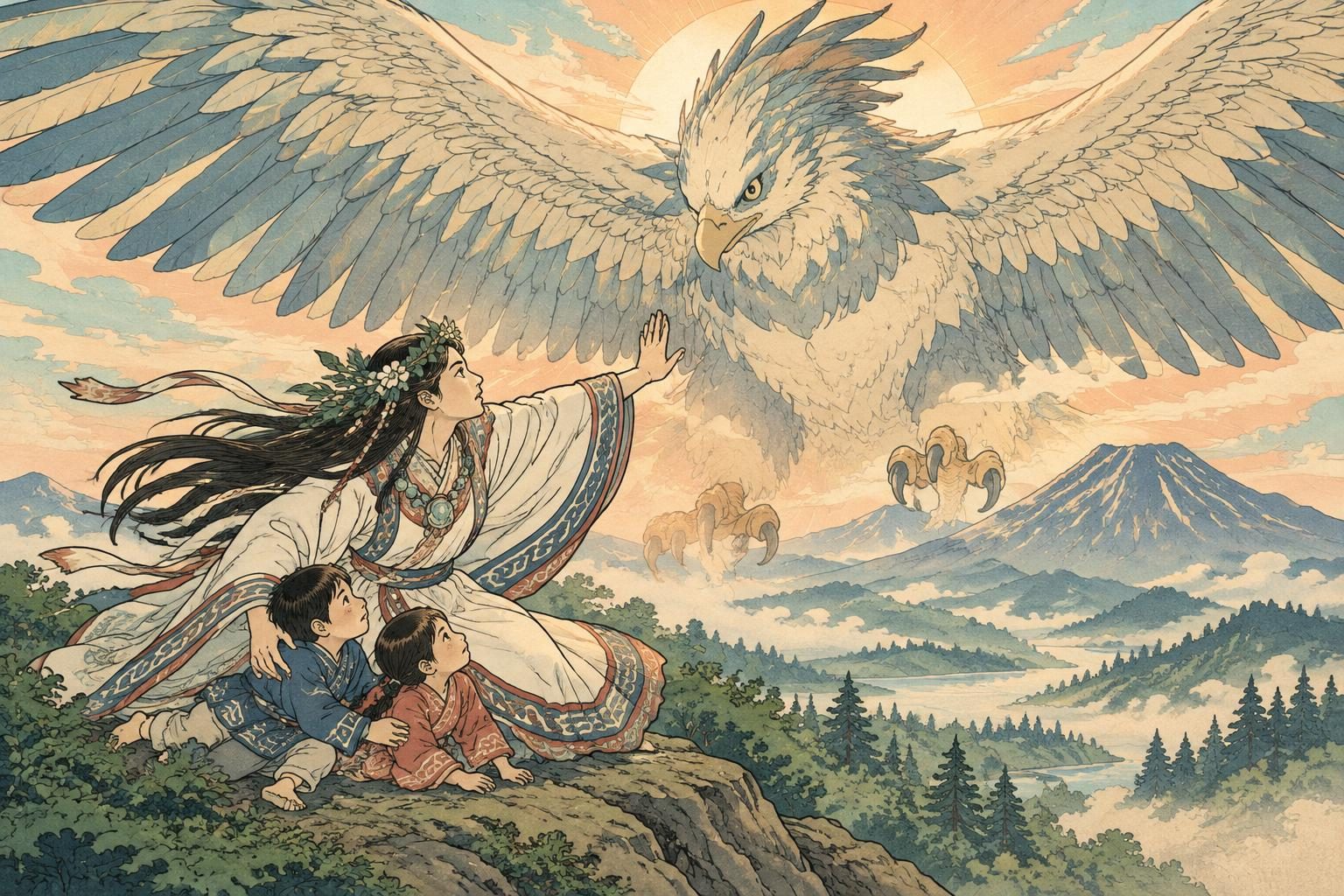
    In Yūbari, Hokkaido Prefecture, the legend of Huri, a giant bird from Ainu folklore, continues to captivate imaginations. This mythical creature, said to have wings so vast they could block out the sun, is an integral part of the cultural tapestry of the region.

    A giant bird with vast wings over Mount Yūbari, goddess rescuing children in a luminous scene.
    AI生成イメージ / AI-generated illustration (not a photograph of the actual place)

    Introduction to Huri: The Mythical Giant Bird of Ainu Lore

    LEGEND: The Story of Huri and Kamuy Kakkemat

    According to Ainu legend, the goddess Kamuy Kakkemat arrived at Mount Yūbari and encountered the giant bird Huri. This bird, with wings so immense that they darkened the land, had pinned two children underfoot. Kamuy Kakkemat rescued these children, who would later become the ancestors of the Sumunkur Ainu. This tale is a vivid part of the oral traditions of the Ainu people, illustrating the interplay between divine intervention and the natural world.

    The legend of Kamuy Kakkemat and Huri is not merely a story of rescue and heroism; it is a narrative that underscores the Ainu’s deep spiritual connection to their environment. The mountain setting provides a dramatic backdrop for the encounter, emphasizing the power and mystery of nature as perceived by the Ainu.

    FACT: The Characteristics of Huri

    In Ainu oral tradition, Huri is depicted as a giant bird, sometimes described as eagle-like. Its name, derived from the Ainu word for a red or reddish bird, is rendered as huri or furi in different dialects. One of the most striking features attributed to Huri is its wingspan, which is said to measure about 28 kilometers (7 ri). This immense size underscores the bird’s mythical status and its ability to influence the natural environment, such as blocking the sun.

    The description of Huri as eagle-like suggests a creature of great majesty and power, characteristics that are often associated with birds of prey. This portrayal aligns with the bird’s role in the legend as a formidable force that the goddess Kamuy Kakkemat must confront.

    The Legend of Mount Yūbari and Kamuy Kakkemat

    LEGEND: Variants Across Hokkaido

    While the legend of Huri has various localized versions across Hokkaido, the encounter at Mount Yūbari is explicitly tied to the Sumunkur Ainu. This specific version highlights the cultural significance of the mountain within the Ainu community and its role as a setting for divine and mythical narratives. The story of Kamuy Kakkemat and Huri is not just a tale of heroism but also a reflection of the Ainu’s deep connection to their natural surroundings.

    According to local tradition, the mountain is more than just a geographical feature; it is a sacred space where the divine and the earthly intersect. This belief imbues the landscape with a spiritual dimension, making it a place of reverence and storytelling.

    夕張岳と釣鐘岩 (Mount Yubari with Tsurigane Rock) - panoramio - Mountaineering in Mount Yubari
    “夕張岳と釣鐘岩 (Mount Yubari with Tsurigane Rock) – panoramio” (Mountaineering in Mount Yubari) by pakku, CC BY 3.0, source, via Wikimedia Commons

    Who Were the Sumunkur Ainu?

    FACT: The Ancestral Lineage

    The Sumunkur Ainu are said to be descendants of the children rescued by Kamuy Kakkemat in the legend of Huri. This lineage is an important aspect of Ainu identity, linking the people to their mythological past and reinforcing their cultural heritage. The story serves as a reminder of the Ainu’s historical presence in Hokkaido and their enduring traditions.

    This ancestral connection is not just a matter of lineage but also one of cultural continuity. The Sumunkur Ainu, through their stories and traditions, maintain a living link to their ancestors, ensuring that the lessons and values of the past continue to inform their present.

    Etymology and Meaning of the Name Huri

    FACT: The Linguistic Roots

    The name “Huri” is derived from the Ainu language, referring to a red or reddish bird. This etymology reflects the bird’s symbolic significance and its vivid portrayal in Ainu folklore. The variations in the name, such as furi, highlight the linguistic diversity within Ainu dialects and the adaptability of oral traditions.

    The color red in Ainu symbolism often represents vitality and life force, suggesting that Huri is not only a creature of legend but also a symbol of life and power. The linguistic nuances in the name reflect the rich tapestry of Ainu language and culture.

    夕張岳からの芦別岳2 - Mount Yubari, Mount Ashibetsu
    “夕張岳からの芦別岳2” (Mount Yubari, Mount Ashibetsu) by Koda6029, CC BY-SA 4.0, source, via Wikimedia Commons

    Mount Yūbari: Geography and Natural Setting in Hokkaido

    FACT: The Natural Landscape

    Mount Yūbari, located in Yūbari City, Hokkaido, is a prominent feature of the region’s geography. It is part of a mountain range that offers breathtaking views and diverse ecosystems. The mountain’s natural beauty and its cultural significance make it a popular destination for hikers and those interested in exploring Ainu folklore.

    The mountain’s rugged terrain and lush surroundings provide a perfect setting for the legends that surround it. Visitors can experience the same natural beauty that inspired the Ainu’s stories, making it a place where the past and present coexist.

    Exploring Ainu Culture and Folklore in Modern Hokkaido

    FACT: The Cultural Heritage

    Ainu culture and folklore continue to be celebrated in Hokkaido, with efforts to preserve and promote these traditions. Festivals, museums, and cultural centers provide insights into the rich heritage of the Ainu people, allowing visitors to engage with their stories and traditions. The legend of Huri is just one example of the vibrant mythology that forms an integral part of Ainu cultural identity.
    These cultural initiatives not only preserve the past but also enrich the present, offering both locals and visitors a deeper understanding of the Ainu’s unique worldview and their contributions to Japan’s cultural mosaic.

    Nearby Guide

    Access

    • Daiyubari Trailhead (Yūbari) — To reach the Daiyubari Trailhead, drive from the Yūbari Interchange on the Hokkaido Expressway along National Routes 274 and 452. The trailhead is located on the west side of Mount Yūbari, where a small parking area and the Yūbari-dake Hyutte mountain hut serve hikers. Public transportation options details.

    Nearby sights

    • Shūparo Lake Reservoir (Yūbari) — Shūparo Lake Reservoir is a scenic spot near Mount Yūbari, offering picturesque views and a tranquil environment. It’s a great place to relax and enjoy nature after a hike. details.
    • Mount Ashibetsu (Ashibetsu) — Mount Ashibetsu is a dramatic peak in the same mountain range as Mount Yūbari. It’s known for its rugged terrain and offers challenging hiking opportunities for adventure enthusiasts. details.

    Where to stay

    • Yūbari Onsen (Yūbari) — Yūbari Onsen is a hot spring resort known for its highly alkaline waters that leave the skin feeling exceptionally smooth. It’s a perfect place to relax after a day of hiking. details.

    Where to eat

    • Yūbari Melon (Yūbari) — Yūbari is famous for its sweet and juicy melons. Visitors can purchase fresh melons or melon-flavored products like smoothies and doughnuts at local shops and roadside stations. details.
    Locator map of Japan: Yūbari, Hokkaido
    Legend site: Yūbari, Hokkaido — Source: Map of Japan with highlight on 01 Hokkaido prefecture.svg; Map: Lincun, CC BY-SA 3.0, via Wikimedia Commons

    Sources

    About the author

    JAPAN ESSENCE Editorial Team
    Our mission is to bring you Japan’s legends, myths, festivals and living traditions, through both historical fact and the stories passed down over generations.

  • The Tsurube-otoshi of Ibigawa: Gifu’s Tree-Dwelling Severed-Head Yokai

    The Tsurube-otoshi of Ibigawa: Gifu’s Tree-Dwelling Severed-Head Yokai

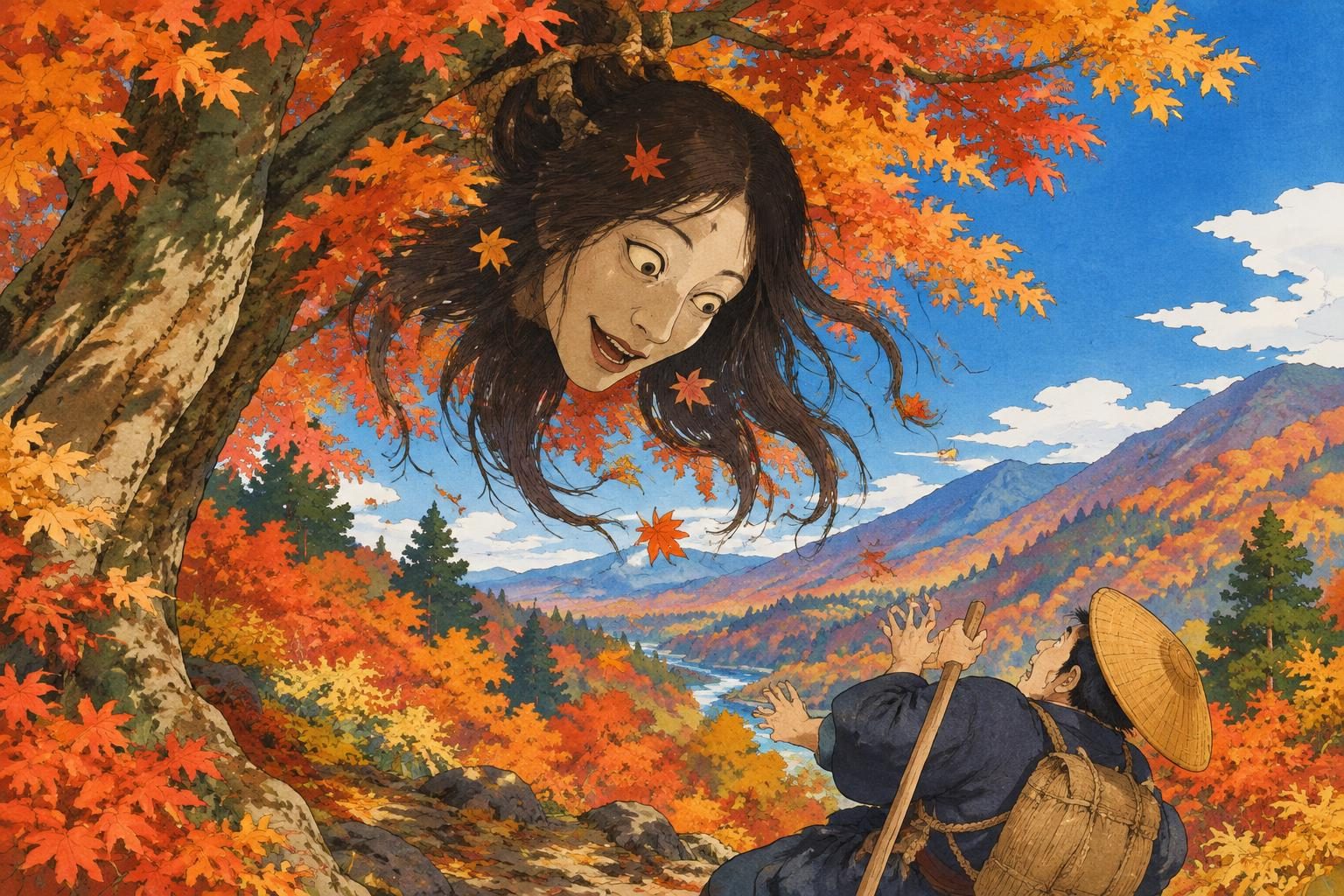
    In the heart of Ibigawa, Gifu Prefecture, the dense Tsukumi woods are home to a chilling tale of a tree-dwelling yokai known as tsurube-otoshi. This eerie legend has captivated locals and visitors alike, drawing them into a world where the supernatural lurks just above the forest floor.

    Tsurube-otoshi, a giant yokai head, drops from a tree in a vivid autumn Japanese landscape.
    AI生成イメージ / AI-generated illustration (not a photograph of the actual place)

    Introduction to Ibigawa’s Darkest Woodland Legend

    LEGEND: The Severed-Head Yokai of Tsukumi

    According to local tradition, in the Tsukumi part of the former Kuze Village, now part of Ibigawa Town, a mysterious creature known as a tsurube-otoshi hides in the canopy of a large tree. This tree is so dense that it remains dim even at noon. The yokai is said to drop down on unsuspecting passers-by like a well bucket, sometimes taking the terrifying form of a giant severed head.

    This legend, steeped in the oral traditions of the region, describes the tsurube-otoshi as a purely threatening apparition. It is said to startle travelers and, in some accounts, even devour them. The story serves as a chilling reminder of the dangers that might lurk in the shadows of ancient woods, embodying the fear of the unknown that these dense forests could evoke.

    Visitors to the Tsukumi area can still feel the eerie atmosphere that gave rise to such tales. The large tree, central to the legend, stands as a silent witness to the stories passed down through generations. Its dim canopy, even at the height of day, offers a glimpse into the world where the tsurube-otoshi might still dwell, waiting to surprise those who wander beneath its branches.

    What Is a Tsurube-Otoshi? The Myth of the Tree-Dwelling Apparition

    FACT: The Unique Tokai-Kinki Variant

    The tsurube-otoshi of Tsukumi is an arboreal apparition unique to the Tokai and Kinki regions of Japan. Unlike other yokai that might be found in popular culture, this variant is not included in Toriyama Sekien’s famous works like the Konjaku Gazu Zoku Hyakki. Instead, it originates from local oral traditions that tie the yokai to specific trees in the area.

    This regional uniqueness underscores the localized nature of Japanese folklore, where stories are often deeply connected to specific landscapes and communities. The Tsukumi variant’s absence from Sekien’s works highlights how certain legends remain preserved within their local contexts, maintaining their distinct identity apart from more widely recognized yokai.

    FACT: The Distinctive Appearance

    In the Mino region, particularly in Ibigawa’s Tsukumi, the tsurube-otoshi is known for its distinctive appearance as a giant severed head. This form is not only startling but also serves as a cautionary tale, warning travelers of the dangers of passing under old trees at dusk, when light drops as suddenly as a well bucket.

    The imagery of the severed head is a powerful symbol within the legend, representing the abrupt and often frightening changes in nature. This form of the tsurube-otoshi is a reminder of the respect and caution required when navigating the natural world, where unexpected dangers can arise without warning.

    Tanugumisan Kegonji temple, 谷汲山華厳寺 - panoramio - Kegon-ji, Photos from Panoramio
    “Tanugumisan Kegonji temple, 谷汲山華厳寺 – panoramio” (Kegon-ji, Photos from Panoramio) by z tanuki, CC BY 3.0, source, via Wikimedia Commons

    The Tsukumi Variant: Gifu’s Unique Severed-Head Yokai

    FACT: A Tradition of Cautionary Tales

    The tsurube-otoshi legend in Tsukumi likely reflects a broader tradition of cautionary tales. These stories often warned villagers and travelers about the perils of the natural world, particularly the sudden darkness that could fall under dense canopies as the sun set. The name ‘tsurube-otoshi’ itself, which translates to ‘well bucket drop,’ evokes the abruptness with which night can descend in these wooded areas.

    Such cautionary tales served an essential function in traditional societies, imparting wisdom and survival strategies through storytelling. By embedding practical advice within engaging narratives, these legends helped communities navigate the challenges of their environment.

    FACT: Regional Distribution

    This legend is part of a broader distribution of tree-dropping apparitions across adjacent provinces like Omi, Yamashiro, and Owari. Such tales are a testament to the shared cultural heritage of these regions, where nature and the supernatural are inextricably linked.

    The spread of these stories across multiple provinces illustrates the interconnectedness of regional folklore in Japan. Despite variations in specific details, the core themes of caution and respect for nature remain consistent, reflecting the common experiences and values of the communities that share these tales.

    Oral Traditions Versus Art: How Local Folklore Differs From Pop Culture

    FACT: Distinction from Sekien’s Works

    While many yokai have been popularized through the works of artists like Toriyama Sekien, the tsurube-otoshi of Tsukumi remains a creature of local folklore. It is not featured in Sekien’s Konjaku Gazu Zoku Hyakki, highlighting its roots in oral tradition rather than artistic representation. This distinction underscores the importance of local stories in preserving cultural identity and history.

    The absence of the tsurube-otoshi from popular artistic catalogs like Sekien’s serves to emphasize the richness and diversity of Japan’s folk traditions. It highlights how oral storytelling continues to play a crucial role in maintaining the unique characteristics of regional legends, ensuring they remain vibrant and relevant to their communities.

    FACT: The Value of Oral Tradition

    The absence of the tsurube-otoshi from Sekien’s catalog does not diminish its significance. Instead, it emphasizes the value of oral traditions in maintaining the unique characteristics of regional folklore, distinct from the more widely recognized yokai of Japanese pop culture.

    Oral traditions offer a dynamic and adaptable form of storytelling, allowing legends to evolve while retaining their core messages. This adaptability ensures that tales like the tsurube-otoshi continue to resonate with new generations, providing a living connection to the past.

    Tanugumisan Kegonji temple, 谷汲山華厳寺 - panoramio (16) - Kegon-ji, Photos from Panoramio
    “Tanugumisan Kegonji temple, 谷汲山華厳寺 – panoramio (16)” (Kegon-ji, Photos from Panoramio) by z tanuki, CC BY 3.0, source, via Wikimedia Commons

    The Meaning Behind the Monster: Cautionary Tales of Ancient Woods

    FACT: Interpreting the Tsurube-Otoshi’s Significance

    The tsurube-otoshi’s legend serves as a metaphor for the fears and uncertainties faced by those who lived close to nature. The sudden drop of the yokai, much like a well bucket, mirrors the unexpected dangers that can arise in the wilderness. This imagery is a powerful reminder of the respect and caution that the natural world demands.

    In Ibigawa, the tsurube-otoshi continues to be a symbol of the mysterious and sometimes threatening aspects of the forest. Its story is a testament to the enduring power of folklore in shaping our understanding of the world around us, reminding us of the delicate balance between humanity and nature.

    Exploring Ibigawa and Gifu’s Rich Mythological Landscape

    Visitors to Ibigawa can explore the rich tapestry of folklore that defines this region. The Tsukumi woods, with their dense canopies and eerie ambiance, offer a glimpse into the world of the tsurube-otoshi. As you wander through these ancient trees, the legend of the severed-head yokai comes alive, inviting you to imagine the supernatural lurking just out of sight.

    Nearby Guide

    Access

    • Ibi Station (Ibigawa Town) — From Ibi Station on the Yoro Railway, take the Ibigawa Town community bus for about 25 minutes to reach Tanigumisan Kegonji Temple. Alternatively, from JR Ogaki Station, transfer to Tanigumiguchi Station on the Tarumi Railway, then about 8 minutes on the Ibigawa Town community bus. By car, it’s appr details.

    Nearby sights

    • Tanigumisan Kegonji Temple (Ibigawa Town) — Tanigumisan Kegonji Temple, founded in 798, is the final stop of the Saigoku Thirty-Three Kannon pilgrimage. It’s known for its unique atmosphere, including the Oizuru-do where pilgrims offer their garments and the bronze carp symbolizing the return to ordinary life. The approach to the temple offer official site.
    • Kamigare Tea Plantation (Ibigawa Town) — Known as ‘Gifu’s Machu Picchu,’ the Kamigare Tea Plantation offers breathtaking views of terraced tea fields at altitudes between 300–380 meters. Visitors can enjoy tea harvesting experiences and purchase locally produced tea leaves. The plantation is accessible by car or via public transportation w official site.

    Where to stay

    • Itsukian (Ibigawa Town) — Itsukian is a guesthouse located in Ibigawa Town, offering comfortable accommodations for travelers. It’s conveniently situated near Tanigumisan Kegonji Temple and other local attractions, making it an ideal base for exploring the area. details.
    Locator map of Japan: Ibigawa, Gifu
    Legend site: Ibigawa, Gifu — Source: Map of Japan with highlight on 21 Gifu prefecture.svg; Map: Lincun, CC BY-SA 3.0, via Wikimedia Commons

    Sources

    About the author

    JAPAN ESSENCE Editorial Team
    Our mission is to bring you Japan’s legends, myths, festivals and living traditions, through both historical fact and the stories passed down over generations.

  • Exploring Ibigawa’s Folklore: The Legend of the Tsurube-otoshi

    Exploring Ibigawa’s Folklore: The Legend of the Tsurube-otoshi

    In Ibigawa, Gifu Prefecture, the legend of the Tsurube-otoshi captivates locals and visitors alike, weaving tales of mysterious tree-dwelling yōkai that haunt the forests. This enigmatic creature is a staple of Japanese folklore, embodying the rich tapestry of myth and mystery that permeates the region.

    Ukiyo-e illustration of Tsurube-otoshi in a sunlit forest with ancient trees, capturing a legendary moment.
    AI生成イメージ / AI-generated illustration (not a photograph of the actual place)

    Introduction to the Tsurube-otoshi Legend

    FACT: What the Tsurube-otoshi Represents

    The Tsurube-otoshi is a type of yōkai, or supernatural creature, in Japanese folklore. It is often depicted as a mysterious entity that resides in trees and is known for dropping severed heads or buckets onto unsuspecting passersby. The name ‘Tsurube-otoshi’ itself translates to ‘falling well bucket,’ a nod to its method of attack. This legend is particularly prevalent in Gifu Prefecture, where the dense forests provide the perfect backdrop for such eerie tales. The creature’s presence in these stories serves as a reminder of the unseen forces that inhabit the natural world, blending the real with the supernatural in a uniquely Japanese manner.

    The concept of yōkai in Japanese culture is deeply rooted in the idea that the natural world is inhabited by spirits and supernatural beings. These entities often serve as cautionary figures, reminding people to respect nature and its mysteries. The Tsurube-otoshi, with its unsettling method of attack, embodies this notion, representing the unpredictable and sometimes dangerous aspects of the natural world. It is a reflection of the cultural belief that the boundaries between the human and supernatural realms are porous, allowing for encounters that can be both enlightening and terrifying.

    The Origins of the Yōkai in Ibigawa’s Tsukumi District

    LEGEND: Local Traditions and Tales

    According to local tradition in Ibigawa, the Tsurube-otoshi is said to inhabit the Tsukumi District, an area known for its ancient trees and secluded atmosphere. The yōkai is believed to be a malevolent spirit that punishes those who wander too close to its territory. Some versions of the legend suggest that the Tsurube-otoshi was once a human who was transformed into a yōkai as a result of a curse or tragic event. This transformation narrative adds a layer of tragedy and caution, warning of the consequences of certain actions or misfortunes. The Tsukumi District, with its dense foliage and quiet paths, creates an ideal setting for such stories, inviting visitors to explore while keeping an eye on the treetops.

    These stories are often passed down through generations, serving as a cultural touchstone for the community. The transformation aspect of the legend highlights themes of loss and redemption, suggesting that even in the supernatural realm, there are consequences for one’s actions. The Tsukumi District itself, with its untouched natural beauty, offers a tangible connection to these tales, allowing visitors to experience the eerie atmosphere that has inspired such legends. Walking through the district, one can almost feel the presence of the yōkai, a testament to the enduring power of these stories in shaping the local cultural landscape.

    Tanugumisan Kegonji temple, 谷汲山華厳寺 - panoramio - Kegon-ji, Photos from Panoramio
    “Tanugumisan Kegonji temple, 谷汲山華厳寺 – panoramio” (Kegon-ji, Photos from Panoramio) by z tanuki, CC BY 3.0, source, via Wikimedia Commons

    How the Tsurube-otoshi Appears: Buckets and Severed Heads

    LEGEND: The Eerie Manifestations

    In the stories told in Ibigawa, the Tsurube-otoshi is known for its terrifying appearance. It is said to drop either a severed head or a bucket from the trees, startling those below. This act is often seen as a warning or an omen, suggesting that the area is haunted or cursed. The legend serves as a cautionary tale, reminding people to respect the natural world and the spirits that inhabit it. The imagery of falling objects from the trees adds a physical dimension to the legend, making it more tangible and frightening for those who hear it. Such manifestations are not only intended to scare but also to instill a sense of respect and reverence for the environment and its mysteries.

    The act of dropping objects from the trees is symbolic of the sudden and unexpected nature of encounters with the supernatural. It serves as a metaphor for the unpredictability of life and the need to remain vigilant. The use of severed heads in the legend adds a macabre element, reinforcing the idea that the yōkai is not to be trifled with. This chilling imagery has a lasting impact on those who hear the story, ensuring that the legend of the Tsurube-otoshi remains a potent reminder of the power and mystery of the natural world.

    Regional Variations Across Gifu and the Tōkai-Kansai Region

    LEGEND: Different Accounts and Interpretations

    While the Tsurube-otoshi is most commonly associated with Ibigawa, variations of the legend can be found throughout the Tōkai-Kansai region. In some areas, the yōkai is said to be a guardian spirit, protecting the forest from those who would harm it. In others, it is viewed as a vengeful entity, seeking retribution for past wrongs. These differing interpretations highlight the rich tapestry of Japanese folklore and the ways in which stories evolve over time. The variations reflect the diverse cultural landscapes of Japan, where local beliefs and environmental factors shape the characteristics and roles of yōkai. Such stories serve as cultural connectors, linking different communities through shared themes while allowing for unique local expressions.

    These regional variations demonstrate the adaptability of folklore, as stories are shaped by the cultural and environmental contexts in which they are told. In some communities, the Tsurube-otoshi may be seen as a protector of the natural world, embodying the community’s respect for the environment. In others, it may be a symbol of vengeance, reflecting historical grievances or social tensions. This flexibility allows the legend to remain relevant and meaningful, providing insights into the values and concerns of different communities across the region.

    Tanugumisan Kegonji temple, 谷汲山華厳寺 - panoramio (16) - Kegon-ji, Photos from Panoramio
    “Tanugumisan Kegonji temple, 谷汲山華厳寺 – panoramio (16)” (Kegon-ji, Photos from Panoramio) by z tanuki, CC BY 3.0, source, via Wikimedia Commons

    Atmospheric Landscapes: Exploring Ibigawa and Tanigumisan Kegonji Temple

    FACT: Scenic Beauty and Cultural Heritage

    Ibigawa is not only home to the legend of the Tsurube-otoshi but also to stunning natural landscapes and cultural sites. The Tanigumisan Kegonji Temple, located in the area, is a significant pilgrimage site and offers a glimpse into the spiritual heritage of the region. Visitors can explore the temple grounds, which are surrounded by lush forests and serene gardens, creating an atmosphere that feels both otherworldly and deeply connected to the land. The temple itself is a testament to the enduring spiritual traditions of Japan, providing a space for reflection and connection with the natural world. The surrounding landscapes enhance this experience, offering a harmonious blend of cultural and natural beauty.

    The temple is a focal point for spiritual activities and cultural events, drawing visitors from across Japan and beyond. Its serene setting and historical significance make it an ideal place for contemplation and exploration. The lush greenery and tranquil environment of the temple grounds provide a perfect backdrop for experiencing the legends and stories that have been passed down through generations. This combination of natural beauty and cultural heritage makes Ibigawa a unique destination for those seeking to connect with Japan’s rich folklore and spiritual traditions.

    Experiencing Japanese Folklore Safely in Modern Gifu

    FACT: Visiting Ibigawa Today

    Today, visitors to Ibigawa can safely explore the areas associated with the Tsurube-otoshi legend while enjoying the natural beauty and cultural attractions of Gifu Prefecture. The local tourism board offers guided tours and information on the best spots to experience the region’s folklore and natural wonders. Whether you’re a folklore enthusiast or simply looking for a unique travel experience, Ibigawa provides a fascinating glimpse into Japan’s rich cultural heritage. The modern infrastructure and amenities ensure that visitors can enjoy these experiences comfortably, with opportunities to learn about the legends and the landscapes that inspired them. For those interested in delving deeper into the folklore, local guides and resources offer insights into the stories and their significance, enriching the travel experience.

    Visitors are encouraged to engage with the local culture and traditions, gaining a deeper understanding of the legends that have shaped the region’s identity. The combination of modern conveniences and traditional experiences makes Ibigawa an accessible and rewarding destination. By participating in guided tours and cultural activities, visitors can gain a comprehensive understanding of the Tsurube-otoshi legend and its place within the broader context of Japanese folklore. This immersive experience allows for a meaningful connection with the stories and the landscape, offering a unique perspective on the cultural heritage of Gifu Prefecture.

    Nearby Guide

    Nearby sights

    • Yokokura-ji Temple (Ibigawa) — Yokokura-ji Temple, established in 803, is an ancient temple housing 22 National Important Cultural Heritages, including a viewable mummy estimated to be around 200 years old. The temple is also renowned for its breathtaking autumn colors, making it a must-visit during the fall season. official site
    • Kamigare Tea Plantation (Ibigawa) — The Kamigare Tea Plantation, known as ‘Gifu’s Machu Picchu,’ offers stunning views of terraced tea fields set against mountainous landscapes. Visitors can enjoy scenic walks through the plantation and learn about traditional tea cultivation practices. official site

    Where to eat

    • Yashagaikenosato Sakauchi (Ibigawa) — A roadside station offering local specialties such as venison curry, venison miso stew, and gibier jerky. It’s a great place to sample regional flavors and purchase local products. details
    Locator map of Japan: Ibigawa, Gifu
    Legend site: Ibigawa, Gifu — Source: Map of Japan with highlight on 21 Gifu prefecture.svg; Map: Lincun, CC BY-SA 3.0, via Wikimedia Commons

    Sources

    About the author

    JAPAN ESSENCE Editorial Team
    Our mission is to bring you Japan’s legends, myths, festivals and living traditions, through both historical fact and the stories passed down over generations.

  • Exploring Yakushiji Temple in Nara: History and Legend

    Exploring Yakushiji Temple in Nara: History and Legend

    Yakushiji Temple in Nara Prefecture is not only a significant historical site but also a place steeped in legend. Founded by Emperor Tenmu in 680, this temple has been a beacon of cultural and spiritual heritage for centuries. Visitors to Yakushiji can explore both its documented history and the intriguing legends that surround it.

    薬師寺の門を撮影。
    “Yakushiji Temple Gate” by Tokumeigakarinoaoshima, CC BY-SA 4.0, via Wikimedia Commons

    Introduction to Yakushiji Temple

    Yakushiji Temple, located in Nara, Nara Prefecture, is a UNESCO World Heritage Site renowned for its historical and architectural significance. The temple was originally established by Emperor Tenmu as a prayer for the recovery of his ailing empress. It was later relocated to its current site in Nishinokyō, Nara, where it continues to attract visitors from around the world. The temple’s serene atmosphere and beautiful surroundings make it a perfect spot for reflection and appreciation of Japan’s rich cultural tapestry.

    Daikokuten, jovial figure, stands with a magic sack in a summer Nara landscape, pagoda silhouette in background.
    AI生成イメージ / AI-generated illustration (not a photograph of the actual place)

    The Founding Story by Emperor Tenmu

    FACT: Emperor Tenmu’s Vision

    The founding of Yakushiji Temple is deeply rooted in the personal life of Emperor Tenmu. According to the temple’s official records, the emperor established the temple in 680 as a spiritual offering for the health and recovery of his empress. This act of devotion highlights the temple’s origins as a place of healing and spiritual reflection. The temple was initially constructed in Fujiwara-kyō, the capital at the time, before being moved to its current location in Nara. This relocation was part of a significant historical transition as the capital moved from Fujiwara-kyō to Nara, marking an era of cultural flourishing and architectural innovation.

    Emperor Tenmu’s decision to build the temple was not only a personal gesture but also a reflection of the broader cultural and religious practices of the time. The establishment of such a temple underscored the importance of Buddhism in the royal court and its role in the spiritual and political life of the era. Visitors to Yakushiji today can sense this historical depth, as the temple stands as a testament to the intertwining of personal devotion and statecraft in ancient Japan.

    Yakushiji Temple Stone Monument - World Heritage Site signs at Yakushiji
    “Yakushiji Temple Stone Monument” (World Heritage Site signs at Yakushiji) by Tokumeigakarinoaoshima, CC BY-SA 4.0, source, via Wikimedia Commons

    Relocation and Architectural Heritage

    FACT: The Move to Nishinokyō

    Yakushiji Temple was relocated to its present site in Nishinokyō, Nara, during the early 8th century. This move was part of a broader effort to establish Nara as the cultural and religious heart of Japan. The temple’s architecture reflects the classical style of the Asuka period, with its symmetrical layout and intricate wooden structures. Visitors today can admire the temple’s iconic East and West Pagodas, which stand as testaments to the craftsmanship of ancient builders. These pagodas are not only architectural marvels but also serve as symbols of the enduring legacy of Buddhist influence in Japan.

    The relocation to Nishinokyō was a strategic decision that aligned with the establishment of Nara as Japan’s first permanent capital. This shift marked a new era of stability and cultural development, allowing for the flourishing of arts and religion. The temple’s design, with its grand pagodas and elegant halls, embodies the aesthetic and spiritual aspirations of the time, offering visitors a glimpse into the grandeur of Japan’s early capital era.

    FACT: Architectural Features

    The East Pagoda, in particular, is renowned for its unique design, which has remained largely unchanged since its construction. It features a central pillar and a series of roofs that create a tiered effect, a hallmark of traditional Japanese pagoda architecture. The West Pagoda, though reconstructed, complements its eastern counterpart, offering a glimpse into the historical continuity and restoration efforts that have preserved Yakushiji’s grandeur over the centuries.

    These pagodas are not only historical structures but also serve as spiritual symbols. The East Pagoda, with its original structure intact, stands as a rare example of ancient Japanese architecture, allowing visitors to appreciate the ingenuity and skill of early craftsmen. The West Pagoda, while reconstructed, reflects the dedication to preserving cultural heritage, ensuring that the temple remains a vibrant center of spiritual and historical significance.

    Understanding Daikokuten and Japanese Deities

    LEGEND: The Mythic Birth of Daikokuten

    While Yakushiji Temple is primarily known for its historical significance, it is also linked to the legend of Daikokuten, one of Japan’s Seven Lucky Gods. According to local tradition, Daikokuten was born at Yakushiji, though this myth lacks independent historical corroboration. Despite the absence of multiple sources, the story remains a cherished part of the temple’s cultural tapestry, illustrating the blending of Buddhist and Shinto beliefs in Japanese folklore. Daikokuten is often depicted as a jovial figure associated with wealth and prosperity, and his presence in the temple’s lore adds a layer of mythic charm to the site.

    The legend of Daikokuten’s birth at Yakushiji reflects the syncretic nature of Japanese spirituality, where myths and religious practices from different traditions intertwine. This story, while not historically verified, enriches the cultural narrative of the temple, offering visitors a glimpse into the dynamic interplay of myth and history in Japanese culture. As visitors explore the temple grounds, they can imagine the vibrant oral traditions that have kept such legends alive through the centuries.

    LEGEND: Cultural Significance of Daikokuten

    Daikokuten’s association with Yakushiji Temple highlights the syncretic nature of Japanese spirituality, where Buddhist and Shinto elements coexist and enrich each other. This legend, while not supported by historical records, reflects the cultural milieu of the time, where deities from different traditions were often integrated into local worship practices. Visitors to the temple can appreciate this aspect of Japanese culture, where mythology and history intertwine to create a unique spiritual experience.

    The integration of Daikokuten into the temple’s lore is a testament to the adaptability and inclusiveness of Japanese religious practices. This blending of beliefs allows for a rich tapestry of cultural expressions, where stories and traditions from various origins come together to form a cohesive spiritual landscape. At Yakushiji, visitors can witness this cultural synthesis firsthand, experiencing the harmonious coexistence of diverse spiritual elements.

    Yakushiji Temple Daikodo - Daikōdō, Yakushiji
    “Yakushiji Temple Daikodo” (Daikōdō, Yakushiji) by Tokumeigakarinoaoshima, CC BY-SA 4.0, source, via Wikimedia Commons

    Planning Your Visit to Nara’s Historic Temples

    For those planning to visit Yakushiji Temple, it is essential to check the official website for current hours, fees, and access information. The temple is accessible via a short walk from Kintetsu Nishinokyo Station, making it convenient for travelers coming from Kyoto or Osaka. Visitors can also explore nearby attractions such as Toshodai-ji Temple, another UNESCO World Heritage site, located just a 10-minute walk away. This proximity allows visitors to immerse themselves in the rich historical and cultural landscape of Nara, experiencing the profound tranquility and beauty of these ancient sites.

    Nearby Guide

    Access

    • Kintetsu Nishinokyo Station (Nara) — 1-minute walk from Kintetsu Nishinokyo Station on the Kintetsu Kashihara Line. Approximately 40 minutes from Kyoto or Osaka-Namba stations via Yamato-Saidaiji Station. official site
    • Bus Stop: Yakushiji (Nara) — 18-minute bus ride from JR Nara and Kintetsu Nara Stations to Yakushiji bus stop. Bus numbers 72 and 78 serve this route. official site
    • Parking (Nara) — Parking available at Yakushi-ji Temple. Car: ¥500; Motorcycle: ¥100; Microbus: ¥2,000; Bus: ¥2,200. Open from 8:45 AM to 4:20 PM; last entry at 4:20 PM; closes at 5:15 PM. details

    Nearby sights

    • Toshodai-ji Temple (Nara) — A UNESCO World Heritage site located approximately 600 meters from Yakushi-ji Temple, offering historical and architectural significance. A 10-minute walk from Yakushi-ji. details
    Locator map of Japan: Nara, Nara
    Legend site: Nara, Nara — Source: Map of Japan with highlight on 29 Nara prefecture.svg; Map: Lincun, CC BY-SA 3.0, via Wikimedia Commons

    Sources

    About the author

    JAPAN ESSENCE Editorial Team
    Our mission is to bring you Japan’s legends, myths, festivals and living traditions, through both historical fact and the stories passed down over generations.

  • Ipetam: The Legend of Hokkaido’s Feared Cursed Sword

    Ipetam: The Legend of Hokkaido’s Feared Cursed Sword

    In Asahikawa, Hokkaido Prefecture, the legend of Ipetam, a cursed sword from Ainu folklore, continues to captivate visitors at the scenic Kamuikotan Gorge. This tale of a bloodthirsty blade intertwines with the dramatic landscapes and rich cultural heritage of the region.

    Ainu spirit casting Ipetam swords into the marsh under moonlight.
    AI生成イメージ / AI-generated illustration (not a photograph of the actual place)

    What Is Ipetam? The Legend of the ‘Eating Blade’

    FACT: The Ainu Cursed Sword

    Ipetam, known as the ‘eating blade,’ is a legendary cursed sword in Ainu folklore. Its name reflects its fearsome reputation, as it was believed to ‘eat’ stone or leather. According to the lore, once drawn, the sword would not return to its sheath until it had drawn blood, and it was even said to fly through the air to strike its target. This terrifying weapon was kept in a box, where it clattered as if biting stones or leather thongs, always thirsting for blood. The legend of Ipetam highlights the deep-seated fears and respect for the supernatural within Ainu culture.

    The belief in such a powerful and malevolent object underscores the Ainu’s rich tradition of animism and their view of the world as inhabited by spirits, both benevolent and malevolent. The Ipetam serves as a reminder of the potential danger of these spirits, embodying the idea that objects, especially weapons, could possess a spirit of their own. This belief in the spiritual life of objects is a central theme in many Ainu legends and continues to influence cultural practices today.

    LEGEND: The Swords in the Marsh

    According to local legends in Asahikawa and Kamikawa, two Ipetam swords were once owned by an old man who, fearing their power, threw them into a bottomless marsh. Afterward, a sword-shaped rock appeared on the shore, believed to be the transformed swords. This rock formation, identified with the legend, stands as a testament to the enduring power of the story and its connection to the landscape.

    The narrative of the swords being cast into the marsh reflects a common theme in folklore where dangerous or cursed objects are hidden or discarded to prevent further harm. The subsequent emergence of the sword-shaped rock serves as a physical reminder of the legend, allowing the story to persist through generations. Visitors to the area can reflect on this tale as they observe the rock formations, imagining the ancient events that might have unfolded in this mystical landscape.

    The Sacred Geography of Kamuikotan Gorge

    FACT: The Dwelling Place of Gods

    Kamuikotan Gorge, meaning ‘the dwelling place of gods’ in Ainu, is a sacred and scenic river gorge in Asahikawa. The gorge features rugged green schist cliffs and giant potholes, designated as a natural monument. This dramatic landscape not only provides a breathtaking view but also serves as a significant cultural and spiritual site, deeply rooted in Ainu beliefs and traditions.

    The gorge’s designation as ‘the dwelling place of gods’ highlights its spiritual significance. The Ainu people traditionally view natural features like mountains, rivers, and forests as the abodes of spirits or gods. This belief is evident in the reverence shown towards Kamuikotan Gorge, where the natural beauty is intertwined with spiritual meaning. The gorge’s dramatic cliffs and unique geological formations are seen not just as natural wonders but as manifestations of the divine, offering visitors a chance to connect with the spiritual essence of the landscape.

    Kamuikotan Asahikawa 18-05-22 - Kamuikotan (Asahikawa)
    “Kamuikotan Asahikawa 18-05-22” (Kamuikotan (Asahikawa)) by Totti, CC BY-SA 4.0, source, via Wikimedia Commons

    From Myth to Stone: The Sword-Shaped Megaliths of Asahikawa

    FACT: The Megalithic Structures

    The megalith rock formations in the Suijin Ryūō Shrine area in Chūwa, Kamuichō, Asahikawa, are said to be the transformed Ipetam swords, known as ‘Ipetam Shuma’ or ‘Man-Eating Sword Rock.’ These standing rocks are a physical manifestation of the legend, providing a tangible link to the mythological past. Visitors to the area can witness these impressive formations and reflect on the stories that have shaped the cultural landscape.

    The presence of these megaliths in a shrine area further emphasizes their cultural and spiritual importance. Shrines in Japan often serve as places where the sacred and the everyday intersect, and the inclusion of these legendary rocks within such a space invites contemplation and reverence. As visitors explore the area, they can ponder the ancient stories that have been passed down through generations, adding depth and context to their experience of the natural and cultural environment.

    Ancient Deities and Demons: The Wider Ainu Lore of the Gorge

    LEGEND: The Ainu Spiritual Landscape

    The Kamuikotan Gorge is not only associated with the legend of Ipetam but also with a wider array of Ainu folklore involving deities and demons. The gorge’s name itself signifies its importance as a spiritual place, where gods were believed to dwell. This rich tapestry of myths and legends continues to influence the cultural identity of the region, offering a glimpse into the spiritual world of the Ainu people.

    Stories of deities and demons in the Ainu tradition often serve to explain natural phenomena or teach moral lessons. The Kamuikotan Gorge, with its dramatic and sometimes intimidating landscape, provides a fitting backdrop for such tales. As visitors walk through the gorge, they can imagine the spirits and creatures that the Ainu believed to inhabit these lands, adding a layer of mystical intrigue to the natural beauty surrounding them.

    Pot hole at Kamuikotan (Asahikawa, Hokkaido) No. 1 - Kamuikotan (Asahikawa)
    “Pot hole at Kamuikotan (Asahikawa, Hokkaido) No. 1” (Kamuikotan (Asahikawa)) by DrTerraKhan, CC BY-SA 3.0, source, via Wikimedia Commons

    Experiencing Kamuikotan Today: Travel Tips for Visitors

    Visitors to Kamuikotan Gorge can explore the scenic beauty and cultural heritage of the area. The gorge is accessible with free parking available near Kamui Ohashi Bridge, and trails lead to various points of interest, including the sword-shaped megaliths. Check the official website for current hours, fees, and access information to plan your visit.

    Nearby Guide

    Access

    • JR Asahikawa Station (Asahikawa) — From JR Asahikawa Station, take the Dohoku Bus heading to Rumoi for approximately 26 minutes. Get off at ‘Yumedono Kannon Mae’ bus stop. details
    • Kamui Ohashi Bridge Parking Lot (Asahikawa) — Free parking is available near Kamui Ohashi Bridge, accommodating about 30 vehicles. From here, cross the bridge to access the gorge area. official site

    Nearby sights

    • Kamui Kotan Potholes (Asahikawa) — Witness massive stone basins up to 5 meters wide, formed by swirling river currents over millennia. These formations are designated as a Natural Monument by the City of Asahikawa and are part of the Japan Heritage story ‘Kamui Kotan — The Fierce Struggle of Demon and Hero Gods.’ official site
    • Former Kamui Kotan Station (Asahikawa) — A restored wooden station building from the Meiji era, showcasing Western architectural style. Nearby, three historic steam locomotives, including the famous D51, are on display. The station rest area is open from May 1 to October 31. details
    Locator map of Japan: Asahikawa, Hokkaido
    Legend site: Asahikawa, Hokkaido — Source: Map of Japan with highlight on 01 Hokkaido prefecture.svg; Map: Lincun, CC BY-SA 3.0, via Wikimedia Commons

    Regional guide

    Location: Asahikawa, Hokkaido Prefecture

    • Kamuikotan Gorge (Asahikawa) — source

    Sources

    About the author

    JAPAN ESSENCE Editorial Team
    Our mission is to bring you Japan’s legends, myths, festivals and living traditions, through both historical fact and the stories passed down over generations.

  • Exploring Tokushima’s Awa Tanuki War: The Legendary Battle of Kincho Shrine

    Exploring Tokushima’s Awa Tanuki War: The Legendary Battle of Kincho Shrine

    In the heart of Tokushima Prefecture, the city of Komatsushima is home to one of Japan’s most intriguing legends: the Awa Tanuki War. This captivating tale of shape-shifting tanuki (raccoon dogs) has left a lasting mark on the cultural landscape of the region, drawing visitors to explore its storied past.

    A stone statue of Kinchō, Kinchō-jinja
    “Kincho statue” by Reggaeman, CC BY-SA 3.0, via Wikimedia Commons

    Introduction to the Awa Tanuki War and Tokushima Lore

    FACT: The Cultural Significance of Tanuki in Japan

    Tanuki, or raccoon dogs, are a staple of Japanese folklore, often depicted as mischievous creatures with the ability to shape-shift. These mythical animals are celebrated for their cunning and playful nature, appearing in countless stories and legends across Japan. Their reputation as tricksters is well-documented in various folktales, where they are often portrayed outsmarting humans or other animals. In Tokushima, the Awa Tanuki War is a prominent example of tanuki folklore, highlighting the cultural importance of these creatures in the region. This tale not only entertains but also serves as a vehicle for exploring themes of rivalry, loyalty, and the supernatural.

    The tanuki’s role in Japanese culture is multifaceted. They are often associated with prosperity and good fortune, and statues of tanuki are commonly found outside homes and businesses as symbols of luck. In literature and art, they are depicted with exaggerated features and whimsical expressions, embodying the playful spirit that defines their mythical persona. This cultural backdrop enriches the Awa Tanuki War narrative, providing a deeper understanding of why these creatures hold such a special place in the hearts of the Japanese people.

    LEGEND: The Legend of Kinchō and Rokuemon’s Clash

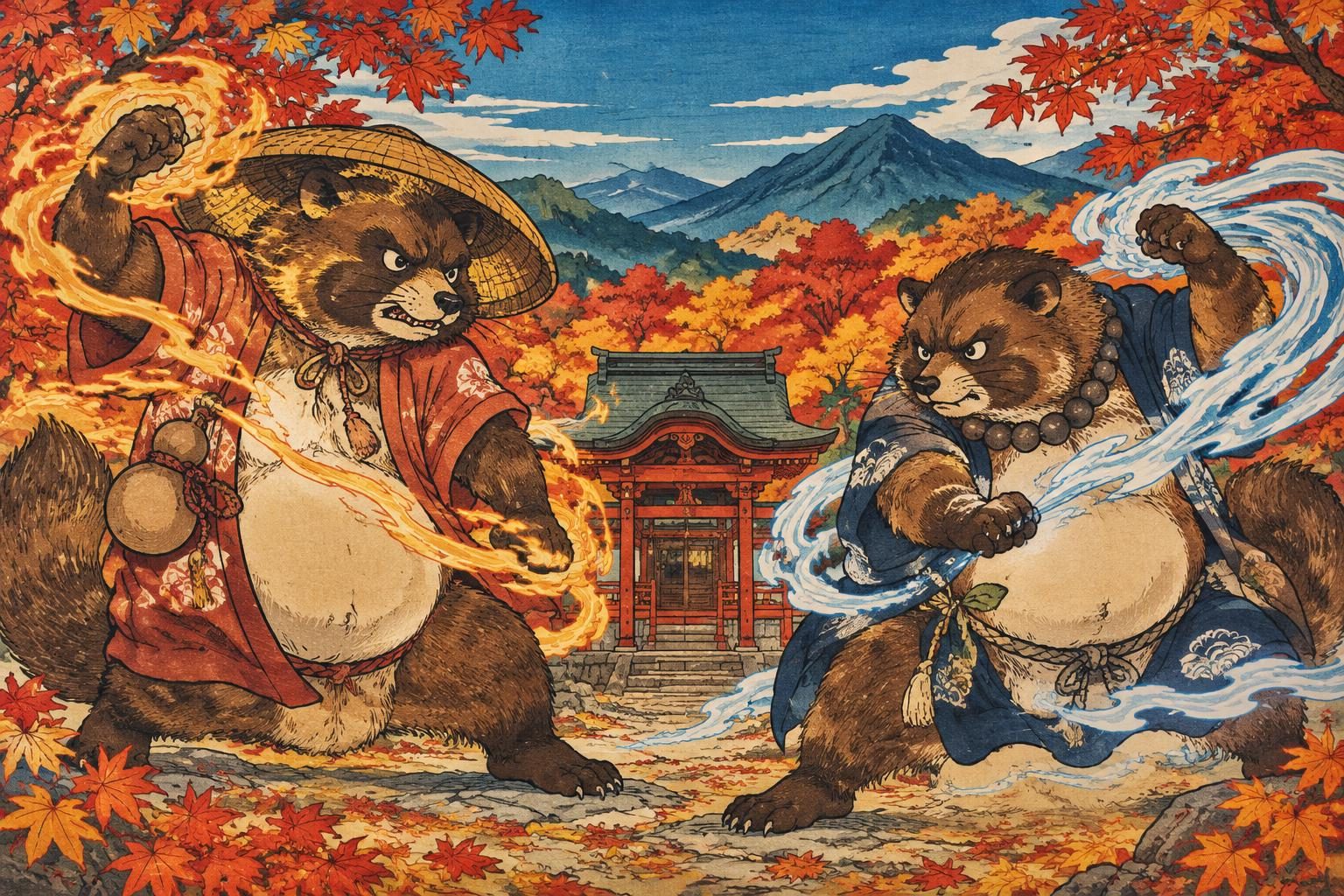
    According to local tradition, the Awa Tanuki War centers around a fierce battle between two powerful tanuki clans led by Kinchō and Rokuemon. The conflict is said to have erupted over territorial disputes and personal grievances, culminating in a dramatic showdown at Kincho Shrine in Komatsushima. This legendary battle is a testament to the enduring allure of tanuki folklore in Tokushima. The story, as recounted by locals, paints a vivid picture of the tanuki’s world, where magical abilities and animal instincts intertwine in a struggle for dominance.

    In the tales told by the people of Komatsushima, the tanuki are not just animals but beings with complex emotions and motivations. The rivalry between Kinchō and Rokuemon is often depicted as a saga of pride and honor, with each leader striving to protect their clan’s legacy. This narrative adds layers of depth to the legend, transforming it from a simple animal fable into a rich tapestry of mythical storytelling. The vivid imagery and dramatic tension of the tanuki war continue to captivate audiences, ensuring the legend’s place in the cultural memory of the region.

    Kincho and Rokuemon, two tanuki, clash in an autumn scene at Kincho Shrine.
    AI生成イメージ / AI-generated illustration (not a photograph of the actual place)

    Visiting Kinchō Shrine at the Foot of Mount Hinomine

    FACT: Kinchō Shrine’s Historical and Cultural Role

    Kinchō Shrine, located in Komatsushima, Tokushima Prefecture, is dedicated to the legendary tanuki Kinchō. Established in 1956, the shrine serves as a focal point for the Awa Tanuki War legend, attracting visitors interested in exploring this unique aspect of Japanese folklore. The shrine’s connection to the tanuki legend has even inspired scenes in Studio Ghibli’s film ‘Pom Poko.’ Visitors to the shrine can appreciate its serene setting at the foot of Mount Hinomine, where the natural beauty complements the mystical atmosphere of the legend.

    The shrine itself is a place of tranquility and reflection, offering a peaceful retreat for those seeking to connect with the spiritual essence of the tanuki legend. The architecture and layout of the shrine are designed to harmonize with the surrounding landscape, creating an immersive experience for visitors. As they explore the grounds, visitors can feel the presence of the tanuki spirits, a testament to the enduring power of the legend and its impact on the local culture.

    LEGEND: The Shrine’s Role in the Awa Tanuki War

    Local tradition holds that Kinchō Shrine was the site of the final confrontation between the tanuki clans. It is said that the spirits of the tanuki still linger in the area, adding an air of mystery and enchantment to the shrine. Visitors to the shrine can immerse themselves in the legend, experiencing the mystical atmosphere that surrounds this storied location. The shrine itself is a testament to the enduring power of folklore, where stories of old continue to captivate the imagination of those who visit.

    The legend of the Awa Tanuki War is deeply intertwined with the identity of Kinchō Shrine. As visitors walk through the shrine, they are invited to reflect on the stories of bravery and cunning that define the tanuki’s legacy. The shrine’s role as a custodian of this legend ensures that the tales of Kinchō and Rokuemon will continue to inspire future generations, preserving the cultural heritage of Tokushima for years to come.

    Miagata shrine, Komatsushima, Tokushima - Shrines in Tokushima prefecture, Religious buildings in Komatsushima, Tokushima
    “Miagata shrine, Komatsushima, Tokushima” (Shrines in Tokushima prefecture, Religious buildings in Komatsushima, Tokushima) by 岩佐 栄三, CC0, source, via Wikimedia Commons

    Komatsushima Station Park’s Giant Tanuki Statue

    FACT: The World’s Largest Bronze Tanuki Statue

    Komatsushima Station Park is home to the world’s largest bronze tanuki statue, a striking tribute to the Awa Tanuki War legend. Standing at an impressive 5 meters tall and weighing 5 tons, the statue is a popular attraction for those visiting Tokushima. The park also features an interactive element: clapping near the statue activates a 10-meter artificial waterfall, adding to the whimsical charm of the site. This playful interaction with the statue reflects the tanuki’s mischievous nature, inviting visitors to engage with the legend in a fun and memorable way.

    The statue is not only a symbol of the tanuki’s playful spirit but also a celebration of the local culture and its connection to the legend. Visitors to the park can enjoy the whimsical atmosphere created by the statue and its interactive features, making it a favorite spot for families and tourists alike. The presence of the statue in Komatsushima Station Park underscores the importance of the Awa Tanuki War in the cultural landscape of Tokushima, offering a tangible link to the region’s mythical heritage.

    Connecting Tokushima’s Mythical Heritage to Shikoku Travel

    FACT: Tokushima’s Place in Shikoku’s Cultural Landscape

    Tokushima’s rich folklore, exemplified by the Awa Tanuki War, is an integral part of Shikoku’s cultural heritage. The region’s unique blend of myth and history offers travelers a chance to delve into Japan’s storied past, exploring the legends that have shaped its cultural identity. From the enchanting tales of tanuki to the serene beauty of the surrounding landscape, Tokushima provides a captivating glimpse into the heart of Japanese folklore. Visitors to the area can explore not only the legends but also the natural and cultural landmarks that make Tokushima a unique destination.

    The cultural significance of Tokushima extends beyond its legends, as the region is home to a variety of traditional arts and crafts that reflect its rich history. Travelers can experience the local customs and traditions that have been passed down through generations, gaining a deeper appreciation for the cultural tapestry of Shikoku. By connecting with the mythical heritage of Tokushima, visitors can embark on a journey of discovery that celebrates the timeless stories and traditions of Japan.

    Toyokuni shrine, Komatsushima, Tokushima - Shrines in Tokushima prefecture, Religious buildings in Komatsushima, Tokushima
    “Toyokuni shrine, Komatsushima, Tokushima” (Shrines in Tokushima prefecture, Religious buildings in Komatsushima, Tokushima) by 岩佐 栄三, CC0, source, via Wikimedia Commons

    Nearby Guide

    Access

    • Minami-Komatsushima Station (Komatsushima) — From Minami-Komatsushima Station, it’s a 20-minute walk to Kincho Shrine. details

    Nearby sights

    • Kincho Shrine (Komatsushima) — Dedicated to Kincho Daimyojin, this shrine honors the legendary tanuki Kincho, central to the Awa Tanuki War. Built in 1956, it inspired scenes in Studio Ghibli’s ‘Pom Poko’. official site
    • Komatsushima Station Park (Komatsushima) — Features the world’s largest bronze tanuki statue, standing 5 meters tall and weighing 5 tons. Clapping near the statue activates a 10-meter artificial waterfall. official site

    Where to eat

    • Yamatoya Dye Shop (Komatsushima) — The historic shop where the tanuki Kincho was rescued, now a local landmark. details
    • Kinchō Café (Komatsushima) — A café themed around the tanuki legend, offering local specialties and tanuki-themed décor. official site
    Locator map of Japan: Komatsushima, Tokushima
    Legend site: Komatsushima, Tokushima — Source: Map of Japan with highlight on 36 Tokushima prefecture.svg; Map: Lincun, CC BY-SA 3.0, via Wikimedia Commons

    Sources

    About the author

    JAPAN ESSENCE Editorial Team
    Our mission is to bring you Japan’s legends, myths, festivals and living traditions, through both historical fact and the stories passed down over generations.

  • Exploring Sefa Utaki: Okinawa’s Most Sacred UNESCO Heritage Site

    Exploring Sefa Utaki: Okinawa’s Most Sacred UNESCO Heritage Site

    In Nanjo, Okinawa Prefecture, lies Sefa Utaki, a site revered for its spiritual significance and its role in the creation myth of the Ryukyu Islands. This sacred location offers a unique glimpse into the cultural and religious heritage of Okinawa.

    Yuinchi (Sefautaki)
    “Okinawa Nanjo Sefa-utaki Gusuku site Yuinchi 02” by Hyppolyte de Saint-Rambert, CC BY 4.0, via Wikimedia Commons

    Introduction to Sefa Utaki: Okinawa’s Most Sacred Ground

    FACT: The Historical and Cultural Significance of Sefa Utaki

    Sefa Utaki is located on the Chinen Peninsula in Nanjo City and is part of the UNESCO World Heritage Site ‘Gusuku Sites and Related Properties of the Kingdom of Ryukyu’. The site is considered one of the most sacred places in Okinawa, deeply rooted in the island’s religious traditions. It served as a central location for royal religious rituals during the Ryukyu Kingdom, including the enthronement ceremony of the Kikoe-Ōgimi, the kingdom’s highest priestess. This highlights its importance in the spiritual and political life of the Ryukyu Kingdom.

    The inclusion of Sefa Utaki in the UNESCO World Heritage list underscores its global significance as a cultural and historical treasure. The site’s preservation allows visitors to connect with the ancient traditions of the Ryukyu Kingdom, offering a window into the spiritual practices that once dominated the region. The sacred nature of Sefa Utaki is palpable, as the site continues to be a place of worship and pilgrimage for many.

    Amamikiyo descending at Sefa Utaki, surrounded by a luminous Okinawa landscape.
    AI生成イメージ / AI-generated illustration (not a photograph of the actual place)

    The Ryukyu Creation Myth: Amamikiyo and Nirai Kanai

    LEGEND: The Descent of Amamikiyo

    According to the Chūzan Seikan, a historical chronicle from 1650, the creator deity Amamikiyo was ordered by the Heavenly Emperor to create the Ryukyu Islands. She descended to Earth at Kudaka Island and then made landfall on Okinawa at the site now known as Sefa Utaki. This myth underscores the sacredness of Sefa Utaki, as it is considered the very place where the divine creation of the Ryukyu Islands began.

    The story of Amamikiyo is central to the identity of the Ryukyu Islands, weaving together themes of divine intervention and the sanctity of the land. The mythological narrative provides a foundation for understanding the cultural reverence for natural sites like Sefa Utaki, where the landscape itself is imbued with spiritual meaning.

    LEGEND: Variant Traditions of Amamikiyo’s Descent

    While some accounts, including the Chūzan Seikan, state that Amamikiyo first descended on Kudaka Island before arriving at Sefa Utaki, other traditions suggest she descended directly at Sefa Utaki. These parallel traditions reflect the rich tapestry of oral history and belief that surrounds Okinawa’s sacred sites, allowing for multiple interpretations and stories to coexist.

    This diversity of legends highlights the dynamic nature of oral traditions in Okinawa. Each version of the story contributes to a broader understanding of the cultural landscape, where myth and history intertwine. Visitors to Sefa Utaki can appreciate the depth of these narratives, which continue to be shared and celebrated by the local community.

    FACT: The Role of Kudaka Island in the Myth

    Kudaka Island, often referred to as the ‘Island of the Gods’, plays a significant role in the creation myth. It is considered the first place where Amamikiyo set foot when descending from the heavens. This island is visible from Sefa Utaki, reinforcing the spiritual connection between these sacred sites. Visitors to Sefa Utaki can gaze upon Kudaka Island from the Sangui rock formation, experiencing a sense of continuity with the mythological past.

    Standing at the Sangui, visitors are offered a panoramic view that connects them to the mythological origins of the Ryukyu Islands. The sight of Kudaka Island serves as a visual reminder of the island’s sacred status, inviting reflection on the enduring power of these ancient stories.

    Okinawa Nanjo Sefa-utaki Gusuku site Yuinchi 07 - Yuinchi (Sefautaki)
    “Okinawa Nanjo Sefa-utaki Gusuku site Yuinchi 07” (Yuinchi (Sefautaki)) by Hyppolyte de Saint-Rambert, CC BY 4.0, source, via Wikimedia Commons

    The Significance of Sefa Utaki in the Ryukyu Kingdom

    FACT: Sefa Utaki’s Role in Royal Rituals

    During the Ryukyu Kingdom, Sefa Utaki was not only a sacred site but also a political and spiritual hub. It was here that the Kikoe-Ōgimi, the highest priestess, was enthroned. This ceremony was a crucial event, symbolizing the divine sanction of the priestess’s authority and her role in maintaining the spiritual well-being of the kingdom. The enthronement was a deeply symbolic act, intertwining the religious and political spheres of Ryukyu society.

    The enthronement ceremony at Sefa Utaki was a significant event that reinforced the spiritual hierarchy and governance of the Ryukyu Kingdom. The Kikoe-Ōgimi held a revered position, acting as a bridge between the divine and the earthly realms. Her role was vital in ensuring the spiritual protection and prosperity of the kingdom, and Sefa Utaki was the sacred ground where this divine connection was formalized.

    Exploring the Site: The Iconic Sangui Rock Formation

    FACT: The Sacred Landscape of Sefa Utaki

    One of the most striking features of Sefa Utaki is the Sangui, a triangular rock formation that frames a viewpoint toward Kudaka Island. This natural structure is not only visually impressive but also holds spiritual significance, as it is a place where visitors can pray and connect with the divine. The rocks and stones at Sefa Utaki are considered sacred, and visitors are instructed not to climb, damage, or remove them, preserving the site’s sanctity.

    The Sangui serves as a powerful symbol of the connection between the physical and spiritual worlds. Its unique shape and orientation create a natural altar, inviting contemplation and reverence. The preservation of these rock formations is crucial to maintaining the spiritual integrity of Sefa Utaki, allowing future generations to experience its sacred atmosphere.

    FACT: Visitor Experience at Sefa Utaki

    As visitors walk through the Sangui, they are enveloped by the serene atmosphere of the site. The path leads through lush greenery and ancient rock formations, offering a sense of stepping back in time. The experience is both a visual and spiritual journey, inviting reflection and reverence for the natural and cultural heritage of Okinawa.

    The tranquility of Sefa Utaki provides a space for introspection and connection with the natural world. Visitors are encouraged to move quietly and respectfully, allowing the site’s spiritual ambiance to unfold. This mindful approach enhances the experience, fostering a deeper appreciation for the sacred landscape.

    Okinawa Nanjo Sefa-utaki Gusuku site Yuinchi 01 - Yuinchi (Sefautaki), Signs at Sefautaki
    “Okinawa Nanjo Sefa-utaki Gusuku site Yuinchi 01” (Yuinchi (Sefautaki), Signs at Sefautaki) by Hyppolyte de Saint-Rambert, CC BY 4.0, source, via Wikimedia Commons

    Connecting with Kudaka Island from the Chinen Peninsula

    FACT: The View from Sefa Utaki

    From the Sangui at Sefa Utaki, visitors can gaze out toward Kudaka Island, which is visible in the sea to the east. This view is not only a testament to the natural beauty of Okinawa but also a reminder of the island’s spiritual connections. Kudaka Island itself is considered a sacred place, often referred to as the ‘Island of the Gods’, further enhancing the spiritual experience of visiting Sefa Utaki.

    The sight of Kudaka Island from Sefa Utaki serves as a poignant reminder of the interconnectedness of Okinawa’s sacred sites. This visual link between the two locations reinforces their shared mythological heritage, inviting visitors to explore the deeper meanings embedded in the landscape.

    Visitor Etiquette: Preserving the Sacred Nature of Sefa Utaki

    FACT: Guidelines for Visitors

    Visitors to Sefa Utaki are encouraged to respect the site’s sacred nature. The rocks and stones are considered holy, and it is important to avoid climbing on or damaging them. These guidelines help preserve the sanctity and integrity of Sefa Utaki, ensuring that it remains a place of reverence and spiritual reflection for future generations.

    Adhering to these guidelines is essential for maintaining the spiritual atmosphere of Sefa Utaki. Visitors are reminded to approach the site with humility and respect, recognizing the cultural and religious significance it holds for the Okinawan people. By doing so, they contribute to the ongoing preservation of this invaluable heritage site.

    How to Plan Your Trip to Nanjo City and Sefa Utaki

    When planning a visit to Sefa Utaki in Nanjo, Okinawa Prefecture, it’s essential to check the official website for current hours, fees, and access information. This ensures a respectful and informed visit to this UNESCO World Heritage Site.

    Locator map of Japan: Nanjo, Okinawa
    Legend site: Nanjo, Okinawa — Source: Map of Japan with highlight on 47 Okinawa prefecture.svg; Map: Lincun, CC BY-SA 3.0, via Wikimedia Commons

    Sources

    About the author

    JAPAN ESSENCE Editorial Team
    Our mission is to bring you Japan’s legends, myths, festivals and living traditions, through both historical fact and the stories passed down over generations.

  • Shidaidaka: The Legend of Japan’s Growing Road Yokai in Shimane

    Shidaidaka: The Legend of Japan’s Growing Road Yokai in Shimane

    In Gōtsu, Shimane Prefecture, a mysterious yokai known as Shidaidaka is said to haunt the rural roads. This enigmatic creature is known for its peculiar behavior of growing taller when approached, only to vanish when gazed upon directly.

    Shidaidaka yokai growing in a snowy Shimane landscape.
    AI生成イメージ / AI-generated illustration (not a photograph of the actual place)

    What Is Shidaidaka? The Legend of Japan’s Growing Road Yokai

    FACT: What the records say

    The Shidaidaka is a yokai, or supernatural creature, associated with roads in and around Gōtsu, Shimane Prefecture. According to sources, this yokai is known for its ability to grow taller as people approach it, creating an unsettling experience for travelers. The legend is tied specifically to the rural roadways of the Sakurae area within Gōtsu, where sightings and stories about Shidaidaka have been passed down through generations. The creature’s ability to grow in size is a characteristic feature that distinguishes it from other yokai in Japanese folklore.

    Shidaidaka’s presence in local folklore highlights the region’s rich tradition of storytelling and the cultural importance of yokai in Japan. The roads of Gōtsu, especially those in the Sakurae area, serve as the backdrop for these tales, embedding the yokai into the landscape itself. For those interested in the supernatural, visiting these roads offers a chance to connect with the living history and cultural narratives of the area.

    LEGEND: The tale of the growing yokai

    According to local tradition, Shidaidaka appears as an ordinary person at first glance. However, as one draws closer, the figure begins to grow in height, towering over the traveler. The yokai is said to vanish if one stares directly at it, adding to its mystique and the challenge of encountering it. This behavior has intrigued and frightened locals and travelers alike, contributing to the yokai’s enduring presence in local folklore.

    The tale of Shidaidaka is often recounted in hushed tones, especially among those who travel the rural roads at night. The yokai’s ability to grow and then disappear creates a sense of unease and wonder, a common theme in Japanese ghost stories. This aspect of the legend serves as a reminder of the thin line between the natural and supernatural worlds in Japanese culture, where such creatures are seen as part of the natural order.

    LEGEND: Variations and connections

    Variations of the legend suggest that Shidaidaka might be connected to other supernatural entities, such as the nekomata, a cat-like creature known for its magical powers and shape-shifting abilities. Another variation links Shidaidaka to specific locations like Shidai-zaka, a slope in the region. These connections enrich the lore and suggest a broader network of supernatural phenomena in the area.

    These variations indicate a complex web of folklore where different yokai and supernatural occurrences are interlinked. The mention of nekomata and Shidai-zaka in the lore adds layers to the narrative, inviting interpretations and discussions among folklore enthusiasts. Such connections also reflect the way legends evolve, adapting to new contexts and incorporating elements from other stories.

    Where Shidaidaka Roams: Roads and Villages of Gōtsu, Shimane

    FACT: The geographical context

    The legend of Shidaidaka is primarily associated with the roads in the Sakurae area of Gōtsu, Shimane Prefecture. This region, known for its scenic beauty and rural landscapes, provides the perfect backdrop for tales of mysterious yokai. The lore is particularly tied to the roads around Kawado and other rural parts of Gōtsu, where the yokai is believed to make its appearances. The rural setting, with its quiet roads and dense forests, enhances the eerie atmosphere that surrounds the legend.

    Travelers to Gōtsu can explore these rural roads and perhaps feel the presence of Shidaidaka themselves. The roads, lined with dense foliage and often enveloped in mist, create an ideal setting for the imagination to wander. The area’s natural beauty and tranquility add to the allure of the legend, making it a compelling destination for those interested in Japan’s rich tapestry of myths and legends.

    Iwamiōsakihana Lighthouse in Gōtsu, Shimane pref Japan - Lighthouses in Shimane prefecture
    “Iwamiōsakihana Lighthouse in Gōtsu, Shimane pref Japan” (Lighthouses in Shimane prefecture) by Tadashi Sugiyama, CC BY-SA 2.0, source, via Wikimedia Commons

    The Peculiar Behavior of the Ever-Rising Phantom

    LEGEND: The yokai’s behavior

    Local stories describe Shidaidaka as a phantom that grows in size as one approaches. This behavior is both intriguing and intimidating, as it challenges the observer’s perception and courage. The yokai’s ability to vanish when directly looked at adds a layer of mystery and suggests a test of bravery and composure for those who encounter it. The sudden disappearance of the yokai when stared at directly is a common motif in yokai legends, symbolizing the elusive nature of the supernatural.

    This motif of growth and disappearance is not unique to Shidaidaka but is a recurring theme in many yokai tales, where the supernatural entity tests the courage and wit of the observer. The act of confronting such a yokai is often seen as a rite of passage, a challenge that requires both bravery and a keen sense of awareness. In this way, the legend serves as a metaphor for facing the unknown and overcoming fears.

    How to Defeat Shidaidaka: Gaze Tricks and Protective Lore

    LEGEND: Protective measures

    According to legend, the key to making Shidaidaka disappear lies in maintaining eye contact. By staring directly at the yokai, one can cause it to vanish, thus neutralizing its threat. This aspect of the legend highlights the importance of courage and presence of mind when dealing with supernatural entities in Japanese folklore. The act of confronting a yokai by looking it in the eye is symbolic of facing one’s fears and overcoming challenges through bravery.

    This protective lore emphasizes the power of human will and the ability to confront the unknown. It reflects a broader cultural belief in the strength of the human spirit to overcome adversity, a theme that resonates across many Japanese legends. For those who encounter Shidaidaka, the act of staring it down becomes a metaphor for resilience and determination.

    江津 一处停工的乐园 - Jiangjin District, Amusement parks in Chongqing
    “江津 一处停工的乐园” (Jiangjin District, Amusement parks in Chongqing) by 重庆轨交18, CC BY-SA 4.0, source, via Wikimedia Commons

    Tales from Sakurae and Mount Sanbe

    LEGEND: Local tales and connections

    Stories of Shidaidaka are not limited to the roads of Gōtsu. The legend extends to nearby areas such as Mount Sanbe, where similar tales of growing yokai have been recounted. These stories contribute to the rich tapestry of folklore in the Chugoku region, where yokai are an integral part of cultural narratives. The presence of such legends in multiple locations suggests a widespread belief in the supernatural and its influence on the local culture.

    The tales from Mount Sanbe and surrounding areas provide a broader context for understanding the cultural significance of yokai in Shimane. These stories offer insight into the ways in which local communities interact with their folklore, using it as a means of explaining natural phenomena and as a source of entertainment and moral lessons. The enduring nature of these legends speaks to their importance in the cultural identity of the region.

    Connecting with Shimane’s Rich Folklore and Mythological Landscape

    FACT: The cultural significance

    Shimane Prefecture, with its abundant legends and myths, offers a unique window into Japan’s folkloric traditions. The story of Shidaidaka is just one of many that reflect the region’s deep connection to the supernatural. Visitors to Gōtsu and its surroundings can explore these narratives while enjoying the natural beauty and historical sites of Shimane. The prefecture is renowned for its rich cultural heritage, making it a fascinating destination for those interested in Japan’s mythological landscape.

    Exploring Shimane’s folklore provides a deeper appreciation for the region’s history and cultural evolution. The legends, including that of Shidaidaka, serve as a bridge between the past and present, offering insights into the values and beliefs that have shaped the local communities. For visitors, engaging with these stories enriches the travel experience, providing a unique perspective on Japan’s diverse cultural landscape.

    Nearby Guide

    Nearby sights

    • Kannon Falls (Gōtsu) — Kannon Falls is a scenic waterfall located in Gōtsu City, offering picturesque views and a tranquil environment for visitors. details

    Where to eat

    • Gōtsu Maruhime Pork (Gōtsu) — Gōtsu Maruhime Pork is a local branded pork known for its tender texture and naturally sweet fat. The pigs are raised in the fresh environment influenced by the sea breezes of the region. details
    • Sakurae Burdock (Gōtsu) — Sakurae Burdock is a local specialty grown in the fertile soil along the Gōnokawa River, valued for its rich flavor and tender texture. It’s commonly used in various Japanese dishes. details
    Locator map of Japan: Gōtsu, Shimane
    Legend site: Gōtsu, Shimane — Source: Map of Japan with highlight on 32 Shimane prefecture.svg; Map: Lincun, CC BY-SA 3.0, via Wikimedia Commons

    Sources

    About the author

    JAPAN ESSENCE Editorial Team
    Our mission is to bring you Japan’s legends, myths, festivals and living traditions, through both historical fact and the stories passed down over generations.

  • Uncovering the Helpful Kappa of Nagoya’s Lost Oiseya River

    Uncovering the Helpful Kappa of Nagoya’s Lost Oiseya River

    In Nagoya, Aichi Prefecture, a mysterious and benevolent figure from Japanese folklore once inhabited the waters of the Ōiseya River. This kappa, a mythical water creature, is celebrated for its good deeds and continues to inspire local traditions and landmarks.

    Helpful kappa with traditional features watches over children by a Nagoya river.
    AI生成イメージ / AI-generated illustration (not a photograph of the actual place)

    Introduction to Japan’s Famous Water Spirits

    FACT: What are Kappa?

    Kappa are mythical creatures from Japanese folklore, often depicted as water-dwelling spirits with a penchant for mischief. They are typically portrayed with a humanoid form, webbed hands and feet, and a dish on their head that holds water, which is said to be the source of their power. Despite their mischievous nature, kappa are also known for their helpfulness and intelligence, traits that are celebrated in various regional legends across Japan. These creatures are believed to inhabit rivers and ponds, where they engage with humans in both playful and sometimes perilous ways. The kappa’s dual nature as both a trickster and a helper makes it a fascinating figure in Japanese mythology.

    The Lost Ōiseya River of Central Nagoya

    FACT: The Historical Path of the Ōiseya River

    The Ōiseya River once flowed through what is now central Nagoya, originating from the Nishi-named areas and coursing through Nakamura and Nakagawa wards before joining Nagoya Port. This river played a significant role in the city’s history, shaping its landscape and serving as a backdrop for local legends. The river’s path is now largely buried beneath the bustling streets of modern Nagoya, but its legacy lives on through stories and monuments that remind us of its past presence. The transformation of the river into urban infrastructure reflects the dynamic changes in Nagoya’s development over the centuries.

    Nagoya Castle(Larger) - Nagoya Castle Keep Tower
    “Nagoya Castle(Larger)” (Nagoya Castle Keep Tower) by Base64, CC BY-SA 3.0, source, via Wikimedia Commons

    The Legend of the Helpful Kappa and the Samurai

    LEGEND: The Helpful Kappa of Ōiseya River

    According to local tradition, a kappa inhabited the Ōiseya River, known for its ability to transform into a strong boy. This kappa was reputed to have saved drowning children, earning the moniker “helpful kappa.” The story highlights the creature’s benevolent nature and its role as a guardian of the river. It is said that the kappa’s transformation into a human form allowed it to interact more closely with the community, bridging the gap between the mystical and the mundane. This legend underscores the kappa’s protective instincts and its special connection to the children of Nagoya.

    LEGEND: The Samurai’s Encounter

    Another account from the Edo period, recorded in local history, tells of a samurai who encountered a kappa by the river. The kappa attempted to drag the samurai into the water but retreated when the samurai reprimanded it. This tale adds a layer of intrigue to the kappa’s character, showcasing its mischievous side. The samurai’s encounter reflects the kappa’s unpredictable nature and the tension between human courage and supernatural forces. Such stories were often shared to teach lessons about respect and caution when dealing with the unknown.

    Finding the Kappa Statues Near Nagoya Station

    FACT: Marking the Former River Site

    Near Nagoya Station, at the Ōise-dōri intersection, two kappa statues stand as a tribute to the river’s past and its legendary inhabitant. Erected about 30 years ago by local volunteers, these statues face downstream, symbolizing the flow of the former Ōiseya River. They serve as a reminder of the area’s rich folklore and are easily accessible to visitors exploring the city. The statues capture the playful essence of the kappa, inviting passersby to pause and reflect on the stories that once flowed with the river. These artistic representations are not only cultural markers but also a celebration of community spirit and historical preservation.

    Nagoya Castle(Edit2) - Nagoya Castle Keep Tower
    “Nagoya Castle(Edit2)” (Nagoya Castle Keep Tower) by Base64 edit by Noodle snacks, CC BY-SA 3.0, source, via Wikimedia Commons

    Shiogama Shrine and the Kappa Deity of Musando-sha

    FACT: The Kappa Deity at Shiogama Shrine

    In Nakagawa Ward, Shiogama Shrine houses a small subsidiary shrine called Musando-sha, where a kappa is enshrined as a deity. This kappa is believed to protect children, bring business prosperity, and cure hemorrhoids. Visitors to the shrine can participate in a ritual by pouring water over the kappa’s head dish to make prayers, a practice that keeps the legend alive. This ritual is a unique way for visitors to engage with the spiritual heritage of the area, offering a tangible connection to the mythical past. The shrine serves as a sanctuary for those seeking blessings and healing, embodying the kappa’s role as a benevolent force.

    Celebrating Local Folklore: The August Kappa Festival

    FACT: The Annual Kappa Festival

    Every August, Shiogama Shrine hosts a kappa festival, celebrating the folklore associated with the former Ōiseya River. This event draws locals and tourists alike, offering a glimpse into the cultural significance of the kappa legend and its enduring impact on the community. The festival features various activities and performances that honor the kappa’s legacy, fostering a sense of continuity and cultural pride. Participants can enjoy traditional music, dance, and storytelling, all centered around the theme of the kappa. The festival is a vibrant expression of Nagoya’s rich cultural tapestry, where ancient myths meet modern festivities.

    Tips for Travelers Exploring Nagoya’s Folklore Sites

    Visitors interested in exploring Nagoya’s rich folklore can start at the Ōise-dōri intersection to view the kappa statues, then proceed to Shiogama Shrine to experience the rituals and learn more about the kappa deity. These sites provide a unique opportunity to connect with the city’s cultural heritage and the intriguing legends that have shaped it. Travelers can immerse themselves in the stories of the past while enjoying the vibrant urban landscape of modern Nagoya. Whether you’re a history enthusiast or a curious explorer, these folklore sites offer a fascinating journey into the heart of Japanese mythology.

    Nearby Guide

    Access

    • Nagoya Station (Nagoya) — Nagoya Station is the central transportation hub of Nagoya, offering extensive connections to various parts of the city and beyond. It serves multiple railway lines, including JR Central, Meitetsu, Kintetsu, and the Nagoya Municipal Subway. official site

    Nearby sights

    • Nagoya Castle (Nagoya) — Nagoya Castle is a historic landmark known for its impressive architecture and beautiful gardens. Visitors can explore the reconstructed Hommaru Palace and enjoy seasonal events like cherry blossom viewing in spring. details
    • Toyota Commemorative Museum of Industry and Technology (Nagoya) — This museum showcases the history of Toyota’s development, featuring exhibits on the evolution of the automobile industry and technological advancements. details

    Where to stay

    • Nagoya Marriott Associa Hotel (Nagoya) — Located within the JR Central Towers, this hotel offers luxurious accommodations with convenient access to Nagoya Station’s facilities and transportation options. details

    Where to eat

    • Hitsumabushi (Nagoya) — A local specialty consisting of grilled eel served over rice, which can be enjoyed in various ways, including with condiments or in a broth. details
    Locator map of Japan: Nagoya, Aichi
    Legend site: Nagoya, Aichi — Source: Map of Japan with highlight on 23 Aichi prefecture.svg; Map: Lincun, CC BY-SA 3.0, via Wikimedia Commons

    Regional guide

    Location: Nagoya, Aichi Prefecture

    • Kappa statues at Ōise-dōri intersection (Nagoya) — source
    • Musando-sha (subsidiary shrine at Shiogama Shrine) (Nagoya) — source
    • Ōise-dōri (former Ōiseya River path) near Nagoya Station (Nagoya) — source
    • Shiogama Shrine, Nakagawa Ward (Nagoya) — source

    Sources

    About the author

    JAPAN ESSENCE Editorial Team
    Our mission is to bring you Japan’s legends, myths, festivals and living traditions, through both historical fact and the stories passed down over generations.