Category: History

歴史

  • Why Amaterasu Dwells at Ise: The Sun Goddess of Ise Jingu Naiku

    On the banks of the Isuzu River in Ise City, Mie Prefecture, stands Kotai Jingu, better known as Naiku, the Inner Shrine of Ise Jingu. Here Amaterasu-Omikami, the sun goddess revered as the ancestral deity of the Imperial family, is enshrined. Many visitors know her from the myth of the Heavenly Rock Cave, where her withdrawal plunged the world into darkness; this article asks a different question: why did she come to be worshipped here, in a quiet forest far from the old capitals?

    Uji Bridge at Ise Jingu Naiku
    “Ise Shrine Uji-bashi1” (Uji Bridge, Ise Jingu Naiku) by Yanajin33, CC BY-SA 3.0, source, via Wikimedia Commons

    LEGEND: Yamatohime-no-mikoto’s Search for a Home

    LEGEND: What the Nihon Shoki tells

    According to the Nihon Shoki (720), the sacred mirror representing Amaterasu was originally kept inside the imperial palace. During the reign of Emperor Sujin it is said to have been moved out of the palace and entrusted to Princess Toyosukiirihime. Under Emperor Suinin, the role passed to his daughter, Yamatohime-no-mikoto, who set out to find a place where the goddess would wish to dwell. According to Ise Jingu’s own account, she travelled through Yamato, Iga, Omi and Mino before reaching the upper Isuzu River at Uji in the Watarai district of Ise; later traditions name further stops, such as Owari.

    The Nihon Shoki records that the goddess then spoke to her, describing Ise as a land where the waves from the eternal world of Tokoyo roll in, a secluded and beautiful province where she wished to stay. A shrine was then established by the Isuzu River. These events belong to the realm of tradition and court chronicle: historians do not treat the dates literally, and the actual origins of worship at Ise remain a matter of scholarly debate. Many places along the route, known as Moto-Ise, claim in local tradition to be temporary resting sites of the goddess.

    LEGEND: The Yata no Kagami

    Tradition holds that the object of worship (goshintai) at Naiku is the Yata no Kagami, the sacred mirror that is one of the Three Sacred Treasures of the Imperial Regalia. In myth, the mirror is linked to Amaterasu herself and is said to have been handed down from the age of the gods. The mirror is never shown to the public, and no one outside a very small circle of priests has seen it; its form and age therefore cannot be verified. What can be said as fact is that Ise Jingu describes Naiku as the shrine of Amaterasu-Omikami, and that the mirror’s presence there is a long-held tradition rather than something open to inspection.

    Isuzu River seen from Uji Bridge, Ise
    “Isuzu River from Uji bridge – Feb 10, 2020” (Isuzu River, Ise) by Ik T, CC BY 2.0, source, via Wikimedia Commons

    FACT: Rebuilding Every 20 Years – Shikinen Sengu

    FACT: What the records say

    Ise Jingu rebuilds the main sanctuaries of Naiku and Geku, along with many related structures and sacred treasures, on an adjacent plot roughly every 20 years, and the deity is transferred to the new hall. This ceremony is called Shikinen Sengu. According to the shrine, it has continued for about 1,300 years; the shrine dates the first Sengu to the fourth year of Empress Jito’s reign (690). The 62nd Sengu took place in 2013, and the shrine’s official site states that the 63rd Shikinen Sengu is being carried out over a period of more than eight years beginning in Reiwa 7 (2025).

    Because of this cycle, two sites sit side by side within the precinct: the current sanctuary and the empty plot where the next one will stand. Visitors can sometimes see both. Why 20 years was chosen is not explained in early records; common explanations, such as passing on carpentry skills between generations or keeping the shrine eternally fresh, are later interpretations rather than documented reasons, and should be read as such.

    FACT: Uji Bridge

    The approach to Naiku begins at Uji Bridge, a wooden bridge 101.8 metres long spanning the Isuzu River, with a large torii at each end. It is regarded as the boundary between the everyday world and the sacred precinct. The bridge is also rebuilt in step with the Sengu cycle, and, according to Ise Jingu, the inner torii is made from the munamochi-bashira (ridge-supporting pillar) of the former Naiku main sanctuary, and the outer torii from that of the former Geku main sanctuary. Ise City’s tourism association notes that around the winter solstice, the sun can be seen rising through the torii of Uji Bridge.

    The Uji-bashi bridge in front of Kotai Jingu (Naiku)
    “Uji-bashi 01” (Uji Bridge in front of Kotai Jingu) by N yotarou, CC BY 2.5, source, via Wikimedia Commons

    FACT: Visiting Naiku Today

    FACT: Purification at the Isuzu River and etiquette

    Inside the precinct, beside the temizusha basin, visitors can descend stone steps to the Isuzu River at the Mitarashi and rinse their hands in the river itself. Ise Jingu explains that washing the hands and mouth is a simplified form of misogi purification. The shrine’s recommended manner of prayer is two bows, two claps and one bow. The official site also asks visitors to keep to the right at Naiku (left at Geku), not to smoke or eat inside the sacred grounds, and not to bring pets. Ise Jingu restricts photography in parts of the precinct, including designated no-photography areas such as around the main sanctuary; please follow on-site signs and staff.

    FACT: Naiku and Geku

    Ise Jingu is not a single shrine but a complex of 125 shrines centred on two main sanctuaries. Naiku enshrines Amaterasu-Omikami, while Geku (Toyouke Daijingu), about 4–5 km away (around 10–20 minutes by bus or taxi), enshrines Toyouke-no-Omikami, the deity of food who provides offerings to Amaterasu. Ise Jingu says there is no fixed rule, but visiting Geku first and then Naiku is a long-standing custom. There is no admission fee (per Ise City Tourism Association).

    Visiting hours for Naiku, Geku and the betsugu (per isejingu.or.jp): January–April and September 5:00–18:00; May–August 5:00–19:00; October–December 5:00–17:00. Hours change during the New Year period. Access: buses run to the Naiku-mae stop from Iseshi and Ujiyamada stations (about 20 minutes, per Ise City tourism). Times and routes can change, so please check the official site before you go.

    Locator map of Japan: Ise, Mie
    Legend site: Ise, Mie — Source: Map of Japan with highlight on 24 Mie prefecture.svg; Map: Lincun, CC BY-SA 3.0, via Wikimedia Commons

    Sources

    About the author

    JAPAN ESSENCE Editorial Team
    Our mission is to bring you Japan’s legends, myths, festivals and living traditions, through both historical fact and the stories passed down over generations.

  • Exploring Sekkei-ji: Temple No. 33 on the Shikoku Pilgrimage

    Exploring Sekkei-ji: Temple No. 33 on the Shikoku Pilgrimage

    In Kochi City, Kochi Prefecture, lies Sekkei-ji, a temple steeped in history and spiritual significance as Temple No. 33 on the famous Shikoku Pilgrimage. This revered site offers a profound connection to Japan’s rich religious heritage and serves as a vital spiritual waypoint for pilgrims from around the world.

    Layout of Sekkei-ji temple at Kôchi, Japan
    “Sekkei-ji Plan” by Fraxinus2, CC BY-SA 4.0, via Wikimedia Commons

    Introduction to Sekkei-ji: Temple No. 33 of the Shikoku Pilgrimage

    FACT: Historical Background and Significance

    Sekkei-ji, located in Kochi City, is an integral part of the Shikoku Pilgrimage, a revered journey encompassing 88 temples across the island of Shikoku. This pilgrimage is more than a physical journey; it is a spiritual quest for many, attracting both local and international visitors seeking enlightenment and reflection. Each temple on this path holds unique significance, and Sekkei-ji, as the 33rd temple, offers pilgrims a place of respite and contemplation. The pilgrimage itself is rooted in the teachings of Kūkai, the founder of Shingon Buddhism, and serves as a means for practitioners to deepen their faith and understanding.

    The Shikoku Pilgrimage is not just a test of physical endurance but a journey of spiritual awakening. Pilgrims, known as “ohenro,” often wear traditional white clothing and carry a staff, symbolizing their commitment to the path. Along the way, they engage in rituals such as chanting sutras and offering prayers at each temple. Sekkei-ji, with its serene environment, provides a perfect setting for such spiritual practices, allowing pilgrims to connect with the divine and reflect on their personal journeys.

    Ukiyo-e style print of a temple landscape at sunrise with mist, mountains, stream, and trees in pastel colors.
    AI生成イメージ / AI-generated illustration (not a photograph of the actual place)

    From Shingon Origins to Rinzai Zen Revival

    Temple Tradition and Later History

    The Shikoku Pilgrimage Association records a temple tradition that Kūkai founded Kōfuku-ji in 815. It describes Chōsokabe Motochika’s revival of the temple as a Rinzai establishment and his son Morichika’s later renaming of it as Sekkei-ji, after his father’s Buddhist name.

    The evolution of Sekkei-ji from its Shingon roots to a Rinzai Zen temple is emblematic of the dynamic nature of Japanese Buddhism. This shift reflects broader historical trends, including the adaptation and integration of different Buddhist practices. The Rinzai Zen tradition, known for its emphasis on meditation and direct insight into one’s nature, brought a new dimension to the temple’s spiritual offerings, attracting practitioners seeking a more introspective path.

    Sekkeiji 02 - Sekkei-ji
    “Sekkeiji 02” (Sekkei-ji) by Reggaeman, CC BY-SA 3.0, source, via Wikimedia Commons

    The Chosokabe Clan Legacy and Sekkei-ji

    FACT: Influence of Chōsokabe Motochika

    Chōsokabe Motochika, a powerful daimyo of the Sengoku period, is intricately linked to the history of Sekkei-ji. His patronage and influence were instrumental in the temple’s development and prominence. Motochika’s legacy is not only etched in the temple’s name but also in its enduring cultural and historical significance within the region. The Chosokabe clan, under Motochika’s leadership, played a crucial role in shaping the political and cultural landscape of Kochi, and their support of religious institutions like Sekkei-ji highlights the intersection of faith and governance during this tumultuous period in Japanese history.

    The Chosokabe clan’s involvement with Sekkei-ji underscores the importance of religious patronage in medieval Japan. Temples served not only as spiritual centers but also as places of cultural and political influence. Motochika’s support helped Sekkei-ji flourish, enabling it to become a hub of religious activity and a repository of cultural treasures. This relationship between the temple and the Chosokabe clan is a testament to the symbiotic ties between religion and politics in the era.

    Treasures in Wood: Unkei and Tankei Sculptures

    FACT: Artistic Heritage of Sekkei-ji

    Sekkei-ji is renowned for its artistic treasures, particularly the sculptures attributed to the master sculptor Unkei and his son Tankei. These wooden statues are considered masterpieces of Buddhist art, reflecting the high level of craftsmanship and spiritual devotion of the period. Unkei and Tankei were part of the Kei school of sculpture, known for its dynamic and realistic representations of Buddhist deities. Visitors to the temple can admire these exquisite works, which continue to inspire awe and reverence. The presence of such art at Sekkei-ji underscores the temple’s role not only as a spiritual center but also as a custodian of cultural heritage.

    The sculptures of Unkei and Tankei are celebrated for their lifelike expressions and intricate details, capturing the essence of Buddhist deities with remarkable skill. These works are not only artistic achievements but also serve as spiritual icons, inviting contemplation and devotion. The Kei school’s influence is evident in the sculptures’ powerful presence and the way they convey a sense of movement and vitality, making them enduring symbols of the temple’s artistic legacy.

    Chosokabe Nobuchika grave - Graves in Kōchi prefecture, Sekkei-ji
    “Chosokabe Nobuchika grave” (Graves in Kōchi prefecture, Sekkei-ji) by Reggaeman, CC BY-SA 3.0, source, via Wikimedia Commons

    Turbulence and Restoration: The Meiji Era to Modern Revival

    FACT: Challenges and Resilience

    The Meiji Restoration brought significant challenges to many religious institutions, including Sekkei-ji. The era was marked by the separation of Shinto and Buddhism, leading to the dismantling of many Buddhist temples and the loss of their lands and resources. Despite these difficulties, Sekkei-ji has managed to preserve its cultural and spiritual heritage through dedicated restoration efforts. These efforts were crucial in maintaining the temple’s historical structures and spiritual practices. Today, Sekkei-ji stands as a testament to resilience and revival, continuing to serve as a place of worship and reflection for pilgrims and visitors alike. The temple’s survival and ongoing vitality are a tribute to the dedication of its caretakers and the enduring faith of its community.

    During the Meiji era, the government’s policy of separating Shinto and Buddhism, known as “shinbutsu bunri,” posed existential threats to many Buddhist institutions. Sekkei-ji’s ability to withstand these changes and emerge as a vibrant center of worship is a reflection of the resilience of its community and the importance of cultural preservation. The temple’s restoration not only safeguarded its physical structures but also ensured the continuity of its spiritual traditions, allowing it to remain a beacon of faith and history.

    Planning Your Visit to Sekkei-ji in Kochi City

    FACT: Visitor Information

    Sekkei-ji is at 857-3 Nagahama, Kochi City. The Shikoku Pilgrimage Association specifies that viewing the Buddhist statues requires a reservation. Consult its Sekkei-ji listing and contact the temple before planning to view them.

    As you walk through the temple grounds, the tranquil environment and the beauty of the surrounding nature enhance the spiritual experience. The temple’s architecture and its artworks offer a glimpse into the past, allowing visitors to connect with the rich tapestry of Japanese religious and cultural history. Sekkei-ji’s enduring appeal lies in its ability to offer both a historical journey and a spiritual retreat, making it a must-visit destination for those exploring Kochi.

    Locator map of Japan: Kōchi, Kochi
    Legend site: Kōchi, Kochi — Source: Map of Japan with highlight on 39 Kochi prefecture.svg; Map: Lincun, CC BY-SA 3.0, via Wikimedia Commons

    Sources

    About the author

    JAPAN ESSENCE Editorial Team
    Our mission is to bring you Japan’s legends, myths, festivals and living traditions, through both historical fact and the stories passed down over generations.

  • Tracing the Roots of Japanese Porcelain: A Guide to Arita and Saga’s Heritage

    Tracing the Roots of Japanese Porcelain: A Guide to Arita and Saga’s Heritage

    In Saga Prefecture, the town of Arita holds a special place in the history of Japanese porcelain. Known for its exquisite craftsmanship, Arita ware has become synonymous with elegance and artistry, tracing its roots back to the early 17th century.

    Replica of Zwinger Palace (original in Dresden, Germany) at the theme park "Arita Porcelain Park", Japan.
    “Zwinger Palace (Arita Porcelain Park)” by mahlervv, CC BY 3.0, via Wikimedia Commons

    Introduction to Arita and the Birth of Japanese Porcelain

    FACT: The 1616 Discovery at Izumiyama Quarry

    The origins of Arita porcelain can be traced to the discovery of high-quality porcelain stone (tōseki) at Izumiyama Quarry in Arita, Saga Prefecture. This discovery in 1616 marked the beginning of porcelain production in Japan. The clay from this quarry was crucial in developing the fine, white porcelain that Arita would become famous for. This site remains a significant historical landmark, marking the birthplace of Japanese porcelain. Visitors to the quarry can still see the area where this pivotal discovery was made, providing a tangible connection to the past.

    Izumiyama Quarry is not only a site of historical importance but also a symbol of the innovation that characterized early Japanese porcelain production. The quarry’s location within Arita makes it accessible for those interested in exploring the roots of this craft. The quarry is often visited by historians, ceramic enthusiasts, and tourists alike, all eager to witness the birthplace of a tradition that would eventually reach global acclaim.

    LEGEND: Yi Sam-pyeong and the Founding of Arita Ware

    According to local tradition in Arita, Yi Sam-pyeong, a Korean potter, is honored as the founder of Arita ware. He is often referred to as the ‘father of porcelain’ in the region. A monument to Yi Sam-pyeong stands at Sueyama Shrine in Arita, celebrating his contributions to the craft. This tradition highlights the cultural exchanges between Korea and Japan during the early Edo period, which played a significant role in the development of Japanese porcelain.

    The monument at Sueyama Shrine is a focal point for those interested in the cultural heritage of Arita. It serves as a reminder of the cross-cultural influences that shaped the region’s history. Visitors to the shrine can reflect on the historical significance of Yi Sam-pyeong’s contributions and the enduring legacy of his work in the porcelain industry.

    LEGEND: Variants of Yi Sam-pyeong’s Story

    Historical documents from the Kanagae family, dating back to 1770, offer differing accounts of Yi Sam-pyeong’s role in the development of Arita ware. Some narratives describe him as a storyteller or a navigator, while others depict him as a survivor who struggled before making porcelain. These varied stories were eventually unified during the Meiji era, creating a cohesive narrative that is celebrated today. This unification reflects the broader trend of consolidating historical narratives to foster a shared cultural identity.

    These variant stories highlight the complexity of historical narratives and how they evolve over time. The differing accounts of Yi Sam-pyeong’s life and contributions illustrate the challenges in separating fact from legend. However, they also enrich the cultural tapestry of Arita, offering multiple perspectives on its history and the individuals who shaped it.

    LEGEND: Yi Sam-pyeong’s Legacy at Sueyama Shrine

    Sueyama Shrine serves as a testament to Yi Sam-pyeong’s enduring legacy. The shrine not only honors him but also serves as a cultural site where visitors can learn about the history and legends of Arita ware. The shrine’s peaceful surroundings and its historical significance make it a must-visit for those interested in the origins of Japanese porcelain.

    At Sueyama Shrine, visitors can engage with the local legends and appreciate the deep respect the community holds for Yi Sam-pyeong. The shrine often hosts events and exhibitions that delve into the history of Arita ware, offering educational opportunities for both locals and tourists. This makes it an integral part of Arita’s cultural landscape.

    Yi Sam-pyeong at Sueyama Shrine in Arita, in a vibrant summer setting.
    AI生成イメージ / AI-generated illustration (not a photograph of the actual place)

    Global Reach: How Arita Porcelain Became Imari Ware

    FACT: Exporting Arita Porcelain to Europe

    Porcelain from Arita was extensively exported to Europe through the port of Imari, leading to the term ‘Imari ware’. This exportation occurred between the second half of the 17th century and the first half of the 18th century. The exquisite designs and quality of Arita porcelain captivated European markets, establishing its reputation as a luxury item abroad. The term ‘Imari ware’ became synonymous with high-quality porcelain, and its influence can still be seen in European art collections today.

    The journey of Arita porcelain to Europe marked a significant chapter in the global trade of ceramics. The demand for these finely crafted pieces in Europe underscored the universal appeal of Arita’s artistry. Collectors and museums across Europe continue to cherish Imari ware, preserving its legacy and showcasing its historical significance.

    FACT: The Influence of Arita Porcelain on European Art

    The impact of Arita porcelain on European art and design cannot be overstated. European artisans were inspired by the intricate patterns and vibrant colors of Imari ware, leading to the creation of European ceramics that mimicked these styles. This cross-cultural exchange further solidified Arita’s place in the global history of ceramics.

    European artists and designers incorporated elements of Arita porcelain into their own works, resulting in a fusion of Eastern and Western artistic traditions. This influence is evident in the decorative arts of the period, where motifs and techniques from Arita ware were adapted and reimagined, leaving a lasting imprint on European design.

    Hattengu Shrine in Sueyama Shrine - Torii in Saga prefecture, Stone lanterns in Saga prefecture
    “Hattengu Shrine in Sueyama Shrine” (Torii in Saga prefecture, Stone lanterns in Saga prefecture) by そらみみ, CC BY-SA 4.0, source, via Wikimedia Commons

    Visiting Arita Today: Key Historic Sites in Saga Prefecture

    Visitors to Arita can explore a variety of historic sites that celebrate its porcelain heritage. The Izumiyama Quarry remains a notable landmark, offering insights into the early days of porcelain production. Sueyama Shrine, with its monument to Yi Sam-pyeong, is another significant site that honors the legacy of Arita ware’s founder. These sites provide a window into the past, allowing visitors to appreciate the rich history and cultural significance of Arita porcelain.

    FACT: Exploring Arita’s Porcelain Legacy

    In addition to the quarry and shrine, Arita hosts numerous museums and galleries dedicated to its porcelain legacy. These institutions showcase a wide array of Arita ware, from traditional designs to contemporary interpretations, highlighting the evolution of this art form over the centuries. Visitors can gain a deeper understanding of the techniques and artistry that have made Arita porcelain world-renowned.

    Among the notable places to visit is the Arita Porcelain Park, which offers an immersive experience into the world of Arita ware. Here, visitors can view extensive collections, participate in workshops, and even purchase unique pieces of porcelain. The park serves as a bridge between the past and present, celebrating the enduring legacy of Arita’s porcelain craftsmanship.

    Inari Shrine in Sueyama Shrine - Torii in Saga prefecture
    “Inari Shrine in Sueyama Shrine” (Torii in Saga prefecture) by そらみみ, CC BY-SA 4.0, source, via Wikimedia Commons
    Locator map of Japan: Arita Town, Saga
    Legend site: Arita Town, Saga — Source: Map of Japan with highlight on 41 Saga prefecture.svg; Map: Lincun, CC BY-SA 3.0, via Wikimedia Commons

    Regional guide

    Location: Arita Town, Saga Prefecture

    • Arita–Imari porcelain (Arita) — source

    Sources & Further Reading

    About the author

    JAPAN ESSENCE Editorial Team
    Our mission is to bring you Japan’s legends, myths, festivals and living traditions, through both historical fact and the stories passed down over generations.

  • Uncovering Kyoto’s Architectural Guardians: The History of Onigawara

    Uncovering Kyoto’s Architectural Guardians: The History of Onigawara

    In the heart of Kyoto Prefecture, the Ōyamazaki Tile Kiln Site offers a fascinating glimpse into the ancient art of Japanese roof tile production, particularly the iconic Onigawara tiles. These tiles, known for their fierce designs, served both a functional and spiritual role in Japanese architecture.

    Onigawara spirit with lion-like face, horns, in a pastoral Kyoto landscape with cherry blossoms and a glowing sky.
    AI生成イメージ / AI-generated illustration (not a photograph of the actual place)

    Introduction to Onigawara and Japanese Architectural Heritage

    FACT: The Role of Onigawara in Architecture

    Onigawara are ornamental roof tiles, often featuring the face of a demon or ogre. Traditionally, they were used at the ends of roof ridges in Japanese architecture, serving both as a decorative element and a talisman to ward off evil spirits. These tiles have been a significant part of Japanese architectural heritage, symbolizing protection and artistry. Their presence on buildings was not merely for aesthetic appeal but also to embody the cultural beliefs and practices that sought to protect structures from malevolent forces.

    The use of Onigawara dates back centuries, and their designs have evolved over time. Originally, these tiles were simple clay figures, but as craftsmanship advanced, they became more intricate and detailed. The imagery of demons or fierce creatures was intended to scare away evil spirits, a belief deeply rooted in Shinto and Buddhist traditions. Today, Onigawara continue to be a distinctive feature of traditional Japanese architecture, admired for their artistic value and cultural significance.

    The Historical Significance of the Ōyamazaki Tile Kiln Site

    FACT: What the Archaeological Site Reveals

    The Ōyamazaki Tile Kiln Site, located in Ōyamazaki, Kyoto Prefecture, is a National Historic Site that dates back to the early Heian period. The designation of the site in 2006 underscores its importance in providing valuable insights into the production techniques and architectural styles of the time. Visitors to the site can appreciate the historical context and the role these kilns played in the grand architectural schemes of the Heian period.

    As a state-run facility, the Ōyamazaki kilns were integral to the construction efforts of the Heian-kyō, the capital of Japan during the Heian period. The kilns’ production was closely tied to the needs of the imperial court, ensuring that the architectural projects of the time were supplied with high-quality tiles. This connection to the capital highlights the strategic importance of the site in maintaining the grandeur and functionality of Heian-kyō’s structures.

    FACT: Discoveries at the Site

    Archaeologists have identified twelve kilns at the Ōyamazaki site, arranged in planned groups. These kilns produced a comprehensive range of roofing components, such as round and flat eaves tiles, flat and curved ridge tiles, and ornamental gable-end tiles including Onigawara. The discovery of these kilns highlights the site’s importance in supplying tiles to the palaces of Heian-kyō, the ancient capital of Japan. The arrangement and variety of tiles produced reflect the sophisticated planning and architectural demands of the period.

    The kilns’ layout suggests a highly organized production process, indicative of the advanced state of ceramic technology during the Heian period. The variety of tiles produced at the site not only met functional needs but also allowed for a range of decorative options, reflecting the aesthetic sensibilities of the time. This diversity in production underscores the kilns’ role in shaping the architectural landscape of the era.

    FACT: Connection to Imperial Structures

    Excavated tiles from the Ōyamazaki site have been matched to specific imperial structures, including the Chōdō-in, Saga-in, and Kaya detached palace. This connection underscores the site’s historical significance and its role in the architectural grandeur of the Heian period. The ability to trace these tiles back to such prominent structures provides a tangible link to Japan’s imperial past, offering a glimpse into the construction practices and aesthetic considerations of the era.

    The matching of tiles to these imperial sites demonstrates the precision and quality of the tiles produced at Ōyamazaki. This archaeological evidence not only confirms the site’s contribution to the imperial architecture but also highlights the craftsmanship that was required to meet the high standards of the court. The tiles served not only as functional elements but also as symbols of the cultural and political power of the Heian period.

    大山崎瓦窯跡3092 - Steles of Kyoto prefecture
    “大山崎瓦窯跡3092” (Steles of Kyoto prefecture) by mariemon, CC BY 3.0, source, via Wikimedia Commons

    Supplying the Heian-kyō Palaces: Archaeological Discoveries

    FACT: Preserving the Site

    Today, the Ōyamazaki Tile Kiln Site is preserved as a park, with the outlines of the kilns marked using ceramic panels and plantings. One kiln is displayed at full scale, allowing visitors to appreciate the scale and craftsmanship involved. An observation plaza offers panoramic views over the Kyoto basin and the river routes once used to transport these tiles to the capital. This thoughtful preservation allows visitors to step back in time and imagine the bustling activity that once characterized this site.

    The park’s design aims to educate visitors about the historical and cultural significance of the kilns. By preserving the kiln outlines and providing a full-scale display, the park offers a unique opportunity to understand the production process and the role these kilns played in Japan’s architectural history. The observation plaza further enriches the visitor experience by connecting the site to the broader geographical and historical context of the region.

    LEGEND: Onigawara Production at Ōyamazaki

    According to historical records, as outlined in a town leaflet, the Ōyamazaki kilns produced Onigawara among other roof tiles like eaves tiles and flat tiles. This suggests that Onigawara production was an integral part of the state-run tile manufacturing process at this site. While the exact details of production remain part of local lore, the legend highlights the cultural significance and the enduring legacy of these tiles in Japanese architectural history.

    This legend, passed down through generations, reflects the pride and identity of the local community in their historical contributions to Japanese architecture. The production of Onigawara at Ōyamazaki is not only a testament to the craftsmanship of the past but also a symbol of cultural heritage that continues to inspire and intrigue both locals and visitors alike.

    What to Expect at the Ōyamazaki Tile Kiln Site Park

    FACT: Visiting the Park

    The Ōyamazaki Tile Kiln Site Park is open daily with free admission. It is conveniently accessible, located about an 8-minute walk from JR Yamazaki Station or Hankyu Ōyamazaki Station. Opening hours vary seasonally, so visitors are encouraged to check the official website for current hours and access information. The park offers a serene environment where one can explore the historical significance of the kilns while enjoying the natural beauty of the surrounding landscape.

    Visitors to the park can expect a well-maintained site that balances historical education with leisure. The park’s pathways and informational panels guide visitors through the history and significance of the kilns, while the natural setting provides a peaceful backdrop for reflection and appreciation of this unique cultural heritage site. Whether you are a history enthusiast or simply looking to enjoy a day outdoors, the Ōyamazaki Tile Kiln Site Park offers a rewarding experience.

    大山崎瓦窯跡3091 - Oyamazaki Kiln Site
    “大山崎瓦窯跡3091” (Oyamazaki Kiln Site) by mariemon, CC BY 3.0, source, via Wikimedia Commons
    Locator map of Japan: Ōyamazaki, Kyoto
    Legend site: Ōyamazaki, Kyoto — Source: Map of Japan with highlight on 26 Kyoto prefecture.svg; Map: Lincun, CC BY-SA 3.0, via Wikimedia Commons

    Regional guide

    Location: Ōyamazaki, Kyoto Prefecture

    • Ōyamazaki Tile Kiln Site Park (Ōyamazaki) — source

    Sources

    About the author

    JAPAN ESSENCE Editorial Team
    Our mission is to bring you Japan’s legends, myths, festivals and living traditions, through both historical fact and the stories passed down over generations.

  • Exploring the Tengu Legends of Mount Takao

    Exploring the Tengu Legends of Mount Takao

    Mount Takao in Hachioji, Tokyo, is not only a popular hiking destination but also a site steeped in spiritual significance and rich folklore. One of the most captivating aspects of this mountain is its association with the legendary Tengu, mystical creatures that are both feared and revered in Japanese culture.

    Tengu statue @ Yakuo-in Yuki-ji Temple @ Mount Takao
    “Tengu statue @ Yakuo-in Yuki-ji Temple @ Mount Takao (9876395914)” by Guilhem Vellut from Annecy, France, CC BY 2.0, via Wikimedia Commons

    FACT: The Founding of Yakuo-in Temple

    FACT: What the records say

    Takao-san Yakuo-in Yuki-ji Temple, commonly known as Yakuo-in, is a historic temple on the slopes of Mount Takao. It was founded in 744 by the monk Gyōki under the orders of Emperor Shōmu. This temple has long been a center for Shugendō, a form of mountain asceticism that combines elements of Shinto and Buddhism. The temple’s establishment marks Mount Takao as a sacred site, drawing pilgrims and visitors alike. The temple’s location on the mountain enhances its spiritual ambiance, offering a serene environment for meditation and reflection.

    Visitors to Yakuo-in can explore its rich history through various structures and artifacts that have been preserved over the centuries. The temple’s architecture reflects the blend of religious influences that characterize Shugendō practices. As you walk through the temple grounds, you can feel the weight of history and the spiritual energy that has attracted worshippers for over a millennium. The temple’s founding by Gyōki, a revered figure in Japanese Buddhism, underscores its historical and religious importance.

    FACT: Restoration and Enshrinement

    In the late 14th century, in the Eiwa era (1375), the monk Shungen Daitoku came from Mount Daigo in Kyoto, performed a goma fire ritual burning 8,000 goma sticks, and then enshrined Izuna Daigongen as the principal image (honzon), restoring Yakuo-in. This act reinforced the temple’s spiritual significance and its connection to the divine. The goma ritual, a sacred fire ceremony, is a central practice in esoteric Buddhism, symbolizing the burning away of negative energies and impurities. By enshrining Izuna Daigongen, Shungen Daitoku revitalized the temple’s spiritual essence, making it a focal point for worshippers seeking divine intervention and protection.

    The restoration by Shungen Daitoku is a testament to the enduring spiritual legacy of Yakuo-in. The enshrinement of Izuna Daigongen, a deity associated with protection and prosperity, brought renewed focus to the temple’s role as a place of pilgrimage and worship. Today, visitors can witness the continuing tradition of the goma ritual, which is performed regularly at the temple, offering a glimpse into the spiritual practices that have sustained Yakuo-in through the ages.

    Long-nosed and crow-beaked Tengu in front of temple amid autumn hues, Tokyo.
    AI生成イメージ / AI-generated illustration (not a photograph of the actual place)

    LEGEND: The Tengu of Mount Takao

    LEGEND: Tengu as Protectors

    According to local legend, the Tengu are regarded as attendants of Izuna Daigongen at Yakuo-in. These mythical creatures are believed to offer protection, remove disasters, and bring good fortune. The Tengu are depicted in two forms: the long-nosed Tengu and the crow-beaked Tengu, both of which are represented by statues in front of the Izuna-Gongen-do Hall at the temple. According to the temple, the smaller crow-beaked Tengu is considered to be still undergoing religious training, while the larger long-nosed Tengu is likened to an experienced yamabushi who has attained spiritual power through training on Mount Takao.

    The presence of Tengu at Yakuo-in is deeply embedded in the temple’s cultural and spiritual identity. These figures are not just mythical; they are woven into the fabric of local beliefs and practices. For visitors, the Tengu statues offer a tangible connection to the legends that have shaped the spiritual landscape of Mount Takao.

    LEGEND: The Tengu-Tsubute Phenomenon

    The legend of ‘Tengu-tsubute,’ or the tengu’s thrown pebbles, is a mysterious tale told in the mountains of Takao and Okutama. It describes an anomaly where pebbles of unknown origin fall like rain from the sky; the thrower is never seen, and no traces are left behind. This phenomenon adds an element of intrigue and wonder to the folklore of the region. The tale of Tengu-tsubute captures the imagination, inviting visitors to ponder the unseen forces that may inhabit these ancient mountains.

    The Tengu-tsubute phenomenon is a captivating aspect of the lore surrounding Mount Takao. It reflects the mysterious and unpredictable nature of the Tengu, who are often depicted as both protectors and tricksters. For those exploring the mountain trails, the legend adds a layer of mystery to the natural beauty of the area. The idea of pebbles falling from the sky serves as a reminder of the unseen world that exists alongside our own, a world where the Tengu play their enigmatic roles.

    Mount Takao, Hachioji, Japan (Unsplash) - Mount Takao
    “Mount Takao, Hachioji, Japan (Unsplash)” (Mount Takao) by Takemaru Hirai takemaru, CC0, source, via Wikimedia Commons

    FACT: Statues of Tengu at Yakuo-in

    FACT: Imagery and Symbolism

    The presence of Tengu statues at Yakuo-in is a testament to their importance in the local culture and religious practices. The larger statue with a long nose represents an experienced yamabushi who has completed his training, while the smaller one with a crow’s beak represents a tengu still undergoing training. Visitors to the temple can see these statues and reflect on the rich tapestry of stories that surround them. These statues are not merely decorative; they serve as a reminder of the spiritual guardianship that the Tengu provide to the temple and its visitors. The artistry of these statues, crafted with attention to detail, reflects the enduring legacy of Tengu in Japanese folklore and their revered status at Yakuo-in.

    For those visiting Yakuo-in, the Tengu statues offer a unique opportunity to engage with the temple’s spiritual heritage. The statues are strategically placed to greet visitors, serving as guardians of the sacred space. Their presence is a visual representation of the temple’s connection to the divine and the protective role that the Tengu play in the lives of those who seek their blessings. The intricate details of the statues, from the expression on their faces to the posture of their bodies, invite contemplation and respect for the legends they embody.

    FACT: The Role of Tengu in Local Culture

    At Yakuo-in, Tengu are more than just mythical figures; they are integral to the temple’s identity and spiritual practices. As kenzoku, or attendants, of Izuna Daigongen, they are believed to bestow blessings and protection upon those who seek their favor. The Tengu’s role as intermediaries between the divine and the earthly realm underscores their significance in the spiritual life of the temple. Goma fire rituals dedicated to Izuna Daigongen are performed daily in the Main Hall.

    The temple’s official site does not describe a festival held specifically to honor the Tengu. Its main annual ritual events are the goma fire rituals on New Year’s Day, Setsubun bean-throwing from the Main Hall around February 3, and the Hiwatari-sai fire-walking festival (Saito Goma-ku) on the second Sunday of March at the foot of the mountain, where yamabushi and participants walk barefoot over the embers to pray for protection from illness and calamity. The Tengu’s enduring presence at Yakuo-in serves as a reminder of the temple’s role as a bridge between the past and the present, where ancient legends continue to inspire and protect.

    Shops @ Mount Takao (9406526591) - Mount Takao, Shops in Hachioji, Tokyo
    “Shops @ Mount Takao (9406526591)” (Mount Takao, Shops in Hachioji, Tokyo) by Rob Young from United Kingdom, CC BY 2.0, source, via Wikimedia Commons
    Locator map of Japan: Hachioji, Tokyo
    Legend site: Hachioji, Tokyo — Source: Map of Japan with highlight on 13 Tokyo prefecture.svg; Map: Lincun, CC BY-SA 3.0, via Wikimedia Commons

    Sources

    About the author

    JAPAN ESSENCE Editorial Team
    Our mission is to bring you Japan’s legends, myths, festivals and living traditions, through both historical fact and the stories passed down over generations.

  • Naruko Kokeshi: Wooden Dolls, Hot Springs and Regional Culture

    Naruko Kokeshi: Wooden Dolls, Hot Springs and Regional Culture

    A wooden doll is a small object to carry away from a journey, but in Naruko it can also be a way into the place itself. The head, painted face and flower-covered body invite close attention. Set the doll beside the hot-spring town, its museum and its public celebrations, and the subject becomes larger: how a local craft is recognized, remembered and shared. This guide treats Naruko kokeshi as part of regional culture, with a museum visit at its center and time to look carefully rather than hurry through a shopping list.

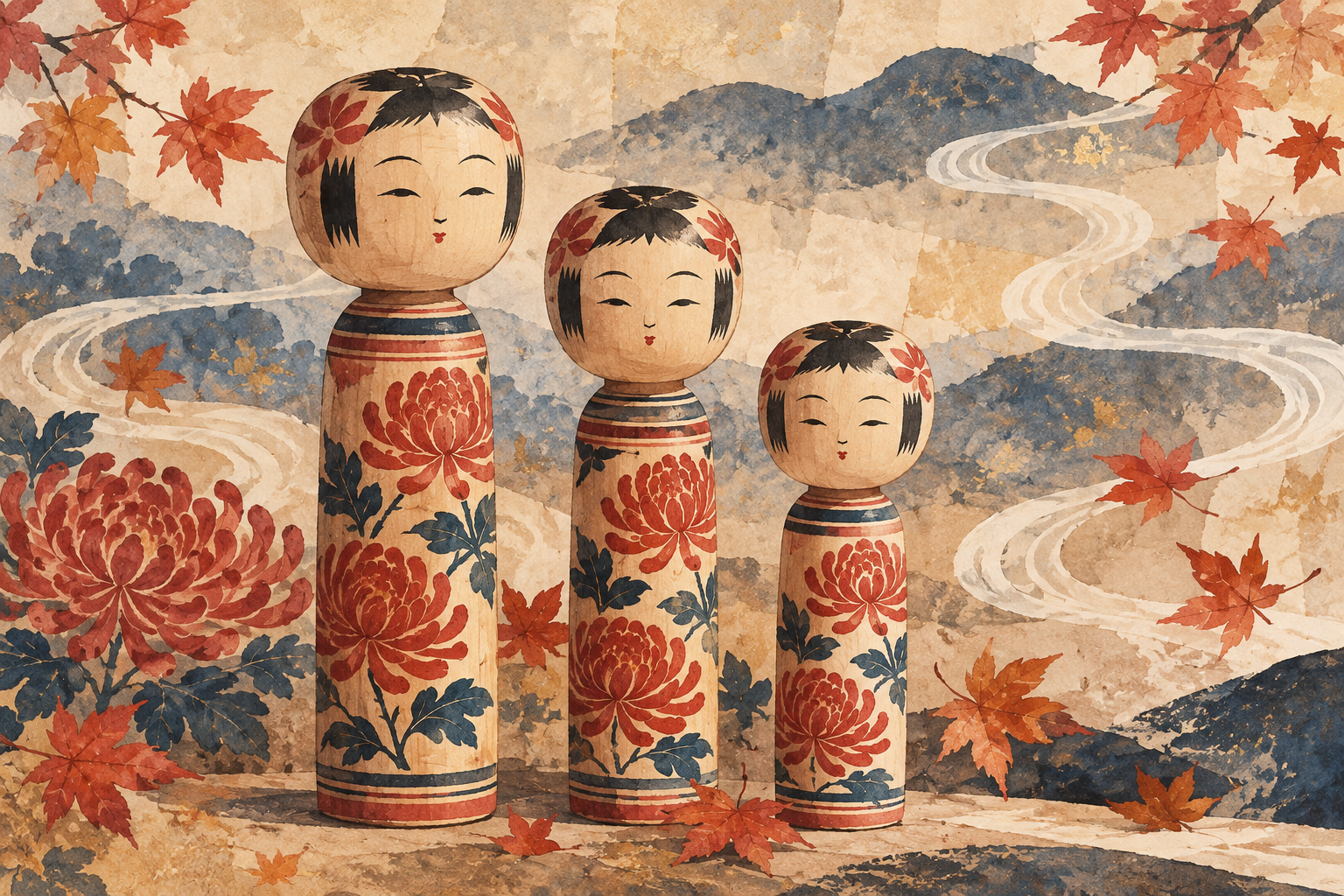
    AI-generated watercolor illustration of imagined kokeshi dolls, autumn leaves and abstract steam
    AI-generated imagined illustration; not a photograph of actual dolls, a workshop or a real location. / AI生成の想像図。実物のこけし・工房・実在の場所を撮影した写真ではありません。

    Origins: a tradition, not a precise birthday

    Miyagi Prefecture describes traditional kokeshi as having emerged as children’s souvenirs in Tohoku hot-spring districts around the end of the Edo period. The local tourism association connects their spread with visitors taking wooden dolls home from therapeutic stays. These are institutional accounts of a tradition, not proof of one inventor or a single founding day. It is more accurate to keep that uncertainty than to turn a broad origin story into a dated event. Miyagi Prefecture’s overview; the local account.

    An administrative milestone is much firmer. Miyagi traditional kokeshi received national traditional-craft designation on 22 June 1981. The prefectural listing groups Naruko with Togatta, Yajiro, Sakunami and Hijiori. That classification helps a visitor ask a useful question: which details belong to a regional family of forms, and which reflect an individual maker? A designation recognizes a craft tradition; it does not mean every doll looks the same or that all wooden dolls sold in the region belong to the same lineage. Official designation and five lineages.

    Learning to recognize the Naruko form

    The regional tourism association identifies a sturdy silhouette with pronounced shoulders, a slightly narrower middle and a base that widens again. Layered chrysanthemum designs are particularly associated with Naruko. Its fitted neck can make a squeaking sound when turned. These are helpful points of recognition, not a checklist to apply by handling museum objects: look first, and ask staff whether a demonstration is possible. Never test the neck of a display piece yourself. Naruko’s characteristic shape, patterns and neck.

    For a slower way of looking, choose two labeled examples and compare only one feature at a time. Begin with the balance between head and body. Then follow the painted flowers and the spaces left between them. Finally, look at the face: a small change in the angle or length of a line may change the expression you perceive. This is a viewing exercise, not a rule about authenticity. A label naming the maker or school carries information that a first impression cannot supply. Photograph the label too, where photography is allowed, so that a remembered face remains connected to its maker.

    The museum as a shared regional memory

    Osaki City records that the Japan Kokeshi Museum opened in 1975. Two important foundations were the 1953 donation of the collection of poet and children’s writer Kaname Fukazawa and the continuing gifts of festival-dedication dolls from craftspeople beginning in 1957. Those dates describe the formation of an institution, rather than the invention of kokeshi. They show why a museum visit adds another layer to an encounter with a doll: collecting, donating and keeping objects accessible are also part of cultural continuity. Osaki City’s museum history.

    The tourism bureau’s March 2026 guide describes a collection of around 5,000 traditional kokeshi, together with craft demonstrations and painting experiences. Rather than treating the number as a challenge to see everything, use the collection for comparison. Start with a small group, read its labels and return to a favorite after looking elsewhere. If a demonstration or painting session matters to your visit, confirm that day’s availability in advance; a general facility description is not a reservation or a promise that a particular craftsperson will be present. Current museum visitor guide.

    A painting experience is most rewarding when approached as an introduction to attention. Before starting, notice how a motif sits on a curved surface and how an empty area contributes to the whole design. Ask the instructor which parts you will paint and what care the finished object needs. A visitor’s painted keepsake and a traditional maker’s work can both be meaningful while representing different kinds of learning. Keeping that distinction clear helps avoid reducing the skill of a practiced artisan to the length of a short workshop.

    From a doll to a town-wide celebration

    The 2026 official listing for the National Kokeshi Festival advertised its 71st edition for 5–6 September, with traditional-kokeshi displays, demonstrations, painting activities and a festival parade. Those dates have already passed at this article’s publication. The event is relevant here as an example of the public life of the craft, not as an October activity to book. A future edition needs its own dated announcement; visitors should not assume that the venue or detailed program repeats unchanged. Dated 2026 festival announcement.

    Real photograph of giant kokeshi figures in Naruko's National Kokeshi Festival parade on 3 September 2016
    National Kokeshi Festival parade, Naruko, 3 September 2016. Photo: KQuhen, CC BY-SA 4.0, via Wikimedia Commons. No content changes; display size may vary. Historical image, not the 2026 event.

    The local association also records kokeshi imagery in the streets, including a postbox, bollards and manhole covers. Such objects offer a different kind of encounter from a museum case: the motif becomes part of ordinary movement through town. Make a small observation walk, looking for how the same simplified figure changes with its setting and purpose. Stay out of the road when photographing street details, keep entrances clear and respect private property. The pleasure lies in noticing a shared visual language, without needing to turn every sighting into a purchase. Kokeshi in the townscape.

    Nearby landscapes: Naruko Gorge and Katanuma

    For an outdoor extension, the regional association identifies Naruko Gorge and Katanuma as local sights. It gives late October to early November as the usual autumn-color period for the gorge and describes Katanuma as a caldera lake whose appearance changes from day to day. Both have winter closures. The photograph below is from October 2025, so it shows a past seasonal scene, not a report of today’s colors. Treat published seasonal ranges as planning guidance and check weather, access notices and the condition of paths before setting out. Official sightseeing information.

    Real photograph of Naruko Gorge's rocky cliffs and autumn foliage, taken 30 October 2025
    Naruko Gorge, 30 October 2025. Photo: lumoplank, CC0 1.0, via Wikimedia Commons. Resized; no other changes. This is not a current foliage report.

    Choose one landscape addition if your main purpose is the museum. Moving between the station, exhibits and a viewpoint takes more time than a cluster of map markers suggests, especially when you also want to read labels or join an activity. The association’s 2026 walking map distinguishes the town from more distant sights and marks seasonal restrictions. Use it to judge the day’s scale, then confirm the actual route. A satisfying visit might end with one carefully remembered doll and one landscape, rather than a hurried attempt to collect every landmark. Official 2026 walking map.

    Getting there and planning a museum visit

    The standard rail approach from the Sendai side is via Furukawa, changing from the Tohoku Shinkansen to the Rikuu East Line for Naruko-Onsen. The tourism association gives approximately 45 minutes for the Furukawa–Naruko-Onsen leg; connection time must be added. A crucial current exception concerns travel from the west: on 8 October 2026, JR East still reported the Naruko-Onsen–Shinjo section suspended after the July 2024 heavy rain, with replacement buses. Check the operator’s latest information and do not plan that section as an ordinary through train. Regional access guide; JR East operating notice.

    The museum is at 74-2 Shitomae, Naruko Onsen, Osaki City, Miyagi. The March 2026 tourism-bureau guide gives approximately five minutes by car from Naruko-Onsen Station and around 45 minutes from Furukawa Interchange. Osaki City lists opening hours of 9:00–16:00, last admission 15:30, during 1 April–31 December, with winter closure from 1 January–31 March. For current admission charges, painting fees and any exceptional closure, contact the museum before travel rather than relying on older price listings. The published telephone number is 0229-83-3600. Access information; Municipal hours and contact details.

    For the location, use the museum map linked by Osaki City. For a manageable sequence, check the return transport first, visit the museum while there is ample time before last admission, and leave a town walk or a single outdoor stop for the remaining daylight. This is an editorial suggestion, not an official timed itinerary. Ask about access needs in advance if slopes, steps or transport between stops could affect your visit.

    Continue exploring Japanese regional culture

    For other regional perspectives, read JAPAN ESSENCE’s articles on Hida woodworking and Takayama’s crafts and Tono’s local folklore. They are separate destinations, not nearby stops on a Naruko day trip.

    Sources and editorial note

    Sources checked on 8 October 2026. Origin accounts are presented as transmitted history; museum dates and craft designation are documented institutional facts. Viewing exercises and the suggested order of visits are editorial guidance. Photo credits and licenses appear with each real photograph; the imagined illustration is explicitly labeled as AI-generated.

    Miyagi Prefecture: Miyagi traditional kokeshi

    Osaki City: Japan Kokeshi Museum

    Naruko Onsenkyo Tourism Association: local crafts

    Naruko Onsen Tourism Association: enjoying kokeshi

    Miyagi Osaki Tourism Bureau: Japan Kokeshi Museum, 30 March 2026

    Miyagi Tourism Federation: 71st National Kokeshi Festival, 2026

    Naruko Onsenkyo Tourism Association: sightseeing

    Naruko Onsenkyo Tourism Association: transport and access

    JR East: Rikuu East Line operating information

    Naruko Onsen walking map 2026

    About the author

    JAPAN ESSENCE Editorial Team
    Our mission is to bring you Japan’s legends, myths, festivals and living traditions, through both historical fact and the stories passed down over generations.

  • Jojima Onigawara: Exploring Kyushu’s Lustrous Demon Tiles in Fukuoka

    Jojima Onigawara: Exploring Kyushu’s Lustrous Demon Tiles in Fukuoka

    In the city of Kurume, Fukuoka Prefecture, the tradition of crafting Jojima Onigawara tiles has been a testament to the region’s rich cultural heritage and craftsmanship. These demon-faced tiles, known for their protective symbolism, have adorned the roofs of shrines, temples, and traditional homes across Kyushu for centuries.

    Ukiyo-e style demons from onigawara tiles guarding a Japanese home at sunset.
    AI生成イメージ / AI-generated illustration (not a photograph of the actual place)

    Introduction to Jojima Onigawara and Kyushu’s Tile Heritage

    FACT: The Origins of Tile Making in Kurume

    Tile making in the Jojima district of Kurume began after the Battle of Sekigahara, under the rule of the Arima clan in the Kurume Domain. This marked the beginning of a long-standing tradition that would see the region become a hub for tile production in Kyushu. The rich clay deposits from the Chikugo River basin and access to water transport routes facilitated the growth of this industry, making Jojima a prominent tile manufacturing area. The Arima clan’s governance provided the necessary support and stability for the craft to flourish, allowing artisans to perfect their skills over generations.

    The aftermath of the Battle of Sekigahara, which was a pivotal conflict in Japanese history, brought about significant changes in governance and regional development. In Kurume, this period of change was harnessed to foster local industries, including the art of tile making. The strategic location of Jojima, with its abundant natural resources, played a crucial role in establishing the district as a key player in the production of traditional Japanese tiles.

    FACT: Characteristics of Jojima Onigawara

    Jojima Onigawara tiles are renowned for their refined luster, elegant form, and excellent durability. These tiles are not only functional but also serve as decorative elements, often depicting fierce demon faces, clouds, or chrysanthemums. Their primary purpose is to act as talismans, warding off evil and protecting the households they adorn. The unique aesthetic of these tiles is achieved through the skilled hands of craftsmen who have inherited techniques passed down through generations.

    The designs on Jojima Onigawara tiles are deeply symbolic. The fierce demon faces are crafted with meticulous detail to embody strength and protection. Clouds and chrysanthemums add a touch of elegance and are often associated with longevity and resilience in Japanese culture. This combination of beauty and function makes Jojima Onigawara tiles a cherished element of traditional architecture.

    LEGEND: The Protective Power of Onigawara

    According to legend, the onigawara tiles possess the power to protect homes from malevolent spirits and misfortune. The fierce expressions of the demons are believed to scare away evil, ensuring the safety and prosperity of the inhabitants. This belief has been passed down through generations, making these tiles an integral part of Japanese architectural tradition. The legend speaks to a time when spiritual beliefs were interwoven with everyday life, reflecting the cultural values and superstitions of the era.

    In traditional Japanese society, the presence of onigawara tiles on a home or temple was a clear indication of the owner’s desire to safeguard their family and property. This practice continues today, with many modern buildings incorporating these tiles as a nod to cultural heritage and an enduring belief in their protective power.

    The History of Tile Making in Kurume

    FACT: Development Under the Arima Clan

    Under the Arima clan’s rule, the tile-making industry in Kurume flourished. The clan’s support and the availability of natural resources allowed the craft to thrive, establishing Jojima as a key player in the production of traditional Japanese tiles. The Arima clan’s patronage was instrumental in nurturing the craft, providing artisans with the resources and stability needed to hone their skills and innovate within their trade.

    FACT: Jojima’s Rise as a Tile Manufacturing Hub

    The Jojima district’s strategic location and resource availability made it Kyushu’s foremost tile manufacturing hub. The Chikugo River provided the necessary clay, while the river itself served as a transportation route, facilitating trade and distribution of the tiles throughout the region. This accessibility allowed Jojima Onigawara to reach a wide audience, enhancing their reputation and demand across Kyushu.

    The river not only supplied the essential materials but also connected Jojima to other regions, enabling the exchange of ideas and techniques. This exchange contributed to the evolution of tile designs and the refinement of craftsmanship, ensuring that Jojima Onigawara remained at the forefront of tile production in Japan.

    Fountain in Seseragi Park, Jojima 01 - Taken with Nikon Coolpix A10, Jōjima
    “Fountain in Seseragi Park, Jojima 01” (Taken with Nikon Coolpix A10, Jōjima) by STA3816, CC BY-SA 4.0, source, via Wikimedia Commons

    What Are Onigawara and Their Protective Symbolism?

    FACT: The Role of Onigawara in Architecture

    Onigawara tiles are a traditional architectural element in Japan, typically placed at the ends of roofs. They serve both decorative and protective purposes, with their fierce designs intended to ward off evil spirits and protect the structures they adorn. The presence of onigawara tiles is a testament to the enduring belief in their protective power, a belief that has been woven into the fabric of Japanese architecture for centuries.

    The role of onigawara tiles extends beyond mere ornamentation. They are considered guardians of the home, providing a spiritual shield against misfortune. This dual function of beauty and protection is a hallmark of Japanese design, where aesthetics and utility are seamlessly integrated.

    LEGEND: The Symbolism of Demonic Faces

    Legend has it that the demonic faces depicted on onigawara tiles are not merely for decoration. These faces are believed to embody the spirits of protective deities, ensuring that any malevolent forces are kept at bay. This symbolism is deeply rooted in Japanese culture and continues to be a significant aspect of traditional architecture. The fierce expressions of the demons are crafted to invoke fear in evil spirits, while simultaneously offering reassurance to the inhabitants of the building.

    The use of demonic imagery as a protective measure reflects a broader cultural understanding of balance between good and evil. By placing these powerful symbols on their homes, the Japanese people demonstrate their respect for the spiritual world and their desire to maintain harmony within their environment.

    The Craftsmanship and Characteristics of Jojima Tiles

    FACT: Design and Durability

    Jojima Onigawara tiles are crafted with meticulous attention to detail, resulting in their distinctive luster and durability. The designs often include motifs of demons, clouds, and chrysanthemums, each serving a symbolic purpose as guardians of the home. The craftsmanship involved in creating these tiles is a testament to the skill and dedication of the artisans, who continue to uphold the traditions of their forebears.

    The durability of Jojima Onigawara tiles is not only a result of the materials used but also the techniques employed by the craftsmen. These tiles are designed to withstand the elements, ensuring that they provide protection and beauty for generations. The combination of aesthetic appeal and practical durability makes them a valued addition to any structure.

    FACT: Recognition as a Special Folk Craft

    In 1986, Jojima Onigawara was designated as a Fukuoka Prefectural Special Folk Craft, recognizing the cultural and historical significance of these tiles. This designation highlights the importance of preserving this traditional craft for future generations. The recognition serves as an acknowledgment of the artisans’ dedication to their craft and the cultural heritage they represent.

    The designation as a Special Folk Craft not only honors the past but also encourages the continuation of this unique art form. It ensures that the skills and knowledge required to produce Jojima Onigawara tiles are passed down to future generations, preserving an important aspect of Fukuoka’s cultural identity.

    Fountain in Seseragi Park, Jojima 02 - Taken with Nikon Coolpix A10, Jōjima
    “Fountain in Seseragi Park, Jojima 02” (Taken with Nikon Coolpix A10, Jōjima) by STA3816, CC BY-SA 4.0, source, via Wikimedia Commons

    Exploring the Jojima District in Fukuoka

    FACT: Visiting the Tile-Making Area

    The Jojima district in Kurume remains a vibrant center for tile production. Visitors can explore the area to learn more about the history and craftsmanship of Jojima Onigawara tiles, gaining insight into the cultural heritage of Fukuoka Prefecture. The district offers a unique opportunity to witness the artistry and dedication of the craftsmen who continue to create these iconic tiles.

    Exploring Jojima allows visitors to immerse themselves in the rich history of tile making in Kurume. The area is a living testament to the enduring legacy of Jojima Onigawara tiles, offering a glimpse into the past while showcasing the vibrant continuation of this traditional craft.

    Locator map of Japan: Kurume, Fukuoka
    Legend site: Kurume, Fukuoka — Source: Map of Japan with highlight on 40 Fukuoka prefecture.svg; Map: Lincun, CC BY-SA 3.0, via Wikimedia Commons

    Sources & Further Reading

    About the author — JAPAN ESSENCE Editorial Team. Our mission is to bring you Japan’s legends, myths, festivals and living traditions, through both historical fact and the stories passed down over generations.

  • Momiji Manju: The Story Behind Hiroshima’s Iconic Maple Leaf Sweets

    Momiji Manju: The Story Behind Hiroshima’s Iconic Maple Leaf Sweets

    On the picturesque island of Miyajima in Hatsukaichi, Hiroshima Prefecture, a delightful confection known as momiji manju has captured the hearts of locals and visitors alike. This maple leaf-shaped cake, inspired by the stunning autumn foliage of Momijidani Park, is more than just a sweet treat; it is a symbol of the region’s cultural and natural beauty.

    Momiji_Manju_Hiroshima.. 広島のお土産「もみじまんじゅう」, Miyajima.
    “Momiji Manju Hiroshima” by NY066, CC BY-SA 3.0, via Wikimedia Commons

    Introduction to Momiji Manju and Miyajima

    FACT: The creation of momiji manju

    Momiji manju was first created in 1906 by Takatsu Tsunesuke, a confectioner who supplied sweets to the Iwaso inn near Momijidani Park on Miyajima and took up the idea on the advice of Oman, a maid (nakai) at the inn. The idea was to create a confection that would reflect the beauty of the maple leaves that adorn the park, especially during the vibrant autumn season. This creation quickly became a beloved symbol of the area, known for its unique shape and delicious taste. The momiji manju’s design and flavor were crafted to capture the essence of the natural surroundings, making it a perfect souvenir for visitors to the island.

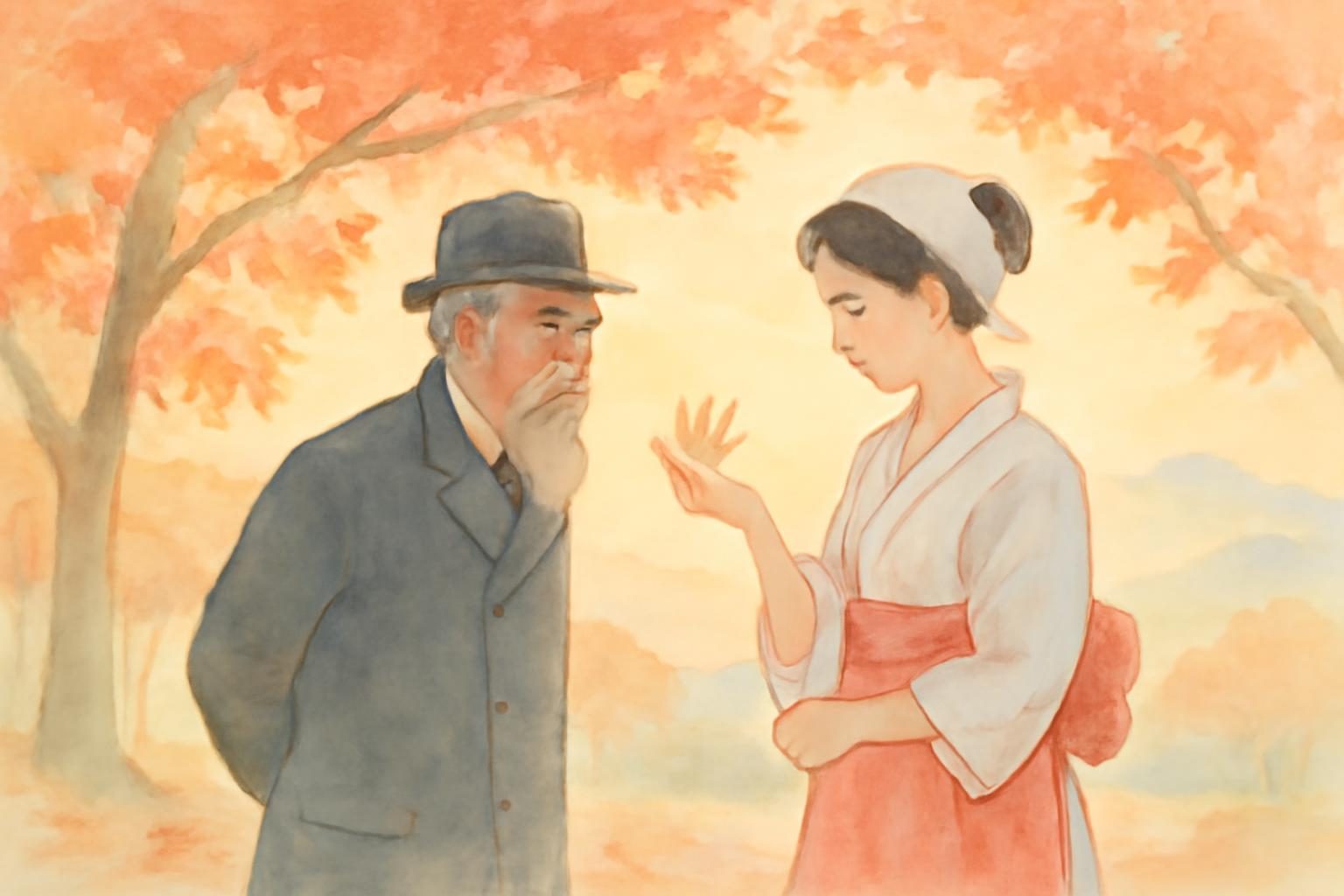
    Ito Hirobumi admiring a waitress's maple leaf-like hands in a vibrant autumn park.
    AI生成イメージ / AI-generated illustration (not a photograph of the actual place)

    The Scenic Inspiration: Momijidani Park’s Autumn Maple Leaves

    FACT: The beauty of Momijidani Park

    Momijidani Park, located at the foot of Mount Misen behind the famous Itsukushima Shrine, is home to approximately 700 maple trees, including around 560 Iroha maples. This park is renowned for its breathtaking autumn foliage, which transforms the landscape into a sea of red and gold hues. Visitors to the park can stroll along picturesque paths, surrounded by the vibrant colors that have inspired artists and confectioners alike. It is this natural spectacle that inspired the creation of momiji manju, capturing the essence of the park’s beauty in a delectable form.

    FACT: The park’s role in local culture

    Momijidani Park is not only a place of natural beauty but also a significant cultural landmark. The park’s maple trees are celebrated each year during the Momiji Festival, where locals and tourists gather to appreciate the stunning autumn leaves. This festival highlights the deep connection between the region’s natural environment and its cultural traditions, with momiji manju serving as a delicious representation of this bond.

    紅葉谷公園 宮島 - Momiji Bridge (Miyajima)
    “紅葉谷公園 宮島” (Momiji Bridge (Miyajima)) by Steven Perez, CC BY-SA 2.0, source, via Wikimedia Commons

    The Origins and Legend Behind Hiroshima’s Famous Sweet

    LEGEND: The tale of the maple leaf inspiration

    According to legend, the shape of momiji manju was inspired by a comment made by Prime Minister Ito Hirobumi during a visit to the area. It is said that he compared the delicate hands of a waitress to the elegant maple leaves of the region, sparking the idea for a confection that would embody this imagery. While the truth of this story remains uncertain, it adds a layer of charm and mystique to the history of momiji manju. Such legends enrich the cultural tapestry of the region, offering visitors a glimpse into the stories that shape local traditions.

    Traditional Crafting Methods and Revival Styles

    FACT: Reviving the original style

    In July 2009, Hiroaki Kato, grandson of founder Takatsu Tsunesuke and third-generation owner of Takatsudo, revived the shop’s hand-baked momiji manju, using baking molds faithfully reproduced from the founder’s original. This revival aimed to preserve the traditional crafting methods and offer a taste of history to those who enjoy the confection. The use of these faithfully reproduced molds ensures that the legacy of momiji manju continues to thrive while maintaining its authentic flavor and appearance. This dedication to tradition allows visitors to experience a piece of history with each bite, connecting them to the past craftsmanship of the region.

    FACT: The significance of traditional methods

    The revival of the original hand-baked style highlights the importance of preserving traditional methods in Japanese confectionery. These techniques are not only about maintaining a culinary legacy but also about honoring the cultural heritage of the area. By using faithfully reproduced molds and traditional methods, the makers of momiji manju ensure that each piece is a tribute to the artisans who first crafted these iconic sweets over a century ago.

    紅葉谷公園 - 31092129457 - Momiji Bridge (Miyajima)
    “紅葉谷公園 – 31092129457” (Momiji Bridge (Miyajima)) by Steven Perez, CC BY-SA 2.0, source, via Wikimedia Commons

    From Red Bean to Chocolate: Modern Flavors and Age-Momiji

    FACT: The evolution of momiji manju flavors

    While the classic momiji manju is filled with sweet red bean paste, modern variations have expanded to include an array of flavors such as custard, chocolate, and matcha. Additionally, a deep-fried version known as age-momiji has become popular, offering a crispy twist on the traditional treat. These innovations have allowed momiji manju to remain a favorite among both locals and tourists, appealing to a wide range of palates. The variety of flavors available today reflects the dynamic nature of Japanese confectionery, where tradition and innovation coexist harmoniously.

    FACT: The appeal of modern variations

    The introduction of new flavors and styles has broadened the appeal of momiji manju, making it accessible to a wider audience. Whether enjoyed as a traditional red bean-filled cake or as a modern chocolate or custard variation, momiji manju offers something for everyone. The deep-fried age-momiji provides a unique texture that has captivated those seeking a novel twist on a classic favorite. These modern adaptations demonstrate the versatility of momiji manju and its ability to adapt to changing tastes while still honoring its roots.

    Where to Experience Miyajima’s Sweet Tradition

    FACT: The widespread popularity of momiji manju

    One of the reasons for the widespread popularity of momiji manju is the decision by its creator to allow other confectioners to produce their own versions. This open approach has led to the confection being enjoyed not only on Miyajima but throughout Hiroshima Prefecture. Visitors to the region can find momiji manju in various shops and stalls, each offering their unique take on this beloved treat. This accessibility has cemented momiji manju as a staple of Hiroshima’s culinary landscape, inviting visitors to partake in a shared cultural experience.

    FACT: Experiencing momiji manju in Hiroshima

    For those visiting Hiroshima, sampling momiji manju is a must-do activity. The confection is readily available in numerous locations, from bustling markets to quaint tea houses, each offering a unique perspective on this iconic sweet. Whether enjoyed as a souvenir or as a delightful snack during a stroll through Momijidani Park, momiji manju provides a taste of Hiroshima’s rich cultural heritage and natural beauty.

    Locator map of Japan: Hatsukaichi, Hiroshima
    Legend site: Hatsukaichi, Hiroshima — Source: Map of Japan with highlight on 34 Hiroshima prefecture.svg; Map: Lincun, CC BY-SA 3.0, via Wikimedia Commons

    Regional guide

    Location: Hatsukaichi, Hiroshima Prefecture

    • Momiji Manju (Hatsukaichi) — source
    • Momijidani Park (Hatsukaichi) — source

    Sources & Further Reading

    About the author

    JAPAN ESSENCE Editorial Team
    Our mission is to bring you Japan’s legends, myths, festivals and living traditions, through both historical fact and the stories passed down over generations.

  • Autumn Legends and History of the Shikoku Pilgrimage: The Emon Saburō Story

    Autumn Legends and History of the Shikoku Pilgrimage: The Emon Saburō Story

    In Naruto, Tokushima Prefecture, the Shikoku Pilgrimage unfolds its rich tapestry of history and legend, particularly during the vibrant autumn season. At the heart of this spiritual journey lies the story of Emon Saburō, a tale of redemption and devotion that continues to inspire pilgrims today.

    Emon Saburō kneels on an autumn trail, surrounded by vibrant foliage, symbolizing repentance in a serene landscape.
    AI生成イメージ / AI-generated illustration (not a photograph of the actual place)

    Introduction to the Shikoku Pilgrimage and Autumn Traditions

    FACT: The Shikoku Pilgrimage Route

    The Shikoku Pilgrimage, or Shikoku Henro, is a revered spiritual journey encompassing 88 temples across Shikoku Island. This pilgrimage is deeply connected to Kūkai, also known as Kōbō Daishi, the founder of the Shingon school of Buddhism. Although the pilgrimage route developed gradually after Kūkai’s time, it remains a testament to his enduring influence on Japanese spirituality and culture. Pilgrims, known as “henro,” often don traditional white garments and conical hats, symbolizing purity and the shedding of worldly attachments as they traverse the island’s diverse landscapes. The journey is not only a physical challenge but also a spiritual endeavor, inviting participants to reflect on their lives and seek enlightenment.

    Throughout the pilgrimage, participants encounter a variety of landscapes, from coastal paths to mountainous trails, each offering unique challenges and moments of introspection. The journey is marked by the ringing of bells and the chanting of sutras, creating an atmosphere of reverence and contemplation. Pilgrims often carry a staff, which symbolizes Kūkai’s presence and guidance along the path. This spiritual journey is not only a test of endurance but also a way to connect deeply with the teachings of Buddhism and the legacy of Kūkai.

    Ryōzen‑ji: The Traditional Starting Point in Naruto

    FACT: Ryōzen‑ji’s Significance

    Ryōzen‑ji, located in Naruto, Tokushima Prefecture, is the first temple on the Shikoku Pilgrimage. It serves as the traditional starting point for pilgrims embarking on this sacred journey. The temple’s serene atmosphere and historical significance make it a pivotal site for those seeking spiritual enlightenment. Visitors to Ryōzen‑ji can witness the temple’s beautiful architecture and tranquil gardens, which provide a peaceful setting for reflection and prayer. The temple also offers a space where pilgrims can receive blessings and guidance before setting off on their journey.

    The temple grounds are often bustling with activity as pilgrims gather to begin their journey. The main hall, adorned with intricate carvings and traditional motifs, stands as a testament to the rich history and cultural heritage of the region. Pilgrims can participate in rituals to cleanse their spirit and prepare for the arduous journey ahead. The temple’s location in Naruto, a city known for its natural beauty and cultural significance, adds to the allure of Ryōzen‑ji as a starting point for this profound spiritual endeavor.

    Ryōzen-ji, Nōkyōsho 001 - Buildings of Ryōzen-ji (Naruto)
    “Ryōzen-ji, Nōkyōsho 001” (Buildings of Ryōzen-ji (Naruto)) by Naokijp, CC BY-SA 4.0, source, via Wikimedia Commons

    The Legend of Emon Saburō and the Reverse Pilgrimage

    LEGEND: Emon Saburō’s Redemption

    According to legend, Emon Saburō was a wealthy man who broke a pilgrim’s bowl, an act that led to his spiritual awakening. In repentance, he undertook the arduous task of walking the Shikoku Pilgrimage twenty times clockwise and once counter-clockwise. His dedication and remorse were eventually rewarded with absolution from Kūkai on his deathbed, symbolizing the power of repentance and forgiveness. This story highlights the themes of humility and redemption, encouraging pilgrims to reflect on their own actions and seek personal growth through their journey.

    The legend of Emon Saburō serves as a moral compass for many pilgrims, illustrating the transformative power of sincere repentance and perseverance. His story is often recounted at various temples along the pilgrimage, reminding pilgrims of the importance of humility and the possibility of redemption regardless of past mistakes. The act of walking the pilgrimage in reverse, as Emon Saburō did, is seen as a profound gesture of atonement and a testament to his unwavering commitment to spiritual growth.

    LEGEND: The Practice of Osettai

    The legend of Emon Saburō also emphasizes the practice of “osettai,” or alms-giving, which is a significant aspect of the pilgrimage experience. Pilgrims often receive gifts and support from local residents, fostering a sense of community and mutual respect. This tradition of generosity and kindness is believed to bring blessings to both the giver and the receiver, reinforcing the spiritual bonds that connect all participants in the pilgrimage.

    Osettai is more than just a tradition; it is a manifestation of the interconnectedness of all beings, a core principle of Buddhism. The act of giving and receiving alms creates a cycle of compassion and gratitude, enriching the pilgrimage experience for both locals and pilgrims. This practice highlights the communal aspect of the pilgrimage, where the journey is not only a personal quest but also a shared experience that strengthens the bonds between individuals and their communities.

    Jōshin‑an and Shōsan‑ji: The Tale’s Conclusion in Kamiyama

    FACT: Emon Saburō’s Final Resting Place

    Emon Saburō’s story concludes at Jōshin‑an near Shōsan‑ji in Kamiyama, Tokushima Prefecture. This site is traditionally linked to his death and absolution, marking the end of his spiritual journey. Pilgrims often visit this location to pay respects and reflect on the themes of redemption and spiritual growth. The serene environment of Jōshin‑an offers a place for contemplation and connection with the deeper meanings of the pilgrimage, allowing visitors to honor the legacy of Emon Saburō’s journey.

    Jōshin‑an, with its tranquil surroundings and historical significance, provides a fitting conclusion to the story of Emon Saburō. The site offers a space for reflection and prayer, where pilgrims can meditate on the lessons of humility, perseverance, and redemption embodied by Emon Saburō. The connection to Shōsan‑ji, another important temple on the pilgrimage route, further enriches the spiritual experience, offering pilgrims a chance to deepen their understanding of the pilgrimage’s teachings.

    Ryōzen-ji, Bell Tower 001 - Buildings of Ryōzen-ji (Naruto)
    “Ryōzen-ji, Bell Tower 001” (Buildings of Ryōzen-ji (Naruto)) by Naokijp, CC BY-SA 4.0, source, via Wikimedia Commons

    Kōbō Daishi Legends and Tōrin‑in

    LEGEND: The Legend of Sowing Daishi

    Tōrin‑in, located in Naruto, is associated with the legend of Kōbō Daishi teaching locals both esoteric Buddhism and farming techniques. This tale, known as the “Legend of Sowing Daishi,” highlights Kūkai’s role in spreading both spiritual and practical knowledge, further cementing his legacy in the region. The story reflects Kūkai’s dedication to improving the lives of the people he encountered, blending spiritual teachings with practical skills to foster a harmonious and prosperous community.

    The “Legend of Sowing Daishi” illustrates Kūkai’s holistic approach to enlightenment, where spiritual growth is intertwined with practical living. By imparting agricultural knowledge alongside esoteric teachings, Kūkai empowered the local communities to thrive both spiritually and materially. Tōrin‑in stands as a testament to this legacy, inviting visitors to explore the harmonious balance between spirituality and daily life that Kūkai championed.

    Tasting Tokushima: Seasonal Naruto Kintoki Sweet Potatoes

    FACT: Naruto Kintoki’s Culinary Delight

    Naruto Kintoki, a regional brand sweet potato, is celebrated for its red-purple skin and golden interior. This sweet potato is a registered regional collective trademark and is popular in various forms, such as daigaku-imo, roasted sweet potato, cakes, pudding, and soft serve. These treats are especially enjoyed by pilgrims and visitors during the autumn pilgrimage season. The sweet, rich flavor of Naruto Kintoki provides a delightful culinary experience that complements the spiritual journey, offering a taste of the region’s agricultural heritage.

    The Naruto Kintoki sweet potato is more than just a culinary delight; it is a symbol of the region’s rich agricultural tradition and the community’s dedication to quality produce. During the autumn pilgrimage season, these sweet potatoes are a staple, offering nourishment and comfort to weary pilgrims. The vibrant colors and sweet taste of Naruto Kintoki reflect the warmth and hospitality of the region, inviting visitors to savor the local flavors as they embark on their spiritual journey.

    Locator map of Japan: Naruto, Tokushima
    Legend site: Naruto, Tokushima — Source: Map of Japan with highlight on 36 Tokushima prefecture.svg; Map: Lincun, CC BY-SA 3.0, via Wikimedia Commons

    Regional guide

    Location: Naruto, Tokushima Prefecture

    • Ryōzen‑ji Temple (Naruto) — source
    • Tōrin‑in (Naruto) — source
    • Jōshin‑an (near Shōsan‑ji) (Kamiyama) — source
    • Naruto Kintoki sweet potato (Naruto) — source

    Sources

    About the author

    JAPAN ESSENCE Editorial Team
    Our mission is to bring you Japan’s legends, myths, festivals and living traditions, through both historical fact and the stories passed down over generations.

  • Discover Hida no Takumi: Takayama’s Legendary Woodworking & Crafts

    Discover Hida no Takumi: Takayama’s Legendary Woodworking & Crafts

    In Takayama, Gifu Prefecture, the legacy of master carpenters known as Hida no Takumi is a testament to the region’s rich history in woodworking and traditional crafts. This heritage is deeply embedded in the cultural fabric of the area, where the skills and artistry of these craftsmen continue to be celebrated and preserved.

    Hida no Takumi as a spirit craftsman surrounded by Takayama's wooden structures and festival floats in warm light.
    AI生成イメージ / AI-generated illustration (not a photograph of the actual place)

    Introduction to Hida no Takumi and the Forest Heritage of Takayama

    FACT: What the records say

    By the Nara period, the carpentry skills of the Hida region were so esteemed that the official court position of Hida-no-Takumi was established. Craftsmen from Hida Province were sent to the capital to contribute their expertise in building shrines and temples. This recognition highlights the exceptional skills of these artisans, who were integral to the construction of significant cultural structures. The mountainous Hida region, with over 90% of its area covered in forests, provided the premium timber that these craftsmen expertly transformed into architectural marvels.

    The Yōrō Code of 757 further solidified the importance of Hida no Takumi by allowing the Hida people to pay taxes through the labor of master carpenters. Approximately 100 carpenters were sent annually to the capital, showcasing the region’s commitment to craftsmanship and its role in national projects. This arrangement not only underscored the value of their skills but also integrated their work into the fabric of Japan’s architectural history. The carpenters’ contributions were vital in maintaining the cultural and religious edifices that formed the backbone of Japanese society.

    LEGEND: The story of Hida’s master carpenters

    According to local legend, the skills of Hida no Takumi were not just a product of training but were also gifts from the gods. It is said that these artisans were blessed with divine abilities to work with wood, enabling them to create structures that could withstand the test of time. This belief in supernatural assistance underscores the reverence held for these craftsmen in the region. The legend suggests that their craftsmanship was so advanced that it seemed almost otherworldly, a divine gift that allowed them to create enduring masterpieces.

    The legend also speaks to the deep respect and admiration the local community had for these craftsmen. Their ability to transform raw timber into intricate and lasting structures was seen as a form of artistry that transcended mere skill, becoming a spiritual endeavor that connected the earthly with the divine.

    The Legacy of Ancient Master Carpenters Under the Imperial Court

    FACT: Contributions to national architecture

    The Hida no Takumi were pivotal in constructing many of Japan’s iconic shrines and temples. Their expertise was not only recognized by the imperial court but also sought after by various regions across the country. This widespread demand for Hida carpenters underscores their reputation as master builders. Their work contributed significantly to the architectural landscape of Japan, with structures that have stood for centuries as a testament to their skill and dedication.

    These craftsmen were instrumental in the development of architectural techniques that would influence generations of builders. Their work on temples and shrines not only provided places of worship but also served as cultural hubs that fostered community and continuity. The legacy of their craftsmanship can still be seen in the enduring beauty and stability of these sacred sites.

    Takayama Festival Float Exhibition Hall, 高山祭屋台会館 - panoramio - Takayama Festival Float Exhibition Hall
    “Takayama Festival Float Exhibition Hall, 高山祭屋台会館 – panoramio” (Takayama Festival Float Exhibition Hall) by z tanuki, CC BY 3.0, source, via Wikimedia Commons

    Architectural Marvels: Shrine Building and Edo Period Merchants’ Homes

    FACT: Ornate houses and festival floats

    By the end of the Edo period, Takayama merchants began hiring Hida no Takumi to construct ornate houses. These homes featured previously prohibited ornamentation, reflecting the evolving tastes and wealth of the merchant class. The intricate designs and elaborate carvings of these residences were a testament to the skill of the Hida artisans, who were able to transform wood into art. Additionally, the intricate wood carvings on the Takayama Festival floats were crafted by Hida artisans, showcasing their skill in decorative woodworking. These festival floats, with their detailed and ornate designs, are a highlight of the Takayama Festival, drawing visitors from around the world to witness their beauty and craftsmanship.

    The festival floats are not only a display of artistic excellence but also a celebration of cultural heritage. Each float tells a story, often rooted in local folklore or historical events, and the craftsmanship involved in their creation is a source of pride for the community. The floats are meticulously maintained and paraded through the streets during the festival, symbolizing the enduring legacy of Hida’s master woodworkers.

    Hida Shunkei Lacquerware: Highlighting Natural Wood Grain

    FACT: The origins and significance of Hida Shunkei

    Originating in the early 17th century during the Keichō era, Hida Shunkei lacquerware is renowned for its clear lacquer that highlights the natural wood grain. This craft was designated a Traditional Craft by the Japanese government in 1975, emphasizing its cultural importance and the skill required to produce these beautiful pieces. The lacquerware’s transparency allows the natural beauty of the wood to shine through, a hallmark of the Hida region’s appreciation for the inherent qualities of their materials. Visitors to Takayama can see these exquisite pieces in local galleries and workshops, where the tradition is kept alive by skilled artisans.

    Hida Shunkei lacquerware is not only valued for its aesthetic appeal but also for its functional qualities. The lacquer provides a durable finish that protects the wood while enhancing its natural beauty. This combination of form and function reflects the Hida artisans’ deep understanding of their materials and their commitment to creating objects that are both beautiful and practical.

    Takayama festival floats exhibition hall, Takayama, 2015 - Takayama Festival Float Exhibition Hall
    “Takayama festival floats exhibition hall, Takayama, 2015” (Takayama Festival Float Exhibition Hall) by 大野 一将, CC BY-SA 4.0, source, via Wikimedia Commons

    Ichii Ittobori: The Art of Yew-Wood Carving in Takayama

    FACT: Development and recognition

    Ichii-Ittobori, a style of yew-wood carving, was developed at the end of the Edo period by Matsuda Sukenaga in the Hida region around Takayama. This craft involves carving unpainted yew wood to showcase its natural grain, and it was certified as a Traditional Craft in 1975. The main manufacturing areas for Ichii-Ittobori include Takayama, Hida, and Gero. The natural patterns of the yew wood are highlighted through the carving process, resulting in unique and intricate designs that are both functional and decorative. These carvings are highly valued for their beauty and craftsmanship, making them a sought-after souvenir for visitors to the region.

    The art of Ichii-Ittobori is a testament to the skill and creativity of Hida artisans. Each piece is carefully crafted to bring out the unique characteristics of the yew wood, resulting in carvings that are as individual as the trees from which they are made. The tradition of Ichii-Ittobori continues to thrive in Takayama, where artisans pass down their skills to new generations, ensuring that this unique form of woodworking remains a vibrant part of the region’s cultural heritage.

    Woodcraft on Display: The Intricate Carvings of Takayama Festival Floats

    FACT: Showcasing craftsmanship in festivals

    The Takayama Festival is renowned for its elaborate floats, which feature intricate wood carvings crafted by Hida artisans. These floats are a testament to the region’s woodworking heritage and are a highlight of the festival, drawing visitors from around the world to witness their beauty and craftsmanship. The festival is not only a celebration of local culture but also a showcase of the enduring skills of Hida no Takumi, whose legacy continues to influence the artisans of today.

    During the festival, the streets of Takayama come alive with the vibrant colors and intricate designs of the floats. Each float is a masterpiece of craftsmanship, adorned with carvings that depict scenes from local legends and historical tales. The festival provides a unique opportunity for visitors to experience the rich cultural traditions of the Hida region and to appreciate the artistry and dedication of its craftsmen.

    Experiencing Takayama’s Living Traditional Crafts Today

    FACT: Preserving and celebrating traditional crafts

    Today, the legacy of Hida no Takumi is preserved through the continued practice of traditional crafts in Takayama. Visitors can explore workshops and galleries that showcase Hida Shunkei lacquerware and Ichii-Ittobori carvings, providing a glimpse into the region’s rich cultural heritage. These crafts are more than just products; they are a living history that connects the past with the present, allowing visitors to experience the artistry and dedication of the Hida craftsmen firsthand.

    The preservation of these crafts is a community effort, involving artisans, cultural organizations, and local government initiatives. Through festivals, exhibitions, and educational programs, the people of Takayama ensure that the skills and stories of their ancestors continue to inspire and enrich the lives of future generations. Visitors to the region are invited to participate in workshops and demonstrations, offering a hands-on experience of the traditional techniques that have been passed down through the centuries.

    Locator map of Japan: Takayama, Gifu
    Legend site: Takayama, Gifu — Source: Map of Japan with highlight on 21 Gifu prefecture.svg; Map: Lincun, CC BY-SA 3.0, via Wikimedia Commons

    Regional guide

    Location: Takayama, Gifu Prefecture

    • Hida Shunkei lacquerware (Takayama) — source
    • Ichii-Ittobori yew-wood carving (Takayama) — source

    Sources

    About the author

    JAPAN ESSENCE Editorial Team
    Our mission is to bring you Japan’s legends, myths, festivals and living traditions, through both historical fact and the stories passed down over generations.