Category: Legends

伝説

  • Exploring Kamui Kotan: Geology and Ainu Legend in Asahikawa

    Exploring Kamui Kotan: Geology and Ainu Legend in Asahikawa

    In Asahikawa, Hokkaido Prefecture, the Kamui Kotan Potholes offer a fascinating blend of natural wonder and cultural legend. These geological formations, carved over millennia, are steeped in Ainu folklore, making them a unique attraction for visitors.

    Ninnekamuy pursued by Samaykur across mythical Kamui Kotan landscape.
    AI生成イメージ / AI-generated illustration (not a photograph of the actual place)

    Introduction to Kamui Kotan and the Ishikari River

    FACT: Geological Significance of Kamui Kotan

    The Kamui Kotan Potholes, located along the Ishikari River in Asahikawa, are a series of cylindrical hollows carved into the riverbed’s bedrock. These formations stretch over approximately 1,200 meters and have been designated as a Natural Monument by Asahikawa City. The potholes are a result of small stones spinning in river currents, which grind cylindrical hollows into the bedrock over countless millennia. This natural process has created a stunning landscape that attracts geologists and tourists alike.

    As a Natural Monument, the Kamui Kotan Potholes are protected for their scientific and educational value. Visitors can appreciate not only the beauty of these formations but also their significance in understanding geological processes. The designation by Asahikawa City ensures that this natural wonder is preserved for future generations, highlighting the importance of conservation in maintaining Japan’s unique natural heritage.

    The Geological Wonder: How the Potholes Were Formed

    FACT: Formation Process

    The formation of the Kamui Kotan Potholes is a testament to the power of natural forces. Over thousands of years, the swirling currents of the Ishikari River have spun small stones, gradually grinding away the bedrock to create these remarkable cylindrical hollows. This process highlights the dynamic interaction between water and rock, shaping the landscape in a way that is both subtle and profound. The continuous movement of water and sediment acts as a natural sculptor, etching these unique features into the earth.

    For those interested in geology, the Kamui Kotan Potholes offer a living classroom where one can observe the results of natural erosion and sediment transport. The site provides a rare opportunity to see the effects of these processes on a large scale, offering insights into the forces that have shaped the Earth’s surface over millions of years. This geological wonder is a testament to the enduring power of nature and its ability to create breathtaking landscapes.

    Pot hole at Kamuikotan (Asahikawa, Hokkaido) No. 2 - Kamuikotan (Asahikawa)
    “Pot hole at Kamuikotan (Asahikawa, Hokkaido) No. 2” (Kamuikotan (Asahikawa)) by DrTerraKhan, CC BY-SA 3.0, source, via Wikimedia Commons

    Ainu Folklore: The Legend of Ninnekamuy and Samaykur

    LEGEND: The Story of Ninnekamuy’s Footprints

    According to Ainu folklore, the Kamui Kotan Potholes are the “footprints” left by the malevolent deity Ninnekamuy as he was pursued by the heroic god Samaykur. This legend imbues the landscape with a sense of mystery and cultural depth, offering visitors a glimpse into the spiritual world of the Ainu people. The story of Ninnekamuy and Samaykur is a classic tale of good versus evil, with the landscape serving as a physical testament to their epic chase. The footprints, as they are called, symbolize the struggle and the pursuit, making the site a place of both natural and mythical significance.

    The narrative of Ninnekamuy and Samaykur is rich with symbolic meaning, reflecting the Ainu’s understanding of the natural world as a realm inhabited by powerful spirits. Visitors to Kamui Kotan can reflect on this legend and consider how the Ainu people have historically interpreted the landscape around them. This connection between myth and nature provides a deeper appreciation of the site and its cultural heritage.

    LEGEND: Other Rock Features in the Legend

    In addition to the potholes, the legend includes other rock formations that are believed to represent parts of the demon Ninnekamuy. These include the demon’s head, known as Nitnekamuy‑sapa, and the demon’s body, referred to as Nitnekamuy‑netopake. These features are visible near the site and add another layer of intrigue to the landscape, inviting visitors to explore and interpret the natural sculptures through the lens of Ainu mythology. The demon’s head and body are said to be petrified remnants of the deity, offering a tangible connection to the mythological narrative.

    The presence of these rock formations enhances the storytelling aspect of the site, allowing visitors to engage with the landscape in a meaningful way. As they walk the paths and observe these natural sculptures, they can imagine the ancient tales that have been passed down through generations, enriching their experience of the Kamui Kotan Potholes.

    Landscape Features: The Demon’s Head and Body Rock Formations

    FACT: Viewing the Rock Formations

    Visitors to Kamui Kotan can view these legendary rock formations from various walking paths and observation points along the gorge. The Demon’s Head rock (Nitnekamuy‑sapa) is visible from these vantage points, while the Demon’s Body rock (Nitnekamuy‑netopake) can be seen across the river. These formations not only serve as a visual representation of the legend but also enhance the natural beauty of the area. The juxtaposition of these mythic forms against the backdrop of the river and forest creates a powerful visual narrative that captivates the imagination.

    These viewing opportunities allow visitors to fully immerse themselves in the landscape and its stories. The paths and observation points are thoughtfully designed to provide the best perspectives of the formations, ensuring that each visitor can appreciate the site’s unique features. Whether one is drawn to the geological wonder or the mythical tales, Kamui Kotan offers an unforgettable experience.

    Pot hole at Kamuikotan (Asahikawa, Hokkaido) No. 1 - Kamuikotan (Asahikawa)
    “Pot hole at Kamuikotan (Asahikawa, Hokkaido) No. 1” (Kamuikotan (Asahikawa)) by DrTerraKhan, CC BY-SA 3.0, source, via Wikimedia Commons

    Historical Significance of the Kamui Kotan Chokepoint

    FACT: Ainu Travel and Rituals

    Historically, Kamui Kotan was a difficult chokepoint on the Ishikari River, posing challenges for Ainu travel. The site required portage and caution, prompting the Kamikawa Ainu to perform rituals of prayer for safe passage. These rituals highlight the cultural significance of the site and its role in the lives of the Ainu people, who have long revered the river and its surrounding landscape. The rituals performed here were not just acts of caution but also expressions of deep respect and connection to the natural world, reflecting the Ainu’s spiritual relationship with their environment.

    These historical practices underscore the importance of Kamui Kotan as a cultural and spiritual landmark. The Ainu’s rituals of prayer and reverence for the river demonstrate their deep understanding of the natural environment and their reliance on it for survival. This historical context adds another dimension to the site, providing visitors with an appreciation for the enduring legacy of the Ainu people and their traditions.

    Visiting Kamui Kotan: Practical Tips for Travelers

    FACT: Access and Viewing Opportunities

    Visitors to Kamui Kotan can explore the area via walking paths that offer stunning views of the potholes and surrounding rock formations. The site is accessible from Asahikawa City, making it a convenient destination for those interested in both natural wonders and cultural heritage. As a designated Natural Monument, Kamui Kotan is preserved for its geological and cultural importance, providing a unique opportunity to experience the intersection of nature and legend. The pathways and observation points are designed to maximize the visitor experience, allowing for a contemplative journey through this storied landscape.

    Travelers are encouraged to take their time exploring the site, allowing the stories and natural beauty to unfold at their own pace. Whether visiting for educational purposes or personal interest, Kamui Kotan offers a rich tapestry of experiences that appeal to a wide range of visitors. The site’s accessibility and thoughtful design ensure that everyone can enjoy the wonders of this remarkable location.

    Locator map of Japan: Asahikawa, Hokkaido
    Legend site: Asahikawa, Hokkaido — Source: Map of Japan with highlight on 01 Hokkaido prefecture.svg; Map: Lincun, CC BY-SA 3.0, via Wikimedia Commons

    Regional guide

    Location: Asahikawa, Hokkaido Prefecture

    • Demon’s Head rock (Asahikawa) — source
    • Demon’s Body rock (Asahikawa) — source

    Sources & Further Reading

    About the author

    JAPAN ESSENCE Editorial Team
    Our mission is to bring you Japan’s legends, myths, festivals and living traditions, through both historical fact and the stories passed down over generations.

  • Dogo Onsen’s White Heron Legend: A Walk Through Matsuyama’s Bathing Heritage

    Dogo Onsen’s White Heron Legend: A Walk Through Matsuyama’s Bathing Heritage

    At Dogo Onsen in Matsuyama, Ehime Prefecture, a white heron offers a memorable starting point for a visit. The bird belongs to a story about discovering warm water, but its presence also directs attention toward real places: a stone near the tram terminus, a historic public bathhouse, and streets connecting shrines and a former castle site. Following those connections makes a rewarding alternative to treating the bathhouse as a single photograph stop. Begin with the story, then give the district time to reveal its different layers.

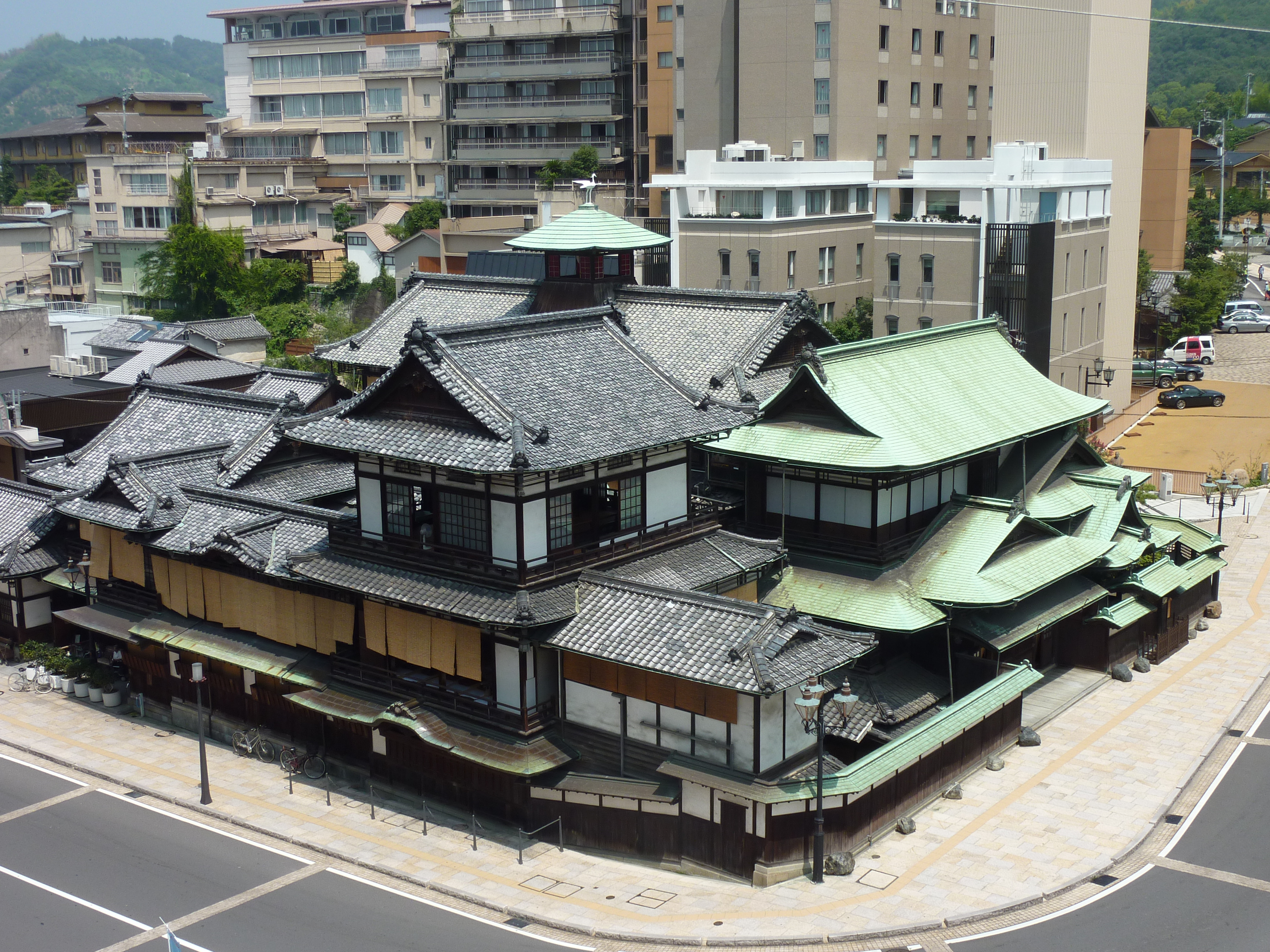
    Dogo Onsen Honkan exterior in July 2009
    Dogo Onsen Honkan, July 2009. Photograph by Tordu01 / Wikimedia Commons, CC BY-SA 3.0. Historical photograph, displayed at reduced size; no intentional crop.

    LEGEND: the bird that found the spring

    According to the official Dogo Onsen history, an injured white heron repeatedly dipped its leg into warm water emerging among rocks. Its wound healed, and it flew away. People who observed the bird then tried the water themselves. The official account attributes this narrative to the regional gazetteer Yoyō Gungō Rigenshū, completed in 1710. The healing and discovery belong to the legend; the date identifies a written account of the tradition, rather than dating the imagined event.

    An independently authored 2025 lecture handout by Ehime University historian Hikaru Ebisu also discusses the heron account and identifies the same gazetteer on page 5. This scholarly treatment helps locate the story within historical writing. Both modern accounts ultimately refer to the same text, so their agreement should not be mistaken for two eyewitness testimonies. For visitors, the useful distinction is simple: a documented tradition can be culturally important without establishing a miraculous cure as historical fact.

    AI-generated watercolor of a white heron standing in a steaming spring, illustrating folklore
    AI-generated illustration inspired by Dogo’s white-heron legend. This imagined scene is not a real photograph, an exact site depiction or a historical reconstruction.

    FACT AND TRADITION: finding Sagiishi at Hojoen

    The physical place to start is Hojoen Square, beside Dogo Onsen Station at the entrance to the shopping street. Matsuyama City identifies the Sagiishi stone, a footbath and the Botchan Karakuri Clock here. The stone is associated with the heron and with marks traditionally described as its footprints. Its location is verifiable; the footprints’ legendary attribution is a different kind of claim. Read the on-site explanation with that distinction in mind, and treat the stone as a local memorial to the story.

    Allow a little unhurried time here before continuing. A small detail such as the stone can easily disappear behind the more conspicuous clock and the movement of arriving passengers. Looking at all three together gives the story a human scale: a remembered bird, a shared place for warm water, and a meeting point in an active neighborhood. This is an editorial way of reading the square, not an assertion that every feature originated from the heron tale. Leave space for people using the footbath and keep paths clear while taking photographs.

    Hojoen Square with the Botchan mechanical clock in September 2008
    Hojoen Square and the Botchan Karakuri Clock, September 2008. Photograph by Jyo81 / Wikimedia Commons, CC BY 3.0. Historical photograph, displayed at reduced size; no intentional crop.

    FACT: a bathhouse built across several periods

    The present Honkan is a connected group of buildings. Ehime Prefecture’s cultural-property record dates Kami-no-Yu Honkan to 1894, the Yushinden and Tama-no-Yu wing to 1899, and the southern and entrance wings to 1924. The four buildings received national Important Cultural Property designation on December 27, 1994. These dates make the building’s history more interesting than a single construction year suggests. When walking around it, remember that its present form developed through additions, with different uses gathered into one bathing complex.

    For the bird’s visible connection to the building, Matsuyama’s white-heron explanation points to the figure above the Honkan and other heron motifs. Take time to look upward from a safe public viewing position. The figure provides a visual bridge between the narrated animal and the town’s built identity. You can appreciate that association without assigning an undocumented ancient date to the ornament or assuming that the present bathhouse marks the precise spot where the legendary bird stood.

    FACT: visiting the Honkan today

    The Honkan’s current official guide says its conservation project ended in December 2024. It also makes an essential distinction for planning: the Honkan is a public bathhouse, with no overnight accommodation. Bathing options differ in the baths and rest areas they include; private rest rooms do not contain private baths. Before buying a ticket, check the official course details, current waiting information and reservation requirements for your chosen option. Older photographs in this article document earlier appearances and are not a promise of present-day conditions.

    A respectful visit depends on ordinary bathing manners as much as historical curiosity. The operator’s rules ask visitors to wash before entering the bath, keep towels out of the water, and avoid photography and smartphone use in changing rooms and bathing areas. Tie back long hair and follow staff guidance. If you want to record the visit, make the exterior and public streets your photographic subjects. The heron’s recovery remains a story about the spring; it should not be read as a medical promise to modern bathers.

    Two nearby places that broaden the walk

    Isaniwa Shrine. Ehime’s heritage record dates the surviving shrine buildings to 1667 and identifies their national cultural-property status. This offers a separate historical destination close to the baths. The official district guide lists a five-minute walk from Dogo Onsen Station and an approach with 135 stone steps. Allow extra time for the climb and your own walking pace. If steps are difficult, keep the shrine as an optional stop rather than assuming a short distance means easy access.

    Dogo Park and Yuzuki Castle ruins. The park adds an archaeological dimension. The prefectural account identifies a National Historic Site and describes excavations that revealed evidence of buildings, roads and other features of the former castle settlement. It also acknowledges uncertainty about the exact founding date. The park operator lists free admission, with exhibition facilities open 9 a.m. to 5 p.m. and normally closed on Mondays, or the following weekday after a holiday, plus December 29 through January 3. Check updates before a museum-focused visit.

    Getting there and choosing your route

    The official access page gives approximate tram journeys of 25 minutes from JR Matsuyama Station and 20 minutes from Matsuyama City Station to Dogo Onsen. These are different departure stations, so check the name carefully when planning a connection. The Honkan’s address is 5-6 Dogo Yunomachi, Matsuyama. Use the operator’s map or the Honkan location recorded on Ehime Prefecture’s heritage map. This pin locates the building; it is not a claim about the legendary spring’s original emergence point.

    For a flexible half-day, our suggested sequence is the station, Hojoen and Sagiishi, the Honkan, then either Isaniwa Shrine or Dogo Park according to your interests and energy. Add the second stop if time allows. This is an editorial suggestion rather than a timed official tour. Keep the bathing visit flexible around the available course and queue, and use the official walking-map collection to adjust the order. A shorter walk with time to read signs is often more satisfying than a hurried attempt to include every attraction.

    What the white heron leaves with us

    The strongest way to carry the legend home is to remember its different forms. There is the written story, the stone that recalls it, the bird motif above a working bathhouse, and the everyday experience of visiting a town shaped around hot water. None needs to be forced into a single literal explanation. Give each its own place: folklore invites imagination, heritage records establish dates, and current operator guidance helps you visit well. Together they offer a richer encounter with Dogo than either a miraculous origin story alone or a list of architectural dates.

    Related reading on JAPAN ESSENCE

    Sources and image notes

    Historical and visitor-information sources are linked beside the relevant claims. The prefectural heritage records and the university historian’s lecture provide sources distinct from local operator guidance. The two modern heron accounts cite the same older text; neither verifies the legendary healing as an event. Visitor information checked October 8, 2026. Photo credits and reuse licenses appear under each real photograph. The watercolor is explicitly labeled as an AI-generated illustration.

    About the author

    JAPAN ESSENCE Editorial Team
    Our mission is to bring you Japan’s legends, myths, festivals and living traditions, through both historical fact and the stories passed down over generations.

  • Kanazawa’s Gold-Washing Well: The Legend of Imohori Togoro

    Kanazawa’s Gold-Washing Well: The Legend of Imohori Togoro

    A small spring beside Kenrokuen offers a different way into Kanazawa’s story. Before thinking about grand gardens or glittering objects, imagine someone washing the earth from freshly dug yams. That ordinary action sits at the heart of the city’s best-known origin legend. Following it leads to three distinct places: the spring near Kanazawa Shrine, a neighborhood associated with the legendary farmer, and a museum that explains the city’s later gold-leaf heritage.

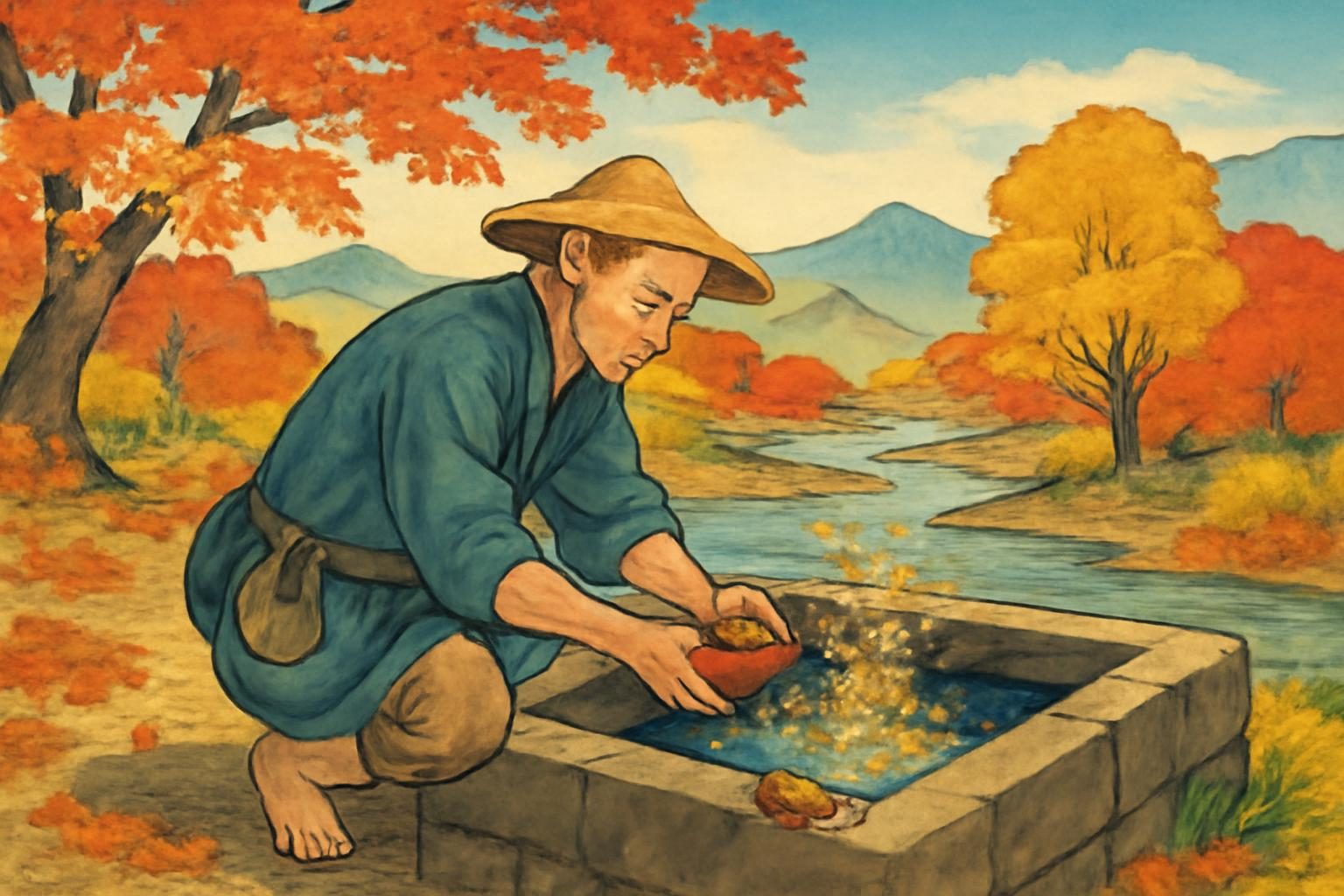
    AI-generated fantasy inspired by the Togoro legend; imagined person, gold particles, setting and season.
    AI-generated illustration. An imagined scene, not a photograph or historical reconstruction of Kinjo Reitaku.

    The legend: yams, gold and the name Kanazawa

    The Kanazawa City Tourism Association identifies the spring as Kinjo Reitaku, written 金城霊澤. Its account says that Imohori Togoro washed yams in the water and found grains of gold. The place came to be known as a gold-washing stream, traditionally explaining the name Kanazawa. This is a local origin legend; it should not be read as a documented discovery of a gold deposit.

    Kanazawa Shrine’s own telling adds an important detail: Togoro, a poor but honest farmer from Yamashina, shared the gold with people in need. The story therefore gives generosity a place alongside good fortune. When reading or retelling it, keep that human choice in view rather than reducing the tale to a promise of personal wealth. The shrine’s account does not require us to picture manufactured gold leaf rising magically from the water.

    Another version, recorded in a 2017 Kanazawa Literary Hall storytelling report, brings Togoro’s wife into the discovery. After he gives away the valuables she brought into their marriage, he explains that gold can be found where he washes yams. The couple subsequently find it together. Such differences are part of reading folklore: a short shrine account and a longer storytelling version can emphasize different relationships and choices. Comparing them makes the tale richer without requiring every detail to belong to a single fixed narrative.

    Finding the spring and keeping the places separate

    Kinjo Reitaku is beside Kenrokuen, near Kanazawa Shrine, at 1-3 Kenroku-machi. The tourism association lists a walk of about five minutes from the Hirosaka / 21st Century Museum bus stop, or about one minute from the National Crafts Museum / Prefectural Museum of Art stop on the Kikugawa route of the Kanazawa Flat Bus. Use its official location guide before setting out. Searching for the spring’s Japanese name is more precise than searching only for a ‘gold well.’

    Togoro Shrine is a different stop in Yamashina. The Kanazawa Literary Hall’s folklore reports associate that neighborhood and shrine with Togoro’s legendary home and the tradition of his hoe-hanging pine. Treat the residence association as tradition, not an excavated and proven address. A visit there can extend a folklore-focused trip, but it is not the same place as the spring beside Kenrokuen. Mark them separately on your map and allow for the journey between them.

    Fountain in Kenrokuen Garden, Kanazawa.
    Kenrokuen fountain, photographed in November 2005; not Kinjo Reitaku. Credit: Daderot (license attribution); original uploader Jovandavid. CC BY-SA 3.0 · Wikimedia Commons. No editorial changes; WordPress display resizing.

    Kenrokuen: a garden with its own history

    The surrounding garden has a historical timeline of its own. Ishikawa Prefecture’s garden history traces the usual starting point to Maeda Tsunanori’s villa and garden in 1676. Successive generations reshaped the grounds; the name Kenrokuen was adopted in 1822, and the garden was fully opened to the public in 1874. Those dates describe the garden’s development, rather than dating the much older setting imagined in Togoro’s story. Keeping the two timelines separate makes both easier to appreciate.

    The prefecture describes Kenrokuen as a strolling garden shaped around ponds, landscaped hills, trees and places to pause. Let the changing views guide your walk. Look across water from more than one position, notice how a path reveals or conceals the next scene, and leave time simply to stop. This is a rewarding companion to the spring visit: the legend invites imaginative reading, while the garden asks for close attention to the landscape in front of you.

    Kenrokuen Garden and Kasumigaike Pond in Kanazawa.
    Kenrokuen garden surroundings, not Kinjo Reitaku. Photograph: Motokoka. CC BY-SA 4.0 · Wikimedia Commons. No editorial changes; WordPress display resizing.

    Gold-leaf heritage: a separate historical story

    Kanazawa’s association with gold also has a craft-history dimension. The municipal Yasue Gold Leaf Museum explains that the precise beginning of local leaf production is unclear, although documentary evidence reaches the late sixteenth century. Its account follows later regulation and changing circumstances rather than attributing the industry to Togoro. The shared image of gold makes a compelling theme for a visit, but it is not evidence that the legend created or sustained the trade.

    For a museum stop, the Yasue Gold Leaf Museum visitor guide lists the address as 1-3-10 Higashiyama. Its current hours are 9:30 a.m. to 5 p.m., with last admission at 4:30 p.m.; regular closure is Tuesday, moving to the next weekday when Tuesday is a public holiday. Exhibition-change closures also apply. Check the calendar before committing to a route. This gives the day’s theme a useful second perspective through an institution devoted to the city’s gold-leaf heritage.

    Regional guide: planning an unhurried visit

    Start with Kinjo Reitaku and nearby Kanazawa Shrine, then choose how much time to give the garden. The prefectural sights map identifies the spring alongside other points of interest, including the fountain and Kasumigaike Pond. Our photographs show those garden surroundings, not the gold-washing spring itself. Match each image to its caption rather than using it as a navigation landmark. The map is especially useful for understanding why nearby attractions can still require different paths or entrances.

    For an October visit, note the garden’s seasonal change in opening times. The official visitor information lists 7 a.m. to 6 p.m. through October 15, then 8 a.m. to 5 p.m. from October 16, with final admission thirty minutes before closing. These are garden hours, not a promised schedule for every nearby shrine or facility. The same page warns about slopes and slippery gravel paths and links to an accessible recommended route. Comfortable shoes and a realistic pace will serve you better than a tightly packed checklist.

    If you continue to Higashiyama for the museum, treat it as a separate stage of the day. If the Yamashina tradition is your main interest, leave room for that journey instead of trying to cover every location. At the spring and shrines, follow posted guidance, keep paths clear and respect people who are there to worship. Avoid touching or entering water features simply to recreate a scene from the tale. A good folklore walk leaves the place undisturbed and gives the story room to remain a story.

    Before leaving, consider what each stop has added: a story about unexpected fortune, a landscape shaped over generations, and a craft tradition with a documented but complex past. You do not have to collapse them into one explanation of Kanazawa. Their different kinds of evidence, and the ways residents continue to remember them, make the city more interesting. The spring is a modest starting point for that broader curiosity.

    Official local sights map · Spring location and transport · Museum access and closure calendar

    Sources

    Kanazawa Literary Hall: 2017 storytelling report / 金沢文芸館「平成29年度 文芸館だより」

    Kanazawa City Tourism Association: Kinjo Reitaku / 金沢市観光協会「金城霊澤」

    Kanazawa Shrine: grounds guide / 金澤神社「周遊案内」

    Kanazawa Literary Hall: 2022 folklore reports / 金沢文芸館「令和4年度 文芸館だより」

    Ishikawa Prefecture: About Kenrokuen / 石川県「兼六園とは」

    Ishikawa Prefecture: Kenrokuen history / 石川県「兼六園の歴史」

    Ishikawa Prefecture: Kenrokuen visitor information / 石川県「兼六園 利用案内」

    Ishikawa Prefecture: Kenrokuen sights map / 石川県「見どころマップ」

    Yasue Gold Leaf Museum: Kanazawa and gold leaf / 安江金箔工芸館「金沢と金箔」

    Yasue Gold Leaf Museum: visitor information / 安江金箔工芸館「ご利用案内」

    Sources and visitor information checked on October 8, 2026. Opening arrangements may change; consult each official page before visiting.

    About the author

    JAPAN ESSENCE Editorial Team
    Our mission is to bring you Japan’s legends, myths, festivals and living traditions, through both historical fact and the stories passed down over generations.

  • Jojima Onigawara: Exploring Kyushu’s Lustrous Demon Tiles in Fukuoka

    Jojima Onigawara: Exploring Kyushu’s Lustrous Demon Tiles in Fukuoka

    In the city of Kurume, Fukuoka Prefecture, the tradition of crafting Jojima Onigawara tiles has been a testament to the region’s rich cultural heritage and craftsmanship. These demon-faced tiles, known for their protective symbolism, have adorned the roofs of shrines, temples, and traditional homes across Kyushu for centuries.

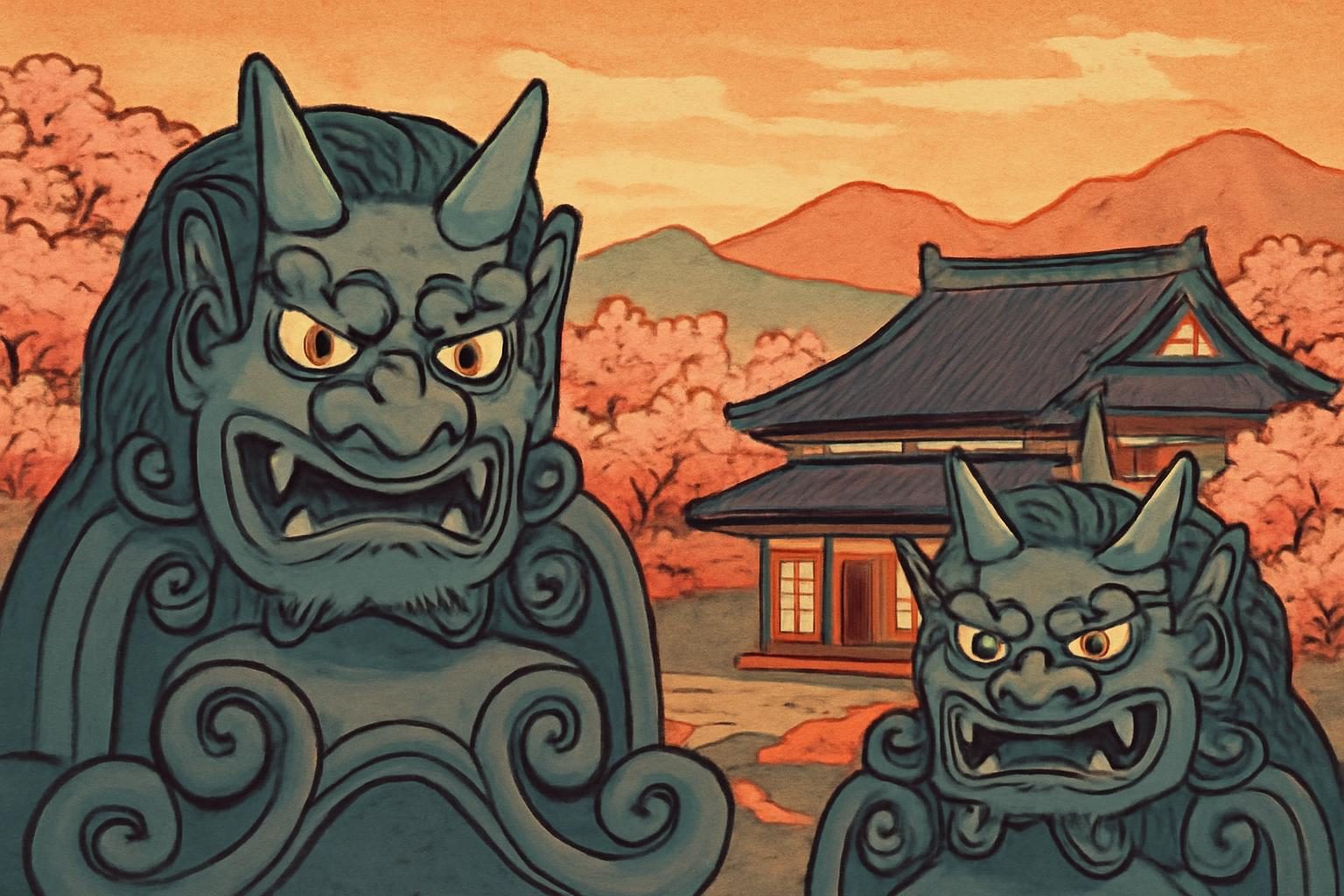
    Ukiyo-e style demons from onigawara tiles guarding a Japanese home at sunset.
    AI生成イメージ / AI-generated illustration (not a photograph of the actual place)

    Introduction to Jojima Onigawara and Kyushu’s Tile Heritage

    FACT: The Origins of Tile Making in Kurume

    Tile making in the Jojima district of Kurume began after the Battle of Sekigahara, under the rule of the Arima clan in the Kurume Domain. This marked the beginning of a long-standing tradition that would see the region become a hub for tile production in Kyushu. The rich clay deposits from the Chikugo River basin and access to water transport routes facilitated the growth of this industry, making Jojima a prominent tile manufacturing area. The Arima clan’s governance provided the necessary support and stability for the craft to flourish, allowing artisans to perfect their skills over generations.

    The aftermath of the Battle of Sekigahara, which was a pivotal conflict in Japanese history, brought about significant changes in governance and regional development. In Kurume, this period of change was harnessed to foster local industries, including the art of tile making. The strategic location of Jojima, with its abundant natural resources, played a crucial role in establishing the district as a key player in the production of traditional Japanese tiles.

    FACT: Characteristics of Jojima Onigawara

    Jojima Onigawara tiles are renowned for their refined luster, elegant form, and excellent durability. These tiles are not only functional but also serve as decorative elements, often depicting fierce demon faces, clouds, or chrysanthemums. Their primary purpose is to act as talismans, warding off evil and protecting the households they adorn. The unique aesthetic of these tiles is achieved through the skilled hands of craftsmen who have inherited techniques passed down through generations.

    The designs on Jojima Onigawara tiles are deeply symbolic. The fierce demon faces are crafted with meticulous detail to embody strength and protection. Clouds and chrysanthemums add a touch of elegance and are often associated with longevity and resilience in Japanese culture. This combination of beauty and function makes Jojima Onigawara tiles a cherished element of traditional architecture.

    LEGEND: The Protective Power of Onigawara

    According to legend, the onigawara tiles possess the power to protect homes from malevolent spirits and misfortune. The fierce expressions of the demons are believed to scare away evil, ensuring the safety and prosperity of the inhabitants. This belief has been passed down through generations, making these tiles an integral part of Japanese architectural tradition. The legend speaks to a time when spiritual beliefs were interwoven with everyday life, reflecting the cultural values and superstitions of the era.

    In traditional Japanese society, the presence of onigawara tiles on a home or temple was a clear indication of the owner’s desire to safeguard their family and property. This practice continues today, with many modern buildings incorporating these tiles as a nod to cultural heritage and an enduring belief in their protective power.

    The History of Tile Making in Kurume

    FACT: Development Under the Arima Clan

    Under the Arima clan’s rule, the tile-making industry in Kurume flourished. The clan’s support and the availability of natural resources allowed the craft to thrive, establishing Jojima as a key player in the production of traditional Japanese tiles. The Arima clan’s patronage was instrumental in nurturing the craft, providing artisans with the resources and stability needed to hone their skills and innovate within their trade.

    FACT: Jojima’s Rise as a Tile Manufacturing Hub

    The Jojima district’s strategic location and resource availability made it Kyushu’s foremost tile manufacturing hub. The Chikugo River provided the necessary clay, while the river itself served as a transportation route, facilitating trade and distribution of the tiles throughout the region. This accessibility allowed Jojima Onigawara to reach a wide audience, enhancing their reputation and demand across Kyushu.

    The river not only supplied the essential materials but also connected Jojima to other regions, enabling the exchange of ideas and techniques. This exchange contributed to the evolution of tile designs and the refinement of craftsmanship, ensuring that Jojima Onigawara remained at the forefront of tile production in Japan.

    Fountain in Seseragi Park, Jojima 01 - Taken with Nikon Coolpix A10, Jōjima
    “Fountain in Seseragi Park, Jojima 01” (Taken with Nikon Coolpix A10, Jōjima) by STA3816, CC BY-SA 4.0, source, via Wikimedia Commons

    What Are Onigawara and Their Protective Symbolism?

    FACT: The Role of Onigawara in Architecture

    Onigawara tiles are a traditional architectural element in Japan, typically placed at the ends of roofs. They serve both decorative and protective purposes, with their fierce designs intended to ward off evil spirits and protect the structures they adorn. The presence of onigawara tiles is a testament to the enduring belief in their protective power, a belief that has been woven into the fabric of Japanese architecture for centuries.

    The role of onigawara tiles extends beyond mere ornamentation. They are considered guardians of the home, providing a spiritual shield against misfortune. This dual function of beauty and protection is a hallmark of Japanese design, where aesthetics and utility are seamlessly integrated.

    LEGEND: The Symbolism of Demonic Faces

    Legend has it that the demonic faces depicted on onigawara tiles are not merely for decoration. These faces are believed to embody the spirits of protective deities, ensuring that any malevolent forces are kept at bay. This symbolism is deeply rooted in Japanese culture and continues to be a significant aspect of traditional architecture. The fierce expressions of the demons are crafted to invoke fear in evil spirits, while simultaneously offering reassurance to the inhabitants of the building.

    The use of demonic imagery as a protective measure reflects a broader cultural understanding of balance between good and evil. By placing these powerful symbols on their homes, the Japanese people demonstrate their respect for the spiritual world and their desire to maintain harmony within their environment.

    The Craftsmanship and Characteristics of Jojima Tiles

    FACT: Design and Durability

    Jojima Onigawara tiles are crafted with meticulous attention to detail, resulting in their distinctive luster and durability. The designs often include motifs of demons, clouds, and chrysanthemums, each serving a symbolic purpose as guardians of the home. The craftsmanship involved in creating these tiles is a testament to the skill and dedication of the artisans, who continue to uphold the traditions of their forebears.

    The durability of Jojima Onigawara tiles is not only a result of the materials used but also the techniques employed by the craftsmen. These tiles are designed to withstand the elements, ensuring that they provide protection and beauty for generations. The combination of aesthetic appeal and practical durability makes them a valued addition to any structure.

    FACT: Recognition as a Special Folk Craft

    In 1986, Jojima Onigawara was designated as a Fukuoka Prefectural Special Folk Craft, recognizing the cultural and historical significance of these tiles. This designation highlights the importance of preserving this traditional craft for future generations. The recognition serves as an acknowledgment of the artisans’ dedication to their craft and the cultural heritage they represent.

    The designation as a Special Folk Craft not only honors the past but also encourages the continuation of this unique art form. It ensures that the skills and knowledge required to produce Jojima Onigawara tiles are passed down to future generations, preserving an important aspect of Fukuoka’s cultural identity.

    Fountain in Seseragi Park, Jojima 02 - Taken with Nikon Coolpix A10, Jōjima
    “Fountain in Seseragi Park, Jojima 02” (Taken with Nikon Coolpix A10, Jōjima) by STA3816, CC BY-SA 4.0, source, via Wikimedia Commons

    Exploring the Jojima District in Fukuoka

    FACT: Visiting the Tile-Making Area

    The Jojima district in Kurume remains a vibrant center for tile production. Visitors can explore the area to learn more about the history and craftsmanship of Jojima Onigawara tiles, gaining insight into the cultural heritage of Fukuoka Prefecture. The district offers a unique opportunity to witness the artistry and dedication of the craftsmen who continue to create these iconic tiles.

    Exploring Jojima allows visitors to immerse themselves in the rich history of tile making in Kurume. The area is a living testament to the enduring legacy of Jojima Onigawara tiles, offering a glimpse into the past while showcasing the vibrant continuation of this traditional craft.

    Locator map of Japan: Kurume, Fukuoka
    Legend site: Kurume, Fukuoka — Source: Map of Japan with highlight on 40 Fukuoka prefecture.svg; Map: Lincun, CC BY-SA 3.0, via Wikimedia Commons

    Sources & Further Reading

    About the author — JAPAN ESSENCE Editorial Team. Our mission is to bring you Japan’s legends, myths, festivals and living traditions, through both historical fact and the stories passed down over generations.

  • The Sacred Deer of Nara: Messengers of Kasuga Taisha Shrine

    The Sacred Deer of Nara: Messengers of Kasuga Taisha Shrine

    In Nara City, Nara Prefecture, the deer of Nara Park are woven into the city’s landscape and the traditions of Kasuga Taisha Shrine. Their story brings together a white-deer legend, a historic shrine and the everyday responsibility of sharing space with wild animals.

    Two sika deer in Nara, photographed in August 2018
    “Deer of Nara, Japan; August 2018 (07)” by Steffen Flor, CC BY-SA 2.0, via Wikimedia Commons. Resized for display.

    Introduction to the Sacred Deer of Nara

    FACT: The Deer of Nara Park

    Nara’s free-roaming deer are designated a national natural monument. They are wild animals, even when they approach people. The Nara City Tourism Association explains their protected status and gives guidance for visitors.

    LEGEND: The Origin of the Sacred Deer Tradition

    According to the tradition described by the Japan Tourism Agency, Takemikazuchi-no-mikoto came from Kashima Jingu in present-day Ibaraki Prefecture on a white deer and arrived at Mt. Mikasa. The story connects the deer with the protection of the ancient capital. It is a religious tradition, rather than a documented journey.

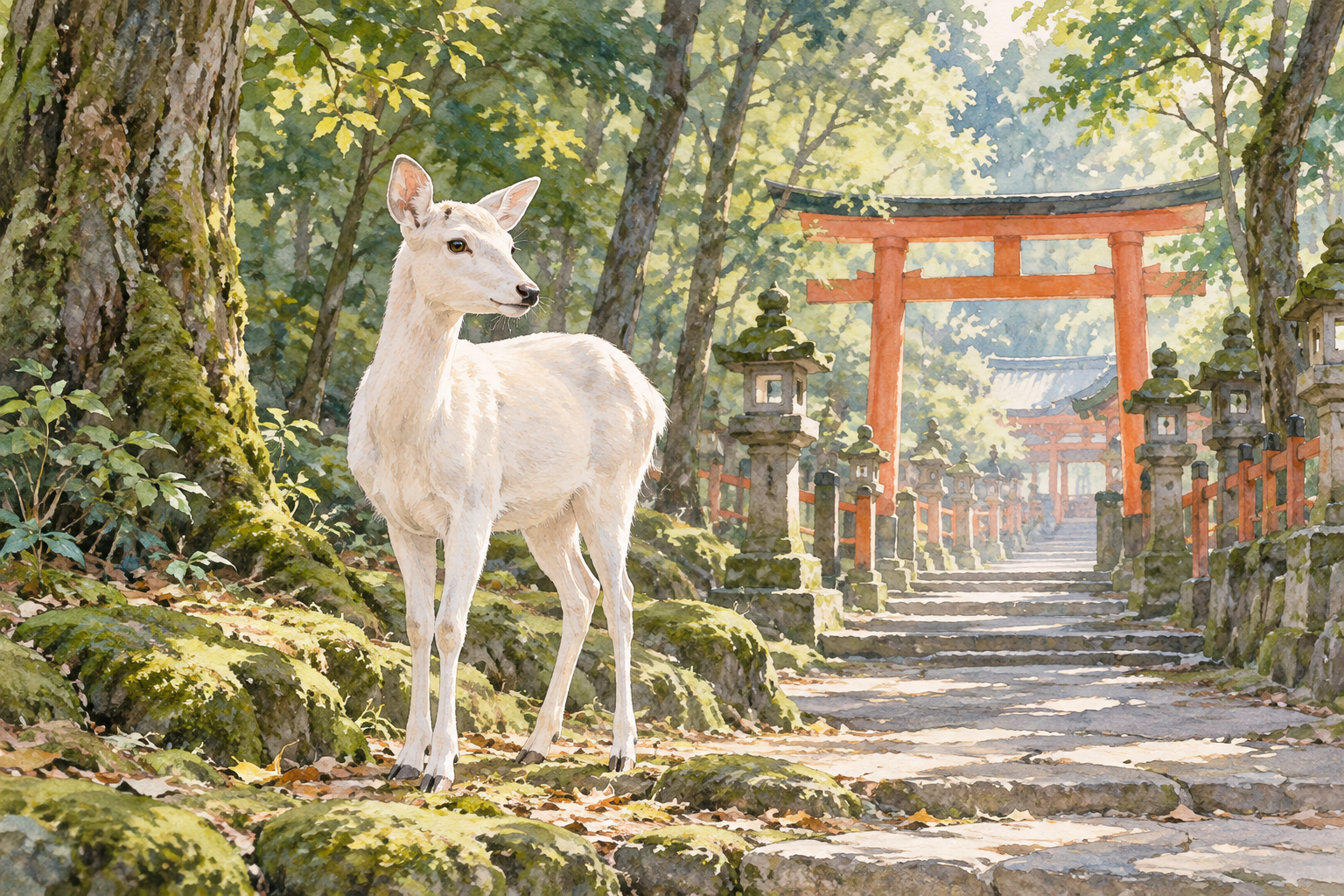
    AI-generated illustration of a white deer beside a woodland shrine path
    AI-generated illustration inspired by the white-deer tradition of Kasuga Taisha; not a historical reconstruction or documentary photograph.

    The Legend of Kasuga Taisha Shrine and Mt. Mikasa

    FACT: Establishment of Kasuga Taisha Shrine

    Kasuga Taisha dates its foundation to 768, when Fujiwara-no-Nagate established its shrine buildings under Empress Shōtoku’s direction. Its vermilion columns and white walls stand against surrounding woodland. The shrine’s own history distinguishes its foundation from the older account of the deity’s arrival.

    LEGEND: Takemikazuchi’s Arrival at the Sacred Mountain

    In the shrine’s account, Takemikazuchi dwells on the summit of Mt. Mikasa, called Ukigumo-no-mine. Here, Mt. Mikasa refers to the sacred 御蓋山. Keep that name distinct from the broader Kasugayama Primeval Forest when reading maps and descriptions. Follow posted access restrictions around sacred areas.

    Nara Park, November 2016 - Leaves in autumn in Nara Park
    “Nara Park, November 2016” (Leaves in autumn in Nara Park) by Martin Falbisoner, CC BY-SA 4.0, source, via Wikimedia Commons

    Living Treasures: The Deer of Nara Park Today

    FACT: Respecting Wild Deer

    The deer mainly eat plants growing in the park. If you choose to feed them, use only shika senbei, the special deer crackers. Keep paper, maps and plastic bags out of their reach. Looking approachable does not make a deer tame. Read the tourism association’s guidance before your visit.

    The Historic Deer Antler-Cutting Ceremony

    FACT: The Tradition and the 2026 Dates

    The Nara Deer Preservation Foundation dates Shika no Tsunokiri to 1672, when antler cutting began to reduce injuries. The ceremony starts with a prayer for safety. Its schedule moved from October to November in 2025; the announced 2026 dates are November 7 and 8 at the Roku-en antler-cutting grounds within Kasuga Taisha’s precincts. There is no October event in 2026.

    Dates and arrangements may change, and severe weather can cause cancellation. Check the organizer’s current notice before making a special trip. The event is one part of Nara’s continuing effort to live alongside its deer.

    Nara Park - panoramio (2) - Ukimi-dō (Nara)
    “Nara Park – panoramio (2)” (Ukimi-dō (Nara)) by Feri88, CC BY 3.0, source, via Wikimedia Commons

    Planning Your Visit to Nara City and Kasuga Taisha

    FACT: Visitor Guidelines for Nara Park

    Avoid touching or teasing the deer, and take particular care around males in autumn. Adults should supervise children. If you do feed deer, do not keep them waiting with crackers held in front of them; show empty hands when you have finished. Observing from a distance is a good way to enjoy the park too. Visitor guidance.

    The path to Kasuga Taisha passes through Nara Park. JNTO’s shrine guide gives approximate walking times of 30 minutes from Kintetsu Nara Station and 45 minutes from JR Nara Station, with buses also available. Allow extra time for stops and check current transport information.

    Locator map of Japan highlighting Nara Prefecture
    Nara Prefecture highlighted in Japan; this map does not pinpoint Nara City. Source: Map of Japan with highlight on 29 Nara prefecture.svg; Map: Lincun (color revision by TAKASUGI Shinji), CC BY-SA 3.0, via Wikimedia Commons

    Regional guide

    Location: Nara City, Nara Prefecture

    Sources

    Event information checked on October 7, 2026. Photo credits and licenses appear below each image.

    About the author

    JAPAN ESSENCE Editorial Team
    Our mission is to bring you Japan's legends, myths, festivals and living traditions, through both historical fact and the stories passed down over generations.

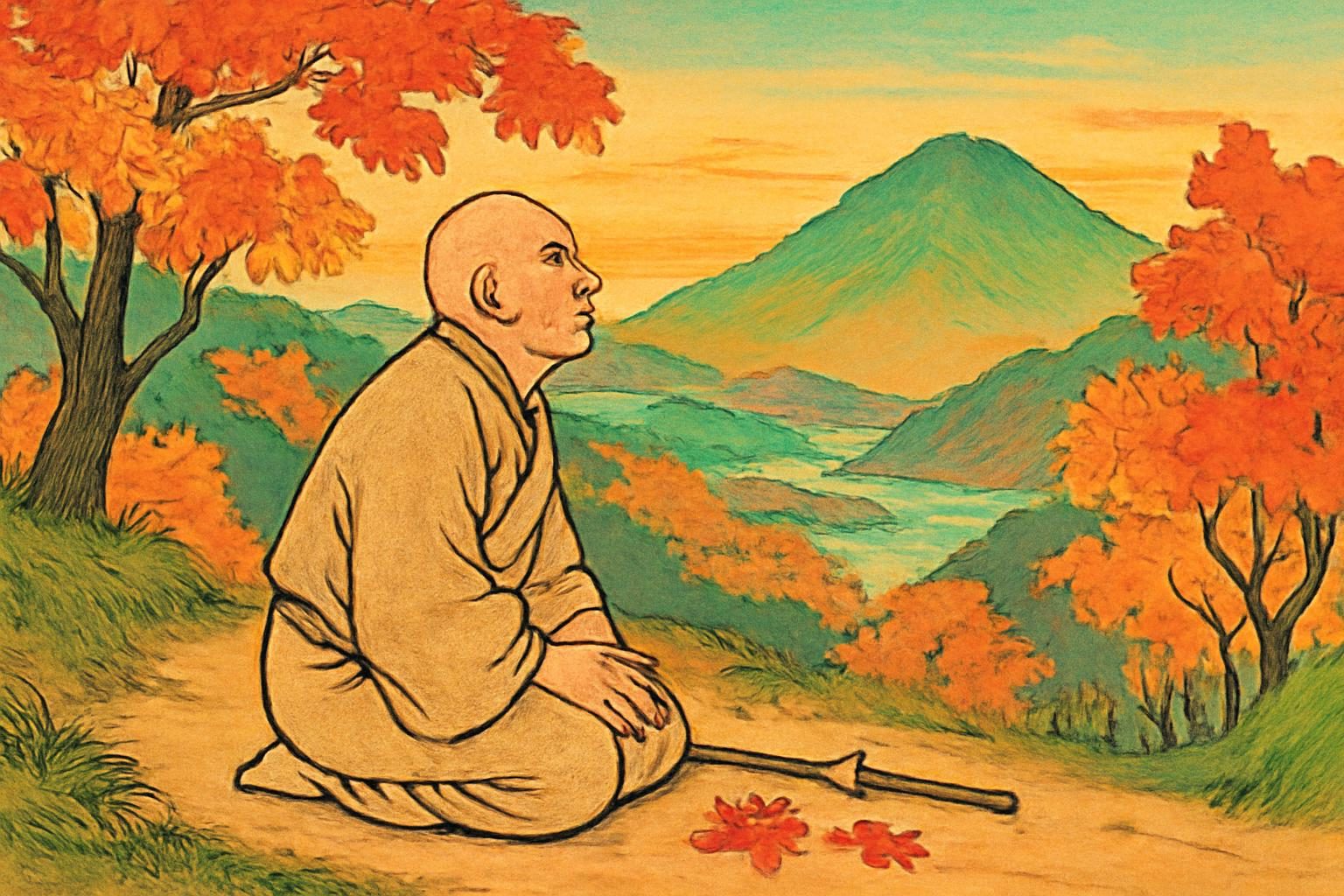
  • Autumn Legends and History of the Shikoku Pilgrimage: The Emon Saburō Story

    Autumn Legends and History of the Shikoku Pilgrimage: The Emon Saburō Story

    In Naruto, Tokushima Prefecture, the Shikoku Pilgrimage unfolds its rich tapestry of history and legend, particularly during the vibrant autumn season. At the heart of this spiritual journey lies the story of Emon Saburō, a tale of redemption and devotion that continues to inspire pilgrims today.

    Emon Saburō kneels on an autumn trail, surrounded by vibrant foliage, symbolizing repentance in a serene landscape.
    AI生成イメージ / AI-generated illustration (not a photograph of the actual place)

    Introduction to the Shikoku Pilgrimage and Autumn Traditions

    FACT: The Shikoku Pilgrimage Route

    The Shikoku Pilgrimage, or Shikoku Henro, is a revered spiritual journey encompassing 88 temples across Shikoku Island. This pilgrimage is deeply connected to Kūkai, also known as Kōbō Daishi, the founder of the Shingon school of Buddhism. Although the pilgrimage route developed gradually after Kūkai’s time, it remains a testament to his enduring influence on Japanese spirituality and culture. Pilgrims, known as “henro,” often don traditional white garments and conical hats, symbolizing purity and the shedding of worldly attachments as they traverse the island’s diverse landscapes. The journey is not only a physical challenge but also a spiritual endeavor, inviting participants to reflect on their lives and seek enlightenment.

    Throughout the pilgrimage, participants encounter a variety of landscapes, from coastal paths to mountainous trails, each offering unique challenges and moments of introspection. The journey is marked by the ringing of bells and the chanting of sutras, creating an atmosphere of reverence and contemplation. Pilgrims often carry a staff, which symbolizes Kūkai’s presence and guidance along the path. This spiritual journey is not only a test of endurance but also a way to connect deeply with the teachings of Buddhism and the legacy of Kūkai.

    Ryōzen‑ji: The Traditional Starting Point in Naruto

    FACT: Ryōzen‑ji’s Significance

    Ryōzen‑ji, located in Naruto, Tokushima Prefecture, is the first temple on the Shikoku Pilgrimage. It serves as the traditional starting point for pilgrims embarking on this sacred journey. The temple’s serene atmosphere and historical significance make it a pivotal site for those seeking spiritual enlightenment. Visitors to Ryōzen‑ji can witness the temple’s beautiful architecture and tranquil gardens, which provide a peaceful setting for reflection and prayer. The temple also offers a space where pilgrims can receive blessings and guidance before setting off on their journey.

    The temple grounds are often bustling with activity as pilgrims gather to begin their journey. The main hall, adorned with intricate carvings and traditional motifs, stands as a testament to the rich history and cultural heritage of the region. Pilgrims can participate in rituals to cleanse their spirit and prepare for the arduous journey ahead. The temple’s location in Naruto, a city known for its natural beauty and cultural significance, adds to the allure of Ryōzen‑ji as a starting point for this profound spiritual endeavor.

    Ryōzen-ji, Nōkyōsho 001 - Buildings of Ryōzen-ji (Naruto)
    “Ryōzen-ji, Nōkyōsho 001” (Buildings of Ryōzen-ji (Naruto)) by Naokijp, CC BY-SA 4.0, source, via Wikimedia Commons

    The Legend of Emon Saburō and the Reverse Pilgrimage

    LEGEND: Emon Saburō’s Redemption

    According to legend, Emon Saburō was a wealthy man who broke a pilgrim’s bowl, an act that led to his spiritual awakening. In repentance, he undertook the arduous task of walking the Shikoku Pilgrimage twenty times clockwise and once counter-clockwise. His dedication and remorse were eventually rewarded with absolution from Kūkai on his deathbed, symbolizing the power of repentance and forgiveness. This story highlights the themes of humility and redemption, encouraging pilgrims to reflect on their own actions and seek personal growth through their journey.

    The legend of Emon Saburō serves as a moral compass for many pilgrims, illustrating the transformative power of sincere repentance and perseverance. His story is often recounted at various temples along the pilgrimage, reminding pilgrims of the importance of humility and the possibility of redemption regardless of past mistakes. The act of walking the pilgrimage in reverse, as Emon Saburō did, is seen as a profound gesture of atonement and a testament to his unwavering commitment to spiritual growth.

    LEGEND: The Practice of Osettai

    The legend of Emon Saburō also emphasizes the practice of “osettai,” or alms-giving, which is a significant aspect of the pilgrimage experience. Pilgrims often receive gifts and support from local residents, fostering a sense of community and mutual respect. This tradition of generosity and kindness is believed to bring blessings to both the giver and the receiver, reinforcing the spiritual bonds that connect all participants in the pilgrimage.

    Osettai is more than just a tradition; it is a manifestation of the interconnectedness of all beings, a core principle of Buddhism. The act of giving and receiving alms creates a cycle of compassion and gratitude, enriching the pilgrimage experience for both locals and pilgrims. This practice highlights the communal aspect of the pilgrimage, where the journey is not only a personal quest but also a shared experience that strengthens the bonds between individuals and their communities.

    Jōshin‑an and Shōsan‑ji: The Tale’s Conclusion in Kamiyama

    FACT: Emon Saburō’s Final Resting Place

    Emon Saburō’s story concludes at Jōshin‑an near Shōsan‑ji in Kamiyama, Tokushima Prefecture. This site is traditionally linked to his death and absolution, marking the end of his spiritual journey. Pilgrims often visit this location to pay respects and reflect on the themes of redemption and spiritual growth. The serene environment of Jōshin‑an offers a place for contemplation and connection with the deeper meanings of the pilgrimage, allowing visitors to honor the legacy of Emon Saburō’s journey.

    Jōshin‑an, with its tranquil surroundings and historical significance, provides a fitting conclusion to the story of Emon Saburō. The site offers a space for reflection and prayer, where pilgrims can meditate on the lessons of humility, perseverance, and redemption embodied by Emon Saburō. The connection to Shōsan‑ji, another important temple on the pilgrimage route, further enriches the spiritual experience, offering pilgrims a chance to deepen their understanding of the pilgrimage’s teachings.

    Ryōzen-ji, Bell Tower 001 - Buildings of Ryōzen-ji (Naruto)
    “Ryōzen-ji, Bell Tower 001” (Buildings of Ryōzen-ji (Naruto)) by Naokijp, CC BY-SA 4.0, source, via Wikimedia Commons

    Kōbō Daishi Legends and Tōrin‑in

    LEGEND: The Legend of Sowing Daishi

    Tōrin‑in, located in Naruto, is associated with the legend of Kōbō Daishi teaching locals both esoteric Buddhism and farming techniques. This tale, known as the “Legend of Sowing Daishi,” highlights Kūkai’s role in spreading both spiritual and practical knowledge, further cementing his legacy in the region. The story reflects Kūkai’s dedication to improving the lives of the people he encountered, blending spiritual teachings with practical skills to foster a harmonious and prosperous community.

    The “Legend of Sowing Daishi” illustrates Kūkai’s holistic approach to enlightenment, where spiritual growth is intertwined with practical living. By imparting agricultural knowledge alongside esoteric teachings, Kūkai empowered the local communities to thrive both spiritually and materially. Tōrin‑in stands as a testament to this legacy, inviting visitors to explore the harmonious balance between spirituality and daily life that Kūkai championed.

    Tasting Tokushima: Seasonal Naruto Kintoki Sweet Potatoes

    FACT: Naruto Kintoki’s Culinary Delight

    Naruto Kintoki, a regional brand sweet potato, is celebrated for its red-purple skin and golden interior. This sweet potato is a registered regional collective trademark and is popular in various forms, such as daigaku-imo, roasted sweet potato, cakes, pudding, and soft serve. These treats are especially enjoyed by pilgrims and visitors during the autumn pilgrimage season. The sweet, rich flavor of Naruto Kintoki provides a delightful culinary experience that complements the spiritual journey, offering a taste of the region’s agricultural heritage.

    The Naruto Kintoki sweet potato is more than just a culinary delight; it is a symbol of the region’s rich agricultural tradition and the community’s dedication to quality produce. During the autumn pilgrimage season, these sweet potatoes are a staple, offering nourishment and comfort to weary pilgrims. The vibrant colors and sweet taste of Naruto Kintoki reflect the warmth and hospitality of the region, inviting visitors to savor the local flavors as they embark on their spiritual journey.

    Locator map of Japan: Naruto, Tokushima
    Legend site: Naruto, Tokushima — Source: Map of Japan with highlight on 36 Tokushima prefecture.svg; Map: Lincun, CC BY-SA 3.0, via Wikimedia Commons

    Regional guide

    Location: Naruto, Tokushima Prefecture

    • Ryōzen‑ji Temple (Naruto) — source
    • Tōrin‑in (Naruto) — source
    • Jōshin‑an (near Shōsan‑ji) (Kamiyama) — source
    • Naruto Kintoki sweet potato (Naruto) — source

    Sources

    About the author

    JAPAN ESSENCE Editorial Team
    Our mission is to bring you Japan’s legends, myths, festivals and living traditions, through both historical fact and the stories passed down over generations.

  • Tracing the Yamata no Orochi Legend Along Shimane’s Hii River

    Tracing the Yamata no Orochi Legend Along Shimane’s Hii River

    In Unnan City, Shimane Prefecture, the Hii River flows through a landscape steeped in myth and legend, where the storm god Susanoo is said to have vanquished the fearsome eight-headed serpent, Yamata no Orochi. This legendary tale is deeply woven into the cultural and historical fabric of the region, inviting visitors to explore its storied past.

    Nippon ryakushi, “A Brief History of Japan”. The Goddess Amaterasu Omikami's younger brother, Susanoo no Mikoto, was banished
    “Susanoo-no-Mikoto-slays-Yamata-no-Orochi-in-Izumo-By-Tsukioka-Yoshitoshi” by Yoshitoshi, Public domain, via Wikimedia Commons

    Introduction to the Yamata no Orochi Legend in Shimane

    FACT: The Myth’s Historical Roots

    The Yamata-no-Orochi myth is one of Japan’s most famous legends, recounting the story of the storm god Susanoo who defeated an eight-headed serpent. This tale is not only a captivating story but also a reflection of the region’s historical and cultural landscape. The Hii River, a central element in the myth, has been associated with this legend for centuries, symbolizing both the natural beauty and the mythological richness of Shimane Prefecture. The river’s presence in the legend underscores its importance as a lifeline for the communities along its banks, providing sustenance and a setting for the unfolding of this dramatic tale.

    In addition to its mythological significance, the Hii River has played a crucial role in the development of the region’s culture and economy. Its waters have supported agriculture and trade, and its banks have been the site of numerous historical events, further embedding the river into the cultural consciousness of the people of Shimane.

    LEGEND: The Tale of Susanoo and the Serpent

    According to legend, Susanoo encountered a grieving family near the headwaters of the Hii River in Okuizumo Town. They told him of the monstrous Yamata-no-Orochi, which demanded the sacrifice of their daughters. Moved by their plight, Susanoo devised a plan to defeat the serpent. He prepared eight vats of sake and placed them around the serpent’s lair. When the serpent drank the sake and fell into a stupor, Susanoo seized the moment to slay it, cutting off its heads and tails.

    This legendary encounter is celebrated in local festivals and cultural events, where the bravery and cunning of Susanoo are honored. The tale is often depicted in traditional art and performances, providing a vivid retelling of the hero’s triumph over the monstrous serpent. These cultural expressions keep the legend alive, allowing each generation to connect with the myth and its enduring themes of courage and sacrifice.

    Susanoo confronting Yamata-no-Orochi by the Hii River at sunrise.
    AI生成イメージ / AI-generated illustration (not a photograph of the actual place)

    The Hii River: The Lifeline and Lair of the Serpent

    FACT: The River’s Significance

    The Hii River flows through Unnan City, and it is here that Susanoo is said to have encountered the serpent. This river is not only a geographical landmark but also a symbolic one, representing the lifeblood of the region and a key element in the myth of Yamata-no-Orochi. Scholars often interpret the myth and the river’s flooding as an allegory for ancient flood-control efforts in the area. The challenges of managing the river’s waters are mirrored in the tale, reflecting the struggles and innovations of early inhabitants in their quest to harness nature’s power.

    The river’s historical significance extends beyond its mythological associations. It has been a vital resource for irrigation and transportation, shaping the livelihoods of those who live along its banks. The interplay between the river’s natural forces and human ingenuity is a testament to the resilience and adaptability of the region’s people, who have long sought to coexist with the powerful elements of their environment.

    LEGEND: Ama-ga-fuchi, the Serpent’s Dwelling

    In the Kisuki area of Unnan City, Ama-ga-fuchi is a deep pool on the Hii River, believed to have been the dwelling place of Yamata-no-Orochi. This site is shrouded in mystery and legend, drawing visitors who wish to connect with the mythological past and explore the natural beauty of the region. The pool’s dark, reflective waters evoke a sense of the unknown, inviting contemplation of the ancient stories that have been passed down through generations.

    Visitors to Ama-ga-fuchi can experience the tranquil yet eerie atmosphere that has inspired countless tales and imaginations. The site’s natural beauty, combined with its legendary significance, makes it a compelling destination for those seeking to delve into the mythological heritage of Unnan City.

    斐伊川堤防桜並木 - Unnan, Shimane, Hii River
    “斐伊川堤防桜並木” (Unnan, Shimane, Hii River) by (Boowytakuya), CC BY-SA 3.0, source, via Wikimedia Commons

    Ama-ga-fuchi and Okuizumo: Where the Monster Dwelt

    FACT: Torikami and the Legend’s Origins

    Torikami, near the headwaters of the Hii River in Okuizumo Town, is identified as the place where Susanoo first encountered the family and began the legend of Yamata-no-Orochi. This location is crucial to understanding the origins of the myth and its deep connection to the landscape of Shimane. The headwaters serve as a symbolic starting point for the tale, where the forces of nature and destiny converge to set the stage for Susanoo’s heroic deeds.

    The area’s rugged terrain and pristine natural environment provide a fitting backdrop for the legendary events. Visitors can explore the scenic beauty of Torikami, gaining insight into the geographical and cultural context that gave rise to the enduring myth of Yamata-no-Orochi.

    LEGEND: The Serpent’s Lair

    According to local lore, the serpent made its lair in the depths of Ama-ga-fuchi, a place that still evokes a sense of awe and wonder. Visitors to this area can immerse themselves in the mythological atmosphere, imagining the dramatic events that unfolded here according to the ancient tales. The site’s natural features, such as its rocky outcrops and dense vegetation, contribute to the mystique that surrounds this legendary location.

    The enduring fascination with the serpent’s lair reflects the power of myth to shape perceptions of the landscape. Ama-ga-fuchi’s association with the Yamata-no-Orochi legend enhances its allure, drawing those who seek to experience the magic and mystery of this storied place.

    Hii Shrine and Happon-sugi: Marking the Serpent’s End

    FACT: The Shrine’s Historical Role

    Hii Shrine in Kisuki-cho, Unnan City, plays a significant role in the Yamata-no-Orochi legend. It is here that the eight cedar trees, known as Happon-sugi, are said to mark the spot where Susanoo buried the serpent’s eight heads. This site serves as a tangible connection to the myth, offering a place for reflection and reverence. The shrine’s sacred grounds provide a serene setting for visitors to contemplate the legend’s themes of victory and renewal.

    The presence of the Happon-sugi trees adds a living dimension to the site’s historical significance. These ancient cedars stand as silent witnesses to the passage of time, embodying the enduring legacy of Susanoo’s triumph over the serpent. Their majestic presence invites visitors to reflect on the interconnectedness of nature, myth, and history.

    LEGEND: The Burial of the Serpent

    Legend holds that after defeating Yamata-no-Orochi, Susanoo buried the serpent’s heads beneath the Happon-sugi at Hii Shrine. This act not only signifies the end of the serpent’s terror but also the triumph of good over evil, a theme that resonates throughout Japanese mythology. The burial site serves as a powerful reminder of the hero’s victory and the restoration of peace to the land.

    The story of the serpent’s burial is commemorated in local rituals and ceremonies, which celebrate the enduring power of myth to inspire and unite communities. These cultural practices ensure that the legend of Yamata-no-Orochi remains a vibrant part of the region’s heritage, fostering a sense of continuity and connection with the past.

    Hinobori check dam - Hii River, Dams in Unnan, Shimane
    “Hinobori check dam” (Hii River, Dams in Unnan, Shimane) by photo: Qurren ( talk ) Taken with Canon IXY 10S (Digital IXUS 210), CC BY-SA 3.0, source, via Wikimedia Commons

    Suga Shrine: The Aftermath and Birthplace of Waka Poetry

    FACT: The Shrine’s Cultural Significance

    Suga Shrine, located in the Daito area of Unnan City, is where Susanoo and Kushinada-hime are said to have lived after the serpent’s defeat. The shrine is considered one of the oldest in Japan and is linked to the Yamata-no-Orochi legend. It is also recognized as the birthplace of waka poetry, where Susanoo composed the first waka poem. This cultural milestone highlights the shrine’s importance as a center of artistic and spiritual expression.

    The shrine’s historical and cultural significance extends beyond its mythological associations. As a site of pilgrimage and worship, Suga Shrine attracts visitors seeking to connect with the spiritual heritage of the region. Its serene atmosphere and beautiful architecture provide a setting for contemplation and inspiration, inviting reflection on the enduring legacy of Susanoo’s deeds.

    LEGEND: Susanoo’s New Home

    According to legend, after vanquishing the serpent, Susanoo built a palace at the site of Suga Shrine. This location became a symbol of peace and prosperity, marking the beginning of a new era for the region and the enduring legacy of Susanoo’s victory. The shrine’s association with the hero’s post-victory life adds a layer of depth to its historical narrative, enriching the visitor’s experience.

    The story of Susanoo’s new home is celebrated in local lore and cultural traditions, which emphasize the themes of renewal and transformation. These narratives reinforce the shrine’s role as a beacon of hope and resilience, embodying the spirit of renewal that follows triumph over adversity.

    Connecting Myth to Reality: Floods and Tatara Ironmaking

    FACT: The Myth’s Allegorical Meaning

    Scholars interpret the Yamata-no-Orochi myth as an allegory for ancient flood-control efforts in the region. The Hii River’s historical significance and its association with the legend underscore the challenges faced by early inhabitants in managing the river’s floods. This interpretation highlights the practical aspects of the myth, revealing its relevance to the region’s historical development and environmental adaptation.

    The allegorical reading of the myth provides insight into the ways in which ancient communities understood and responded to the natural world. By framing the legend as a reflection of human ingenuity and resilience, scholars offer a deeper understanding of the cultural and historical context in which the myth arose.

    FACT: Tatara Ironmaking Heritage

    The myth’s discovery of a sword in the serpent’s tail ties to the region’s long legacy of tatara ironmaking. Okuizumo Town, known for its historical connection to this ancient craft, reflects the intersection of myth and industry, highlighting the cultural richness of Shimane Prefecture. The practice of tatara ironmaking is celebrated as a testament to the region’s innovative spirit and its ability to harness natural resources for technological advancement.

    The connection between the myth and the ironmaking tradition enriches the cultural narrative of the region, emphasizing the interplay between legend and reality. Visitors to Okuizumo can explore this heritage, gaining insight into the historical and cultural forces that have shaped the region’s identity over the centuries.

    Locator map of Japan: Unnan City, Shimane
    Legend site: Unnan City, Shimane — Source: Map of Japan with highlight on 32 Shimane prefecture.svg; Map: Lincun, CC BY-SA 3.0, via Wikimedia Commons

    Regional guide

    Location: Unnan City, Shimane Prefecture

    • Yamata no Orochi Park (Unnan City) — source
    • Orochi Shrine (part of Iwatsubo Shrine) (Okuizumo Town) — source

    Sources

    About the author — JAPAN ESSENCE Editorial Team. Our mission is to bring you Japan’s legends, myths, festivals and living traditions, through both historical fact and the stories passed down over generations.

  • Discover Japan’s Great Tanuki War: The Legend of Komatsushima

    Discover Japan’s Great Tanuki War: The Legend of Komatsushima

    In the city of Komatsushima, Tokushima Prefecture, a legendary battle between mythical creatures known as tanuki (raccoon dogs) is said to have taken place. This is the story of the Great Tanuki War of Awa, a tale that continues to captivate the imagination of locals and visitors alike. The tanuki, often depicted in Japanese folklore as shape-shifters and tricksters, are believed to bring good fortune, adding a layer of cultural depth to this enduring legend.

    A stone statue of Kinchō, Kinchō-jinja
    “Kincho statue” by Reggaeman, CC BY-SA 3.0, via Wikimedia Commons

    Introduction to the Great Tanuki War of Awa

    FACT: The historical setting of the legend

    The legend of the Awa-Tanuki Gassen, or the Great Tanuki War of Awa, is set in the late Edo period in an area known as Higaino, which is now part of Komatsushima. It revolves around a tanuki named Kinchō who was rescued by a local dyer named Moemon. Kinchō became the guardian spirit of Moemon’s shop, bringing prosperity and protection. This tale is deeply rooted in the local culture and is celebrated throughout the city. The legend signifies the intertwining of human lives with mythical beings, highlighting the cultural significance of tanuki in Japanese folklore.

    The relationship between humans and tanuki in this legend is emblematic of the broader Japanese cultural theme where nature and the supernatural are closely linked to everyday life. The tale of Kinchō and Moemon is a narrative that reflects the mutual respect and beneficial coexistence between humans and the mystical creatures of their folklore, which is a recurring motif in many Japanese legends.

    LEGEND: The story of Kinchō and the battle

    According to legend, Kinchō later became a disciple of Rokuemon, a powerful tanuki general from Tsuda. However, when Kinchō politely refused to marry Rokuemon’s daughter, it sparked a fierce conflict. The ensuing battle, known as the Awa-Tanuki Gassen, took place across the Katsuura River and lasted for three days and nights. The river, a natural boundary, became the stage for this epic confrontation. Despite being severely wounded, Kinchō emerged victorious but ultimately succumbed to his injuries after returning to Higaino, where he expressed his gratitude to Moemon before dying. This poignant moment underscores the themes of loyalty and sacrifice, which resonate deeply with the audience.

    The battle itself is depicted as a grand and dramatic event, filled with the kind of mythical grandeur that characterizes many traditional Japanese tales. The three-day and night duration of the battle adds to the epic scale of the story, illustrating the intensity and significance of the conflict. This narrative not only entertains but also conveys moral lessons about honor, duty, and the consequences of choices, which are central to many Japanese folktales.

    FACT: The legacy of Kinchō in local culture

    The legacy of Kinchō is not only preserved through oral tradition but also through various cultural expressions in Komatsushima. The story of Kinchō’s bravery and the dramatic battle has been passed down through generations, becoming an integral part of the local identity. The narrative serves as a reminder of the values of courage and gratitude, which are celebrated in various local festivals and events.

    Festivals and cultural events often feature reenactments or symbolic representations of the legend, allowing both locals and visitors to engage with the story in a communal setting. These events serve as a living testament to the enduring nature of the legend and its continued relevance in modern times, reinforcing community bonds and cultural heritage.

    Kinchō the tanuki stands heroically by Katsuura River at night, lanterns glowing around.
    AI生成イメージ / AI-generated illustration (not a photograph of the actual place)

    Komatsushima Station Park and the World’s Largest Bronze Tanuki

    FACT: A monumental tribute to Kinchō

    In Komatsushima Station Park, visitors can find a remarkable tribute to the legend of Kinchō. The park is home to a 5-meter-tall, 5-ton bronze statue of Kinchō, recognized as the world’s largest bronze tanuki statue. Since its unveiling, this statue has become a symbol of the city. A unique feature of the statue is that clapping hands near it triggers a waterfall behind the statue, adding to the magical atmosphere of the park. This interactive element invites visitors to engage with the legend in a tangible way, enhancing the experience of the folklore.

    The statue’s presence in the park serves as a constant reminder of the legend’s significance to Komatsushima. It is not only a tourist attraction but also a place of reflection where the spirit of Kinchō is celebrated. The waterfall, activated by clapping, symbolizes the connection between visitors and the legend, creating a dynamic interaction that brings the story to life.

    FACT: The significance of the bronze statue

    The statue not only serves as a visual representation of the legend but also as a cultural landmark that attracts tourists and locals alike. It embodies the spirit of Kinchō and the values he represents, making it a focal point for cultural activities and gatherings. The unveiling of the statue marked a significant moment for Komatsushima, reinforcing the city’s connection to its mythical past.

    As a cultural landmark, the statue plays a crucial role in promoting local heritage and tourism. It stands as a testament to the artistic and cultural investment of the community in preserving and celebrating their unique folklore, drawing visitors from near and far who wish to experience the legend firsthand.

    Toyokuni shrine, Komatsushima, Tokushima - Shrines in Tokushima prefecture, Religious buildings in Komatsushima, Tokushima
    “Toyokuni shrine, Komatsushima, Tokushima” (Shrines in Tokushima prefecture, Religious buildings in Komatsushima, Tokushima) by 岩佐 栄三, CC0, source, via Wikimedia Commons

    Paying Respects at Kincho Shrine

    FACT: The establishment of Kincho Shrine

    To honor Kinchō’s memory and his contributions as a guardian spirit, Moemon enshrined him as Shōichi-i Kinchō Daimyōjin. Kincho Shrine was built in Komatsushima to ensure that Kinchō would be remembered as a deity forever. The shrine stands as a testament to the enduring legacy of the tanuki and the cultural significance of the legend in the region. Visitors to the shrine can experience a sense of reverence and connection to the past, as they pay homage to Kinchō and the values he embodies.

    Kincho Shrine is more than just a religious site; it is a cultural beacon that highlights the spiritual aspects of the tanuki legend. Visitors often leave offerings and prayers, seeking blessings and protection, much like Moemon did when he first enshrined Kinchō. The shrine thus serves as a bridge between the past and present, allowing the legacy of Kinchō to continue influencing contemporary life.

    FACT: The role of Kincho Shrine in local culture

    Kincho Shrine plays a pivotal role in the spiritual and cultural life of Komatsushima. It serves as a venue for various rituals and ceremonies that honor the memory of Kinchō and celebrate the values of protection and prosperity he brought to Moemon’s shop. The shrine is a place where the community gathers to reflect on the lessons of the past and to seek blessings for the future.

    Throughout the year, the shrine hosts numerous events that draw participants from across the region, fostering a sense of unity and cultural pride. These gatherings not only keep the legend alive but also strengthen the community’s connection to their shared heritage, ensuring that the story of Kinchō remains a vibrant part of Komatsushima’s cultural landscape.

    Tanuki-Themed Explorations Across Komatsushima

    FACT: Tanuki motifs throughout the city

    Komatsushima is adorned with tanuki-themed statues and motifs that celebrate the Awa-Tanuki Gassen legend. These can be found at various locations, including South Komatsushima Station, bus stops, mailboxes, and parks. The tanuki imagery serves as a constant reminder of the folklore that shapes the identity of the city. These artistic expressions provide a visual narrative of the legend, inviting residents and visitors to explore and engage with the story of Kinchō in everyday settings.

    The abundance of tanuki imagery throughout the city creates a unique urban landscape where the legend is interwoven with daily life. This integration of folklore into the public space not only beautifies the city but also educates and entertains, making the legend accessible to all who pass by.

    FACT: The cultural impact of tanuki art

    The prevalence of tanuki-themed art throughout Komatsushima highlights the cultural impact of the Awa-Tanuki Gassen legend. These motifs not only beautify the city but also foster a sense of community and shared heritage. They serve as a daily reminder of the values and stories that have shaped the local culture, encouraging both residents and tourists to appreciate the rich tapestry of folklore that defines Komatsushima.

    By incorporating these artistic elements into the city’s infrastructure, Komatsushima has effectively created an open-air museum of folklore. This approach not only preserves the legend but also promotes cultural tourism, inviting visitors to discover the stories behind each piece of art and to delve deeper into the rich history of the region.

    Komatsushima city view - Hinomine-jinja (Komatsushima), Cityscapes of Komatsushima, Tokushima
    “Komatsushima city view” (Hinomine-jinja (Komatsushima), Cityscapes of Komatsushima, Tokushima) by Reggaeman, CC BY-SA 3.0, source, via Wikimedia Commons
    Locator map of Japan: Komatsushima, Tokushima
    Legend site: Komatsushima, Tokushima — Source: Map of Japan with highlight on 36 Tokushima prefecture.svg; Map: Lincun, CC BY-SA 3.0, via Wikimedia Commons

    Regional guide

    Location: Komatsushima, Tokushima Prefecture

    • Tanuki mikoshi (portable shrine) parade at the annual Kinchō Festival (Komatsushima) — source
    • Tanuki-themed street art and statues throughout Komatsushima (Komatsushima) — source
    • Komatsushima Station Park (Tanuki Plaza) (Komatsushima) — source
    • Kincho Shrine (Shōichi-i Kinchō Daimyōjin Shrine) (Komatsushima) — source

    Sources & Further Reading

    About the author — JAPAN ESSENCE Editorial Team. Our mission is to bring you Japan’s legends, myths, festivals and living traditions, through both historical fact and the stories passed down over generations.

  • Visiting Takachiho’s Heavenly Rock Cave: Amaterasu’s Hiding Place

    Visiting Takachiho’s Heavenly Rock Cave: Amaterasu’s Hiding Place

    In Takachiho Town, Miyazaki Prefecture, lies a site steeped in myth and history, where the divine and the earthly intersect. Known as the Heavenly Rock Cave, this sacred place is said to be the hiding spot of the sun goddess Amaterasu, a legend that has shaped the cultural and spiritual landscape of Japan.

    高千穂あまてらす鉄道としての本格的な装飾が行われたあとの駅舎
    “Takachiho-Amaterasu Railway Takachiho Sta 20260322” by にのへ, CC BY-SA 4.0, via Wikimedia Commons

    The Legend of Amaterasu and Takachiho’s Heavenly Rock Cave

    LEGEND: The Sun Goddess’s Retreat

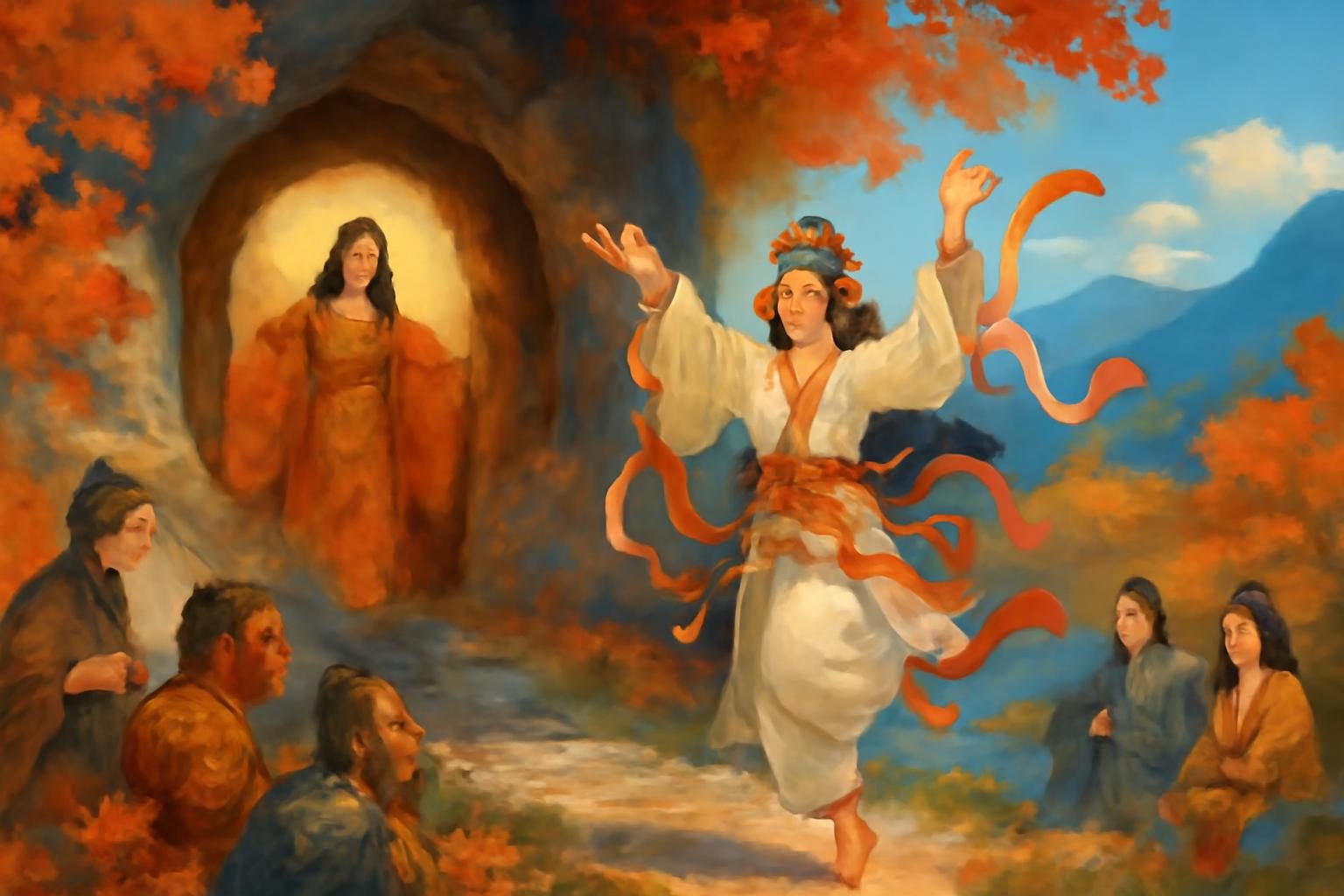
    According to legend, the sun goddess Amaterasu, distressed by her brother Susanoo’s misbehavior, hid herself in a cave in Takachiho, plunging the world into darkness. The other gods, desperate to bring light back to the world, gathered outside the cave. Ame-no-Uzume, the goddess of dawn and revelry, performed a dance that caused the gods to laugh uproariously. Curious about the commotion, Amaterasu peeked out, and a mirror reflected her image, luring her out and restoring light to the world.

    This story is not merely a myth but a reflection of the cultural values that emphasize the power of community and collective action. The gathering of the gods symbolizes the importance of unity and cooperation in overcoming challenges. Visitors to Takachiho can feel the weight of this legend as they explore the sites associated with it, each location a testament to the enduring power of these ancient stories.

    LEGEND: The Role of Ame-no-Uzume

    Ame-no-Uzume’s dance is a pivotal moment in the legend, showcasing the power of joy and laughter. Her performance was not just a simple dance but a divine act that brought the gods together in unity. The laughter and clamor outside the cave were so compelling that Amaterasu could not resist seeing what was happening, ultimately leading to her emergence and the return of light.

    The dance of Ame-no-Uzume is celebrated in various cultural expressions, including the Yokagura dances, which are deeply rooted in the traditions of Takachiho. These performances highlight the role of art and festivity in spiritual practices, illustrating how creativity can bridge the gap between the human and the divine. As visitors witness these dances, they are reminded of the joyous spirit that Ame-no-Uzume embodies.

    Amaterasu peeking from cave entrance while Ame-no-Uzume dances, surrounded by autumn foliage and gods.
    AI生成イメージ / AI-generated illustration (not a photograph of the actual place)

    Exploring Amanoiwato Shrine and Viewing the Sacred Cave

    FACT: Amanoiwato Shrine’s Sacred Grounds

    Amanoiwato Shrine stands near the legendary cave in Takachiho Town, Miyazaki Prefecture. This shrine is a place of deep reverence, where visitors can connect with the myth of Amaterasu. The cave itself is considered the shrine’s divine body (go-shintai) and cannot be entered directly. Instead, visitors can view it from a distance, ensuring the sanctity of this sacred site is preserved.

    The shrine’s location is steeped in natural beauty, with lush surroundings that enhance the spiritual atmosphere. As visitors approach the shrine, they are enveloped in a sense of tranquility and reverence, a reminder of the sacredness of the land and its connection to the divine. The careful preservation of the site reflects the community’s respect for its historical and spiritual significance.
    FACT: Viewing the Cave

    Visitors can view the sacred cave from a rear observation deck behind the West Main Shrine (Nishi Hongū) via free guided tours conducted by a Shinto priest. This unique experience allows visitors to appreciate the spiritual significance of the site while learning about its history and cultural importance. The guided tour provides insights into the rituals and traditions associated with the shrine, enhancing the visitor’s understanding of its sacred nature.

    The observation deck offers a serene vantage point from which to contemplate the legend of Amaterasu. The guidance of a Shinto priest adds depth to the experience, as they share stories and rituals that have been passed down through generations. This connection to the past is palpable, providing a bridge between ancient traditions and modern visitors.

    FACT: Etiquette and Reverence

    When visiting Amanoiwato Shrine, it is important to observe proper etiquette. Visitors should remain quiet within the shrine precincts to maintain the sanctity of the environment. The guided tour to view the cave is free and conducted with a sense of reverence, emphasizing the spiritual significance of the site. At Amano Yasukawara, visitors are encouraged to avoid disturbing the stone stacks, which are offerings made by worshippers as acts of devotion.

    Respectful behavior is essential to preserving the spiritual atmosphere of these sacred sites. Visitors are reminded that their presence is part of a long tradition of pilgrimage and worship. By honoring these customs, they contribute to the ongoing legacy of the shrine, ensuring that future generations can also experience its profound serenity.

    Amanoiwato Shrine (30722535953) - Ema at Amanoiwato Shrine
    “Amanoiwato Shrine (30722535953)” (Ema at Amanoiwato Shrine) by David Stanley from Nanaimo, Canada, CC BY 2.0, source, via Wikimedia Commons

    The Mythic Cavern of Amano Yasukawara and Stone Offerings

    FACT: Amano Yasukawara’s Sacred Gathering

    A short 10-minute riverside path from Amanoiwato Shrine leads to Amano Yasukawara, a cavern where the gods are said to have held council to plan how to lure Amaterasu from hiding. This mystical site is marked by thousands of stone stacks along the riverbank, offerings made by worshippers over the years. These stone stacks are a testament to the enduring power of the legend and the devotion it inspires.

    The path to Amano Yasukawara is a journey through nature, offering moments of reflection and connection with the divine. The cavern itself is a place where the boundaries between the human and the divine seem to blur, inviting visitors to contemplate the mysteries of the universe. The stone offerings are a physical manifestation of the prayers and hopes of countless pilgrims, each stack a silent witness to the faith and devotion that have characterized this site for centuries.

    FACT: The Significance of Stone Offerings

    The stone stacks at Amano Yasukawara are more than just physical structures; they represent the prayers and hopes of those who have visited this sacred place. Each stack is a personal offering, a symbol of connection between the worshipper and the divine. The practice of stacking stones is a way for visitors to leave a part of themselves at this holy site, contributing to the spiritual atmosphere that permeates the area.

    These offerings are a testament to the enduring power of faith and the human desire to connect with something greater than oneself. As visitors add their own stones to the growing collection, they become part of a living tradition that transcends time and space. This act of devotion is a reminder that the legends of Takachiho continue to inspire and resonate with people from all walks of life.

    Experiencing Takachiho’s Sacred Yokagura Dances

    FACT: The Yokagura Tradition

    Takachiho is also renowned for its Yokagura, a series of 33 mythic dances rooted in the Amano Iwato legend. Designated an Important Intangible Folk Cultural Property in 1978, these dances are performed to honor the gods and celebrate the rich tapestry of Japanese mythology. At Takachiho Shrine’s Kagura Hall, four representative dances from the 33-dance cycle are performed nightly by local residents known as hoshadon.

    The Yokagura dances are a vibrant expression of Takachiho’s cultural heritage, blending music, movement, and storytelling to bring the legends to life. Each performance is a carefully choreographed ritual that conveys the essence of the myths, allowing audiences to experience the stories in a dynamic and engaging way. The dedication of the performers ensures that these traditions are preserved and passed down through generations.

    FACT: Nightly Performances

    The Yokagura performances are held nightly from mid-November to early February, with full all-night versions in village kagura lodgings. The Kagura Hall nightly shows begin at 8 PM and last about one hour, offering visitors a captivating glimpse into the spiritual and cultural heritage of Takachiho. These performances are not merely entertainment; they are a living tradition that connects the past with the present, allowing both locals and visitors to experience the power of myth through dance.

    Attending a Yokagura performance is an immersive experience that transports audiences to a world where gods and humans coexist. The rhythmic drumming and vibrant costumes create an atmosphere of celebration and reverence, inviting spectators to participate in the timeless rituals that define Takachiho’s identity. These dances are a testament to the enduring power of myth and the role of art in preserving cultural heritage.

    FACT: The Role of Hoshadon

    The hoshadon, local residents who perform the Yokagura dances, play a crucial role in preserving this cultural heritage. Their dedication to the art form ensures that the stories and traditions of Takachiho continue to be passed down through generations. By participating in these performances, they help sustain the cultural identity of the region and keep the legend of Amaterasu alive in the hearts of all who witness the dances.

    The hoshadon are not only performers but also cultural custodians, committed to maintaining the authenticity and integrity of the Yokagura tradition. Their involvement in the performances is a reflection of their deep connection to the community and its history. Through their efforts, the Yokagura dances remain a vibrant and essential part of Takachiho’s cultural landscape, inspiring both locals and visitors alike.

    天岩戸神社の神楽殿 - panoramio - Amanoiwato-jinja, Photos from Panoramio
    “天岩戸神社の神楽殿 – panoramio” (Amanoiwato-jinja, Photos from Panoramio) by sk01, CC BY-SA 3.0, source, via Wikimedia Commons
    Locator map of Japan: Takachiho, Miyazaki
    Legend site: Takachiho, Miyazaki — Source: Map of Japan with highlight on 45 Miyazaki prefecture.svg; Map: Lincun, CC BY-SA 3.0, via Wikimedia Commons

    Regional guide

    Location: Takachiho, Miyazaki Prefecture

    • Amanoiwato Shrine (West Main Shrine observation deck) (Takachiho Town) — source
    • Takachiho Shrine Kagura Hall (Takachiho Town) — source

    Sources

    About the author — JAPAN ESSENCE Editorial Team. Our mission is to bring you Japan’s legends, myths, festivals and living traditions, through both historical fact and the stories passed down over generations.

  • Exploring Sefa-utaki: Okinawa’s Most Sacred Grove and UNESCO Site

    Exploring Sefa-utaki: Okinawa’s Most Sacred Grove and UNESCO Site

    In the serene landscape of Nanjo, Okinawa Prefecture, lies Sefa-utaki, a site steeped in legend and history. This sacred grove, part of the UNESCO World Heritage ‘Gusuku Sites and Related Properties of the Kingdom of Ryukyu,’ offers a glimpse into the spiritual heart of the Ryukyu Kingdom.

    Yuinchi (Sefautaki)
    “Okinawa Nanjo Sefa-utaki Gusuku site Yuinchi 07” by Hyppolyte de Saint-Rambert, CC BY 4.0, via Wikimedia Commons

    Introduction to Sefa-utaki: Okinawa’s Sacred World Heritage Site

    FACT: A UNESCO World Heritage Site

    Sefa-utaki, located in Nanjo, Okinawa, is recognized as a UNESCO World Heritage Site, celebrated for its cultural and historical significance. It was designated a National Historic Site in 2018, underscoring its importance in the Ryukyuan cultural landscape. The site is renowned for its natural rock formations and dense forest, which contribute to its sacred atmosphere. These natural features create a serene and mystical environment that has been revered for centuries.

    FACT: The Sacred Prayer Points

    Sefa-utaki is home to several revered prayer points, including Ufugūi, Yuinchi, Sangūi, and Chōnohana. These areas are deeply tied to the religious practices of the Ryukyu Kingdom and are named after facilities in Shuri Castle, reflecting their historical and spiritual connections. Each prayer point serves a unique purpose in the rituals conducted here, and their names evoke the sacred traditions of the past. However, to protect the sanctity of the site, entry into the Sangūi area is now prohibited, ensuring that the spiritual integrity of Sefa-utaki is preserved for future generations.

    Illustration of goddess Amamikiyo descending to a lush grove, vivid colors, ukiyo-e style.
    AI生成イメージ / AI-generated illustration (not a photograph of the actual place)

    The Legend of Amamikiyo and the Creation of the Ryukyu Islands

    LEGEND: The Descent of Amamikiyo

    According to legend, the creator goddess Amamikiyo descended to Earth at Sefa-utaki after first arriving on Kudaka Island. The story of her descent is a cornerstone of Ryukyuan mythology, symbolizing the divine origins of the islands. She is said to have established the sacred grove at Sefa-utaki, which became a focal point for spiritual activities. Following this, she is believed to have built Tamagusuku Castle and Chinen Castle, laying the foundations for the Ryukyu Kingdom and its cultural heritage.

    FACT: Amamikiyo’s Role in Ryukyuan Mythology

    Amamikiyo is revered as the Ryukyuan creator goddess who, along with Shinerikyu, created the land, people, and several utaki (sacred sites). Her mythological journey from Kudaka Island to Sefa-utaki is a cornerstone of Ryukyuan spiritual beliefs. The goddess’s actions are seen as the genesis of the Ryukyu Islands, and her influence is evident in the numerous sacred sites attributed to her creation. This mythology underscores the deep connection between the people of Okinawa and their spiritual landscape.

    Okinawa Nanjo Sefa-utaki Gusuku site Yuinchi 02 - Yuinchi (Sefautaki)
    “Okinawa Nanjo Sefa-utaki Gusuku site Yuinchi 02” (Yuinchi (Sefautaki)) by Hyppolyte de Saint-Rambert, CC BY 4.0, source, via Wikimedia Commons

    Royal Rituals and the History of the Ryukyu Kingdom

    FACT: Rituals at Sefa-utaki

    Sefa-utaki served as a focal point for royal and priestess rituals in the Ryukyu Kingdom. It was the site for the inauguration of the Kikoe-ōgimi, the supreme priestess, and the Oaraori, a royal pilgrimage. These rituals highlight the site’s central role in the spiritual and political life of the kingdom, where the divine and royal spheres intersected. The Kikoe-ōgimi played a crucial role in maintaining the spiritual well-being of the kingdom, and her inauguration at Sefa-utaki signified the divine approval of her role.

    Visiting Nanjo: Tamagusuku Castle and Surrounding Landmarks

    FACT: Tamagusuku Castle Ruins

    Located in Nanjo, the Tamagusuku Castle Ruins are tied to the legend of Amamikiyo, who is said to have built the castle after descending to Earth. While archaeological evidence of deity involvement is mythical, the ruins remain a significant historical site reflecting the architectural style of the Ryukyu Kingdom. Visitors to the ruins can explore the remnants of this once-majestic castle, gaining insight into the region’s rich history and the enduring legacy of its legends.

    FACT: The Cultural and Spiritual Significance of Sefa-utaki

    Sefa-utaki is considered one of the most sacred sites in Okinawa. Traditionally, it was off-limits to men, emphasizing its spiritual purity and the reverence in which it was held. The site’s cultural and spiritual significance is deeply embedded in the identity of the Okinawan people, serving as a reminder of their ancestral roots and the divine origins of their land. As visitors walk through the sacred grove, they are enveloped in the tranquility and mysticism that have characterized Sefa-utaki for centuries.

    Okinawa Nanjo Sefa-utaki Gusuku site Yuinchi 05 - Yuinchi (Sefautaki)
    “Okinawa Nanjo Sefa-utaki Gusuku site Yuinchi 05” (Yuinchi (Sefautaki)) by Hyppolyte de Saint-Rambert, CC BY 4.0, source, via Wikimedia Commons
    Locator map of Japan: Nanjo, Okinawa
    Legend site: Nanjo, Okinawa — Source: Map of Japan with highlight on 47 Okinawa prefecture.svg; Map: Lincun, CC BY-SA 3.0, via Wikimedia Commons

    Regional guide

    Location: Nanjo, Okinawa Prefecture

    • Tamagusuku Castle Ruins (Nanjo) — source

    Sources

    About the author — JAPAN ESSENCE Editorial Team. Our mission is to bring you Japan’s legends, myths, festivals and living traditions, through both historical fact and the stories passed down over generations.