Category: Legends

伝説

  • Sannenzaka Kyoto: Meaning, the Three-Year Legend and Walking Tips

    Sannenzaka Kyoto: Meaning, the Three-Year Legend and Walking Tips

    Quick answer: Sannenzaka (三年坂, “Three-Year Slope”) is a stone-stepped lane in Kyoto’s Higashiyama district that climbs from the Yasaka area toward Kiyomizu-dera Temple. There is no single proven origin for the name. Old Kyoto guidebooks give three traditional explanations (theories, not established fact): that it was opened in the third year of the Daidō era (808); that it is Sanneizaka, the “slope of safe childbirth” linked to the Koyasu (childbirth) pagoda of Kiyomizu-dera; or that it is Sainenzaka, the “pray-again slope.” Its famous legend says that if you trip and fall here, you will die within three years. That superstition was already in print in 1679, and gourd charms were once sold along the slope to bring back the lost soul. Today the slope is the heart of the Sanneizaka Preservation District, protected since 1976. Below: the meaning, the history, the legend (clearly labelled as tradition), what to see, how to get there and a few walking tips.

    Sannenzaka street, Kyoto
    “Sannenzaka street, Kyoto (3811257874)” by Andrea Schaffer from Sydney, Australia, CC BY 2.0, via Wikimedia Commons

    What does “Sannenzaka” mean?

    According to Kyoto City’s official signboard for the slope, this flight of stone-flagged steps between Yasaka and Kiyomizuzaka goes by three names. Each comes with its own explanation, and all three are traditions recorded in old guidebooks (諸説, “several theories”) rather than proven history:

    • Theory 1 — Sannenzaka (三年坂), “Third-Year Slope”. The 1762 guidebook Kyō-machi Kagami, as quoted by Kyoto City, says it was called this because it was opened in the third year of Daidō, which is 808. We found no other official record of the slope’s opening, so treat this date as what an 18th-century book reports, not as a confirmed fact.
    • Theory 2 — Sanneizaka (産寧坂), “Slope of Safe Childbirth”. Kyoto City’s signboard links this name to Taisan-ji, a sub-temple of Kiyomizu-dera above the slope, whose “Koyasu” (childbirth) pagoda was said to answer prayers for an easy birth. 産 means “to give birth” and 寧 means “peaceful”. Kiyomizu-dera’s own precinct guide confirms that the Koyasu Pagoda, an Important Cultural Property rebuilt in 1500, enshrines Koyasu Kannon and has long drawn prayers for safe childbirth. Today the pagoda stands inside the temple grounds. The temple’s page does not itself discuss the slope’s name.
    • Theory 3 — Sainenzaka (再念坂), “Pray-Again Slope”. According to the 1658 guidebooks cited by Kyoto City, people who had already prayed at Kiyomizu-dera prayed once more as they walked back down this slope.

    Kyoto City notes that all three names already appear in two guidebooks published in 1658, Kyō-warabe and Rakuyō Meishoshū. In other words, even 360 years ago nobody agreed on a single answer, and that is still the honest answer today.

    History: from temple approach to preservation district

    Kyoto City’s tourism site explains that this part of Higashiyama, home to Yasaka Shrine and Kiyomizu-dera, was settled even before the Heian capital was founded. The town grew up along the old pilgrim routes to these temples and shrines, including the stone steps and winding stone-paved lanes of Sannenzaka and Ninenzaka. Temple buildings such as the Yasaka Pagoda and Kōdai-ji stand together with townhouses (machiya) built from the late Edo period to the Taishō period.

    In 1976, Kyoto City designated the Sanneizaka area a Preservation District for Groups of Historic Buildings under the Law for the Protection of Cultural Properties. It was also among the first districts the national government selected as an Important Preservation District for Groups of Historic Buildings.

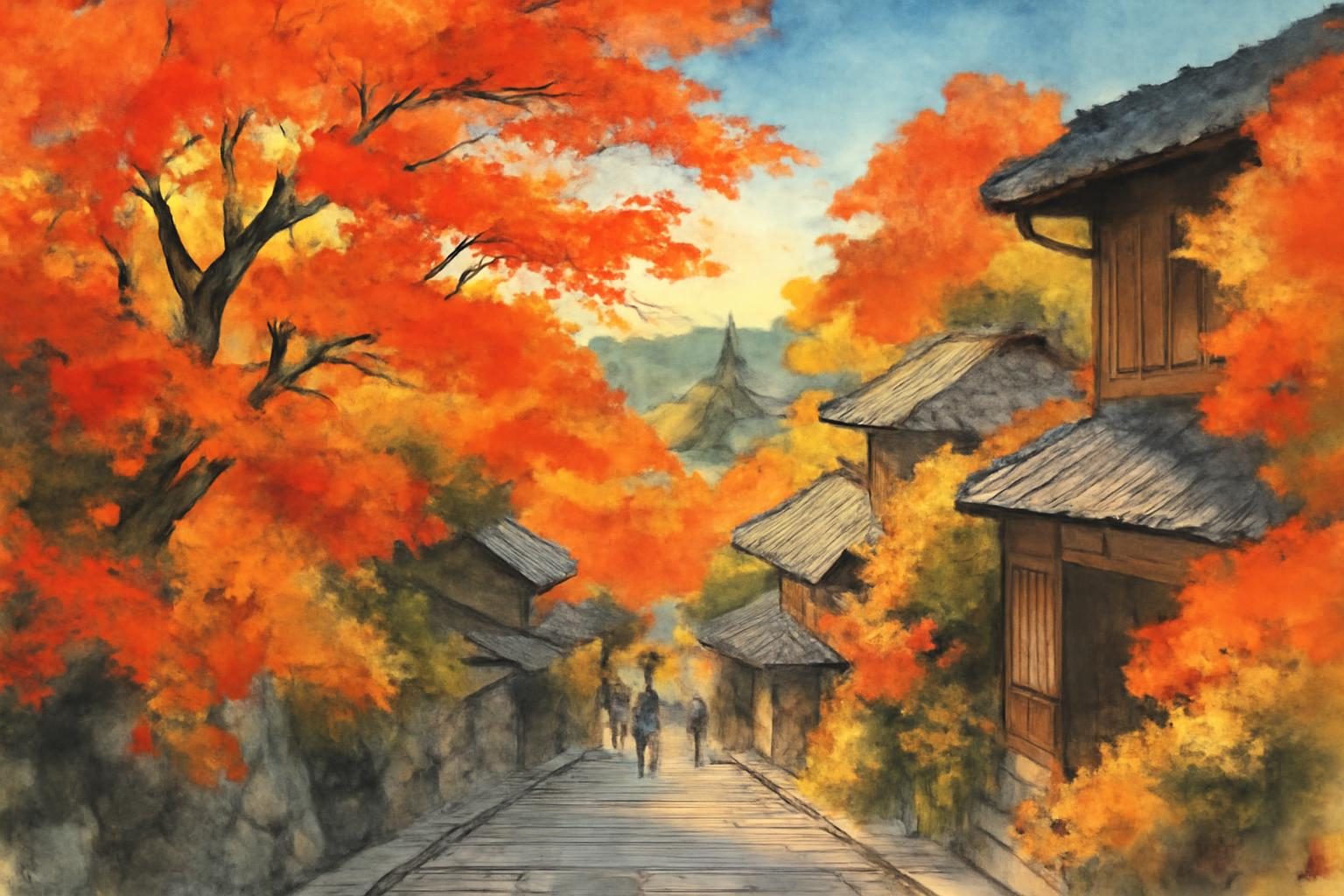
    Painterly ukiyo-e scene of Sannenzaka slope in Kyoto, with vivid autumn colors under a clear blue sky.
    AI生成イメージ / AI-generated illustration (not a photograph of the actual place)

    The legend: what happens if you fall on Sannenzaka?

    Tradition: “Fall here and you will die within three years”

    This section describes a folk belief, not a historical fact. According to Kyoto City’s signboard, the sayings that if you trip and fall on Sannenzaka “you will die within three years,” or “your life will be three years shorter,” were already recorded in the guidebook Keishi Junranshū, published in 1679.

    Tradition: the gourd that brings your soul back

    The same source records a charm that went with the curse. A gourd (hyōtan) was said to call back the soul that escaped from your body when you fell, and so in the past the street was lined with shops selling gourds.

    Our note: No source says why the belief began. Many people today read it as a reminder that steep stone steps and crowds need care. Whatever its origin, it is good advice on this slope.

    Sannenzaka-kyoto - Taken with Canon PowerShot SX230 HS, Sannei-zaka
    “Sannenzaka-kyoto” (Taken with Canon PowerShot SX230 HS, Sannei-zaka) by Aporon999, CC BY-SA 3.0, source, via Wikimedia Commons

    Where to see it: what to look for on and around the slope

    • The slope itself. The stone steps and the wooden townhouses on either side are the reason the district is protected.
    • The roofs. Look up at the tiled roofs of the machiya and temple halls, and at the ridge ends where demon-faced tiles often sit. We explain what those faces are for in Why are there demon faces on Japanese roofs?
    • Kiyomizu-dera and its Koyasu Pagoda. The “safe childbirth” theory points uphill to Kiyomizu-dera, where the Koyasu Pagoda stands in the temple grounds (Kiyomizu-dera’s precinct map lists it as No. 13). For the temple’s own legends, see Kiyomizu-dera Temple and Otowa Waterfall: history and legends.
    • Ninenzaka and the Yasaka Pagoda. Downhill, the route continues into Ninenzaka and toward the Yasaka Pagoda and Kōdai-ji, all inside the same preservation district. For a walk-focused route along the shops, read Walking Sannenzaka: Kyoto’s historic stone slope.

    If Sannenzaka’s curse makes you want more of Kyoto’s eerie side, the city has other places where legend and real streets meet, such as Ichijo Modoribashi, the bridge of return, and the stories gathered in Kyoto’s ghost stories.

    Desolation of Sannenzaka by Covid19 (1) - COVID-19 pandemic in Kyoto prefecture
    “Desolation of Sannenzaka by Covid19 (1)” (COVID-19 pandemic in Kyoto prefecture) by 京都新観光提言懇談会メンバー, CC BY-SA 4.0, source, via Wikimedia Commons

    How to get to Sannenzaka (access)

    • By Kyoto City Bus to the district. Kyoto City’s official tourism site gives “Higashiyama Yasui” or “Gojozaka” bus stops, then about 5 minutes on foot to the Sanneizaka Preservation District. Kyoto Prefecture’s official tourism site gives the “Kiyomizu-michi” stop, then about 10 minutes on foot.
    • From JR Kyoto Station. Kiyomizu-dera’s official access page says to take City Bus No. 206 (for Kitaoji Bus Terminal via Higashiyama-dori) or No. 100, get off at Gojozaka and walk east about 10 minutes to the temple. Sannenzaka leads off Kiyomizuzaka, the approach to the temple, as Kyoto City’s signboard describes.
    • From Keihan Kiyomizu-Gojo Station. About 25 minutes on foot to Kiyomizu-dera, according to the temple.
    • By car. Kiyomizu-dera has no parking lot of its own, and the temple strongly recommends public transport or a taxi because nearby lots fill up in busy seasons.

    Bus routes and stops can change, so check the official sites before you go (details checked October 11, 2026).

    Walking tips

    • Wear shoes with grip. Sannenzaka is a flight of stone steps, not a smooth path, so take it slowly, especially in rain.
    • Remember it is a living street. The district is lived in and the townhouses are protected buildings. Keep to the street, and don’t block doorways when you stop for photos.
    • Walk it as part of a loop. Climb via Gojozaka or Kiyomizuzaka to the temple, then come down Sannenzaka and Ninenzaka toward the Yasaka Pagoda. That follows the “pray again on the way down” idea behind the name Sainenzaka.
    Locator map of Japan: Kyoto City, Kyoto
    Legend site: Kyoto City, Kyoto — Source: Map of Japan with highlight on 26 Kyoto prefecture.svg; Map: Lincun, CC BY-SA 3.0, via Wikimedia Commons

    From the slope to the roofs

    As you walk down Sannenzaka, take a moment to look at the tiled roofs of the old townhouses. Those roofs, and the fierce onigawara faces on them, are the craft our own workshops are built around.

    Sources

    About the author — JAPAN ESSENCE Editorial Team. Our mission is to bring you Japan’s legends, myths, festivals and living traditions, through both historical fact and the stories passed down over generations.

  • Visiting Jōren Falls: Shizuoka’s Legendary Spider Woman Waterfall

    Visiting Jōren Falls: Shizuoka’s Legendary Spider Woman Waterfall

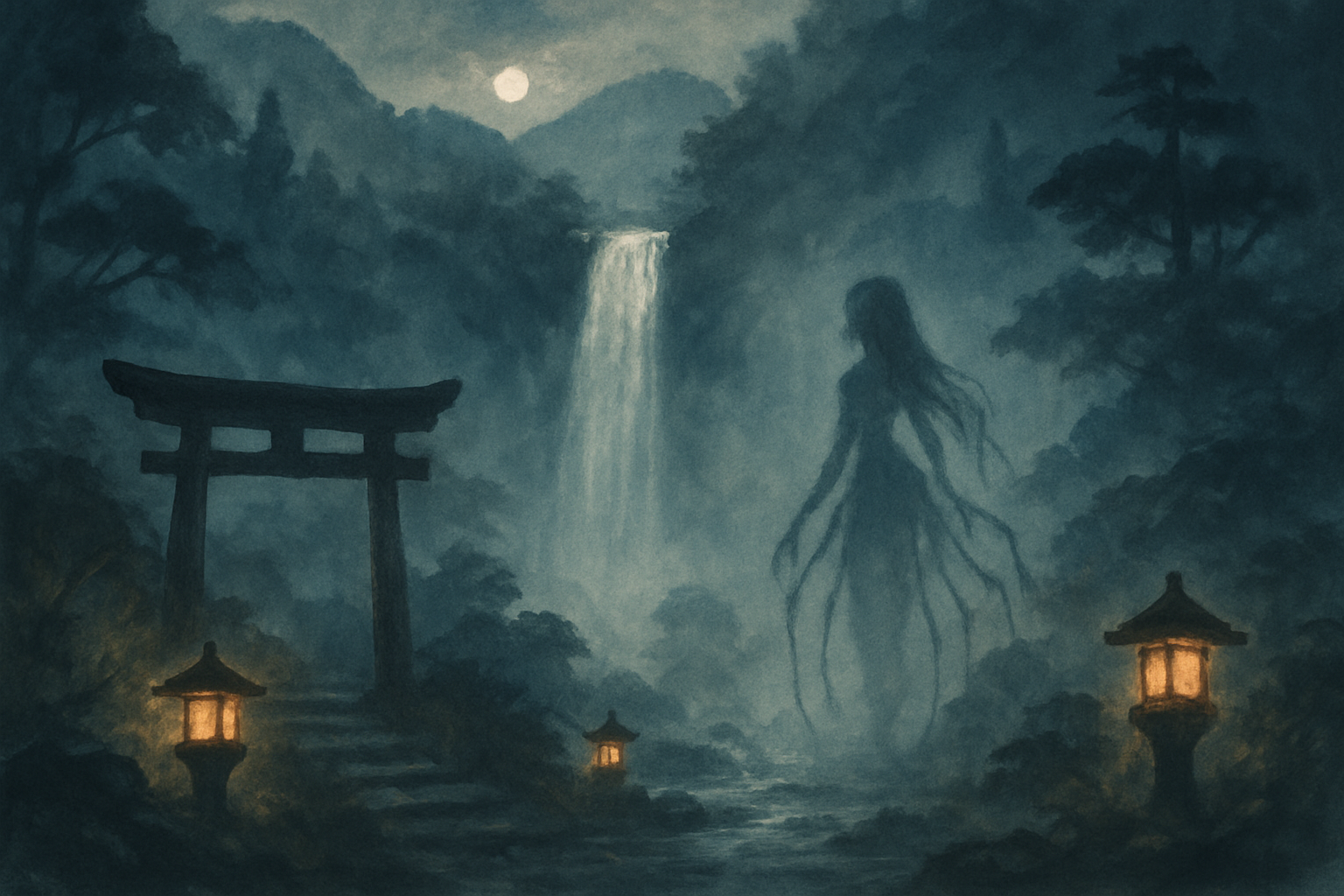
    Jōren Falls, located in Izu City, Shizuoka Prefecture, is renowned not only for its breathtaking natural beauty but also for the captivating legend of the Jorōgumo, a mythical spider woman said to inhabit the falls.

    A mystical waterfall scene inspired by Japanese folklore, with mist, silhouettes, and lanterns creating an enchanting atmosph
    AI生成イメージ / AI-generated illustration (not a photograph of the actual place)

    Introduction to Jōren Falls in Shizuoka Prefecture

    FACT: A Natural Monument and Top Waterfall

    Jōren Falls is situated in the Yugashima district of Izu City, nestled within the lush landscapes of Shizuoka Prefecture. This stunning waterfall is part of the upper reaches of the Kano River and has been designated as a Shizuoka Prefectural Natural Monument. It is also celebrated as one of “Japan’s Top 100 Waterfalls,” making it a must-visit destination for nature enthusiasts and travelers alike. The combination of its majestic cascade and the verdant surroundings creates a serene and picturesque setting that captivates visitors year-round.

    The recognition as a top waterfall underscores the aesthetic and ecological value of Jōren Falls. Visitors can experience the tranquility of the cascading waters, which flow down a height of approximately 25 meters, creating a mesmerizing spectacle. The sound of the water crashing into the pool below adds to the immersive experience, making it a favored spot for those seeking solace in nature.

    FACT: Geological Significance

    Jōren Falls is not only a site of natural beauty but also of geological importance. It lies within the Izu Peninsula Geopark, a Global Geopark recognized for its unique volcanic geology. The area features fascinating lava flows and columnar joints, offering visitors a glimpse into the dynamic geological history of the region. These geological formations provide insight into the volcanic activity that shaped the landscape, making Jōren Falls a point of interest for both geologists and tourists interested in the natural sciences.

    The Izu Peninsula Geopark’s designation highlights the significance of preserving the area’s geological features. Visitors to Jōren Falls can observe the intricate patterns formed by the cooling and solidification of lava, which are a testament to the powerful natural forces that have sculpted the terrain over millennia. This geological backdrop enhances the allure of the falls, providing a deeper understanding of the natural world.

    The Legend of the Jorōgumo Spider Woman

    LEGEND: The Enchanting Spider Woman

    According to Japanese folklore, Jōren Falls is the dwelling place of a Jorōgumo, a mythical spider that can transform into a seductive woman. This creature is said to lure unsuspecting men to their doom with her beauty and charm. The legend of the Jorōgumo adds an element of mystery and allure to the already enchanting setting of Jōren Falls. The story is a classic example of Japanese yokai folklore, where supernatural beings often interact with humans, sometimes with dire consequences.

    The Jorōgumo legend is deeply rooted in the cultural imagination, reflecting themes of deception and transformation. The spider woman’s dual nature symbolizes the duality of beauty and danger, a common motif in folklore. Visitors to Jōren Falls can sense the eerie yet fascinating aura that the legend imparts, enriching their experience of this natural wonder.

    LEGEND: The Tale of the Woodcutter

    One popular version of the legend tells of a woodcutter who accidentally dropped his axe into the pool beneath the falls. A beautiful woman emerged from the water to return his axe, but she made him promise to keep their encounter a secret. However, the woodcutter could not resist sharing his story at a banquet, and as a consequence, he died in his sleep, presumably ensnared by the Jorōgumo’s web. This tale serves as a cautionary story about the importance of keeping one’s word and the potential dangers of revealing secrets.

    The woodcutter’s tale underscores the moral lessons often found in folklore, emphasizing the value of discretion and the perils of breaking promises. It also highlights the Jorōgumo’s cunning nature, as she uses the woodcutter’s own actions against him. This narrative invites reflection on human behavior and the supernatural consequences that folklore suggests can follow.

    LEGEND: The Spiderweb Trap

    Another tale recounts how a Jorōgumo attempted to ensnare a man by wrapping his leg in spiderwebs. The man cleverly transferred the web to a nearby stump, which was then pulled into the water, revealing the true nature of the Jorōgumo’s trap. These stories have merged over time to form the famous lore specific to Jōren Falls, captivating the imaginations of locals and visitors alike. The narrative of the Jorōgumo is a testament to the rich tapestry of Japanese folklore, where human ingenuity often plays a role in overcoming supernatural challenges.

    This story of the spiderweb trap illustrates the theme of wit and resourcefulness triumphing over malevolent forces. It serves as an allegory for overcoming adversity through cleverness and quick thinking, resonating with audiences who appreciate tales of human triumph against supernatural odds.

    Izu Joren-Wasserfall 09 - Joren Falls
    “Izu Joren-Wasserfall 09” (Joren Falls) by Zairon, CC BY-SA 4.0, source, via Wikimedia Commons

    Exploring the Surrounding Landscape and Wasabi Fields

    FACT: The Wasabi Fields of Izu

    Adjacent to Jōren Falls are fields dedicated to the cultivation of Izu wasabi, a renowned specialty of the region. The traditional Tatami-ishi style of wasabi cultivation is practiced here, adding to the cultural and natural heritage of the area. These wasabi fields not only provide a picturesque backdrop to the falls but also contribute to the local economy and culinary traditions. Visitors to the area can witness the meticulous process of wasabi cultivation, which involves maintaining the delicate balance of water flow and nutrient-rich soil, essential for growing high-quality wasabi.

    The presence of these wasabi fields enhances the visitor experience, offering a unique glimpse into the agricultural practices that define the region. The Tatami-ishi method, characterized by its stone-lined beds, is a testament to the ingenuity and tradition of local farmers. This method not only ensures optimal growing conditions but also preserves the natural beauty of the landscape, making it a harmonious addition to the Jōren Falls area.

    Planning Your Visit to Jōren Falls

    Visitors to Jōren Falls can enjoy the serene beauty of the waterfall while immersing themselves in the rich folklore and cultural heritage of the region. The combination of natural splendor and mythical intrigue makes Jōren Falls a unique destination that offers both relaxation and a touch of mystery. Whether you’re drawn by the allure of the Jorōgumo legend or the tranquility of the surrounding nature, Jōren Falls promises an unforgettable experience. The area is accessible for day trips, and the nearby wasabi fields offer an additional layer of cultural exploration, making it an ideal spot for those looking to delve into the natural and mythical wonders of Japan.

    Planning a visit to Jōren Falls allows travelers to engage with the multifaceted attractions of the area. From the captivating legends to the geological marvels and cultural landscapes, the falls offer a comprehensive experience that appeals to diverse interests. Whether exploring the stories of the Jorōgumo or savoring the flavors of local wasabi, visitors are sure to find a rich tapestry of experiences awaiting them at Jōren Falls.

    Izu Joren-Wasserfall 06 - Joren Falls
    “Izu Joren-Wasserfall 06” (Joren Falls) by Zairon, CC BY-SA 4.0, source, via Wikimedia Commons
    Locator map of Japan: Izu City, Shizuoka
    Legend site: Izu City, Shizuoka — Source: Map of Japan with highlight on 22 Shizuoka prefecture.svg; Map: Lincun, CC BY-SA 3.0, via Wikimedia Commons

    About the author — JAPAN ESSENCE Editorial Team. Our mission is to bring you Japan’s legends, myths, festivals and living traditions, through both historical fact and the stories passed down over generations.

  • Exploring the Oeyama Oni Legends: Myth and Hiking in Kyoto’s Fukuchiyama

    Exploring the Oeyama Oni Legends: Myth and Hiking in Kyoto’s Fukuchiyama

    In the heart of Kyoto Prefecture, the city of Fukuchiyama holds the mystical allure of the Oeyama Oni legends, where myth and nature intertwine. This region, rich in folklore, invites adventurers and history enthusiasts alike to explore its storied landscapes.

    Introduction to Oeyama and the Legend of Shuten-doji

    FACT: The Oeyama Mountain Range

    Oeyama, a mountain range that stretches across the municipalities of Fukuchiyama, Yosano, Miyazu, and Maizuru, is renowned for its seven peaks, including the tallest, Mt. Senjogatake, which rises to 832 meters. This range forms part of a quasi-national park, offering breathtaking views and diverse hiking opportunities. The area is not only a natural wonder but also a cultural treasure trove, deeply embedded in Japanese folklore. Visitors to Oeyama can enjoy a variety of outdoor activities, from hiking to bird watching, all while soaking in the rich history that permeates the region. The mountain’s lush greenery and diverse wildlife make it a haven for nature lovers.

    LEGEND: The Tale of Shuten-doji

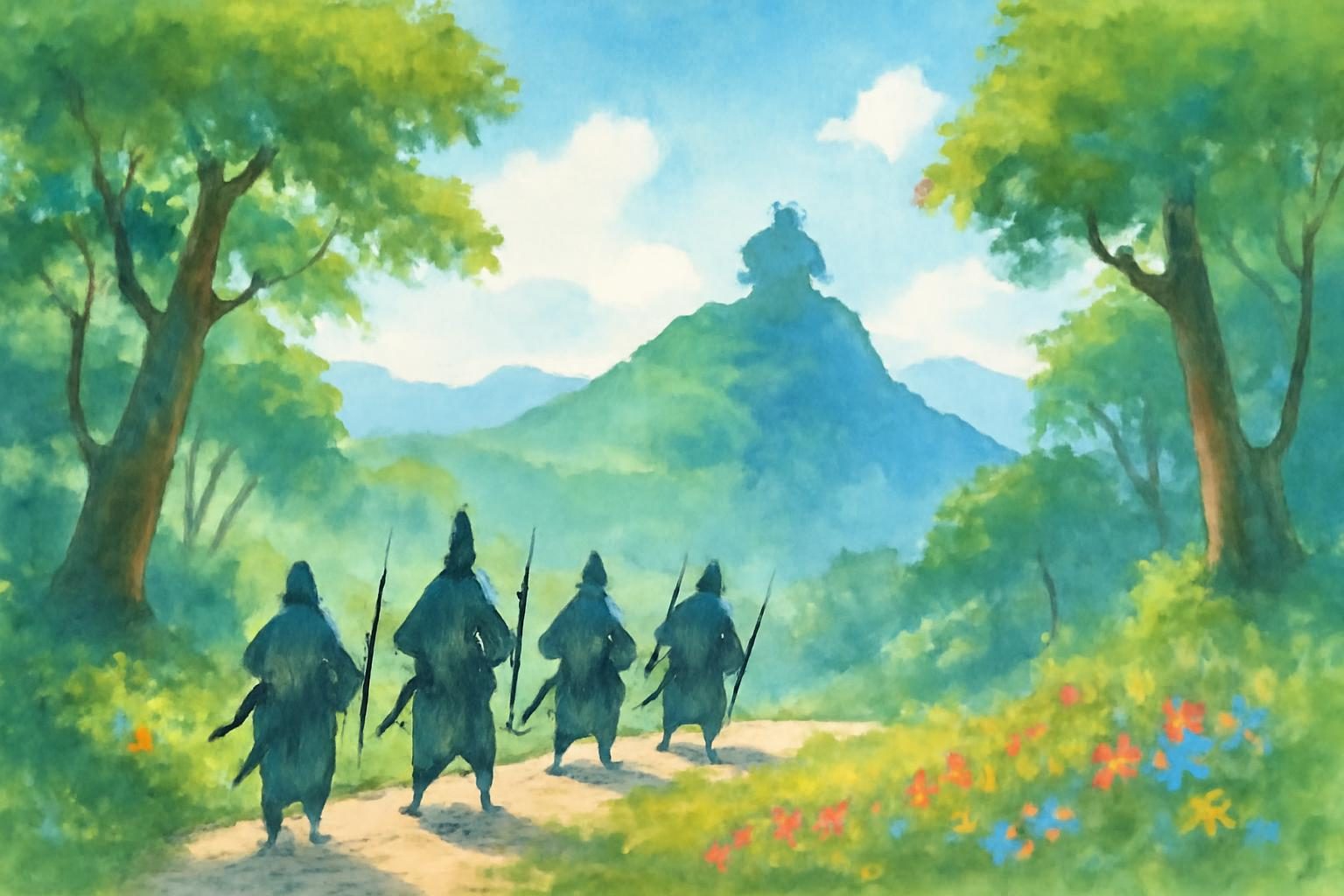
    According to local legend, Shuten-doji was a fearsome oni (demon) who abducted people and brought them to his lair in Oeyama. The tale recounts how Minamoto no Yorimitsu, also known as Raiko, was tasked with defeating this demon. With the help of his loyal retainers, Raiko infiltrated Shuten-doji’s fortress, ultimately slaying the demon and freeing the captives. This story is celebrated in local folklore and prominently featured in the Japan Oni Exchange Museum. The legend of Shuten-doji is not just a tale of heroism but also a reflection of the cultural and moral values of the time, emphasizing themes of bravery, loyalty, and justice.

    Watercolor of warriors approaching a mythical mountain lair under a vivid blue sky, surrounded by lush greenery.
    AI生成イメージ / AI-generated illustration (not a photograph of the actual place)

    Hiking the Historic Oeyama Oni Trail

    FACT: The Oni Trail

    The Oeyama ‘Oni Trail’ is a captivating route that follows ancient paths, forest trails, and pilgrimage routes. This trail offers hikers a chance to immerse themselves in the region’s natural beauty and historical significance. Along the way, visitors can enjoy the scenic Futasegawa Gorge, spanned by the Shin-Dōji suspension bridge. Note: the Shin-Dōji Bridge is closed for repair from September to the end of December 2026 (planned), so it cannot be crossed during this period; please check Fukuchiyama City’s official Futase River gorge page for the latest status before visiting. The trail is well-marked, making it accessible for both seasoned hikers and casual walkers. As you traverse the path, you’ll encounter various landmarks that are steeped in legend, each telling a part of the story of Shuten-doji and Raiko.

    LEGEND: Raiko’s Journey

    As the legend goes, Raiko and his men traveled through these very paths on their quest to defeat Shuten-doji. The trail is said to be the same route they took to reach the demon’s lair, adding an element of adventure and mystery to the hiking experience. Visitors can imagine themselves following in the footsteps of these legendary warriors as they explore the trail. The journey is not just a physical trek but also a spiritual one, allowing hikers to connect with the past and the enduring legacy of the legends that define this region.

    Amaniwato Shrine(Fukuchiyama, Kyoto)-01 - Shrines in Fukuchiyama, Kyoto
    “Amaniwato Shrine(Fukuchiyama, Kyoto)-01” (Shrines in Fukuchiyama, Kyoto) by Gohachiyasu1214, CC BY-SA 4.0, source, via Wikimedia Commons

    Futasegawa Gorge and Demon-Related Landmarks

    FACT: Landmarks Along the Gorge

    Futasegawa Gorge is not only a natural marvel but also a site of cultural and historical importance. Near the gorge, visitors will find Raikō-no-Koshikake Iwa, or ‘Raiko’s resting rock,’ where the legendary warrior is said to have paused during his quest. Additionally, the area features ‘Oni’s Footprint’ stones and multiple oni statues, further connecting the landscape to the local legends. These landmarks provide a tangible connection to the stories that have been passed down through generations, offering a unique opportunity to explore the intersection of history and myth.

    LEGEND: The Significance of the Rocks

    According to legend, these rocks and footprints are remnants of the battle between Raiko and Shuten-doji. The stones are believed to bear the marks of the oni’s presence, serving as a tangible reminder of the epic confrontation that took place in this region. These features enhance the mystical atmosphere of the gorge, inviting visitors to ponder the ancient stories that have shaped the area’s identity. The presence of these landmarks adds a layer of depth to the hiking experience, allowing visitors to engage with the rich tapestry of folklore that defines Oeyama.

    Inside the Japan Oni Exchange Museum

    FACT: Exhibits and Artifacts

    The Japan Oni Exchange Museum, located at the foot of the Oeyama range in Fukuchiyama, offers a fascinating glimpse into the world of oni mythology. Established on the site of a former mine in 1993, the museum houses a collection of oni masks, onigawara (decorative roof tiles featuring oni faces), and exhibits dedicated to the Shuten-doji legend. It serves as a hub for cultural exchange and education, drawing visitors interested in Japan’s rich folklore. The museum’s exhibits provide insight into the cultural significance of oni, exploring their role in Japanese art, literature, and religion.

    LEGEND: Preserving the Oni Heritage

    The museum plays a crucial role in preserving and promoting the legends of Shuten-doji and the oni. Through its exhibits and events, the museum keeps these stories alive, ensuring that they continue to captivate and inspire future generations. Visitors can learn about the cultural significance of oni in Japanese history and explore the various interpretations of these mythical creatures. The museum also hosts workshops and lectures, offering a deeper understanding of the folklore and its impact on Japanese culture.

    Amaniwato Shrine Gozaishi(Fukuchiyama, Kyoto)-01 - Shrines in Fukuchiyama, Kyoto
    “Amaniwato Shrine Gozaishi(Fukuchiyama, Kyoto)-01” (Shrines in Fukuchiyama, Kyoto) by Gohachiyasu1214, CC BY-SA 4.0, source, via Wikimedia Commons

    Exploring Ancient Paths and Local Temples

    FACT: Historical Cobblestone Paths

    The region around Oeyama is home to ancient cobblestone paths that date back over 1300 years. These paths were once vital transportation routes through the mountains, and parts of them remain visible today. They offer a tangible connection to the past, allowing visitors to walk the same routes that have been traveled for centuries. The preservation of these paths is a testament to the region’s commitment to maintaining its historical heritage, providing a unique glimpse into the transportation and trade practices of ancient Japan.

    LEGEND: Raiko’s Prayer at Raidō-ji Temple

    Before embarking on his quest to defeat Shuten-doji, Raiko is said to have prayed at Raidō-ji (Raikō-ji) Temple in Fukuchiyama. The temple is a site of historical and spiritual significance, featuring the ‘nan-jamon-ja’ tree, which blooms in May. According to legend, Raiko’s prayers at this temple played a crucial role in his success against the demon. The temple remains a place of pilgrimage for those seeking to connect with the spiritual aspects of the legend, offering a peaceful retreat for reflection and meditation.

    Locator map of Japan: Fukuchiyama, Kyoto
    Legend site: Fukuchiyama, Kyoto — Source: Map of Japan with highlight on 26 Kyoto prefecture.svg; Map: Lincun, CC BY-SA 3.0, via Wikimedia Commons

    Sources

    About the author — JAPAN ESSENCE Editorial Team. Our mission is to bring you Japan’s legends, myths, festivals and living traditions, through both historical fact and the stories passed down over generations.

  • Kiyomizu-dera Temple & Otowa Waterfall: History and Legends of Kyoto

    Kiyomizu-dera Temple & Otowa Waterfall: History and Legends of Kyoto

    Kiyomizu-dera, located in the Higashiyama Ward of Kyoto Prefecture, is a temple steeped in history and legend, drawing visitors from around the world to its sacred grounds and the enigmatic Otowa Waterfall. This temple is not only a spiritual haven but also a cultural icon, embodying the rich tapestry of Kyoto’s historical and religious heritage.

    Otowa-no-taki waterfall, Kiyomizu-dera
    “Otowa-no-taki waterfall, Kiyomizu-dera (3810427595)” by Andrea Schaffer from Sydney, Australia, CC BY 2.0, via Wikimedia Commons

    Introduction to Kiyomizu-dera and Higashiyama Ward

    FACT: A Historic Temple in Kyoto

    Kiyomizu-dera, officially known as Otowa-san Kiyomizu-dera, is one of Kyoto’s most celebrated temples. Founded in 778, it stands as a testament to the city’s rich cultural heritage. The temple is renowned for its wooden stage that juts out from the main hall, offering breathtaking views of the cherry and maple trees below. This stage is particularly famous during the spring and autumn months when the surrounding landscape transforms into a vibrant tapestry of colors. The architectural design of the temple reflects the ingenuity of traditional Japanese craftsmanship, which has been preserved through centuries, making it a must-see for visitors interested in historical architecture.

    FACT: The Cultural Significance of Kiyomizu-dera

    Kiyomizu-dera is not merely a religious site but a cultural treasure that has been recognized worldwide. Its inclusion in the UNESCO World Heritage list as part of the Historic Monuments of Ancient Kyoto underscores its global significance. Visitors to Kiyomizu-dera can immerse themselves in a unique blend of natural beauty and architectural wonder, making it a must-visit destination for anyone exploring Kyoto. The temple’s cultural activities and festivals provide a window into the traditional practices that have been part of Japanese life for centuries, offering a rich, immersive experience for all who visit.

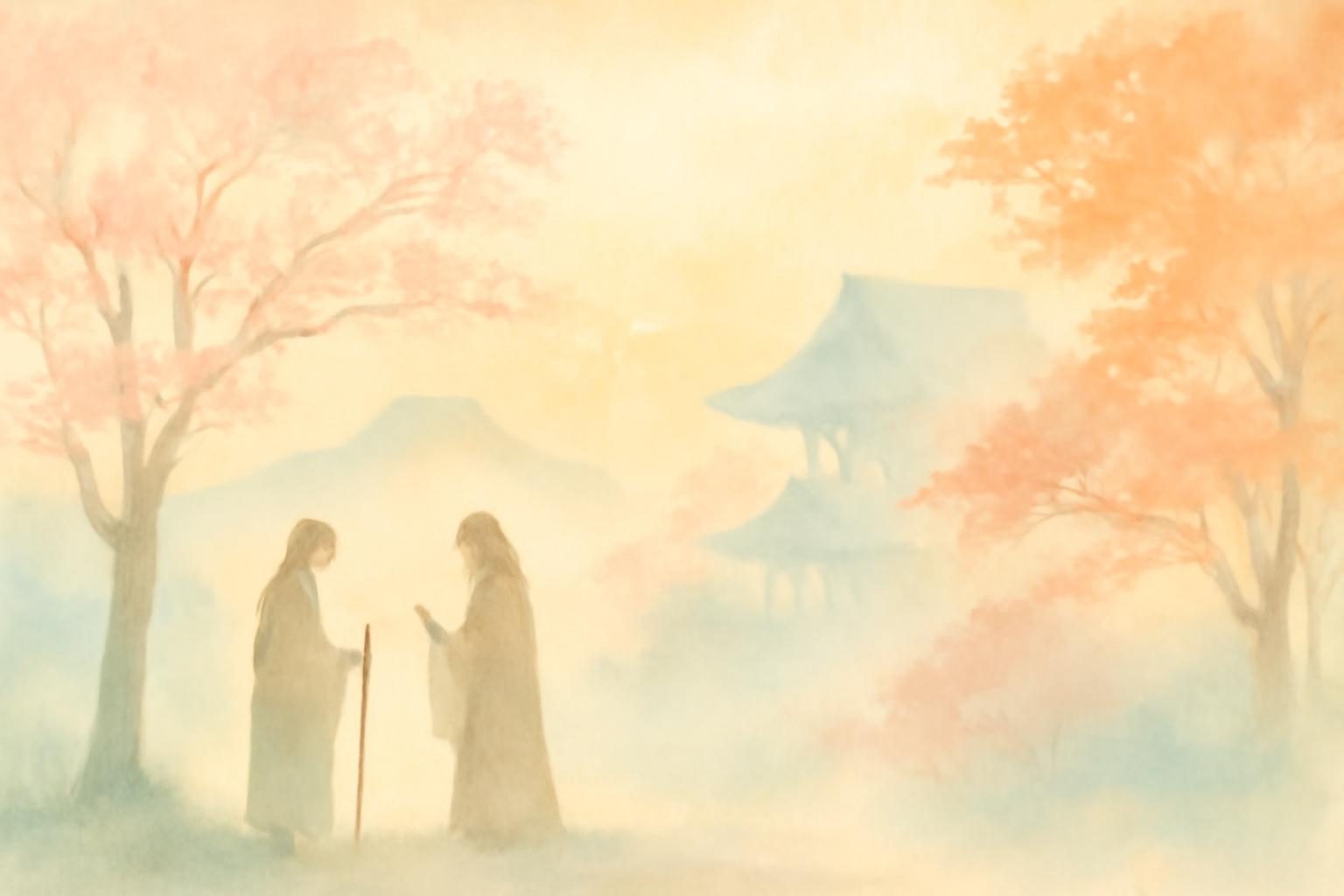
    Watercolor scene of Mount Otowa with silhouettes of two figures meeting, surrounded by mist, trees, and distant temple outlin
    AI生成イメージ / AI-generated illustration (not a photograph of the actual place)

    The Founding Legend: Monk Enchin and Mount Otowa

    LEGEND: The Divine Dream of Enchin

    According to legend, the temple’s founding is attributed to the monk Kenshin, later known as Enchin. Guided by a divine dream, he traveled to Mount Otowa, where he encountered the ascetic Gyōei-kōji. The ascetic entrusted him with a sacred tree, from which Enchin carved a statue of Kannon, the Buddhist goddess of mercy. This statue became the central icon of Kiyomizu-dera. The story of Enchin’s divine guidance and the subsequent creation of the Kannon statue is a testament to the deep spiritual roots and mystical allure that Kiyomizu-dera holds. This legend is celebrated in various forms, such as storytelling and reenactments during temple festivals, allowing visitors to engage with the rich spiritual history of the site.

    FACT: The Role of Otowa Waterfall

    The Otowa Waterfall, located within the temple grounds, played a significant role in this legend. It is said that Gyōei-kōji practiced asceticism at this very site. The waterfall’s pure waters are believed to have inspired the temple’s name, ‘Kiyomizu,’ which means ‘pure water.’ Visitors today can still partake in the ritual of drinking from the waterfall, a practice that connects them to the ancient traditions and spiritual essence of the site. The waterfall is a focal point of the temple visit, where the sound of cascading water adds to the serene atmosphere, inviting reflection and meditation.

    Four ladies wearing a yukata in front of the North Gate of Kiyomizu-dera temple Kyoto Japan - Featured pictures of Kyoto, Kit
    “Four ladies wearing a yukata in front of the North Gate of Kiyomizu-dera temple Kyoto Japan” (Featured pictures of Kyoto, Kitasomon, Kiyomizu-dera) by Basile Morin, CC BY-SA 4.0, source, via Wikimedia Commons

    The Meaning Behind Otowa Waterfall’s Three Streams

    FACT: Blessings of Longevity, Academic Success, and Love

    Otowa Waterfall is famous for its three separate streams, each believed to bestow a different blessing: longevity, academic success, and a successful love match. Visitors often drink from one stream to receive their desired blessing, as drinking from all three is considered greedy. This practice is a reflection of the waterfall’s enduring spiritual significance and the belief in its miraculous powers, which continue to draw pilgrims and tourists alike. The tradition of choosing a stream is a symbolic act that reflects personal aspirations and desires, offering a moment of introspection and hope for the future.

    General Sakanoue no Tamuramaro and the Temple’s Patronage

    LEGEND: Conversion and Patronage

    Legend tells of General Sakanoue no Tamuramaro, who encountered Enchin at the waterfall. Moved by the monk’s devotion, the general converted to Buddhism and became a principal patron of the temple, aiding in the construction of the main hall. This story highlights the historical importance of patronage in the development of religious sites and the role of influential figures in promoting Buddhism in Japan. The general’s support is commemorated in temple lore and serves as a reminder of the interconnectedness of faith and leadership in Japanese history.

    Kiyomizu-dera, Kyoto, November 2016 -01 - Autumn in Kyoto, Views of the Main Hall, Kiyomizu-dera with leaves in autumn from t
    “Kiyomizu-dera, Kyoto, November 2016 -01” (Autumn in Kyoto, Views of the Main Hall, Kiyomizu-dera with leaves in autumn from the Okunoin) by Martin Falbisoner, CC BY-SA 4.0, source, via Wikimedia Commons

    Masterpiece Architecture: The Nail-Free Kakezukuri Veranda

    FACT: An Architectural Marvel

    The main hall of Kiyomizu-dera is renowned for its kakezukuri architecture, a technique that allows the structure to extend over the hillside without the use of nails. This engineering marvel provides a stunning vantage point over the Otowa Waterfall and the surrounding landscape. The veranda’s construction is a testament to the ingenuity and craftsmanship of ancient Japanese builders, offering a glimpse into the sophisticated architectural techniques of the time. This style of construction not only demonstrates technical prowess but also reflects a deep respect for the natural environment, as it harmonizes with the landscape rather than altering it.

    FACT: The Experience of Visiting Kiyomizu-dera

    Visitors to Kiyomizu-dera can walk along the temple’s expansive veranda, taking in panoramic views of Kyoto. The experience is both awe-inspiring and serene, allowing visitors to connect with the natural beauty and spiritual tranquility that the temple offers. The kakezukuri design not only enhances the aesthetic appeal of the temple but also provides a unique perspective on the harmonious relationship between architecture and nature. This blend of human artistry and natural beauty creates a space where visitors can reflect on the balance between human endeavors and the natural world.

    Exploring Surrounding Grounds: Jishu Shrine and Okunoin

    FACT: Jishu Shrine and Love-Matching Tradition

    Within the temple grounds lies Jishu Shrine, dedicated to the deity of love and matchmaking. This shrine echoes the love-match blessing of Otowa’s streams, attracting couples and hopeful romantics. Visitors can participate in traditional rituals, such as walking between two stones with their eyes closed, to test their romantic fortune. The shrine’s popularity highlights the enduring appeal of love and romance in Japanese culture and the spiritual significance of matchmaking. The rituals performed here offer a playful yet meaningful way for visitors to engage with the cultural traditions surrounding love and relationships.

    FACT: Okunoin and Koyasu Pagoda

    Visitors can also explore Okunoin, the temple’s secondary hall, and the nearby Koyasu Pagoda. These sites, while not directly tied to the founding legend, contribute to the spiritual ambiance of Kiyomizu-dera. The pagoda is particularly associated with prayers for safe childbirth, adding another layer of spiritual significance to the temple grounds. Exploring these areas allows visitors to appreciate the diverse religious practices and beliefs that have been part of Kiyomizu-dera’s history for centuries. The presence of these structures enhances the temple’s role as a multifaceted spiritual center, offering solace and blessings for various aspects of life.

    Locator map of Japan: Kyoto (Higashiyama Ward), Kyoto
    Legend site: Kyoto (Higashiyama Ward), Kyoto — Source: Map of Japan with highlight on 26 Kyoto prefecture.svg; Map: Lincun, CC BY-SA 3.0, via Wikimedia Commons

    About the author — JAPAN ESSENCE Editorial Team. Our mission is to bring you Japan’s legends, myths, festivals and living traditions, through both historical fact and the stories passed down over generations.

  • Exploring Mount Oeyama: The Legend of Shuten-doji in Kyoto

    Exploring Mount Oeyama: The Legend of Shuten-doji in Kyoto

    Mount Oeyama in Fukuchiyama, Kyoto Prefecture, is steeped in the rich folklore of Japan, most notably the legend of Shuten-doji, a fearsome demon said to have terrorized the region.

    Scroll 3 from 'Tale of Ōeyama' (Ōeyama emaki) the text accompanied by illustrations painted in ink, colours and gold on paper
    “Tale of Ōeyama (Ōeyama emaki) (CBL J. 1145) label QS:Len,"Tale of Ōeyama (Ōeyama emaki) (CBL J. 1145)"” by Unknown artist Unknown artist, Public domain, via Wikimedia Commons

    Introduction to Mount Oeyama and Kyoto’s Demon Legends

    FACT: The Geography of Oeyama

    Ōeyama is a mountain range located at the base of the Tango Peninsula, extending across Yosano, Fukuchiyama, and Miyazu in Kyoto Prefecture. This range is also known by the name Yosa-no-oyama. The area is renowned not only for its natural beauty but also for its deep roots in Japanese folklore, particularly the legend of Shuten‑dōji. The mountains provide a picturesque landscape that attracts both nature lovers and those interested in the cultural stories embedded in the region.

    Visitors to Ōeyama can enjoy the scenic beauty of the mountain range, which offers a variety of hiking trails and panoramic views. The landscape is characterized by lush forests and rugged terrain, making it a popular destination for outdoor enthusiasts. The region’s connection to the Shuten‑dōji legend adds a layer of mystique to the experience, inviting visitors to explore the stories that have been woven into the fabric of the land.

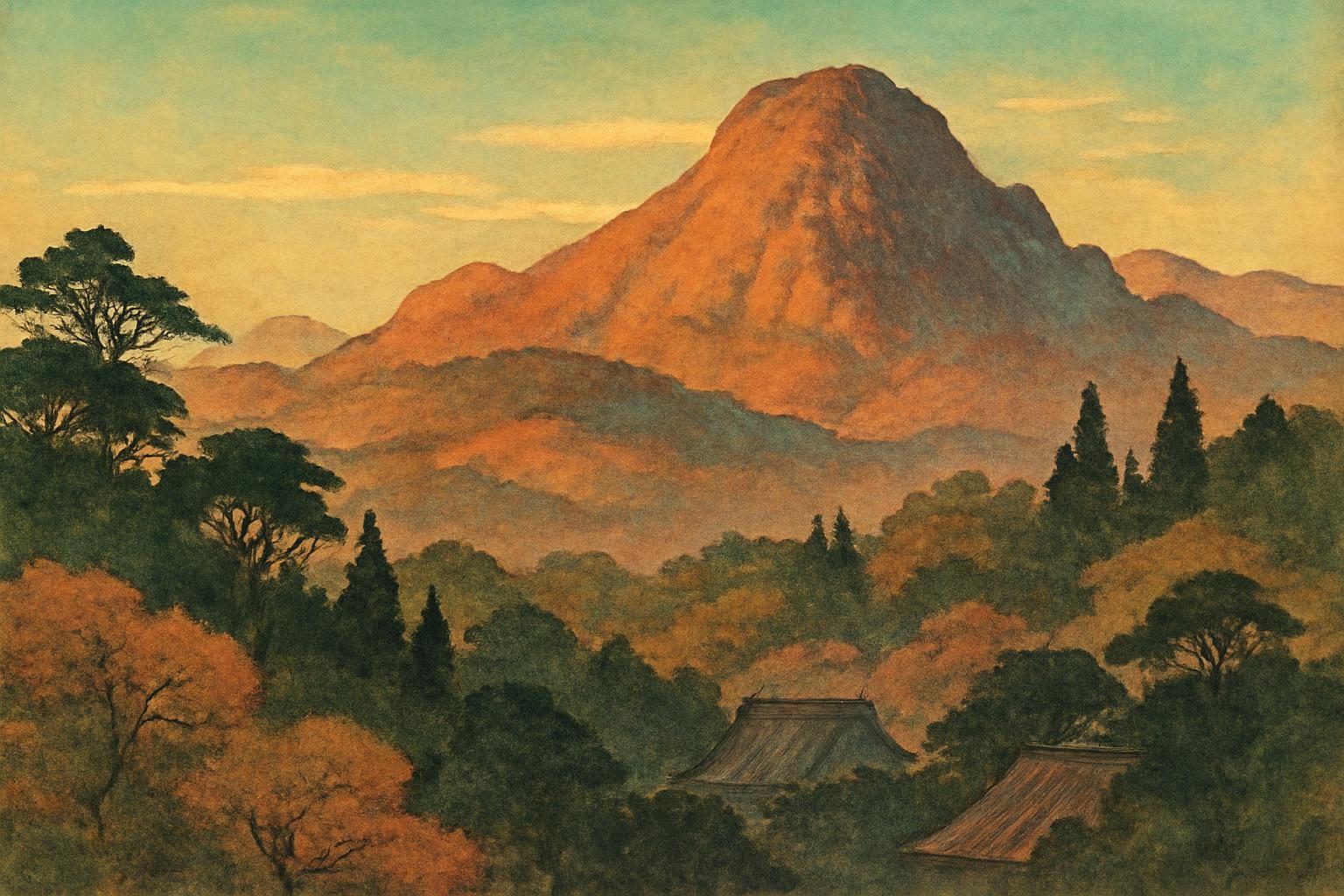
    Ukiyo-e-inspired scene of Mount Oeyama with lush forests and mountains under warm golden light, evoking Shuten-doji's legend.
    AI生成イメージ / AI-generated illustration (not a photograph of the actual place)

    The Legend of Shuten-doji: History and Folklore

    LEGEND: The Tale of Shuten-doji

    According to the 14th-century Ōeyama Ekotoba, Shuten‑dōji was a notorious demon who made Mount Ōe his home. The legend tells of his reign of terror, during which he abducted young women from Kyoto. His story is a classic narrative of good versus evil, culminating in his defeat at the hands of Minamoto no Raikō, a legendary hero. This tale has been passed down through generations, capturing the imagination of many and becoming a staple of Japanese folklore.

    The story of Shuten‑dōji is often depicted in various forms of art and literature, highlighting its significance in Japanese culture. The demon’s fearsome nature and the heroic deeds of Minamoto no Raikō are celebrated in numerous paintings, plays, and stories. These artistic interpretations not only preserve the legend but also offer insights into the cultural values and societal norms of the time.

    FACT: The Ōeyama Ekotoba

    The Ōeyama Ekotoba, or the Tale of Mount Ōe in Pictures and Words, is the oldest surviving illustrated scroll of the Shuten‑dōji legend, dating back to the 14th century. This scroll is a crucial historical document, preserving the narrative and artistic interpretations of the legend. It offers a visual representation of the story, providing insights into the cultural and artistic context of the time.

    The illustrations in the Ōeyama Ekotoba are rich in detail, depicting the various scenes and characters from the legend. These images serve as a window into the past, showcasing the artistic styles and techniques used by the creators. The scroll is not only a testament to the enduring power of the Shuten‑dōji story but also an invaluable resource for historians and art enthusiasts interested in the evolution of Japanese art.

    Onigawara statue at Oeyama Onigawara Park Fukuchiyama - Onigawara
    “Onigawara statue at Oeyama Onigawara Park Fukuchiyama” (Onigawara) by Peguiru, CC BY-SA 4.0, source, via Wikimedia Commons

    Exploring the Oeyama Mountain Range

    FACT: Visiting Ōeyama

    The Ōeyama mountain range is not only a place of natural beauty but also a site of cultural significance due to its connection to the Shuten‑dōji legend. Visitors can explore the area, hike the trails, and imagine the tales of old that have been told about this mystical place. The lush forests and serene landscapes offer a perfect backdrop for those seeking to immerse themselves in the legend’s atmosphere.

    As visitors traverse the trails of Ōeyama, they can encounter various landmarks associated with the legend. These include ancient shrines and markers that pay homage to the stories of Shuten‑dōji and the heroes who defeated him. The experience of walking through these historical sites allows visitors to step back in time and connect with the rich tapestry of myths and legends that define the region.

    Notice: The Shin-Dōji suspension bridge over the Futase River gorge is closed for repair from September to the end of December 2026 (planned), so it cannot be crossed during this period. Please check Fukuchiyama City’s official Futase River gorge page for the latest status before visiting.

    Visit the Japan Oni Cultural Museum in Fukuchiyama

    FACT: A Museum Dedicated to Oni Legends

    Fukuchiyama City hosts the Japan Oni Cultural (Exchange) Museum at the foot of Ōeyama. This museum is dedicated to demon legends, including that of Shuten‑dōji, offering visitors a deeper understanding of the cultural significance of these stories in Japanese folklore. The museum features exhibits that explore the history and mythology of oni, providing a comprehensive look at how these creatures have been represented in Japanese culture.

    The museum is an essential stop for anyone interested in the folklore of Japan. It houses a variety of exhibits, including artifacts, artworks, and interactive displays that engage visitors of all ages. Through these exhibits, the museum aims to educate and inspire, shedding light on the fascinating world of oni and their place in Japanese history and culture.

    Planning Your Trip to Fukuchiyama and Oeyama

    FACT: Local Festivals and Cultural Branding

    Fukuchiyama hosts an Oni festival and has developed Oni-related cultural branding, such as Oni-Oni Day on February 2, based on the Ōeyama Shuten‑dōji legend. These events celebrate the local folklore and offer a unique cultural experience for visitors. The festival features traditional music, dance, and performances that bring the legend to life, allowing visitors to experience the vibrant culture of the region firsthand.

    These festivals are a highlight of the local cultural calendar, attracting visitors from across Japan and beyond. They provide an opportunity to witness the living traditions of the area, with performances and activities that showcase the rich heritage of the region. Participating in these events offers a deeper connection to the stories and legends that define Fukuchiyama, making it a memorable experience for all who attend.

    Locator map of Japan: Fukuchiyama, Kyoto
    Legend site: Fukuchiyama, Kyoto — Source: Map of Japan with highlight on 26 Kyoto prefecture.svg; Map: Lincun, CC BY-SA 3.0, via Wikimedia Commons

    Regional guide

    Location: Fukuchiyama, Kyoto Prefecture

    • Japan Oni Cultural Museum (Fukuchiyama) — source
    • Ōeyama (mountain range) (Fukuchiyama) — source

    Sources

    About the author — JAPAN ESSENCE Editorial Team. Our mission is to bring you Japan’s legends, myths, festivals and living traditions, through both historical fact and the stories passed down over generations.

  • Ichijo Modoribashi: Visiting Kyoto’s Legendary Bridge of Demons

    Ichijo Modoribashi: Visiting Kyoto’s Legendary Bridge of Demons

    Ichijo Modoribashi, located in Kyoto’s Kamigyō Ward, is a site steeped in history and legend, known for its association with the Hyakki Yagyō, or the Night Parade of One Hundred Demons. This bridge, often referred to as Japan’s oldest haunted spot, offers a fascinating glimpse into the folklore and historical narratives that have shaped Kyoto’s cultural landscape.

    晴明神社 一條戻橋
    “Seimei Jinja Ichijo modoribashi” by KENPEI, CC BY 3.0, via Wikimedia Commons

    Introduction to Ichijo Modoribashi in Kyoto

    FACT: The Historical Significance of Ichijo Modoribashi

    Ichijo Modoribashi is a bridge that spans the Horikawa River in Kamigyō Ward, Kyoto City. Historically, it marked the northern boundary of the ancient capital Heiankyo, serving as a demarcation line between the inner and outer city. This bridge has been a significant landmark since the medieval period, recognized for its cultural and historical importance. The bridge’s location at the boundary of the ancient capital not only made it a strategic point but also imbued it with a sense of transition between worlds, a theme that resonates in the legends associated with it.

    LEGEND: The Bridge of Return

    According to legend, the name ‘Modori-bashi’ or ‘Bridge of Return’ originates from a miraculous event in 918. It is said that a man named Miyoshi Kiyoyuki briefly came back to life when his son Jōzō prayed over his coffin as it crossed the bridge. This tale of resurrection imbues the bridge with an aura of mystery and supernatural significance. The story of Miyoshi Kiyoyuki’s return from the dead is a testament to the bridge’s reputation as a place where the boundaries between life and death blur, adding a layer of intrigue for visitors and locals alike.

    An ukiyo-e inspired illustration of a mystical bridge scene with vivid colors and ethereal silhouettes.
    AI生成イメージ / AI-generated illustration (not a photograph of the actual place)

    The Legend of the Bridge of Return

    FACT: The Bridge’s Rebuilding and Preservation Efforts

    The current structure of Ichijo Modoribashi was rebuilt in 1995. To preserve its historical essence, the old bridge’s newel posts were saved and are now displayed at Seimei Shrine, which is located just a five-minute walk away. This preservation effort underscores the bridge’s enduring legacy in Kyoto’s cultural heritage. The careful preservation of these relics allows visitors to connect with the bridge’s storied past, offering a tangible link to the legends that have been passed down through generations.

    LEGEND: Watanabe no Tsuna and the Demon Ibaraki-dōji

    Another captivating legend associated with Ichijo Modoribashi involves Watanabe no Tsuna, a renowned warrior and one of Minamoto no Yorimitsu’s Four Heavenly Kings. It is said that Tsuna encountered the demon Ibaraki-dōji on this bridge. Disguised as a woman, the demon attacked Tsuna, who managed to cut off its arm, an event that has been immortalized in various artworks and stories. This tale not only highlights the bridge’s role as a site of supernatural encounters but also reflects the rich tapestry of folklore that characterizes Kyoto’s historical narrative.

    Seimei Shrine, Kyoto Prefecture; September 2009 (05) - Seimei-jinja (Kamigyo Kyoto) Magic peach
    “Seimei Shrine, Kyoto Prefecture; September 2009 (05)” (Seimei-jinja (Kamigyo Kyoto) Magic peach) by nekonomania, CC BY 2.0, source, via Wikimedia Commons

    Demons and Onmyoji: Watanabe no Tsuna and Abe no Seimei

    FACT: Abe no Seimei’s Connection to the Bridge

    Abe no Seimei, the legendary onmyōji or master of yin-yang divination, is also linked to Ichijo Modoribashi. It is believed that Seimei hid his shikigami, or spirit servants, beneath the bridge. This association with Seimei further enhances the bridge’s mystical reputation. As one of Japan’s most famous historical figures, Seimei’s connection to the bridge adds an element of historical depth, inviting visitors to explore the intersection of myth and reality.

    LEGEND: The Hyakki Yagyō and the Haunted Bridge

    Ichijo Modoribashi is famously known as the site where the Hyakki Yagyō, or the Night Parade of One Hundred Demons, is said to pass. This concept first appeared in the 12th-century Konjaku Monogatari-shū and was later visualized in the Muromachi-period Hyakki Yagyō Emaki and the Edo-period Gazu Hyakki Yagyō. The bridge’s connection to this legendary parade has earned it the title of ‘Japan’s oldest haunted spot’ in modern tourism. The vivid imagery of the Hyakki Yagyō, with its procession of supernatural creatures, captures the imagination and underscores the bridge’s role as a focal point of Japanese folklore.

    Visiting Seimei Shrine and Old Bridge Relics

    FACT: Seimei Shrine’s Role in Preserving History

    Seimei Shrine, located near Ichijo Modoribashi, plays a crucial role in preserving the historical relics of the bridge. Visitors can view the old newel posts from the bridge, which are displayed within the shrine grounds. The shrine itself is dedicated to Abe no Seimei, adding another layer of historical and cultural significance to the area. The shrine offers a serene environment where visitors can reflect on the legends and history that permeate the region, providing a deeper understanding of Kyoto’s cultural heritage.

    Seimei Shrine, Kyoto Prefecture; September 2009 (11) - Ichijo-modori § shikigami in Seimei-jinja (Kamigyo-ku, Kyoto)
    “Seimei Shrine, Kyoto Prefecture; September 2009 (11)” (Ichijo-modori § shikigami in Seimei-jinja (Kamigyo-ku, Kyoto)) by nekonomania, CC BY 2.0, source, via Wikimedia Commons

    Practical Tips for International Travelers

    When planning a visit to Ichijo Modoribashi and Seimei Shrine, it’s advisable to explore the surrounding Kamigyō Ward to fully appreciate the area’s rich history. The bridge and shrine are easily accessible by public transportation, making them convenient stops for those exploring Kyoto’s historical sites. Visitors are encouraged to take their time to absorb the atmosphere and consider the layers of history and legend that make this area a unique destination.

    Locator map of Japan: Kyoto (Kamigyō Ward), Kyoto
    Legend site: Kyoto (Kamigyō Ward), Kyoto — Source: Map of Japan with highlight on 26 Kyoto prefecture.svg; Map: Lincun, CC BY-SA 3.0, via Wikimedia Commons

    About the author — JAPAN ESSENCE Editorial Team. Our mission is to bring you Japan’s legends, myths, festivals and living traditions, through both historical fact and the stories passed down over generations.

  • Walking Sannenzaka: Kyoto’s Famous Historic Stone Slope

    Walking Sannenzaka: Kyoto’s Famous Historic Stone Slope

    In the heart of Kyoto’s Higashiyama Ward lies Sannenzaka, a stone-paved pedestrian slope that holds both historical significance and captivating folklore. This area, rich in tradition and legend, offers visitors a unique glimpse into the cultural tapestry of Kyoto, drawing them into a world where history and myth intertwine.

    Sannenzaka street, Kyoto
    “Sannenzaka street, Kyoto (3811257874)” by Andrea Schaffer from Sydney, Australia, CC BY 2.0, via Wikimedia Commons

    Introduction to Sannenzaka and Ninenzaka

    FACT: What the records say

    Sannenzaka, also known as Sannen-zaka or Sanneizaka, is a renowned stone-paved pedestrian slope in Higashiyama Ward, Kyoto City. This historic street, leading up to the famous Kiyomizu-dera, is lined with traditional wooden machiya buildings. These machiya, with their distinctive architecture, reflect the Edo period’s aesthetic, characterized by narrow facades and deep interiors. The slope, along with the adjacent Ninenzaka, forms a preserved area that is always open to visitors and heavily trafficked by tourists exploring the cultural heritage of Kyoto. The charm of these streets lies not only in their historical architecture but also in the vibrant life that continues to thrive there today.

    LEGEND: The tale of the three-year curse

    According to legend, if you trip and fall on Sannenzaka, you will die within three years. This superstition is recorded as early as 1679 in the collection Keishi Junranshu and remains a well-known part of traveler folklore. The fear of the curse adds an element of intrigue to the otherwise serene and picturesque street. Visitors often tread carefully, not just because of the steepness of the slope, but also due to the lingering fear of this ancient curse. This legend, passed down through generations, continues to be a topic of fascination and conversation among both locals and tourists.

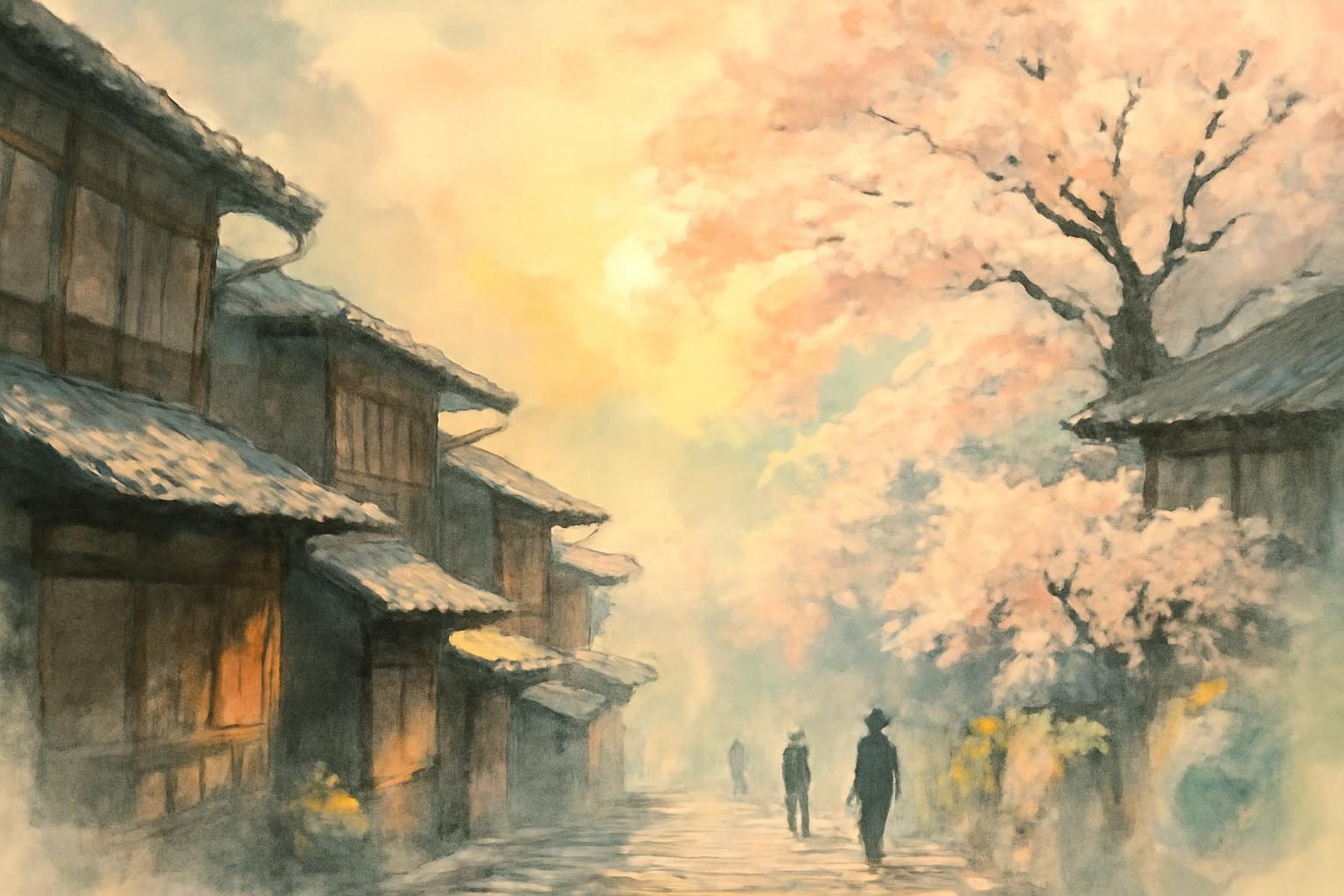
    Illustration of a Kyoto-inspired stone-paved slope with wooden buildings, cherry blossoms, and distant figures in sunrise mis
    AI生成イメージ / AI-generated illustration (not a photograph of the actual place)

    The History and Preservation of Kyoto’s Stone Slopes

    FACT: Historical significance and preservation

    The name ‘Sannenzaka’ may derive from its creation in the third year of the Daido era (808) or from the term ‘safe delivery slope,’ linked to the nearby childbirth-praying Taisan-ji. Despite the uncertainty of its exact origin, Sannenzaka’s importance is recognized through its designation as an Important Preservation District for Groups of Historic Buildings by Kyoto City in 1976 under the Law for the Protection of Cultural Properties. This status helps maintain the traditional atmosphere and architectural integrity of the area. The preservation efforts ensure that the unique cultural and historical essence of Sannenzaka is not lost to modernization, allowing visitors to step back in time as they walk these storied paths.

    Sannenzaka-kyoto - Taken with Canon PowerShot SX230 HS, Sannei-zaka
    “Sannenzaka-kyoto” (Taken with Canon PowerShot SX230 HS, Sannei-zaka) by Aporon999, CC BY-SA 3.0, source, via Wikimedia Commons

    The Legend of Sannenzaka: Folklore and Superstition

    LEGEND: The origins of the curse

    The legend of Sannenzaka’s curse is a fascinating piece of folklore that has been passed down through generations. While the exact origins of the superstition are unclear, it is believed to be tied to the spiritual significance of the area and the many temples and shrines nearby. The fear of the curse adds an extra layer of caution for visitors walking the slope, especially given its steepness. This superstition, deeply embedded in the local culture, serves as a reminder of the mystical elements that pervade Kyoto’s historical sites.

    LEGEND: Variations and cultural impact

    Over time, variations of the legend have emerged, sometimes including the adjacent Ninenzaka in the narrative. Such stories have contributed to the cultural richness of the area, attracting those with an interest in the supernatural. The legend not only adds a layer of mystery to the experience of visiting Sannenzaka but also highlights the importance of oral traditions in preserving cultural identity. As visitors explore the slope, they become part of a living history, where past and present converge in a shared cultural experience.

    Exploring the Traditional Machiya Buildings and Shops

    FACT: The charm of machiya architecture

    Sannenzaka and Ninenzaka are lined with traditional wooden machiya buildings, offering a glimpse into Kyoto’s architectural past. These structures, with their narrow facades and deep interiors, are characteristic of Kyoto’s historic streets. Many of these buildings have been converted into shops, cafes, and inns, providing visitors with a unique shopping and dining experience while preserving the area’s cultural heritage. The machiya’s design, with its emphasis on natural materials and harmony with the surroundings, reflects the Japanese aesthetic principles of simplicity and elegance.

    FACT: Unique shopping experiences

    Visitors can explore a variety of shops offering local crafts, traditional sweets, and souvenirs. Among these are the gourd (hyōtan) shops, which have a unique connection to the legend. In the past, gourds were sold along the slope as a spell to return a soul lost when someone fell, directly tied to the legend. These shops continue to attract those intrigued by the folklore, offering a tangible connection to the area’s mystical past. The combination of shopping and storytelling creates a rich tapestry of experiences for those who wander these historic streets.

    Desolation of Sannenzaka by Covid19 (1) - COVID-19 pandemic in Kyoto prefecture
    “Desolation of Sannenzaka by Covid19 (1)” (COVID-19 pandemic in Kyoto prefecture) by 京都新観光提言懇談会メンバー, CC BY-SA 4.0, source, via Wikimedia Commons

    How to Include Sannenzaka in Your Kiyomizu-dera Itinerary

    FACT: A popular route for tourists

    As part of the standard route to Kiyomizu-dera, Sannenzaka and Ninenzaka are frequented by tourists eager to experience Kyoto’s historic charm. The slopes offer a scenic and culturally rich path to the temple, making them a must-visit for anyone exploring Kyoto. The area is particularly beautiful during cherry blossom season and in the autumn when the leaves change color. These seasonal changes add to the allure of the slopes, providing a picturesque backdrop for photographs and a serene atmosphere for reflection.

    FACT: Tips for an enriching visit

    To make the most of your visit, consider starting early in the morning to avoid the crowds and enjoy the peaceful ambiance of the area. Take your time to explore the various shops and savor the local delicacies. The journey through Sannenzaka and Ninenzaka is not just about reaching Kiyomizu-dera but also about immersing yourself in the cultural and historical richness of Kyoto.

    Practical Tips for Visiting Kyoto’s Higashiyama District

    FACT: Navigating the slopes

    Visitors to Sannenzaka should wear comfortable shoes to navigate the steep and often crowded slope. The area is best explored on foot, allowing you to fully appreciate the traditional architecture and vibrant atmosphere. Be mindful of the legend and tread carefully to avoid any mishaps! The experience of walking these historic streets is enhanced by the awareness of the legends and history that surround them, making each step a part of a larger narrative.

    Locator map of Japan: Kyoto City, Kyoto
    Legend site: Kyoto City, Kyoto — Source: Map of Japan with highlight on 26 Kyoto prefecture.svg; Map: Lincun, CC BY-SA 3.0, via Wikimedia Commons

    Regional guide

    • Sannenzaka (Kyoto City) — source

    Sources

    About the author — JAPAN ESSENCE Editorial Team. Our mission is to bring you Japan’s legends, myths, festivals and living traditions, through both historical fact and the stories passed down over generations.

  • Hachinohe Aomori Travel Guide: Exploring Folklore, Coastlines, and Local Delicacies

    Hachinohe Aomori Travel Guide: Exploring Folklore, Coastlines, and Local Delicacies

    Hachinohe in Aomori Prefecture is a captivating destination where folklore, scenic coastlines, and culinary delights converge. This guide will take you through the intriguing legend of Medotsu, the breathtaking Tanesashi Coast, and the region’s renowned local specialties.

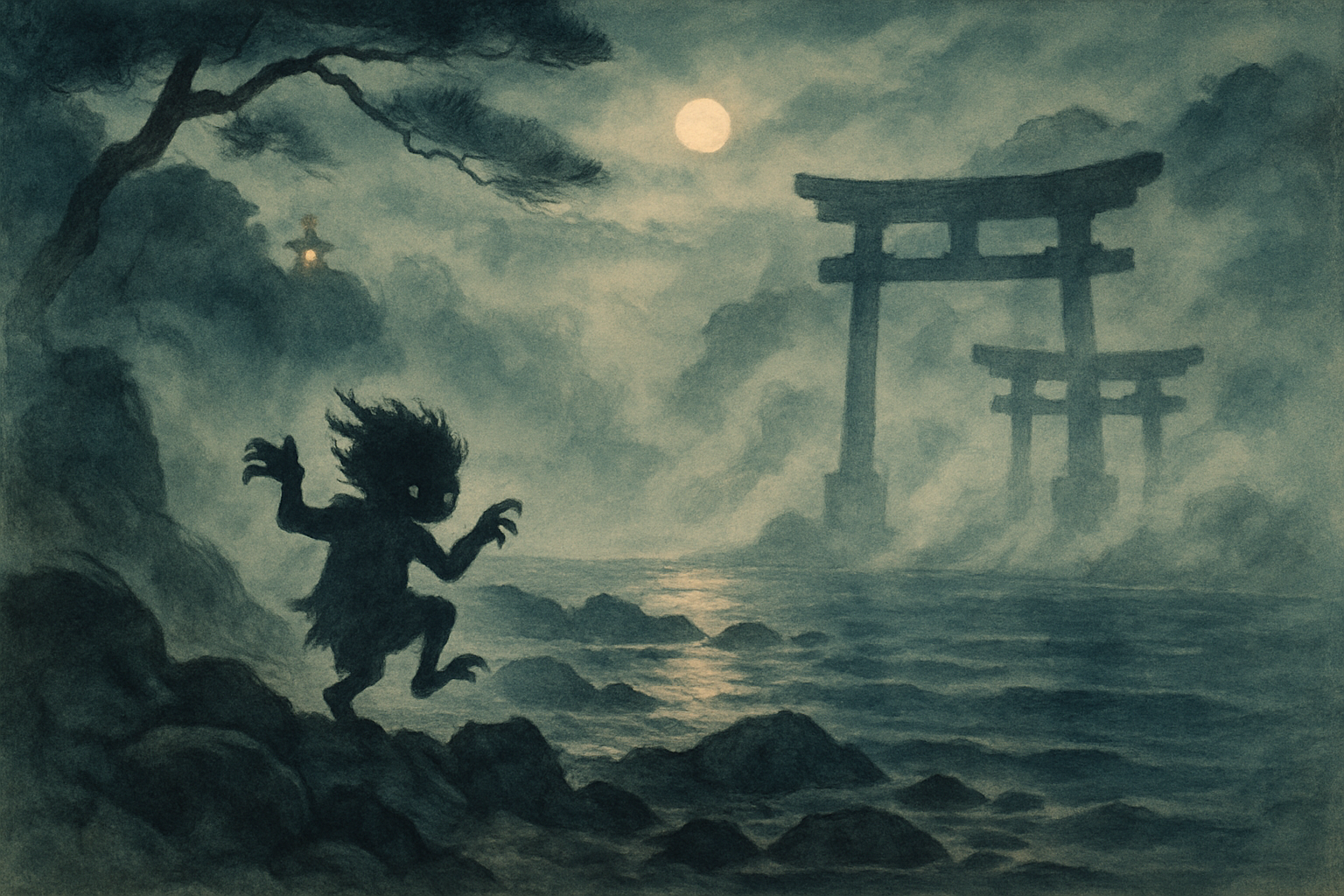
    Ukiyo-e style scene of the Medotsu legend with misty coast, eerie silhouette, torii arches, and glowing lanterns.
    AI生成イメージ / AI-generated illustration (not a photograph of the actual place)

    The Legend of Medotsu: Aomori’s Unique Water Spirit

    FACT: Origins of the Medotsu Legend

    The Medotsu, also known as Medochi, is a dialect name for the kappa, a water spirit in the Tsugaru region of Aomori Prefecture. This name derives from the ancient water-spirit term mizuchi, highlighting its deep-rooted presence in local folklore. The legend is particularly prominent in Hachinohe City, specifically in Shirinai-cho, where it has left a lasting mark on the local culture.

    LEGEND: The Medotsu’s Mystical Transformations

    According to legend, the Medotsu is depicted as a small black child with a monkey-like face. It is said to have the ability to transform into a young girl, luring unsuspecting victims into the water to drown them. This fearsome reputation has led to the erection of warning signs in the area, cautioning locals and visitors alike about the dangers of the Medotsu.

    Scenic Wonders Along the Tanesashi Coast

    FACT: Natural Beauty of Tanesashi Coast

    The Tanesashi Coast, located in southern Hachinohe, is a nationally designated Place of Scenic Beauty. It features a diverse landscape of grassy meadows, sandy beaches, and rocky shores, forming part of the Sanriku Fukko National Park. This coastal area is a must-visit for nature enthusiasts and those seeking tranquility by the sea.

    Historic Landmarks: Utou Shrine and Local Culture

    FACT: Utou Shrine’s Cultural Significance

    Utou Shrine in Aomori City is a historic site tied to the former fishing village of Uto, which is the origin of the city name ‘Aomori’. Visitors to the shrine can engage with its cultural heritage and feed koi, adding a unique experience to their visit.

    The Mystery of Shingō Village

    LEGEND: The Tale of Jesus in Shingō

    Shingō village in Aomori Prefecture is home to a fascinating legend that claims Jesus Christ escaped crucifixion and spent his final years in this small village. According to local lore, his tomb resides here, adding an intriguing layer to Aomori’s cultural tapestry.

    Savoring Hachinohe Maeoki Silver Mackerel

    FACT: Aomori’s Renowned Mackerel Specialty

    Hachinohe Maeoki Silver (Blue) Mackerel is a celebrated local specialty, particularly the toro zuke-don, which has garnered national awards. This dish is highly regarded for its fresh, flavorful taste and is a must-try for visitors to the region.

    Locator map of Japan: Hachinohe, Aomori
    Legend site: Hachinohe, Aomori — Source: Map of Japan with highlight on 02 Aomori prefecture.svg; Map: Lincun, CC BY-SA 3.0, via Wikimedia Commons

    Regional guide

    • Hachinohe Maeoki (silver) mackerel toro zuke-don — source
    • Utou Shrine (historic shrine in Aomori City) — source
    • Tanesashi Coast — source
    • Shingō (village of the ‘Jesus in Japan’ legend) — source

    Sources

    About the author — JAPAN ESSENCE Editorial Team. Our mission is to bring you Japan’s legends, myths, festivals and living traditions, through both historical fact and the stories passed down over generations.

  • Exploring Japanese Folklore: The Yōkai Legends of Kameoka and Nantan

    Exploring Japanese Folklore: The Yōkai Legends of Kameoka and Nantan

    In the heart of Kyoto Prefecture lies the region of southern Tanba, where the legends of yōkai, or supernatural creatures, have been passed down through generations. Among these tales, the story of the Tsurube-otoshi stands out, captivating the imagination of locals and visitors alike.

    Ukiyo-e-inspired mystical forest with kaya trees and eerie night ambience, evoking Tsurube-otoshi folklore.
    AI生成イメージ / AI-generated illustration (not a photograph of the actual place)

    Introduction to Southern Tanba Folklore

    FACT: What the records say

    The Tsurube-otoshi is a yōkai known for its eerie presence in the folklore of southern Tanba, particularly in the areas now known as Kameoka and Nantan. According to historical records, the densest cluster of these legends is found here, making it a significant location for those interested in Japanese folklore.

    The Legend of Tsurube-otoshi in Kameoka

    LEGEND: The story from Hōki

    According to the Taishō-period oral legend collection “Kuchitanba Kōhi Shū,” in the Hōki section of former Sogabe village, now part of Kameoka, a Tsurube-otoshi is said to drop from a kaya tree. It sniggers, “has your night work ended, how ’bout we drop a bucket, gii-gii,” before rising back up. This chilling tale has been recounted through generations, adding to the mystique of the area.

    LEGEND: The tale from Tera

    In another part of Sogabe village, known as the Tera section, the legend describes a Tsurube-otoshi appearing as a severed head that drops from an old pine tree. It is said to devour people before disappearing for two to three days, only to reappear later. This gruesome tale highlights the fearsome nature of this yōkai.

    Folklore Sites and Landmarks in Nantan

    LEGEND: The haunted tree of Tomimoto

    In Tomimoto, now part of Nantan, an ivy-wrapped tree was feared as a site where the Tsurube-otoshi might appear. This legend adds to the area’s rich tapestry of folklore, drawing those intrigued by supernatural tales.

    Exploring the History of Kameoka

    FACT: Historical significance

    Kameoka is not only rich in folklore but also in history. The site of Tanba Kameyama Castle is a testament to the area’s historical importance, offering visitors a glimpse into the past.

    Local Flavors and Specialties of the Region

    FACT: Culinary delights

    Kameoka is renowned for its local produce, including Tamba Daigon azuki beans and Kameoka beef. These specialties are celebrated for their quality and are a must-try for any visitor to the region.

    Plan Your Journey Through Tanba’s Mythical Countryside

    With its rich tapestry of folklore and history, southern Tanba offers a unique journey into the world of Japanese legends. Whether you’re drawn by the tales of the Tsurube-otoshi or the area’s historical sites, Kameoka and Nantan provide a captivating experience.

    Locator map of Japan: Kameoka, Kyoto
    Legend site: Kameoka, Kyoto — Source: Map of Japan with highlight on 26 Kyoto prefecture.svg; Map: Lincun, CC BY-SA 3.0, via Wikimedia Commons

    Regional guide

    • Tamba Daigon azuki beans (Kameoka) — source
    • Kameoka beef (Kameoka) — source
    • Site of Tanba Kameyama Castle (Kameoka) — source

    Sources

    About the author — JAPAN ESSENCE Editorial Team. Our mission is to bring you Japan’s legends, myths, festivals and living traditions, through both historical fact and the stories passed down over generations.

  • Japanese Folklore: Kyoto’s Ghost Stories

    Japanese Folklore: Kyoto’s Ghost Stories

    Kyoto Prefecture, steeped in history and tradition, is also a land of mysterious tales and ghostly encounters. Among these, the legend of the Ubagabi ghost-light stands out, casting an eerie glow over the Hozu River in Tanba.

    Introduction to Kyoto’s Supernatural Folklore

    FACT: What the records say

    The ubagabi, or ‘old woman’s fire,’ is a type of atmospheric ghost-light found in Japanese folklore, particularly in the legends of Kawachi Province (now Osaka Prefecture) and Tanba Province (now northern Kyoto Prefecture). This phenomenon is often described as a will-o’-the-wisp, appearing on rainy nights as an orange fireball that sometimes reveals the face of an old woman or transforms into a bird shape. These traditions are especially prevalent around Hiraoka in Kawachi and along the Hozu River in Tanba.

    Mysterious ghost-light floats over a river, surrounded by misty mountains and trees, creating an eerie night scene.
    AI生成イメージ / AI-generated illustration (not a photograph of the actual place)

    The Legend of Ubagabi: The Ghost-Light of Tanba

    LEGEND: The story of the Hozu River

    According to legend, the ubagabi first appeared near the Hozu River in Kyoto Prefecture after a tragic event. An old woman, living near Kameyama (now Kameoka), was said to have drowned in the river after betraying children. Following her death, a mysterious flame began to appear near the river, believed to be her restless spirit manifesting as the ubagabi.

    The Hozu River: Where Folklore Meets Nature

    FACT: A scenic and storied location

    The Hozu River, flowing through the picturesque landscapes of Kyoto Prefecture, is not only known for its ghostly legends but also for its natural beauty. The river is a popular spot for scenic boat tours, attracting tourists who wish to experience the serene and sometimes eerie atmosphere of this storied waterway.

    Ichijo Modoribashi: The Legendary Bridge Between Worlds

    FACT: A bridge with a history

    Ichijō Modoribashi, located in Kyoto City’s Kamigyō Ward, spans the Horikawa River and is steeped in folklore. This small bridge is associated with legends from the Heian period, often described as a boundary between the human world and the realm of yōkai, or supernatural creatures. One famous tale involves the warrior Watanabe no Tsuna, who is said to have cut off the arm of the demon Ibaraki Dōji at this very spot.

    Exploring Kyoto’s Yōkai Sites Safely as a Traveler

    FACT: Visiting with respect and curiosity

    For those intrigued by the supernatural, Kyoto offers a wealth of sites connected to its rich tapestry of folklore. When visiting places like the Hozu River or Ichijō Modoribashi, it is important to approach with respect for the cultural and historical significance of these locations. Whether you’re drawn by the legends or the natural beauty, these sites offer a unique glimpse into the mystical side of Japan.

    Planning Your Mythological Journey Through Kyoto Prefecture

    Kyoto’s blend of history, culture, and folklore makes it a fascinating destination for those interested in Japan’s supernatural heritage. From the ghost-lights of the Hozu River to the legendary Ichijō Modoribashi, the prefecture is a treasure trove of stories waiting to be explored.

    Locator map of Japan: Hozu River, Kyoto
    Legend site: Hozu River, Kyoto — Source: Map of Japan with highlight on 26 Kyoto prefecture.svg; Map: Lincun, CC BY-SA 3.0, via Wikimedia Commons

    Regional guide

    • Ichijō Modoribashi (Bridge of Return) — source

    Sources

    About the author — JAPAN ESSENCE Editorial Team. Our mission is to bring you Japan’s legends, myths, festivals and living traditions, through both historical fact and the stories passed down over generations.